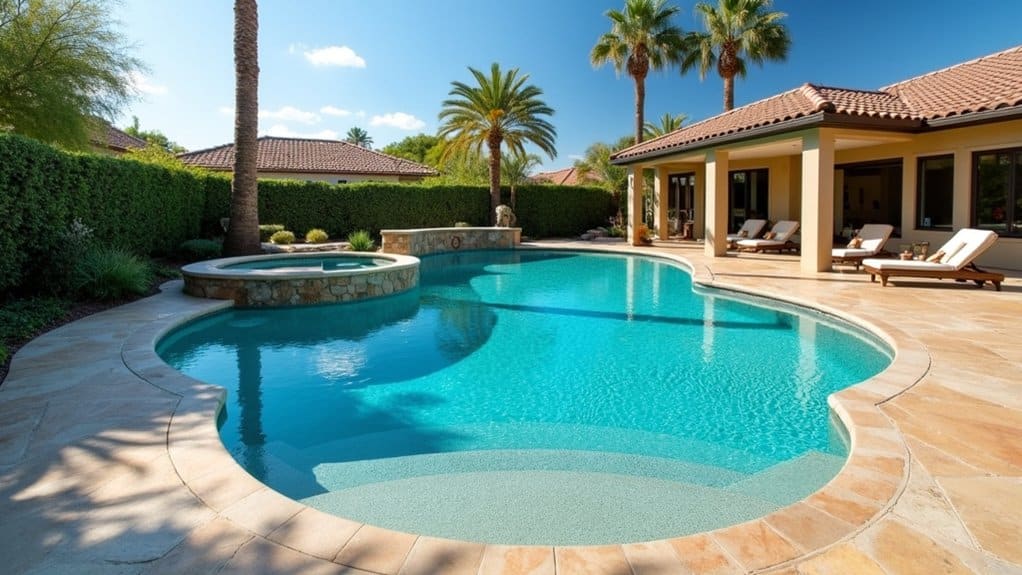
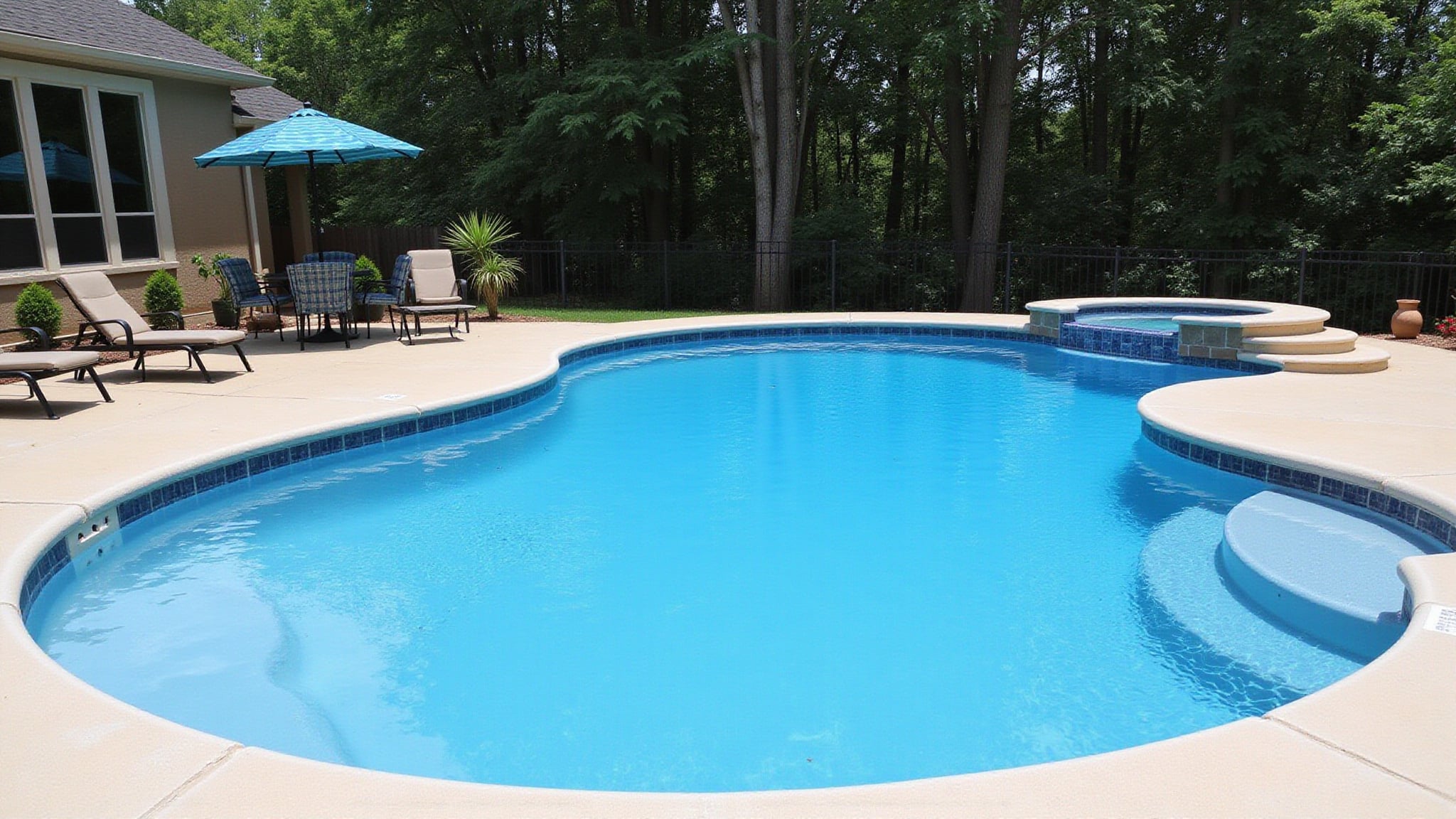
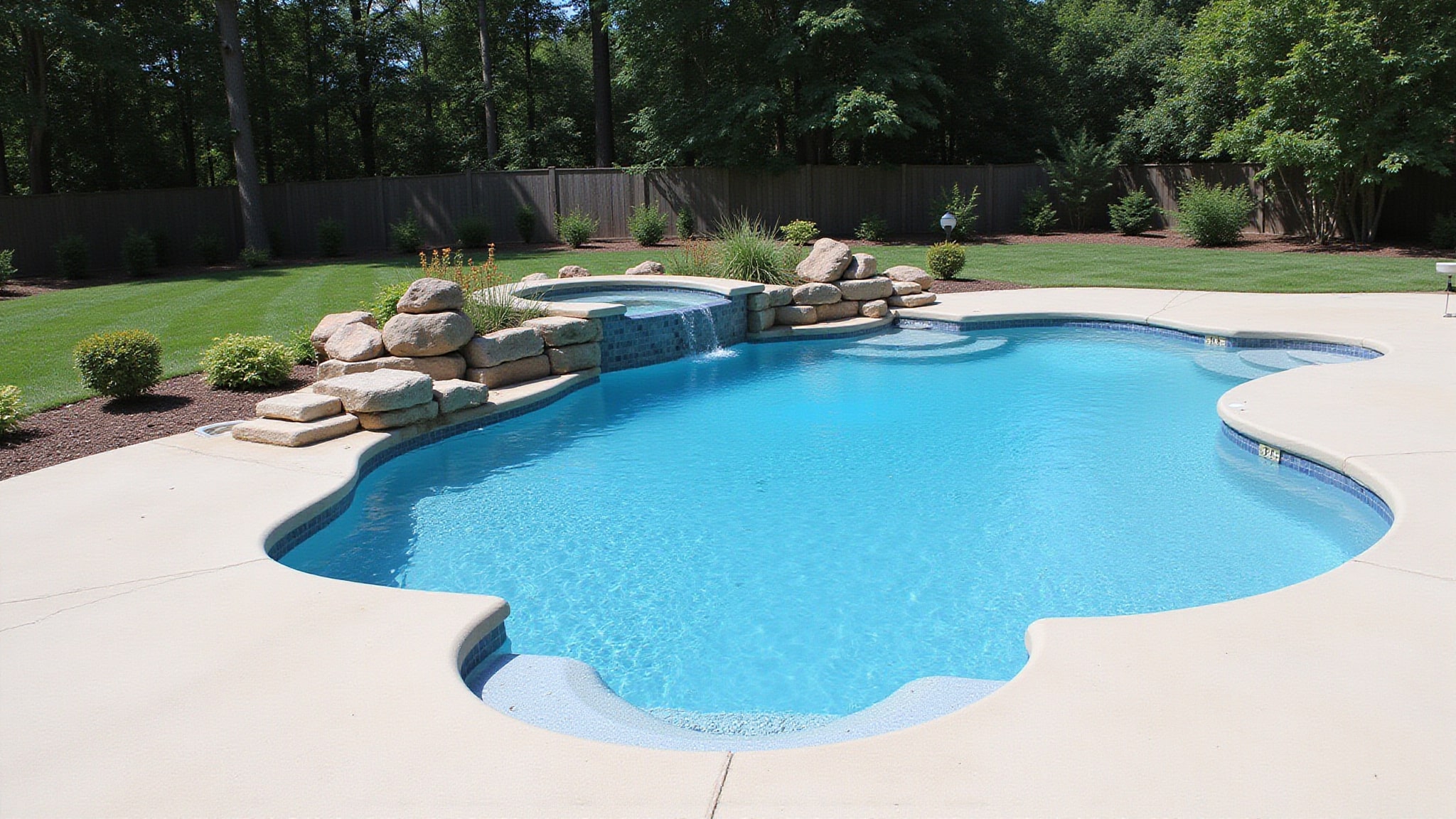
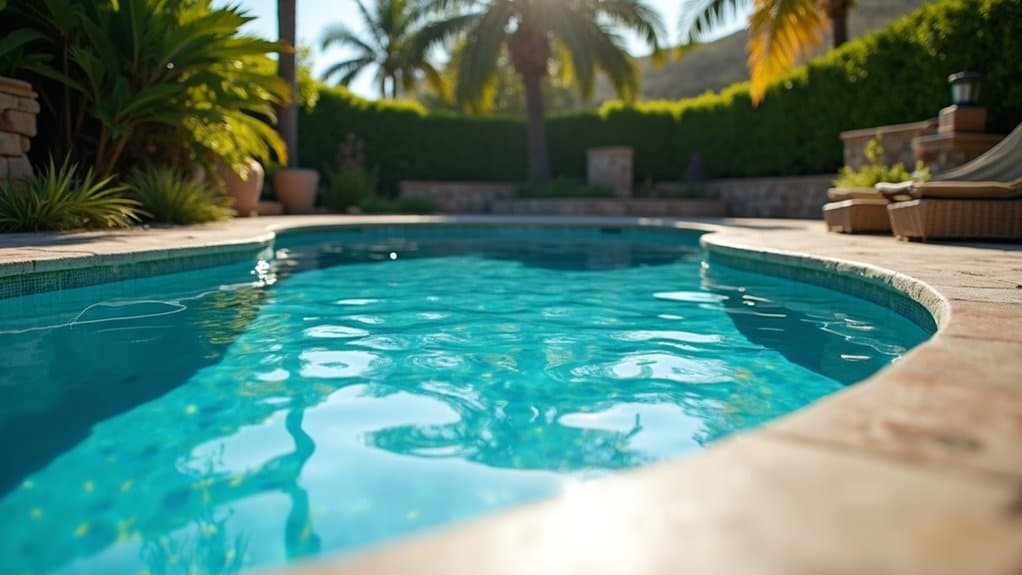
A gunite pool is an inground pool you build by spraying a dry cement-and-sand mix over a steel rebar framework. Water combines with the mix at the nozzle right before impact, forming a dense, seamless concrete shell on-site. You get complete control over shape, depth, and custom features, plus a durable structure lasting 50 to 100+ years. Curious how it’s built, what it costs, and how it stacks up? Keep going to find out.
Key Takeaways
- A gunite pool is an inground pool built by spraying a dry cement-and-sand mix over a steel rebar framework.
- The dry mix combines with water at the spray nozzle, forming a dense, durable concrete shell after curing.
- Construction involves excavation, a crushed stone base, rebar reinforcement, spraying, and roughly 28 days of curing.
- Built entirely on-site, gunite pools allow full customization of shape, size, depth, and features like waterfalls and spas.
- Gunite pools can last 50 to 100+ years but cost $40,000 to $120,000+ and require resurfacing every 10 to 15 years.
What is a gunite pool
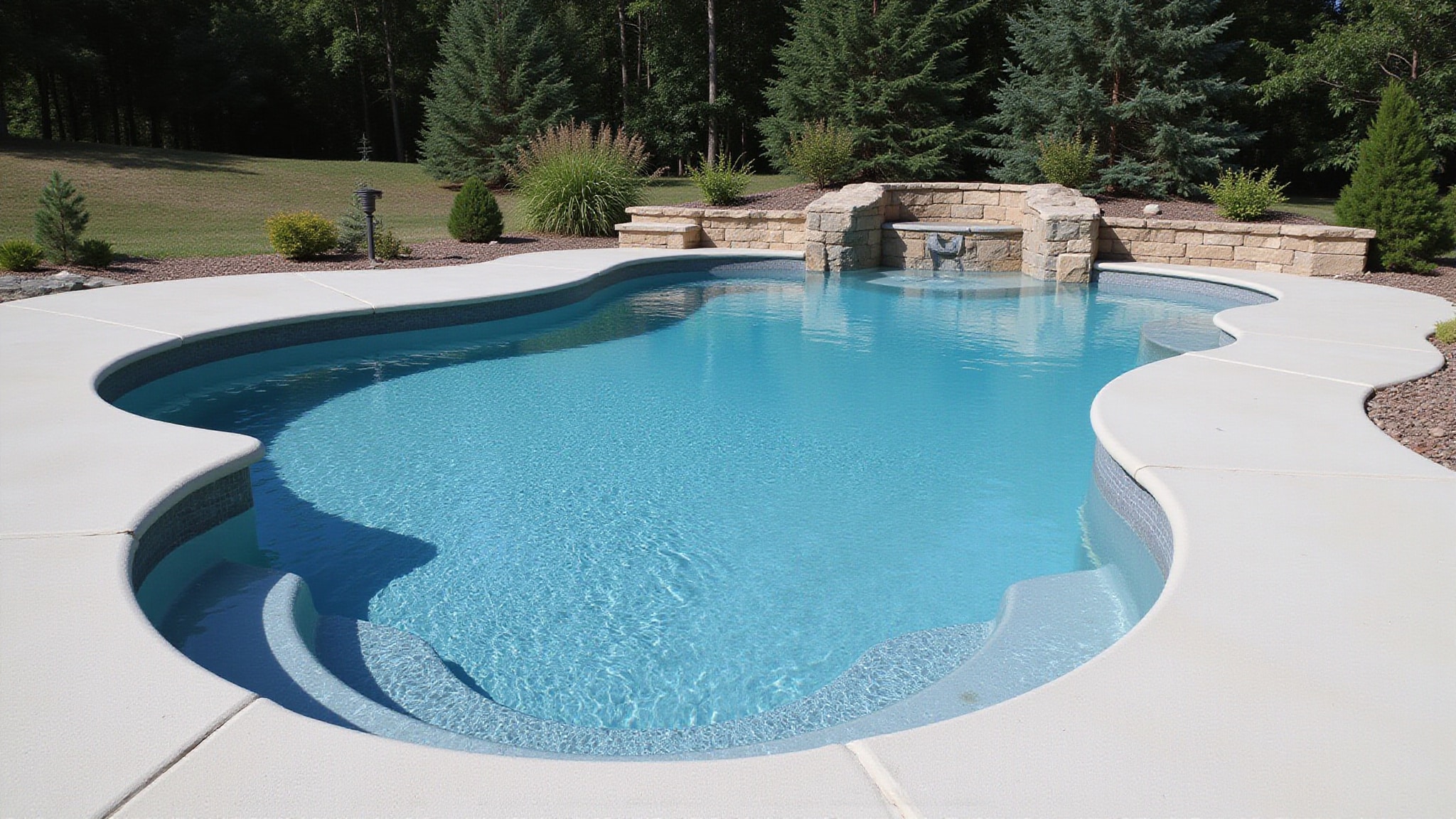
A gunite pool is an inground swimming pool built by spraying a dry mixture of cement and sand over a reinforced steel rebar framework. The term “gunite” refers to that dry mix, which combines with water at the spray nozzle during application.
Unlike a traditional concrete pool that uses larger aggregates and poured sections, a gunite pool contains only fine particles. This lets builders shoot the material through a hose using air pressure, creating seamless layers on-site. Once sprayed, it hardens into a dense, durable concrete structure. That seamless application is what gives gunite its remarkable strength and design flexibility.
How is a gunite pool built
A gunite pool is built by spraying a cement-and-sand mixture over a steel rebar framework, then curing and finishing it. Construction starts with excavation, where crews dig out and shape the ground to match your chosen design, then lay a crushed stone base for stabilization. Next, installers construct a steel rebar framework that reinforces your inground gunite pool before any concrete goes down. Pressurized air pushes a dry cement-and-sand mix through a hose, combining with water at the nozzle before blasting onto the rebar, the same technique used to build a shotcrete pool. This spray application lets you form vertical surfaces, curves, and freeform layouts impossible with pre-formed shells, giving you a fully custom pool. Once sprayed, the concrete must cure for roughly 28 days to reach maximum strength. After curing, crews apply your finish, fill the water, and complete final inspections.
What is gunite made of
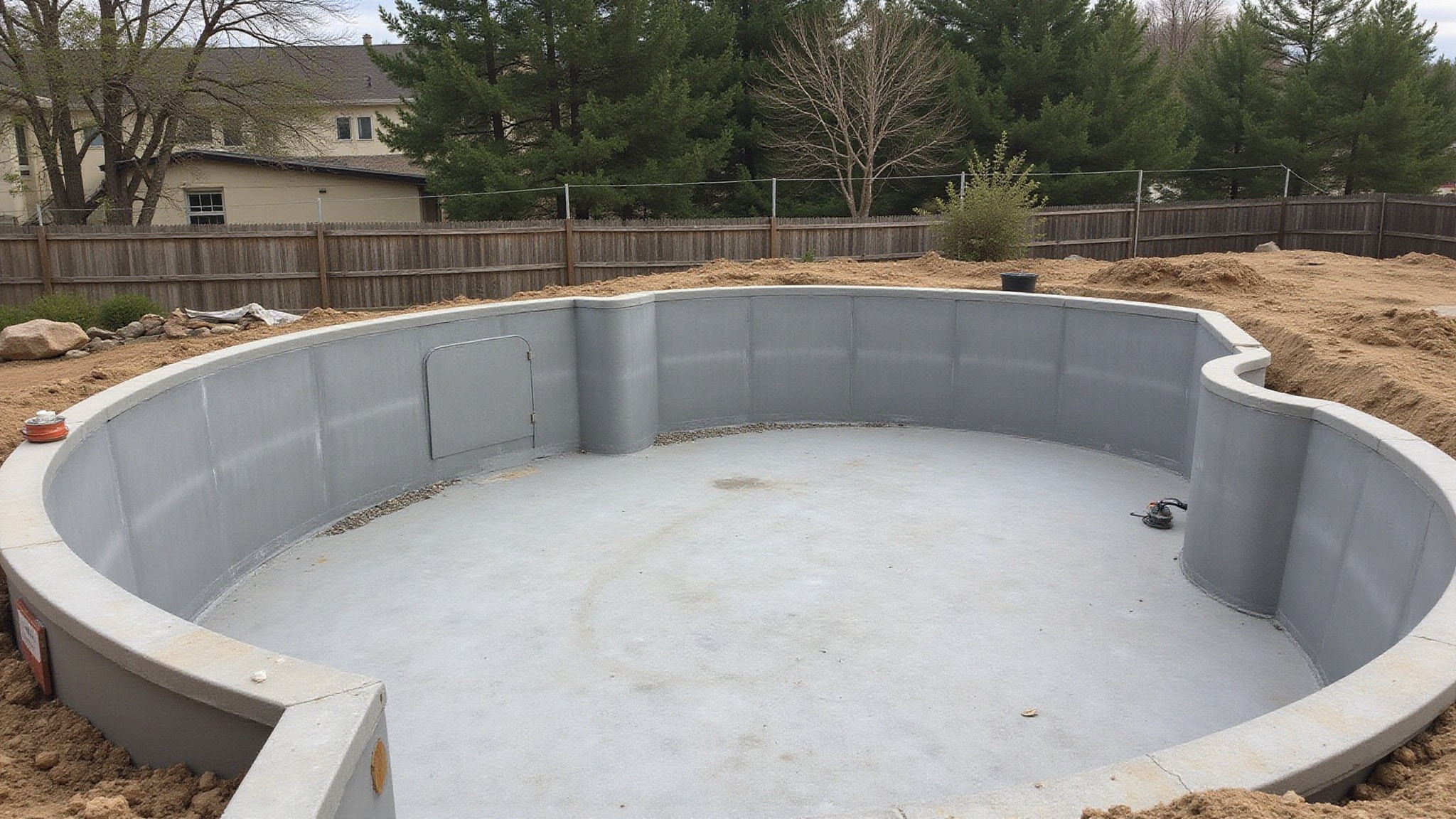
Gunite is a dry blend of cement and sand that combines with water at the spray nozzle during application. Because it relies on fine particles rather than large aggregates, you can shoot it through a hose using only air pressure. Here’s what goes into it:
Gunite: a dry cement-and-sand mix that meets water at the nozzle, spraying into a seamless, high-strength concrete shell.
- Cement, the binding agent that hardens the mixture into a solid structure.
- Sand, the fine aggregate providing body and workability without clogging the hose.
- Water, added at the nozzle to activate curing right before impact.
Once sprayed and cured, this combination hardens into a dense, durable concrete shell with seamless, high-strength layers throughout.
How does a gunite pool compare to fiberglass and vinyl
A gunite pool differs from fiberglass and vinyl because it gets built entirely on-site, and that fundamental difference drives every comparison that follows. Because you construct gunite by spraying concrete over rebar, you gain complete control over shape, size, depth, and custom features, options that molded shells can’t match. Fiberglass and vinyl pools, by contrast, ship as pre-formed or pre-shaped products. That flexibility comes with higher upfront costs and longer installation timelines, but it delivers a structural shell that outlasts both alternatives.
| Attribute | Gunite | Fiberglass/Vinyl |
|---|---|---|
| Construction | On-site sprayed | Pre-formed/pre-shaped |
| Design freedom | Unlimited custom | Limited to molds |
| Lifespan | 50 to 100+ years | Shorter, liner-dependent |
You’ll pay more initially for gunite, but you’re investing in seamless durability, resurfacing longevity, and a fully customized backyard retreat that pre-manufactured pools simply can’t replicate.
What are the pros and cons of a gunite pool
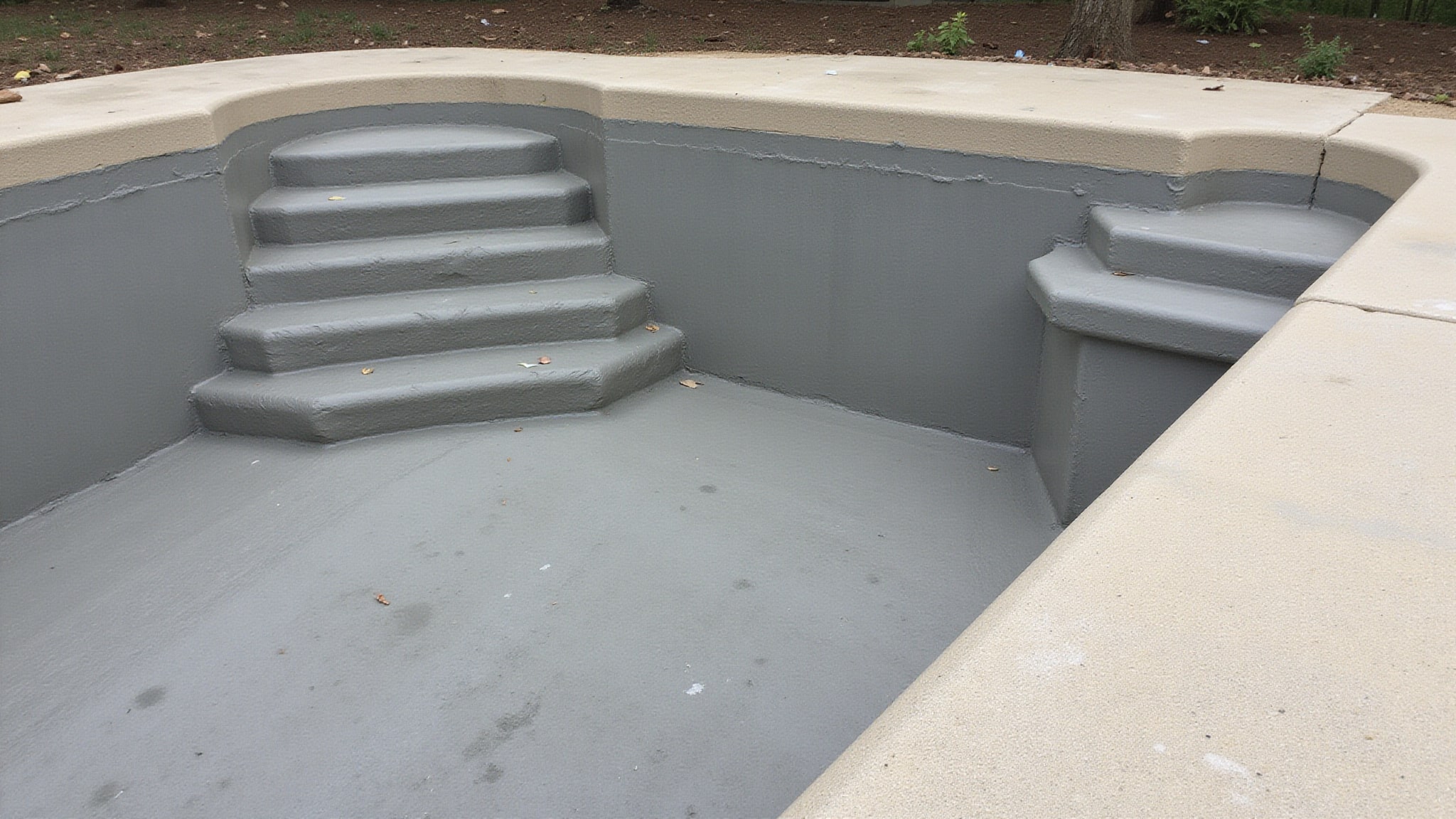
Gunite pools offer structural longevity and design freedom but cost more upfront and take longer to install. Here’s how the key advantages and disadvantages break down:
- Durability: You’ll get a seamless, reinforced shell that lasts 50 to 100+ years, outperforming sectioned poured concrete and pre-formed shells in structural strength.
- Customization: Because it’s sprayed on-site over rebar, you can build virtually any shape, depth, or feature, including waterfalls, infinity edges, and spas, without pre-formed limitations.
- Cost and timeline: You’ll pay $40,000 to $120,000+ and wait three to six months, with a 28-day cure and resurfacing every 10 to 15 years.
Weigh these factors against your budget, timeline, and design ambitions.
How much does a gunite pool cost
A gunite pool costs between $40,000 for basic designs and past $120,000 for elaborate designs loaded with custom features. Expect a standard 14′ x 28′ pool to run up to $100,000, averaging $100 to $280 per square foot. Labor typically accounts for one-third of your total, reflecting the labor-intensive spray application and rebar work. Historically, projects ranged $55,000 to $100,000, but modern turnkey installations rarely dip below $100,000. You’re paying more upfront than with vinyl or fiberglass, yet that investment buys long-term value through exceptional durability and timeless design appeal. When you factor in a 50-to-100-year lifespan, the per-year cost becomes far more reasonable.
How do you choose a gunite pool builder
Choose a gunite pool builder by evaluating technical competence, portfolio, and warranty coverage before signing any contract. Behind every long-lasting gunite pool stands a builder who understands the technical demands of spray application, rebar reinforcement, and proper curing. Since gunite pools require a 28-day curing period and precise nozzle mixing, you can’t afford to hire based on price alone.
A gunite pool’s 50-year lifespan depends on the builder’s mastery of spray application, rebar reinforcement, and proper curing.
- Verify experience: Confirm the builder has completed custom gunite projects, since freeform shapes and features like infinity edges demand specialized spray-gun expertise.
- Review warranties: Strong structural and finish warranties protect your investment against cracking, seam failure, or premature resurfacing.
- Check licensing and references: Ensure proper permitting, insurance, and verifiable client feedback.
Selecting carefully ensures your pool’s seamless shell delivers 50-plus years of durability.
Conclusion
What makes gunite worth understanding is that the method itself is what buys the freedom. Nothing is moulded in a factory and delivered, so the shell takes whatever form the property and the owner call for, and it is that same seamless construction that carries it through decades. The trade is time and cost, and neither is small. If you want to know whether gunite is the right answer for your backyard, Cristallo Pools builds custom concrete and gunite pools across South Florida and will talk it through before anything is committed.
Understanding Gunite Pools
A gunite pool is built on site from a steel framework sprayed with a concrete mixture, which is what gives it the strength and freedom to take almost any shape. That construction method is why gunite suits custom designs, spas, and features that pre-formed shells cannot match, and why a well-built one lasts for decades. Choosing a licensed, experienced builder is the key to getting the most from the method, and a consultation is the natural first step to see what gunite could do for your yard.
Call Today and Design a Pool Made for You
Gunite pools stand out for durability, flexibility, and true custom design, all backed by decades of construction experience. At Cristallo Pools in Palm Beach Gardens, FL, our skilled team delivers dependable New Pool Construction built around your lifestyle and outdoor space. Call +1 (561) 766-0353 today and turn your backyard into a private retreat.
Frequently Asked Questions
What sets a gunite pool apart from other types?
Gunite is built on site by spraying a concrete-and-sand mixture over a steel framework, rather than dropped in as a pre-formed shell. That method lets it take any shape, depth, or size and support custom features. It is prized for strength and design freedom, which is why it dominates the custom pool market.
What credentials should I expect a gunite builder to hold in Florida?
At minimum, a Florida pool or building contractor license, which you can verify on public record. Proper licensing shows the builder is authorized for the work and accountable for it. Reviews, a portfolio, and any industry recognition are worth checking alongside the license.
Can gunite be used to build spas as well as pools?
Yes. The same on-site construction method used for the pool shell is used for spas, whether built into a new pool or added to an existing one. That is part of why gunite is so flexible, since the pool and spa can be shaped as one connected design.
Is gunite a good choice for a warm climate like Florida?
Yes. Gunite holds up well to year-round use and the sun, salt air, and rain common in warm coastal climates, especially with quality finishes and regular care. Its durability and design freedom make it a popular choice for custom pools in regions like South Florida.
Can I speak to someone before committing to a project of this scale?
Yes. A consultation lets you discuss your ideas, budget, and yard with a builder before any commitment. It is a normal first step for a project this size, and it helps you understand the scope and cost before deciding to move forward.
How can I verify a builder’s gunite work is high quality?
Look for independent signals like reviews, industry awards, and a documented portfolio of completed projects, along with proper licensing. Work that has been recognized or assessed by others, plus pools that have lasted well over time, is a good sign of quality.
Does a gunite project cover more than just the pool shell?
Usually, yes. A full gunite project typically includes the shell plus tile, coping, decking, lighting, and often a spa, landscaping, or water features. Together these turn the pool into a finished outdoor space rather than just a body of water.