Pool resurfacing at Cristallo Pools replaces the worn interior finish of an existing pool, and pool deck resurfacing renews the surface around it. Resurfacing fixes rough, stained, or cracked plaster and updates the look with a new pebble, quartz, or plaster finish. Most resurfacing projects run one to three weeks depending on pool size and finish.
What Pool Resurfacing Is
Pool resurfacing replaces the interior finish that lines the pool shell, the layer that water touches and that wears over time. The old finish is chipped out, the shell is prepped, and a new finish is applied, then the pool is refilled and balanced. Cristallo Pools resurfaces with finishes including PebbleTec, Wet Edge, NPT, and BioDesign. Resurfacing is the most common single pool project because every plaster and aggregate finish wears out on a predictable cycle and needs replacing, usually every 10 to 15 years.
Signs Your Pool Needs Resurfacing
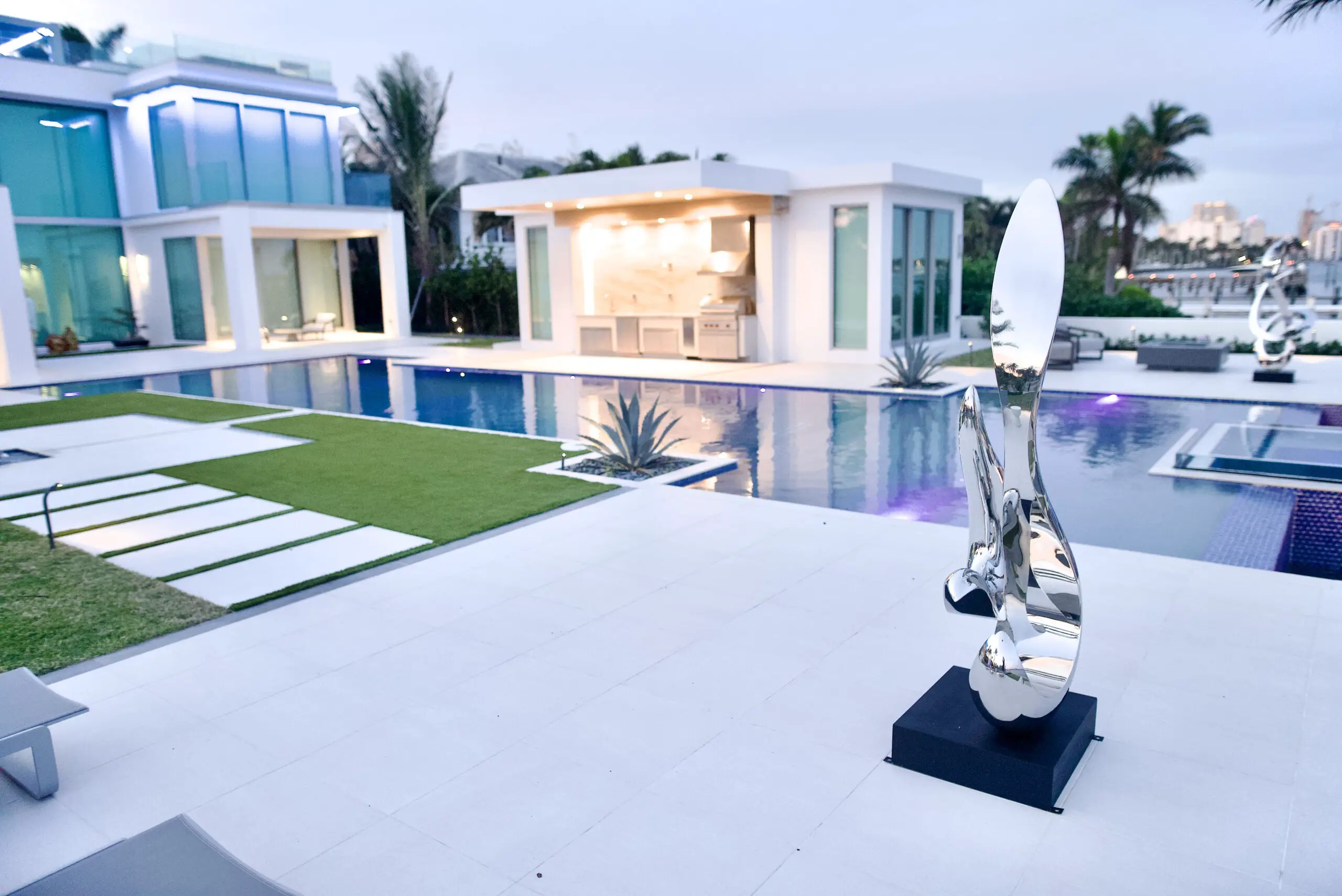
A pool needs resurfacing when the finish is rough, stained, flaking, or showing the shell underneath. Common signs are a surface that feels like sandpaper underfoot, persistent stains that do not brush off, plaster that chips or flakes into the water, exposed aggregate or gunite, and a finish that has lost its color. Rough or failing plaster also makes the pool harder to keep clean and balanced. Most finishes show these signs 10 to 15 years after the last resurfacing.
Pool Finishes We Install
Cristallo Pools resurfaces in three finish families: plaster, quartz aggregate, and pebble, each with a different texture, look, and service life. Plaster is the traditional and lowest-cost finish. Quartz aggregate adds durability and stain resistance with a smoother feel than pebble. Pebble finishes such as PebbleTec last longest and hide water chemistry better, at a higher upfront cost. The right finish is a trade-off between upfront cost and how many years it lasts.
Plaster Vs. Quartz vs. Pebble: Which Is Right for You?
Finish | Service life | Relative cost | Best for |
|---|---|---|---|
Plaster / marcite | 7 to 12 years | Lowest | A budget resurfacing on a standard pool |
Quartz aggregate | 12 to 15 years | Mid | A balance of durability, feel, and stain resistance |
Pebble (e.g. PebbleTec) | 15 to 20 years | Highest | Longest life and the lowest cost per year over time |
Plaster is the lowest upfront cost but the shortest-lived finish. Pebble costs the most to install but often the least per year of service life, which is why many Palm Beach County homeowners choose it. Quartz sits between the two. We walk through the trade-off during the on-site assessment so the finish matches your budget and how long you plan to keep the pool.
Pool Deck Resurfacing
Pool Deck Resurfacing renews the surface around the pool and is often done at the same time as the interior finish. The deck is the concrete or paver area surrounding the pool, and it cracks, stains, and fades on its own cycle. We resurface decks in cool-deck textures, overlays, pavers, and natural stone. Deck resurfacing in South Florida runs an estimated $5 to $14 per square foot depending on the finish. Bundling the deck with an interior resurfacing saves a second mobilization because the pool is already drained and the crew is on site.
How Resurfacing Works, Step by Step
Resurfacing runs in six stages from drain to refill, and takes an estimated one to three weeks depending on pool size and finish.
- Drain the pool and inspect the shell for cracks or hollow spots.
- Chip out the old finish and repair any structural damage found
- Prep and bond-coat the shell
- Apply the new finish, plus waterline tile or coping if included.
- Refill the pool.
- Balance the water and complete the finish startup.
A full chip-out matters: skipping it is how low-bid resurfacing jobs fail within a year or two. Pebble and quartz finishes need a careful startup over the first weeks to cure evenly, and we manage that startup as part of the project.

Resurfacing As Part Of A Larger Remodel
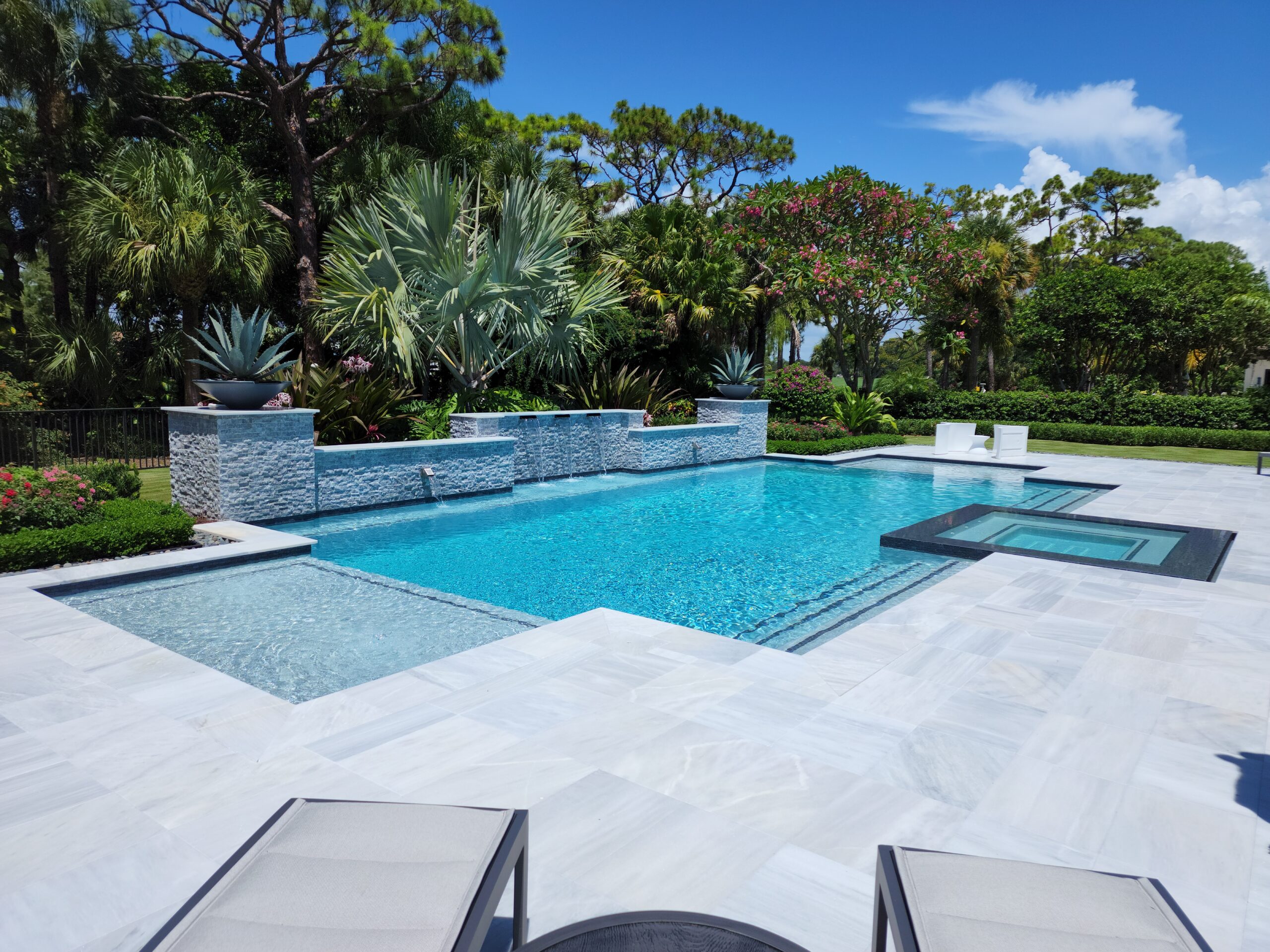
Resurfacing is often the first step in a larger pool remodel, and it pairs naturally with tile, coping, and deck work. Because the pool is already drained for resurfacing, replacing the waterline tile or rebuilding the deck at the same time avoids paying twice to drain and refill. For homeowners updating the whole pool or yard, resurfacing folds into a pool remodel or a complete backyard makeover rather than standing alone. The right scope depends on whether only the finish needs work or the surrounding space does too.
Why Draining Matters
Draining a pool to resurface carries a specific risk in Palm Beach County: the area’s high water table can push against an empty shell and lift it, so the drain has to be managed carefully. An empty pool with no water weight inside relies on a hydrostatic relief valve to equalize groundwater pressure underneath. On older pools that valve can be seized or missing, which is one reason a resurfacing crew that knows the local conditions matters more here than in drier regions. We account for the water table when planning the drain, so the shell stays put while the old finish comes off.
Resurfacing vs. a Simple Replaster: Which Is Right for You?
|
Dimension |
Replaster |
Full resurface |
|---|---|---|
|
Scope |
New plaster over the same surface type |
New finish, full chip-out, optional finish change |
|
Finish change |
Stays plaster |
Can switch to quartz or pebble |
|
Service life |
7 to 12 years |
Up to 10 to 15 years with pebble |
|
Best for |
A like-for-like refresh on a plaster pool |
Upgrading the finish or fixing a worn shell |
|
Relative cost |
Lowest |
Varies by finish |
A replaster is the right choice for a like-for-like refresh when the pool is already plaster and the goal is the lowest upfront cost. A full resurface fits homeowners who want to switch to a longer-lasting quartz or pebble finish or whose shell needs more than a new coat. We inspect the shell during the assessment and recommend the path that fits.
Pool Videos

0:13
0:07
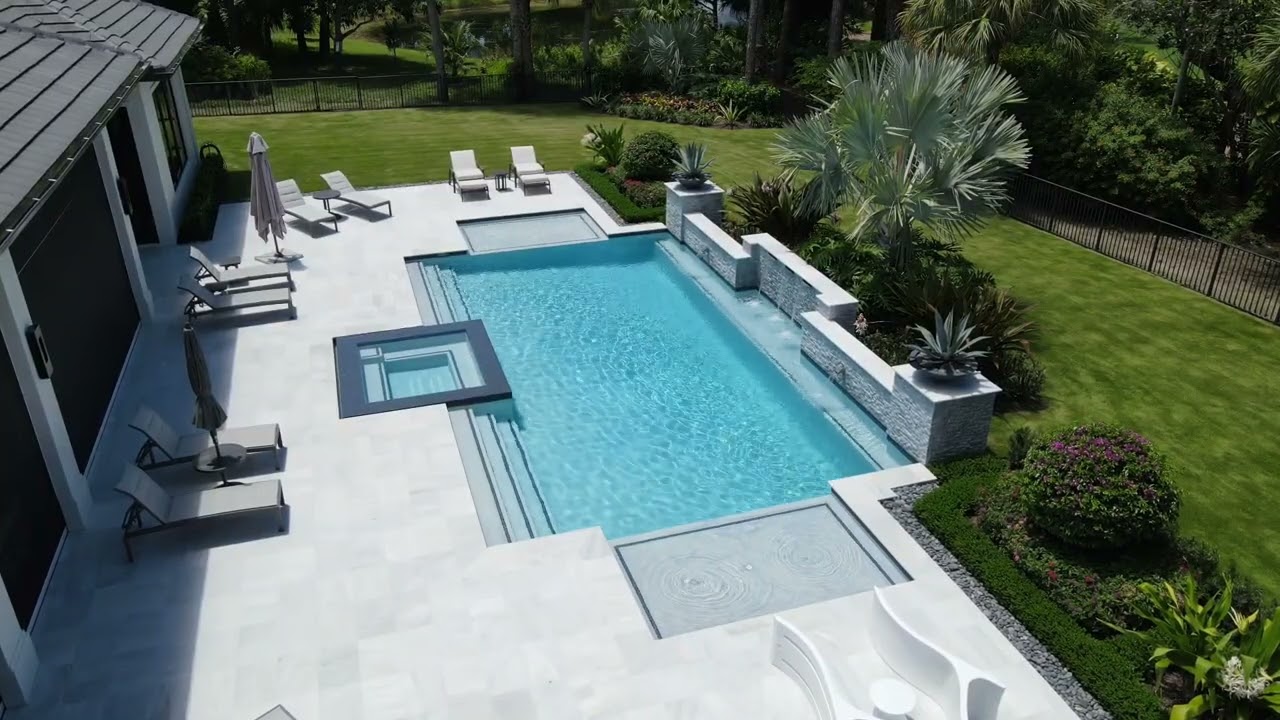
0:24
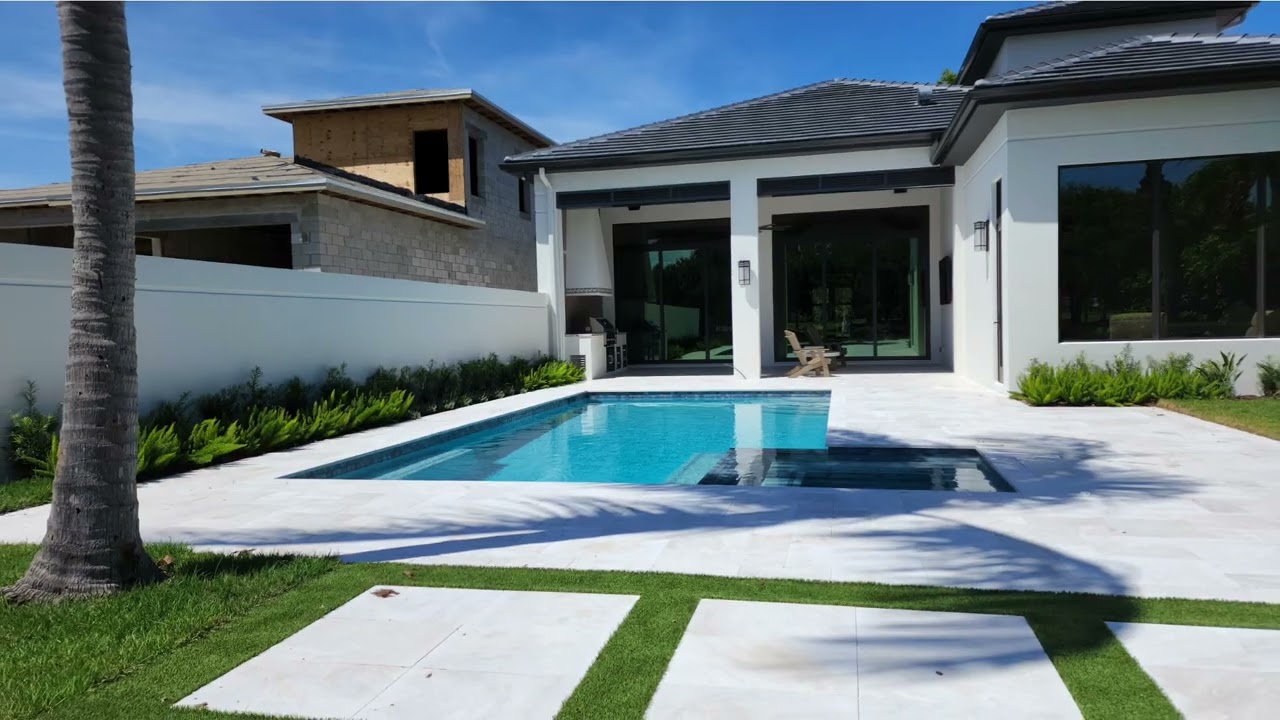
0:46
Why Choose An Experienced Pool Resurfacing Team
Cristallo Pools has resurfaced and built custom pools in Jupiter and the surrounding area since 2011. The company holds Florida licenses CPC1458452 and CBC 1255924 and was recognized with the PHTA International Award of Excellence in 2025 and a Pinnacle Award in 2024. Every resurfacing project is managed in-house from the on-site assessment through the finish startup, with structural repairs handled by the same team that applies the finish.
Where We Resurface Pools
Cristallo Pools resurfaces pools and decks across Palm Beach County and Martin County, including Jupiter, Palm Beach Gardens, Palm City, Lake Worth, Delray Beach, Boynton Beach, and West Palm Beach. The facility is located at 14701 Walgreens Dr, Suite 1, Jupiter, FL 33478.

 Taylor
Trustindex verifies that the original source of the review is Google.
From start to finish, Cristallo Pools made the entire pool building process seamless. The crew was on time, courteous, and kept us in the loop every step of the way. The end result speaks for itself, we couldn’t be happier with our backyard transformation. JohnHello, I cannot say enough about Cristallo pool/backyard concepts From initial consult to concept and design. the company is Professional, cutting edge. Prompt and reliable, explaining the step-by-step process for the pool of your dreams. I worked directly with the owner Scott Miller, while other pool companies would show me a portfolio of the pools that they could build, which really limited my options Scott allowed my wife and I to custom design what we wanted we did not want a one size fits all pool. Scott and his team at Cristallo Nailed it I Highly recommend them for your dream pool
 EricaCristallo Pool resurfaced my pool. It looks amazing! They were professional, communicated well and were conscientious with my property. This was a project I didn't put a lot of thought into, but they took care of everything and offer services that many other companies do not. I am very pleased with the results and with their workmanship.
 JakeCristallo built a dream backyard. Over and above expectations. Recommended over and over again. A++ Job
 ROBINI highly recommend…they listen to to your need and accommodate you lifestyle with the custom design
 ValerieWe’re so glad we found Scott and his team to create a backyard we never want to leave. Our pool is gorgeous. Most of all it’s functional for our lifestyle. We didn’t want a basic pool. Scott knew exactly what we were looking for. The design and craftsmanship are stunning and more than we ever dreamed of! We’re absolutely thrilled with how well our pool and backyard turned out!
 KathrynDoes Amazing work!!😍😍😍😍
 MelissaA trustworthy professional company that takes great care of all our pool needs! Always there when we need them! Our pool has never looked so GOOD!!!!!!!
Explore Our Services By Area
Frequently Asked Questions:
How Long Does Pool Resurfacing Take?
Most resurfacing projects take one to three weeks, depending on pool size and finish. A small pool with a plaster finish is faster than a large pool in pebble that also needs tile or coping work. You receive a timeline with your written estimate.
How Often Does a Pool Need to Be Resurfaced?
Most pools need resurfacing every 10 to 15 years, though it varies by finish. Plaster lasts about 7 to 12 years, quartz 12 to 15, and pebble 15 to 20. Water chemistry and maintenance affect how long a finish lasts.
What Pool Finishes Do You Offer?
Cristallo Pools resurfaces with finishes including PebbleTec, Wet Edge, NPT, and BioDesign, across plaster, quartz aggregate, and pebble families. Each differs in texture, color range, and service life. The right finish depends on your budget and how long you plan to keep the pool.
What Is the Difference Between Resurfacing and Replastering?
Replastering applies new plaster over the same surface type. Resurfacing is a full chip-out and new finish that can also switch the pool to a longer-lasting quartz or pebble finish. Resurfacing is the better choice when changing finishes or when the shell needs more than a fresh coat.
Do You Resurface Pool Decks Too?
Yes. Cristallo Pools resurfaces pool decks in cool-deck textures, overlays, pavers, and natural stone, often at the same time as the interior finish. Deck resurfacing runs an estimated $5 to $14 per square foot depending on the finish.
Can You Change My Pool Finish Color During Resurfacing?
Yes. Resurfacing is the point at which the finish color changes, since a new finish is applied to the whole shell. Each finish family comes in a range of colors, and darker finishes change the look of the water. We review color options during the assessment.
Do You Repair Cracks and Structural Damage During Resurfacing?
Yes. The shell is inspected once the pool is drained, and structural cracks or hollow spots are repaired before the new finish goes on. Repairs are quoted separately because they cannot be priced until the shell is exposed.
Start Your Pool Resurfacing
Schedule an on-site assessment to get a written, itemized resurfacing estimate for your pool and deck. Call (561) 766-0353 or request your estimate online.
Interior finishes and pool decks renewed by a licensed team, most projects in one to three weeks.