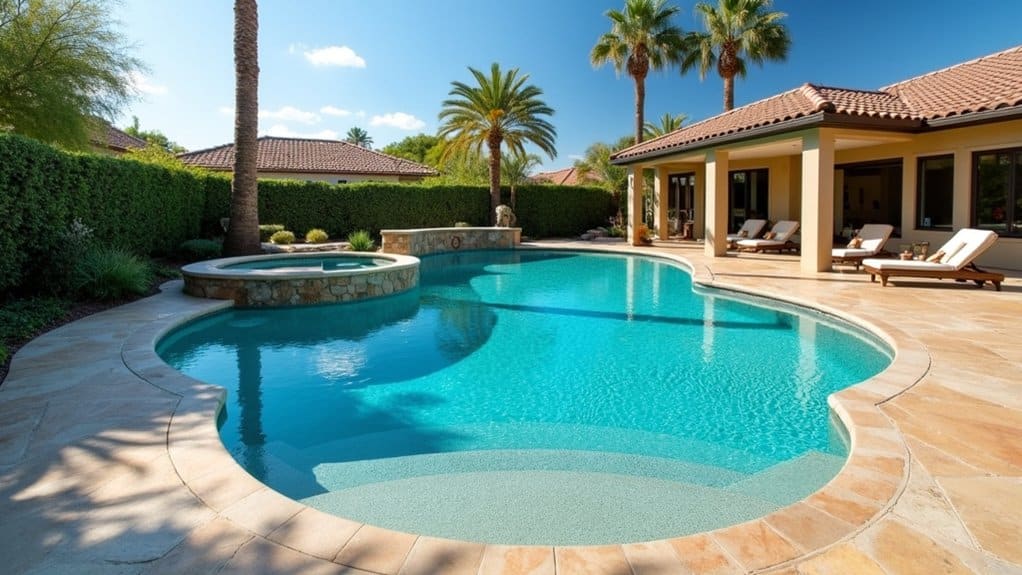
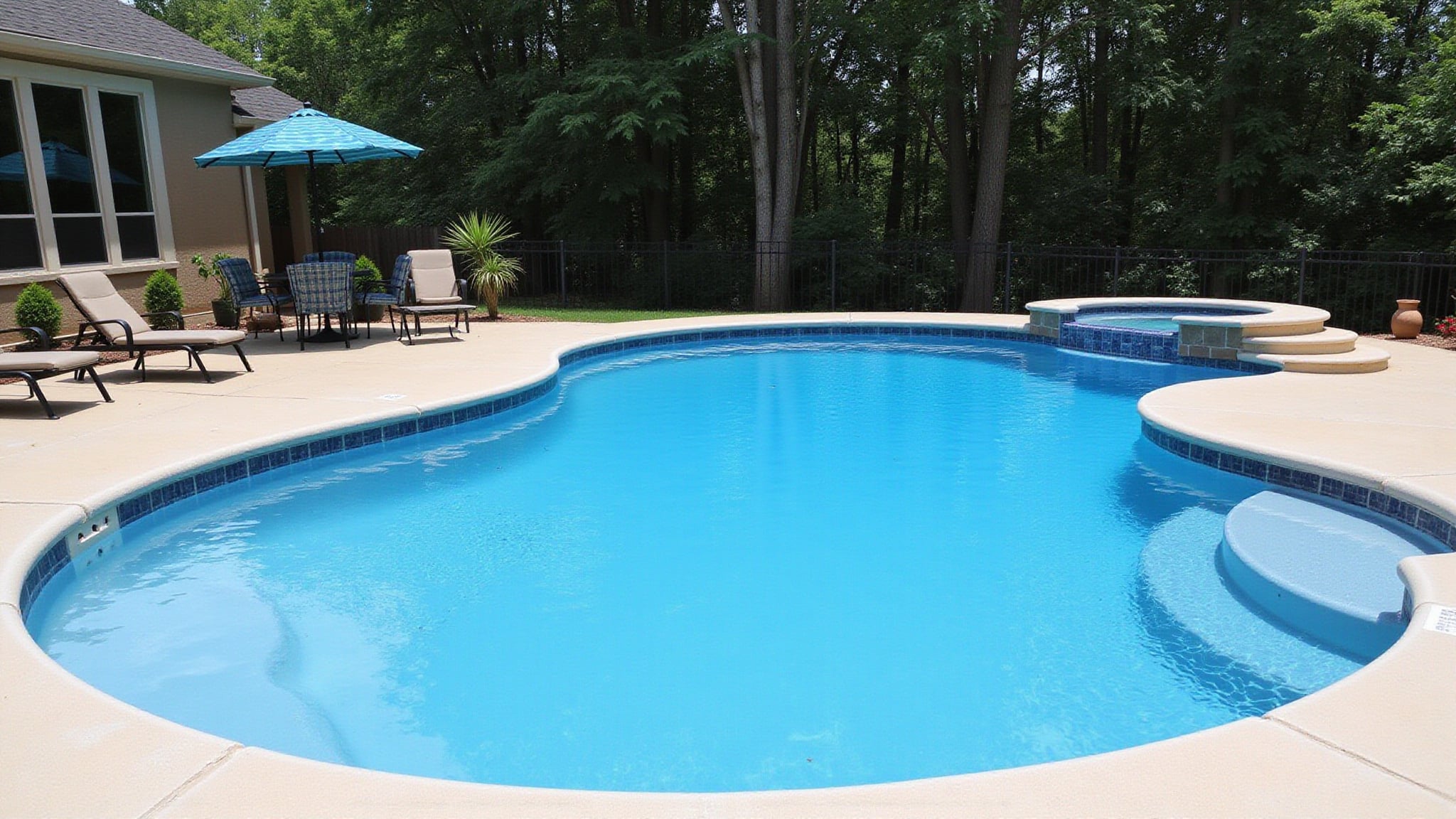
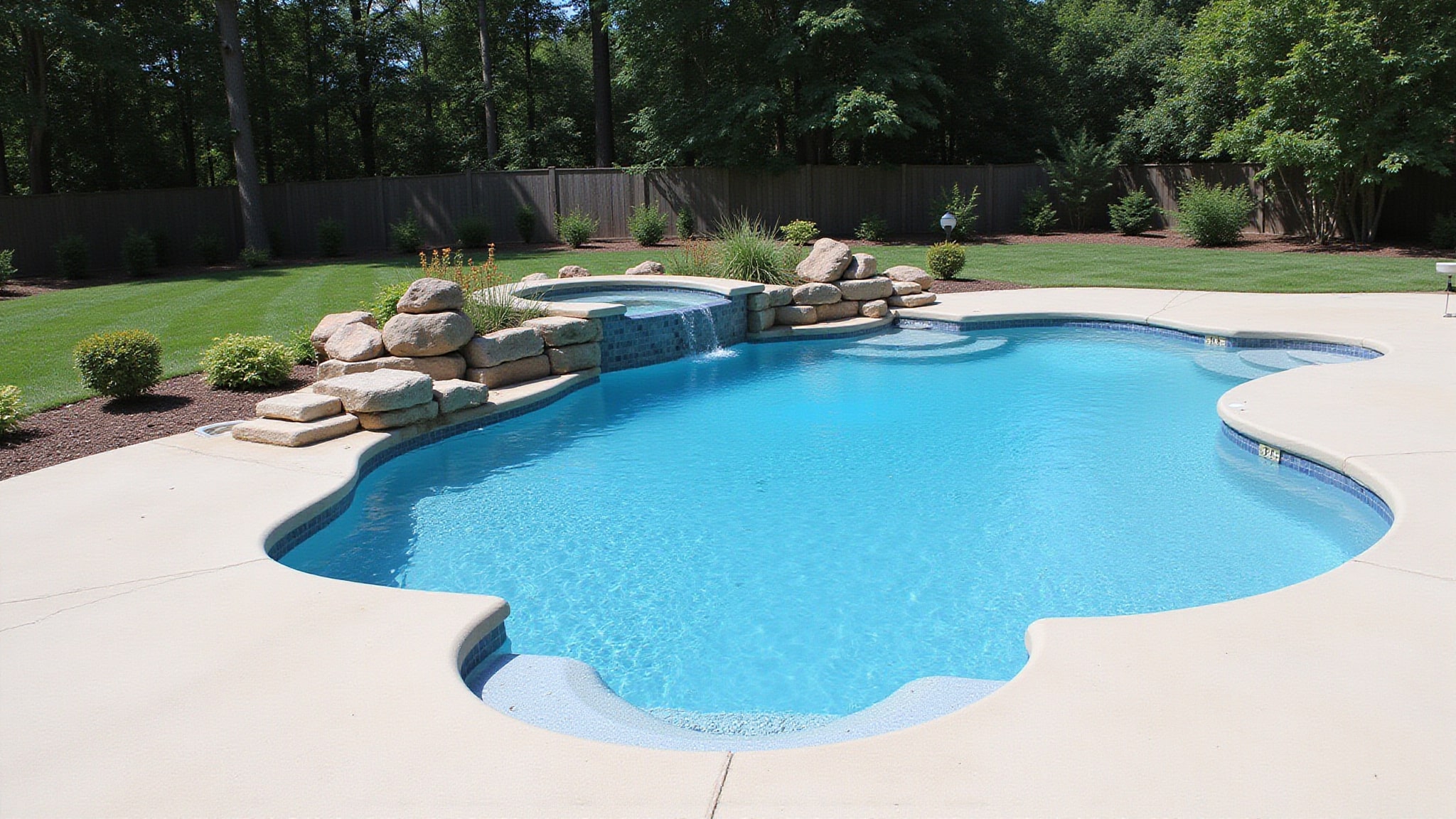
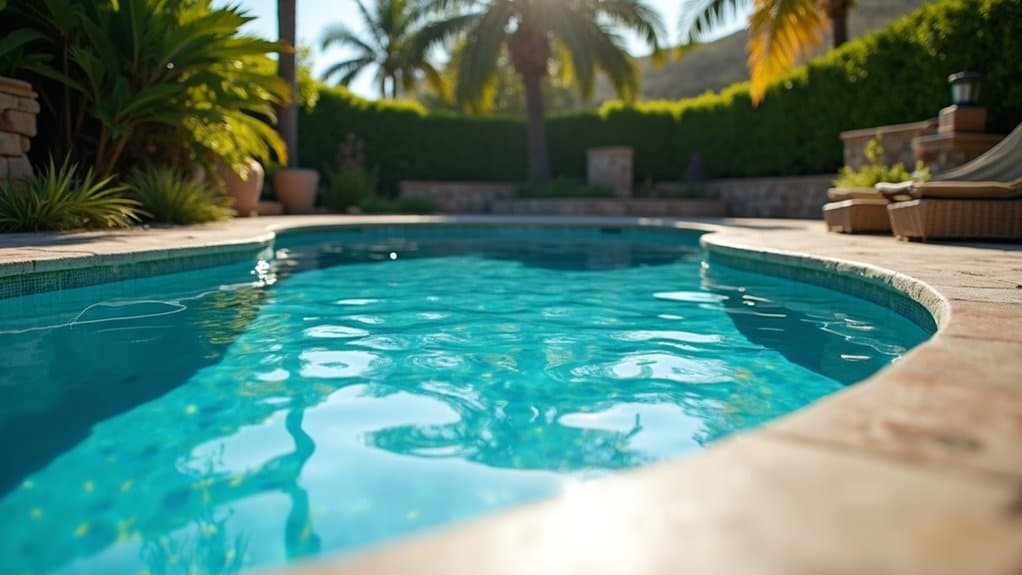
Pool grottos, slides, and rock features turn your gunite pool into a private resort. A grotto’s a semi-enclosed, cave-like retreat, roughly four feet high by two feet deep, with water cascading over the entrance. You can add overhead or side-mounted slides, plus natural stone, sculpted concrete, or faux rock features. Basic grottos start around $10,000, while high “wow” designs run $20,000 to $40,000. Let’s break down how each feature’s built, priced, and planned.
Key Takeaways
- Pool grottos are semi-enclosed, cave-like retreats, typically four feet high by two feet deep, with water cascading over the entrance.
- Slides integrate as overhead placement on the structure’s face or side-mounted to preserve the shaded interior retreat.
- Gunite’s sprayed-concrete construction sculpts into virtually any contour, making it ideal for grotto and rock features.
- Rock materials include natural stone, engineered concrete sculpted to resemble stone, or prefabricated modular faux rock.
- Basic grottos start around $10,000, high “wow” designs range $20,000 to $40,000, with $300 to $500 annual maintenance.
What are pool grottos, slides, and rock features
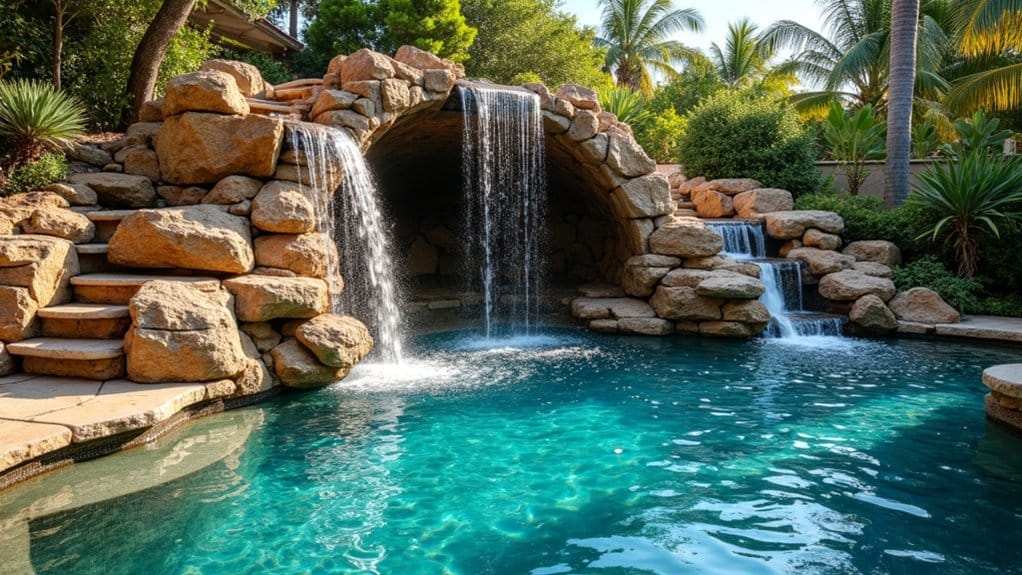
Pool grottos, slides, and rock features are decorative and functional additions that give your pool a resort-style character. A pool grotto is a semi-enclosed, cave-like structure built directly into your pool to create a shaded, private retreat. Water typically cascades over the entrance, enhancing that secluded, resort-style atmosphere. You’ll find a basic grotto measures roughly four feet high by two feet deep, offering a cavernous space where you can swim in, swim through, or sit inside comfortably. Most grottos include a waterfall, but yours can function without one.
You can integrate a slide overhead or at the side, combining a cascading waterfall with an active play element. Rock features extend this design, using giant formations and decorative concrete that matches your grotto material. Together, these elements deliver privacy, shade, and imaginative play, complementing lagoon-type pools and giving your backyard true resort-style character.
What is a pool grotto and how is it built
A pool grotto is a semi-enclosed, cave-like structure integrated directly into the pool to deliver a shaded, private retreat. Water typically cascades over the entrance, enhancing the secluded, resort-style atmosphere. A simple design measures roughly four feet high by two feet deep, letting you swim in, swim through, or sit inside.
You’ll construct it mostly from artificial rock. Your options include natural stone, engineered concrete sculpted to resemble stone, or prefabricated modular faux rock, the most affordable choice. Pre-cast concrete offers greater design flexibility but almost always costs more than natural stone.
You can enhance the structure with seating, lighting, or a therapy spa. Adding a pool slide overhead or at the side combines active play with the shaded, relaxing environment.
What types of pool slides can you add
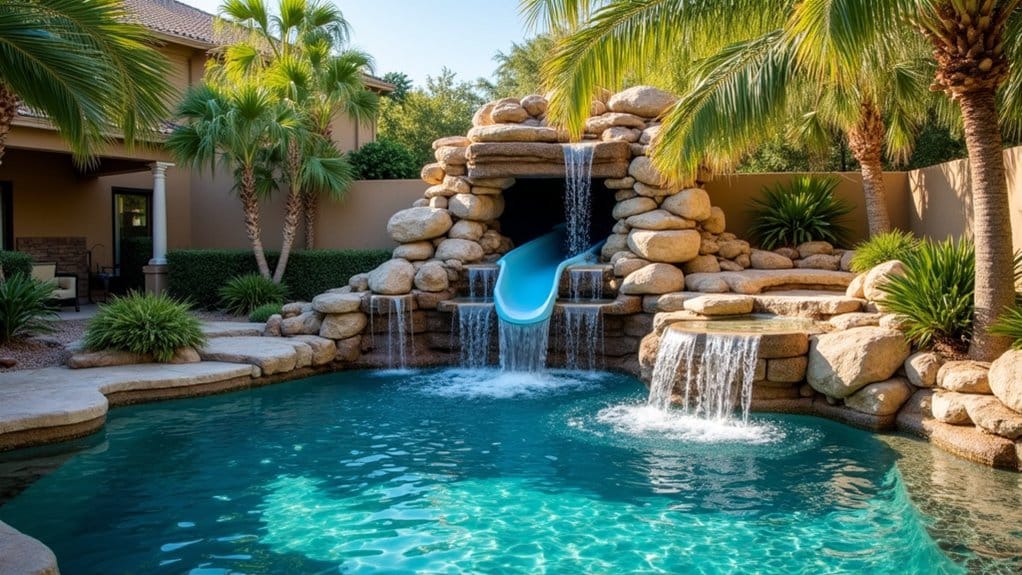
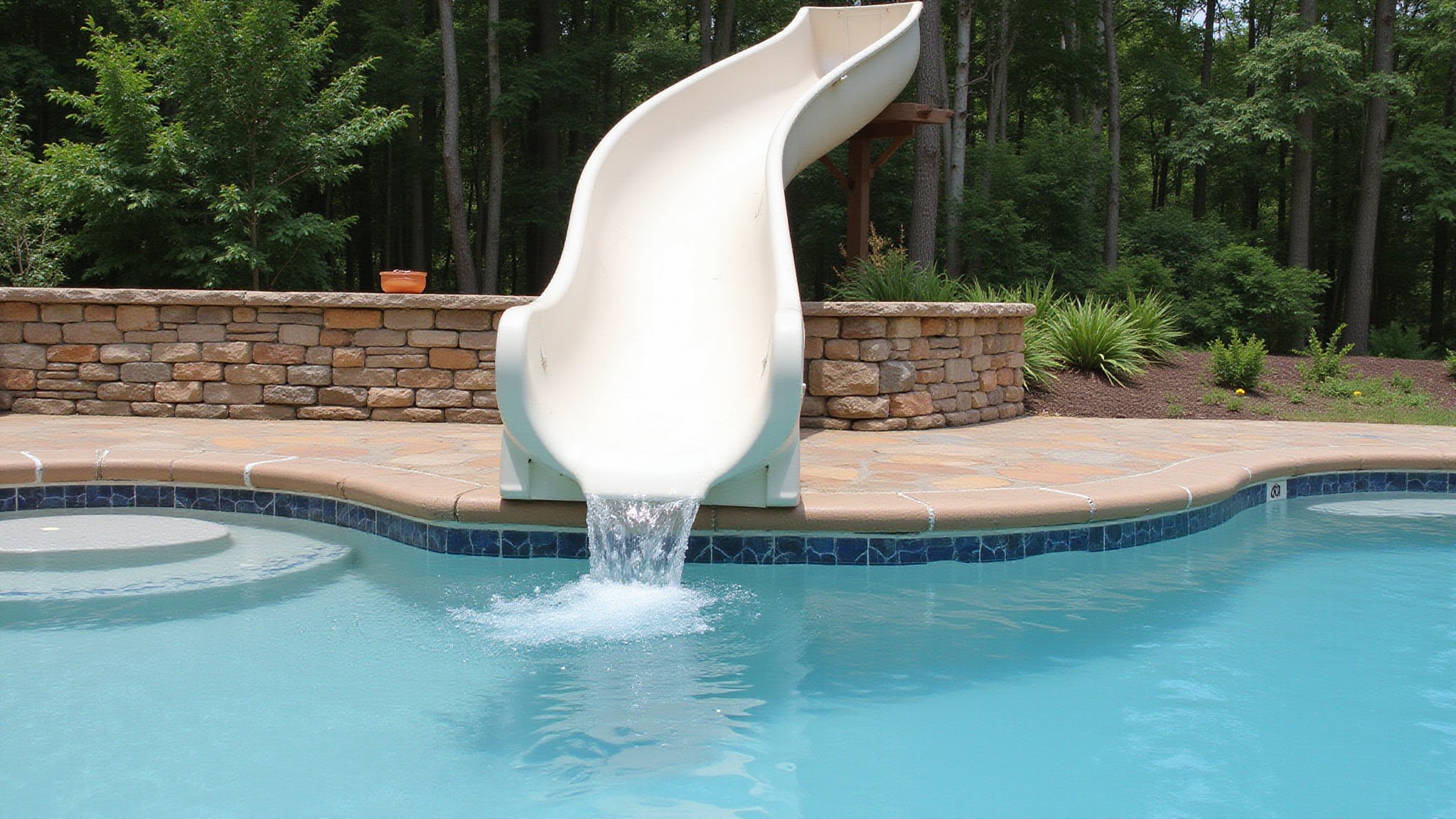
You can add an overhead slide or a side-mounted slide to your grotto, creating a combined feature that pairs a cascading rock waterfall with an active descent. This configuration delivers “the works”: water pouring over the cavernous entrance while swimmers glide down into the pool below.
You’ll choose placement based on your grotto’s dimensions and surrounding rock formations. An overhead slide integrates directly with the structure’s face, while a side-mounted slide preserves the shaded interior retreat. Either option complements lagoon-type pools beautifully.
Keep in mind that slides introduce distinct maintenance considerations compared to the grotto itself, so factor inspection and upkeep into your design decisions when selecting the right slide configuration.
What rock and waterfall features work in a gunite pool
Rock and waterfall features that work in a gunite pool include natural stone, engineered concrete sculpted to resemble stone, and prefabricated modular faux rock, which is your most affordable option. Because gunite’s sprayed-concrete construction can be sculpted into virtually any contour, it’s the ideal foundation for integrating these features into your pool. Pre-cast concrete gives you greater design flexibility, though it almost always costs more than natural stone. For custom rock features, you can build a grotto, typically four feet high by two feet deep, with water cascading over the entrance for that secluded, resort-style atmosphere. Add a waterfall pouring over the cavernous opening, and you’ve created a shaded retreat where swimmers can swim in, swim through, or sit inside. Giant rock formations can incorporate matching decorative concrete for cohesion.
How much do these features add to pool cost
Adding luxury pool features like grottos and rock formations impacts your budget based on size, style, configuration, and materials.
Luxury pool features like grottos and rock formations shape your budget through size, style, configuration, and materials.
A basic grotto with a love bench starts around $10,000. If you want a distinctive design with a high “wow” factor, expect to pay between $20,000 and $40,000. Large, custom-built pools incorporating rock features or grottos typically exceeds $25,000.
Your material choice drives costs too. Prefabricated modular faux rock’s the most affordable option, while pre-cast concrete offers greater design flexibility but almost always costs more than natural stone.
Don’t forget maintenance. Budget $300 to $500 annually for grotto-specific upkeep, since costs vary considerably depending on your market and region.
How do you plan grottos and rock features
Plan a grotto by starting with its core dimensions: a simple structure runs about four feet high by two feet deep, giving you enough room to swim in, swim through, or sit inside. From there, choose your material: natural stone, engineered concrete sculpted to resemble stone, or prefabricated modular faux rock, the most affordable option. Decide whether water will cascade over the entrance, since a waterfall reinforces the secluded, resort-style feel of a naturalistic pool. Map out enhancements next: a love bench, ground-level lighting, a therapy spa, or even a grotto bar. If you want “the works,” position a slide overhead or at the side. Finally, confirm the configuration complements your pool’s shape, especially lagoon-type designs, and budget for annual inspections and upkeep.
Bringing Grottos and Rock Features to Life
Grottos, slides, and rock features can turn a standard pool into a backyard centerpiece, and they work best when designed into the plan rather than added as an afterthought. A naturalistic design should suit the home and setting, and features like a hidden spa or waterfall are very achievable with the right builder. Whether your yard is large or modest, the scale can be tailored, so it is worth reviewing a design before committing.
Create a Resort-Style Backyard Retreat
Grottos, waterfalls, fire features, and negative-edge designs turn any pool into a luxury destination right at home. At Cristallo Pools in Palm Beach Gardens, FL, our experienced team provides trusted Design and Planning with craftsmanship, creativity, and a fully personalized approach. Call +1 (561) 766-0353 today and start designing your private oasis.
Frequently Asked Questions
Can rock and water features be added to a pool that already exists?
They can, though the approach differs from designing them into a new build. Adding features to an existing pool is usually done through a remodel, which may involve reworking the surrounding deck and plumbing. A builder can assess whether your current pool and space can support what you have in mind.
Does a naturalistic rock design suit every property, or only certain styles?
It depends on the home and the setting. A naturalistic rock design can look stunning with the right architecture and landscaping, but it can feel out of place against a very modern or formal home. The design should complement the property rather than fight its style.
Is a therapy spa inside a grotto something a builder can integrate?
Yes, and it is one of the more popular combinations. A spa can be built into or beside a grotto so it feels like a private retreat, with the plumbing and structure planned together. Integrating it during the design stage gives the cleanest result.
Do features like these need special attention once they are built?
Somewhat. Rock features, waterfalls, and grottos have pumps, jets, and surfaces that benefit from regular cleaning and occasional servicing to keep them running and looking their best. It is worth building that upkeep into your routine, and a maintenance plan can handle it for you.
How ambitious can a rock and water design realistically get?
Very. With gunite construction, designs can range from a simple rock accent to elaborate multi-level grottos, waterfalls, slides, and caves. The main limits are your budget, your space, and how the design fits the property, so an experienced builder can help you balance ambition with practicality.
Is it possible to see a feature design before committing to it?
Yes. Reputable builders provide design renderings and can show completed projects with similar features, so you can see how the concept translates into reality before you approve it. Reviewing a visual alongside real examples helps you commit with confidence.
Are these features suited only to very large backyards?
No. While big yards allow the most dramatic designs, rock and water features can be scaled to fit smaller spaces too. A compact waterfall, a single rock accent, or a modest grotto can add character without overwhelming the yard, since scale is decided at the design stage.