ASHRAE 62.1 requires a minimum outdoor air rate of 0.48 cfm/ft² for pool and deck areas, with spectator zones needing 0.06 cfm/ft² plus 7.5 cfm per person. You’ll want to target 4, 6 air changes per hour for recreational pools and 6, 8 ACH for competition facilities. Maintain relative humidity at 50%, 60% and keep air temperature 2°F, 4°F above water temperature. These baselines matter, but pressure control and airflow direction determine whether your system actually protects occupants from chloramine exposure.
Why Indoor Pool Ventilation Starts With Chloramine Control
When most people smell “chlorine” at an indoor pool, they’re actually detecting chloramines, volatile compounds that form when chlorine reacts with sweat, urine, body oils, and other nitrogen-containing contaminants in the water. Chloramine formation drives the core air-quality challenge in any enclosed natatorium. The CDC confirms these compounds off-gas from the water surface, irritating eyes, skin, and respiratory tracts when ventilation can’t keep pace.
You can’t solve this problem with indoor pool moisture control alone. Effective ventilation must target chloramine concentrations directly. The WHO sets gas-phase trichloramine limits at 0.5 mg/m³, while stricter research benchmarks recommend 0.3 mg/m³. ASHRAE specifies 2.5 air changes per hour to maintain those thresholds. Your ventilation system’s primary job isn’t just moving air, it’s removing chloramines before they accumulate in the breathing zone. High bather loads further accelerate chloramine production, making adequate air exchange even more critical during peak usage periods.
ASHRAE 62.1 Ventilation Rates for Indoor Pools
Because ASHRAE 62.1 sets the baseline for acceptable indoor air quality in commercial buildings, it’s the primary reference point for sizing outdoor air systems in natatoriums. Under current ashrae pool ventilation standards, you’ll find a minimum outdoor air rate of 0.48 cfm/ft² for pool and deck areas. Spectator zones use a combined approach: 0.06 cfm/ft² plus 7.5 cfm per person.
These minimums alone won’t satisfy your indoor pool hvac requirements. You’ll need to exceed them to achieve proper air distribution and contaminant control. ASHRAE-referenced designs typically target 4 to 6 air changes per hour for recreational pools and 6 to 8 for competition facilities with spectators. Maintain negative pressure, roughly 5% to 15% exhaust-to-supply imbalance, to prevent chloraminated air from migrating into adjacent spaces. Even with properly sized Pool Dehumidification Units handling most HVAC needs, source-capture exhaust systems remain essential for effective chloramine removal.
How Many Air Changes per Hour Does Your Pool Need?
To calculate indoor pool airflow requirements, use this formula: Supply CFM = Room Volume (ft³) × ACH ÷ 60. ACH reflects total supply air, outdoor plus recirculated, not outdoor air alone.
These targets aren’t standalone metrics. They work alongside dehumidification calculations, negative pressure strategies, and condensation control over glazing and cold surfaces. Dropping below 4 ACH risks inadequate circulation. Exceeding 6 ACH addresses higher occupancy or distribution challenges. Commissioning verifies that delivered airflow matches your nominal design value. Real-time monitoring systems should be in place to continuously assess chloramine levels and pollutants, enabling prompt corrective action when air quality deviates from acceptable thresholds.
Humidity and Temperature Rules for Pool Ventilation
Although airflow rates set the foundation for pool-room ventilation, humidity and temperature setpoints determine whether that airflow actually protects your building envelope. ASHRAE-based indoor pool ventilation requirements specify maintaining relative humidity between 50% and 60% RH, with 55% RH as a common design setpoint.
Humidity and Temperature Rules for Pool Ventilation
| Parameter | Target |
|---|---|
| Relative humidity | 50%, 60% RH |
| Air-to-water temperature offset | 2°F, 4°F above water temperature |
| Maximum air temperature | 86°F |
| Surface temperature threshold | Above space dew point |
| Supply air delivery | 4, 6 ACH |
You’ll keep air temperature 2°F to 4°F above water temperature to reduce evaporation and swimmer chill. Direct supply air toward glass and exterior surfaces to maintain them above dew point, preventing condensation damage.
Pressure Control: Keep Pool Air Where It Belongs
This negative pressure directly supports chloramine containment, preventing trichloramine and other disinfection byproducts from infiltrating corridors, lobbies, and occupied rooms.
Key design parameters you must coordinate:
- Balance exhaust airflow against supply and outdoor air delivery rates
- Position exhaust points at high-contaminant zones near the water surface
- Integrate dehumidification systems with pressure control sequences
- Commission pressure relationships under both occupied and unoccupied conditions
Without verified pressure control, contaminant migration occurs regardless of filtration or air change performance.
How to Direct Ventilation Air to the Breathing Zone
Every cubic foot of air your ventilation system moves is wasted if it doesn’t reach the zone where people actually breathe. ASHRAE 62.1 defines the breathing zone as 3 to 72 inches above the floor, exactly where swimmers and deck occupants stand, sit, and move. Your pool room ventilation design must deliver supply air directly into this zone, not leave it circulating at ceiling height.
Position supply diffusers at deck level to push conditioned air across occupied areas. You’ll need a minimum of 0.48 cfm/ft² of outdoor air based on pool and deck area. Direct airflow along condensation-prone surfaces at 3 to 5 cfm/ft² while keeping air velocity over water below 30 fpm. Poor distribution undermines even generous airflow rates, the breathing zone must receive your system’s best-quality air.
Indoor Pool Ventilation Mistakes That Cause Real Problems
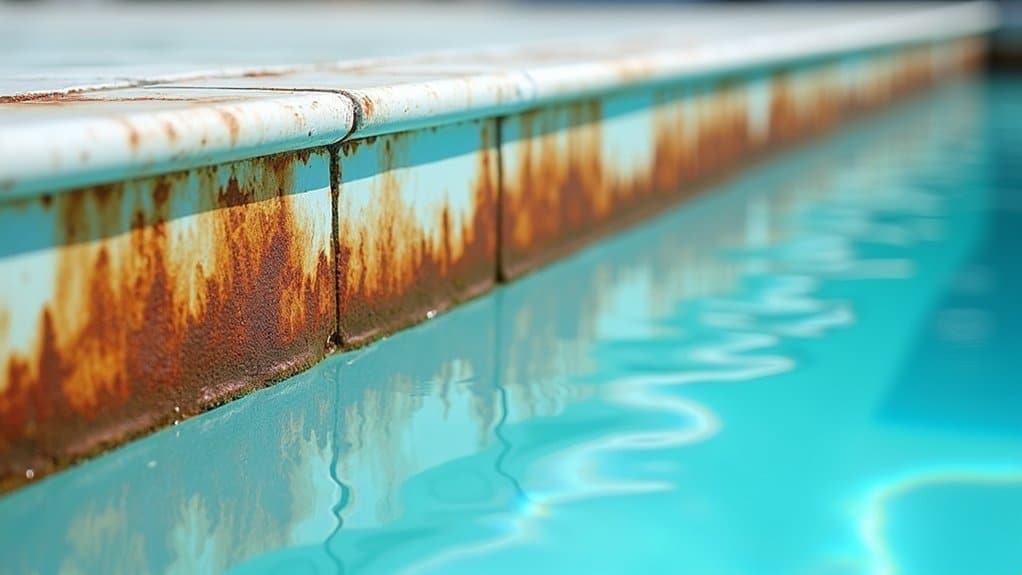
If you don’t maintain adequate air change rates, moisture and chloramines accumulate faster than your system can remove them, leading to condensation damage and poor air quality in the breathing zone. Equally critical is pressure control, your pool room should operate at negative pressure, with exhaust moving 10, 20% more air than the outdoor air supply, to prevent humid, chloramine-laden air from migrating into adjacent spaces. When either of these parameters falls short, you’ll face accelerating corrosion, persistent odors, and structural deterioration that no amount of after-the-fact remediation can cheaply reverse. Condensation issues in indoor pools can significantly exacerbate these problems. Ensuring proper air circulation and humidity control is essential to mitigate the risks associated with moisture buildup.
Inadequate Air Change Rates
When air change rates fall below ASHRAE’s recommended 4, 6 ACH for natatoriums, stagnant zones develop where condensation and chloramine concentrations climb to problematic levels. Gas-phase NCl3 can exceed the WHO guideline of 0.5 mg/m³ when supply airflow fails to reach the deck-level breathing zone (3, 72 inches per ASHRAE 62.1).
Common design failures tied to inadequate air change rates include:
- Sizing from minimum code values without accounting for actual pool activity and occupancy loads
- Ignoring spectator areas that require 6, 8 ACH for proper ventilation
- Directing supply air over water surfaces above 30 fpm, increasing evaporation and latent load
- Relying on nominal ACH calculations without verifying actual air movement patterns
Maintaining proper indoor air quality pool enclosure performance demands distribution-verified airflow, not just volume-based calculations. Understanding indoor pool dehumidifier sizing methods is crucial for optimizing the efficiency of the system. Accurate sizing can prevent excess humidity, which leads to mold growth and structural damage.
Poor Pressure Control
Poor pressure control ranks among the most overlooked ventilation failures in residential natatoriums, yet it drives some of the most destructive long-term consequences. Your pool exhaust systems should remove approximately 10% more air volume than supply systems introduce, maintaining slight negative pressure. When moisture control systems fail to achieve this balance, humid air migrates into wall cavities, accelerating hidden mold growth and structural deterioration.
| Pressure Condition | Resulting Problem |
|---|---|
| Positive pressure | Moisture driven into wall/ceiling voids |
| Positive pressure | Pool odors migrate to living spaces |
| Negative pressure (target) | Contained humidity and contaminants |
| Unbalanced exhaust | Condensation and premature corrosion |
| Malfunctioning exhaust fan | Complete pressure control failure |
You can field-verify pressure by cracking a door, air pulled inward confirms proper negative pressurization.
Call Today and Plan a Pool Built for Every Season
Indoor pools deliver year-round enjoyment, but only when built with the right design, ventilation, and finishes. At Cristallo Pools in Jupiter, FL, our skilled team delivers dependable Design and Planning built around your space, lifestyle, and luxury standards. Call +1 (561) 766-0353 today and turn your indoor pool dream into a reality.
Frequently Asked Questions
Can a Standard Home HVAC System Handle Indoor Pool Ventilation?
No, a standard home HVAC system can’t handle indoor pool ventilation. You need a dedicated system delivering 0.48 cfm/ft² outdoor air, maintaining 4, 6 air changes per hour, and holding 50%, 60% relative humidity. You’ll also need negative pressure control at 0.05, 0.15 in. w.g., corrosion-resistant components, and specialized dehumidification capacity. Standard residential equipment lacks the latent-load control, exhaust placement, and pressure balancing these environments demand.
How Does Pool Water Temperature Affect Ventilation System Sizing?
Higher water temperature increases evaporation, which directly raises your system’s latent moisture load. You’ll need greater dehumidification capacity to maintain 50%, 60% relative humidity. ASHRAE recommends keeping air temperature 2°F to 4°F above water temperature to limit evaporation, but the comfort cap of 86°F narrows that margin as water warms. You should size your system based on the actual evaporation load, not just minimum outdoor air rates.
What Energy Recovery Options Exist for Indoor Pool Ventilation Systems?
You can choose from three main recovery options: air-to-air energy recovery (ERVs capturing heat and moisture from exhaust air), refrigeration-based heat recovery (reclaiming compressor waste heat for pool-water heating and air reheat), and runaround glycol loops (transferring exhaust-air energy to pool water when airstreams can’t be co-located). ASHRAE 90.1 requires at least 50% enthalpy recovery at cooling design conditions and 60% at heating design conditions.
How Much Space Should Be Allocated for Pool Ventilation Equipment?
You’ll need to allocate enough mechanical room space to house dehumidification equipment, air handlers, outdoor air intake and exhaust components, ductwork routing, filtration, and source-capture exhaust for chloramine control. Your equipment must handle dehumidification, ventilation, and distribution simultaneously, not just outdoor air intake. You should also plan for maintenance access clearances and future servicing paths. Start equipment layout early in design to avoid costly retrofits later.
Does Ceiling Height Change How an Indoor Pool Ventilation System Works?
Yes, ceiling height directly affects your ventilation system‘s sizing and performance. Since ASHRAE-based guidance targets 4, 6 ACH for recreational pool areas, a taller ceiling increases total room volume, requiring higher supply airflow to maintain those air changes. You’ll also need to guarantee conditioned air reaches the breathing zone (3, 72 inches above deck level) effectively. However, ceiling height doesn’t change core targets like 50, 60% relative humidity or negative pressure requirements.