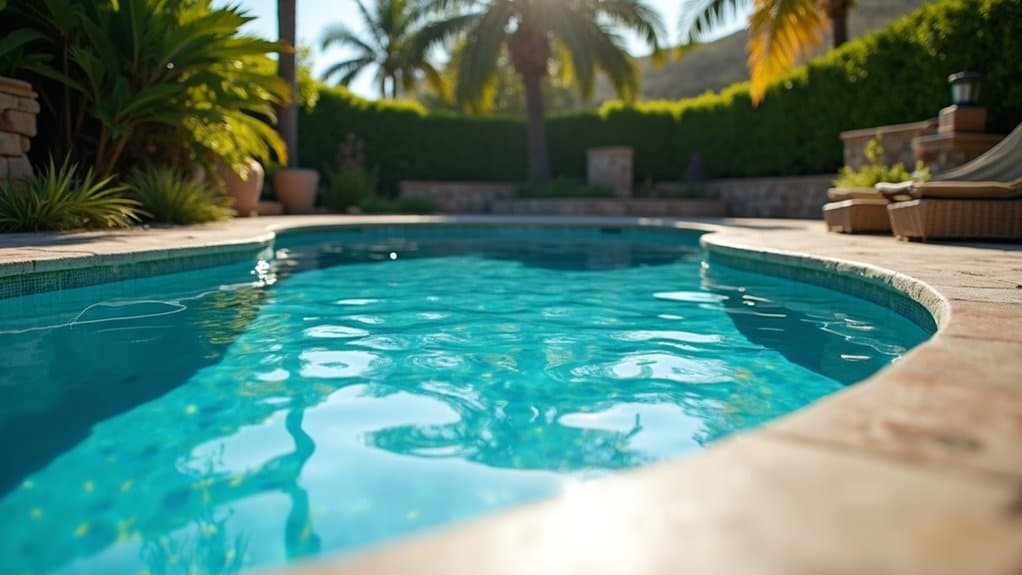
Negative-edge and perimeter-overflow pools both hide coping and gutters, but they distribute overflow differently. A negative-edge pool spills over one profiled vanishing wall into a hidden catch basin, creating a dramatic, directional effect that suits lots sloping toward a view. A perimeter-overflow pool sheets evenly across all four edges into a slot gutter and balancing tank, producing a flat, mirror-like surface for flat sites. Below, you’ll find how each system’s operation, cost, and tolerances stack up.
Key Takeaways
- Negative-edge pools spill over one side into a hidden catch basin, creating a dramatic, directional vanishing effect toward a view.
- Perimeter-overflow pools overflow evenly across all four edges into a slot gutter, producing a flat, mirror-like surface level with the deck.
- Negative-edge designs have more forgiving levelness tolerances, while perimeter-overflow systems require tighter elevation tolerances to prevent dry spots or uneven flow.
- Perimeter-overflow pools cost more due to greater engineering complexity, a balancing tank, and precise multi-sided slot design.
- Negative-edge pools suit lots sloping toward an open view, while perimeter-overflow pools suit flat sites, enclosed patios, or urban terraces.
What is the difference between negative-edge and perimeter-overflow pools
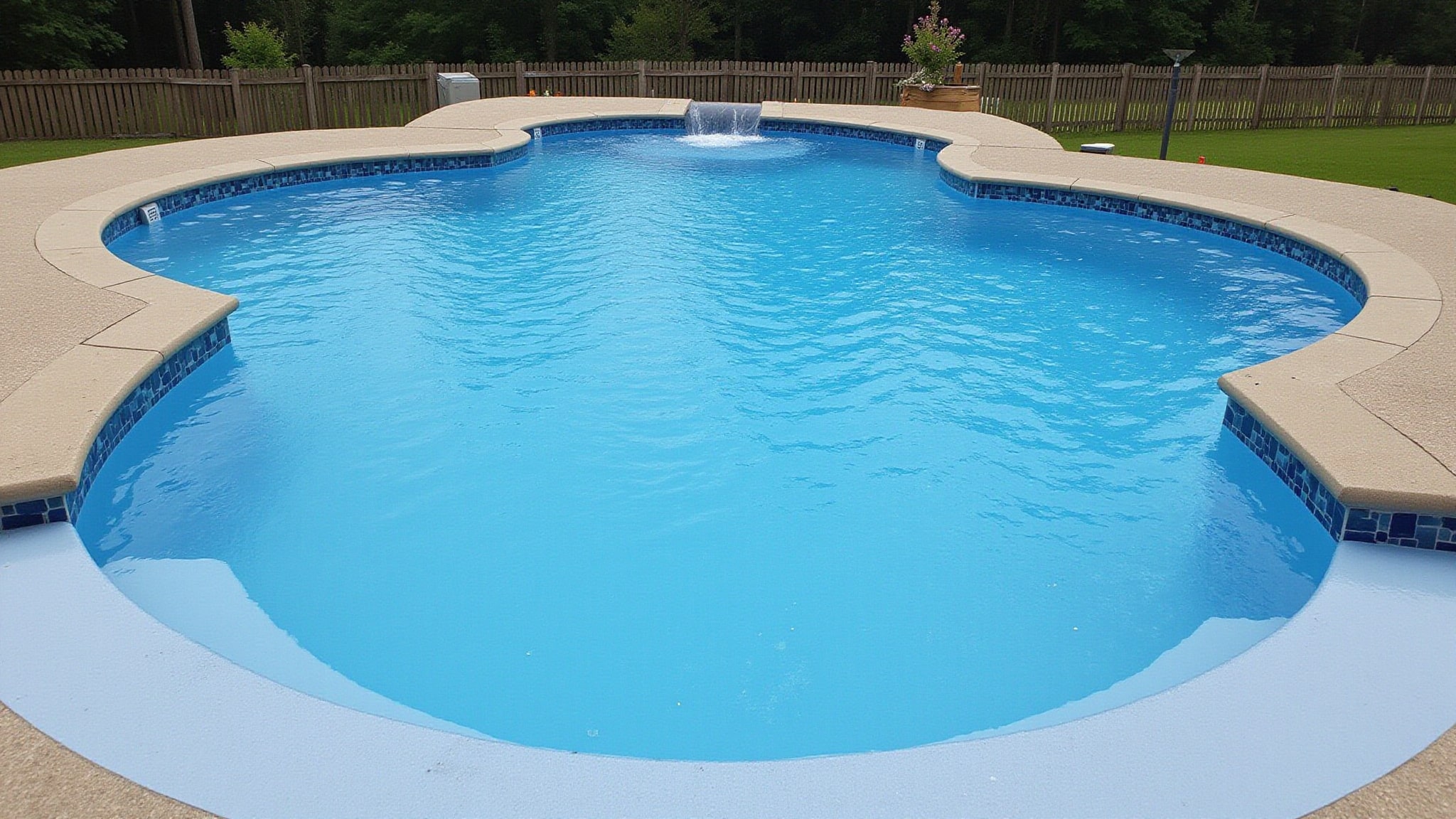
Negative-edge and perimeter-overflow pools differ in how many sides carry the overflow. A negative-edge pool spills water over one side only, creating that dramatic, directional vanishing effect toward oceans, lakes, or skylines. A perimeter overflow pool, by contrast, lets water flow evenly over all four sides, producing a flat, mirror-like surface level with the deck.
Both eliminate visible coping and gutters, but they function differently hydraulically. Your negative-edge design blurs the boundary between water and landscape, and your perimeter-overflow design creates a seamless, symmetrical transition to the terrace. Perimeter systems demand tighter elevation tolerances and a balancing tank, whereas single-edge designs stay more forgiving in levelness. In luxury pool design, you’ll choose based on site, view, and hydraulic complexity.
How does a negative-edge pool work
A negative-edge pool works by letting water spill over one carefully profiled wall, called the vanishing edge, and drop into a catch basin below. From there, a pump recirculates the water back into the main pool, creating a continuous loop. Because only one edge overflows, you’ve got more forgiving levelness tolerances than a perimeter system demands, though your wall profile must stay accurate to distribute flow evenly.
You’ll position the vanishing edge to face a sloped site with an open view, letting the infinity pool blur the boundary between water and horizon. The catch basin sits hidden below deck level, capturing overflow and functioning as a large skimmer for debris. An invisible gutter and precise hydraulic balance keep the water sheeting smoothly across that single dramatic edge.
How does a perimeter-overflow pool work
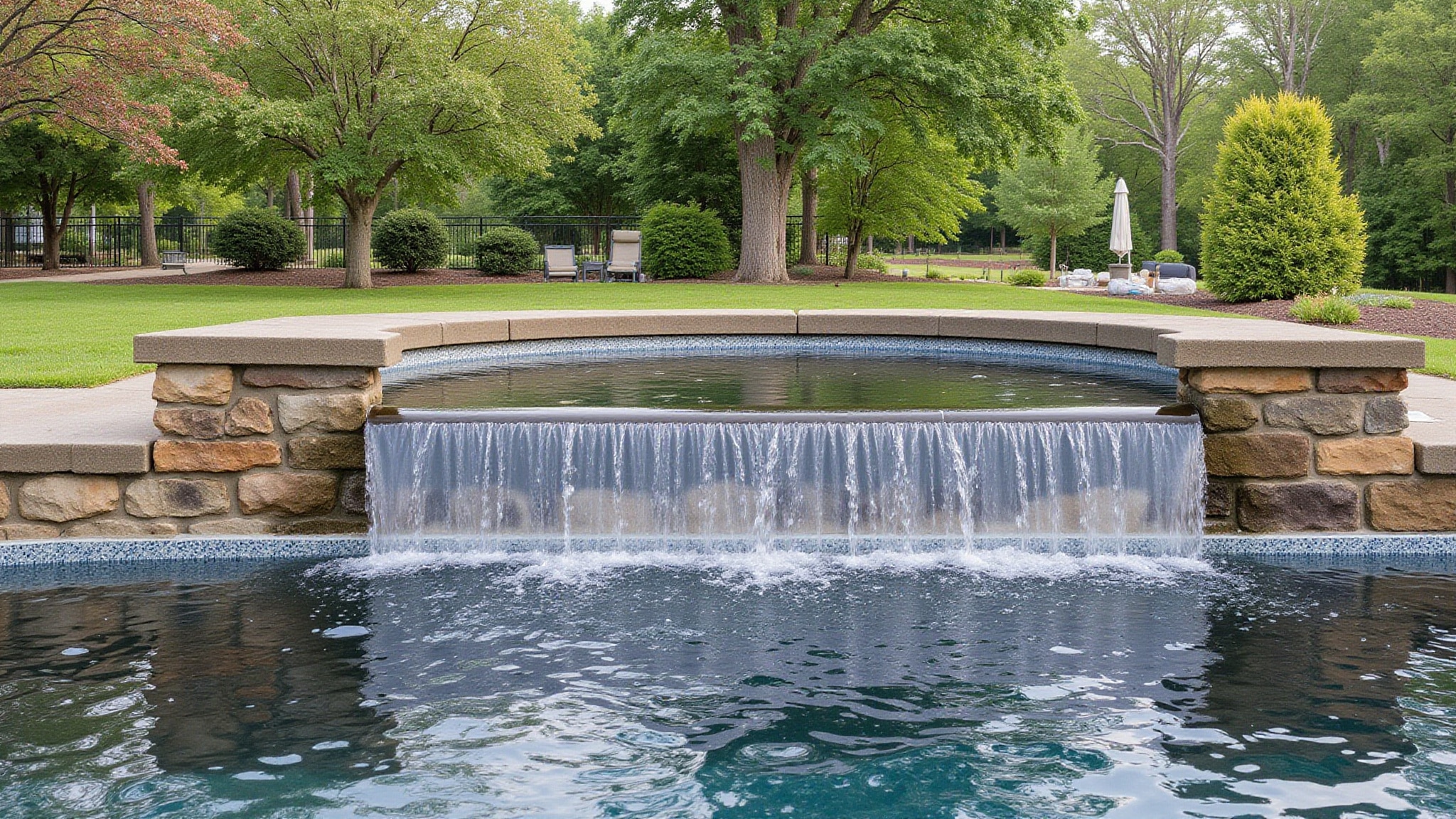
A perimeter-overflow pool works by letting water spill evenly over all four edges into a slot gutter that rings the entire pool, then draining into a hidden balancing tank below. Pumps recirculate this water back through the filtration system, maintaining a flat, mirror-like surface flush with your deck. Because water overflows on all four sides, you’ll need tighter elevation tolerances, since even minor variations cause dry spots or uneven flow. The precise slot design around the entire perimeter demands exact workmanship. Hydraulic balance is more complex here, since uniform flow across every edge requires careful tuning. The balancing tank compensates for displacement when swimmers enter, preventing overflow interruptions. This system eliminates visible skimmers, using the whole perimeter as one large skimmer to capture surface debris efficiently.
How do the two designs compare on cost and engineering
The two designs differ mainly in cost and engineering complexity, with perimeter-overflow pools demanding more of both. Negative-edge pools typically run 20% to 30% more than standard gunite builds, driven by complex engineering and premium materials. Perimeter-overflow pools cost even more, since four-sided overflow demands tighter elevation tolerances, a balancing tank, and precise slot design around the entire perimeter.
| Factor | Comparison |
|---|---|
| Base cost | Perimeter-overflow exceeds negative-edge |
| Levelness tolerance | Perimeter-overflow far tighter |
| Hydraulic complexity | Perimeter-overflow multi-sided; negative-edge single-sided |
| Timeline | Both span several months |
You’ll find negative-edge designs more forgiving in levelness, since only one edge overflows. Perimeter systems require uniform flow across all four sides, so you’ll invest in exact design and workmanship at every stage.
What backyard suits each design
Your site’s topography dictates which design works, so you’ll match each system to a specific backyard condition. If your lot slopes toward an open view, an ocean, lake, or skyline, choose a negative-edge pool. Its single overflow edge faces the panorama, blurring the boundary between water and landscape while extending the surface visually toward the horizon. This design tolerates minor levelness variations, since only one edge overflows.
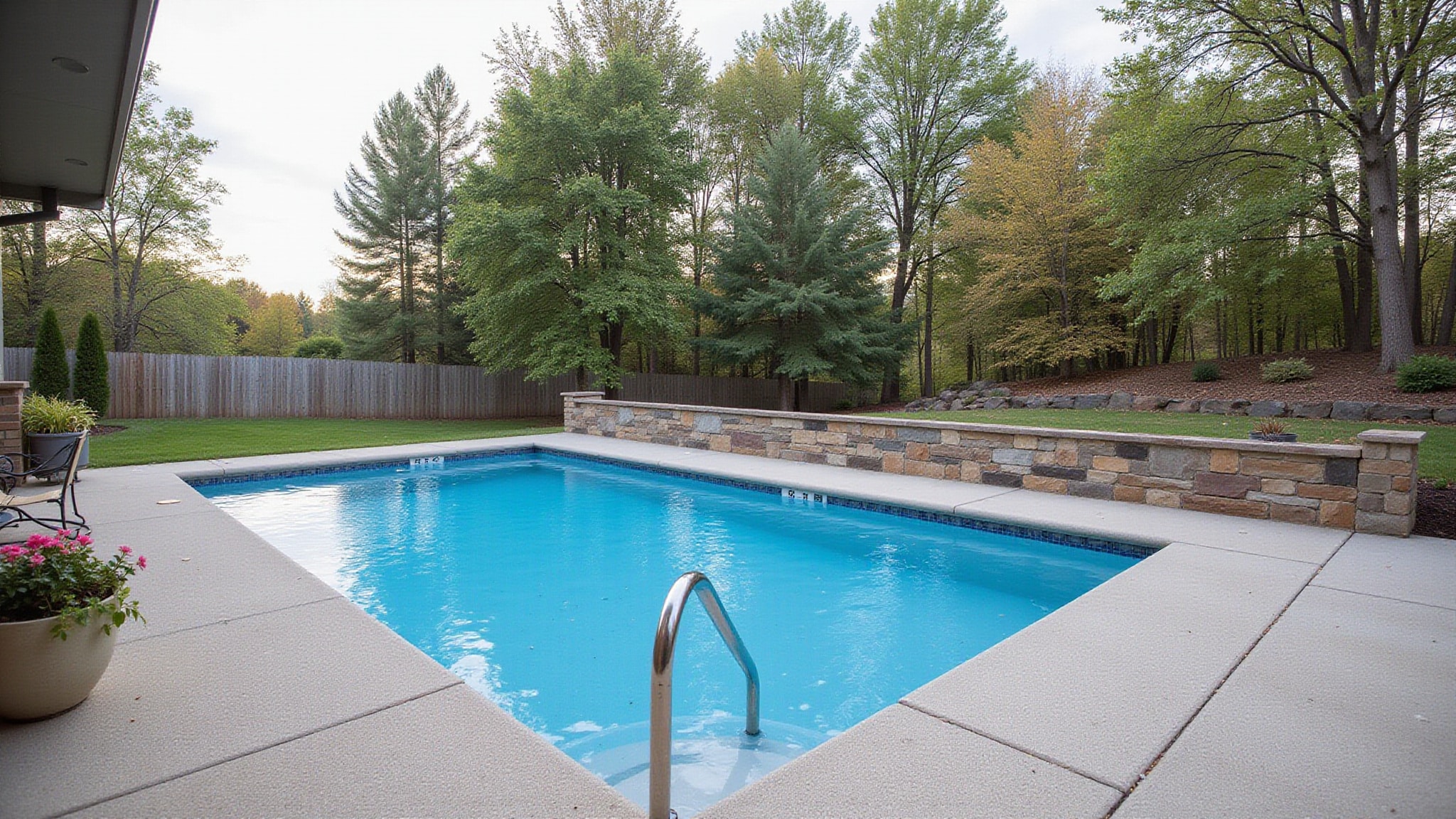
If you’re working with a flat site, enclosed patio, or urban terrace, select a perimeter-overflow pool. Its four-sided overflow creates a symmetrical, mirror-like surface flush with your deck, producing a seamless shift to the surrounding terrace. Remember, though, that flat sites demand tighter elevation tolerances. Even slight variations cause dry spots or uneven flow across all edges. Landscaping ideas for poolside layouts can enhance the overall aesthetic of your outdoor space. Consider incorporating native plants that require little maintenance while providing lush greenery and a tropical feel.
How do you choose between them
Choose between them based on three factors: visual effect, hydraulic complexity, and budget. Start with the effect you want. If you’re chasing a dramatic, directional look that blurs the pool into an ocean, lake, or skyline, go negative-edge. If you want a minimalist, symmetrical mirror that’s level with your deck, choose perimeter-overflow.
Next, weigh hydraulic complexity. Perimeter-overflow demands tighter elevation tolerances, a balancing tank, and slot design around all four sides. Negative-edge forgives minor levelness variations since only one edge overflows, so it’s simpler to build and tune.
Finally, factor budget. Negative-edge runs 20% to 30% above standard gunite, while perimeter-overflow costs more still. Match your maintenance appetite to the system too. Perimeter’s multi-sided flow needs regular tuning to stay uniform.
Negative-Edge vs Perimeter-Overflow: Choosing an Edge Design
Negative-edge and perimeter-overflow pools create some of the most striking effects in pool design, but they rely on precise engineering to work well. Most Florida lots are flat, so the drop and catch basin are created through grading and structural design rather than a natural slope. Because the tolerances are tight and the systems need ongoing attention, builder experience matters more here than on a standard pool. Reviewing real examples and a clear design is the best way to know an edge pool suits your site.
Call Today and Design a One-of-a-Kind Pool
Luxury pool features aren’t just extras, they’re expressions of style, personality, and the way you want to live outdoors. At Cristallo Pools in Palm Beach Gardens, FL, our talented team delivers thoughtful Design and Planning built around your unique vision and outdoor lifestyle. Call +1 (561) 766-0353 today and bring your dream backyard to life.
Frequently Asked Questions
Are vanishing edge pools difficult to build?
They are more demanding than standard pools. A vanishing or negative edge relies on precise levels, a hidden catch basin, and a properly sized pump system to keep the water sheeting evenly. It is very achievable, but it calls for careful engineering and a builder experienced with the design.
Do these designs work on Florida lots without a natural slope?
Yes. Most South Florida properties are flat, so the drop for a catch basin is created through grading and structural design rather than found on site. An experienced builder engineers the elevation change into the plan, which is why these pools are possible even on level lots.
Who determines whether my site can support an edge design?
That decision belongs in the design and planning stage, before any commitment to a particular effect. A builder reviews your layout, levels, soil, and drainage to confirm what the site can support. Settling this early prevents costly surprises once construction begins.
Do these systems need more attention once they are running?
Somewhat. Edge designs rely on pumps, precise water levels, and a catch basin, so they benefit from regular checks and occasional servicing to keep the effect crisp. It is not difficult, but it is a bit more involved than a standard pool, and a maintenance plan can handle it.
Can an edge feature be added to a pool built years ago?
Sometimes, but it is a significant undertaking. Adding a true vanishing edge usually means altering the structure and levels, which is closer to a rebuild of that side than a simple upgrade. A builder can assess whether your existing pool and site make it feasible.
Why does builder experience matter more on this type of pool?
Because the tolerances are tight. A small error in levels or an undersized pump can leave the edge looking uneven or failing to sheet properly. A builder who has completed edge pools before understands the engineering and detailing needed to get the effect right the first time.
How do I get a sense of what these pools look like in person?
Ask to see completed edge pools, whether in photos, video walkthroughs, or in person where possible. Seeing a finished vanishing edge helps you understand the effect and scale far better than a drawing, so you know exactly what you are paying for.