When designing an Olympic swimming pool, you’ll need to meet precise specifications: a 50-meter length (tolerance +0.010/-0.000m), 25-meter width with ten 2.5-meter lanes, and minimum 2.0-meter depth (3.0m recommended). Your facility must incorporate World Aquatics-certified equipment, high-grade materials like reinforced concrete and porcelain tiles, and maintain strict temperature control (25-28°C). The extensive requirements for competition-ready pools extend far beyond these basic parameters.
Essential Dimensions and Volume Specifications

When designing an Olympic-size swimming pool, precise dimensional specifications are paramount for meeting international competition standards. You’ll need to guarantee exactly 50 meters in length with a tolerance of +0.010 m, -0.000 m when touch panels are installed. The standard width is 25 meters, accommodating 10 lanes of 2.5 meters each. Touch pads at both ends ensure accurate timing during competitions. The construction typically requires stainless steel materials for maximum durability and minimal maintenance requirements over decades of use. The modern Olympic pool standards were established in 1924 Olympics when the 50-meter length became the official requirement.
The minimum depth requirement is 2.0 meters, though 3.0 meters is recommended for ideal performance. You must maintain consistent depth throughout to minimize water circulation patterns that could affect competition. Your design should include 2.5-meter clearance zones outside the outermost lanes. The total volume will be approximately 2,500,000 liters when filled, guaranteeing stable temperature range control between 25-28°C and proper water quality maintenance during competitive events.
Critical Design Standards and Regulations
To guarantee Olympic pool compliance, you must adhere to stringent regulations set forth by World Aquatics, the foremost governing body for international aquatic sports. You’ll need certification from a qualified official or surveyor approved by your national swimming federation, while also meeting regional building codes and industry sustainability practices.
Your design must incorporate precise safety standards, including 2-meter minimum depth, non-slip surfaces, and ADA-compliant accessibility features. The pool must maintain a length of 50 meters exact to accommodate competitive events at the highest level. The facility requires a width of 25 meters wide to meet international FINA competition standards. Water quality systems require maintaining temperatures between 25°C-28°C, with proper filtration and ventilation. You’ll need to install World Aquatics-certified equipment, including start blocks, timing systems, and lane ropes, positioned according to exact specifications. All structural elements must use approved materials, ensuring smooth, watertight surfaces that meet strict dimensional tolerances for competition certification.
Lane Configuration and Competition Requirements

Building upon the established safety standards, lane configuration forms the competitive foundation of your Olympic pool design. You’ll need to incorporate 8 to 10 lanes, with standard competition lanes measuring 2.5 meters wide. When considering lane placement considerations, position your competitive lanes centrally for ideal spectator viewing experience.
Install lane ropes with 0.15-meter diameter components, ensuring they’re anchored to withstand 20 kN forces. You’ll need to follow the specific color sequence: green ropes for lanes 1 and 8, blue for lanes 2, 3, 6, and 7. Don’t forget to include buffer lanes (0 and 9) at 2.4 meters wide in permanent installations to dampen turbulence. For temporary pools, maintain a 2.5-meter width across all lanes with 0.5-meter outer spaces, totaling 26 meters in width.
Depth Parameters for Peak Performance
Determining the correct depth parameters stands as one of the most critical decisions you’ll make when designing an Olympic swimming pool. While recreational pool usage might allow for variable depths, competitive venues demand strict adherence to World Aquatics standards of 2-3 meters throughout the entire pool length.
| Pool Type | Minimum Depth | Best Performance |
|---|---|---|
| Training | 2.0m | 2.5m |
| Competition | 2.5m | 3.0m |
| Multi-Sport | 3.0m | 3.0m+ |
| Olympic | 3.0m | 3.0m+ |
Your depth selection directly impacts performance through turbulence reduction and safety augmentation. While competitive versus training pools may have different requirements, the trend toward deeper configurations (3 meters) provides ideal conditions for all aquatic activities. This depth reduces wave interference between lanes, enables safer diving entries, and accommodates multiple sport disciplines without compromise. For specialized diving events, a separate pool with 5 meters minimum depth is required to ensure athlete safety during platform dives.
Construction Materials and Structural Components
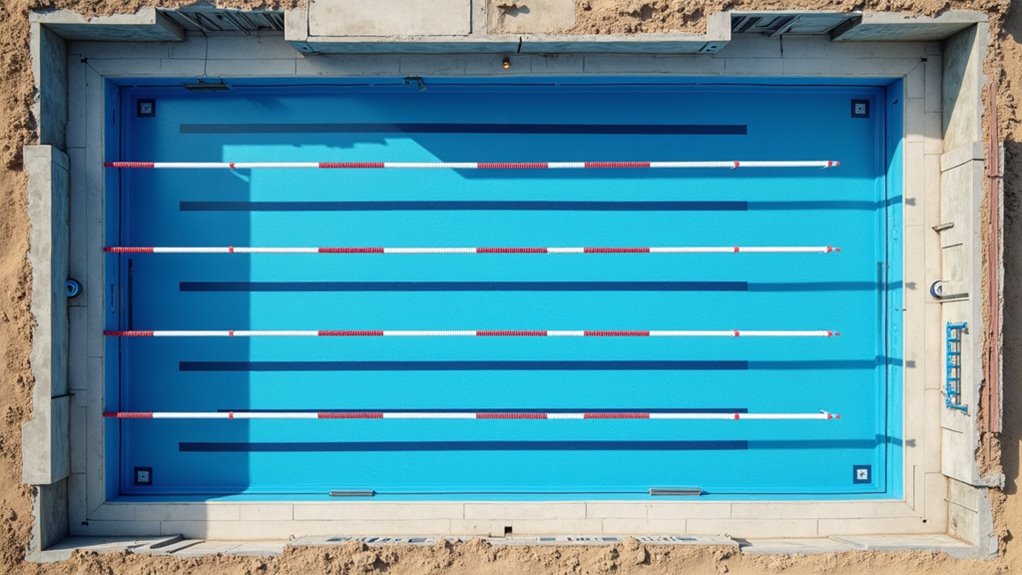
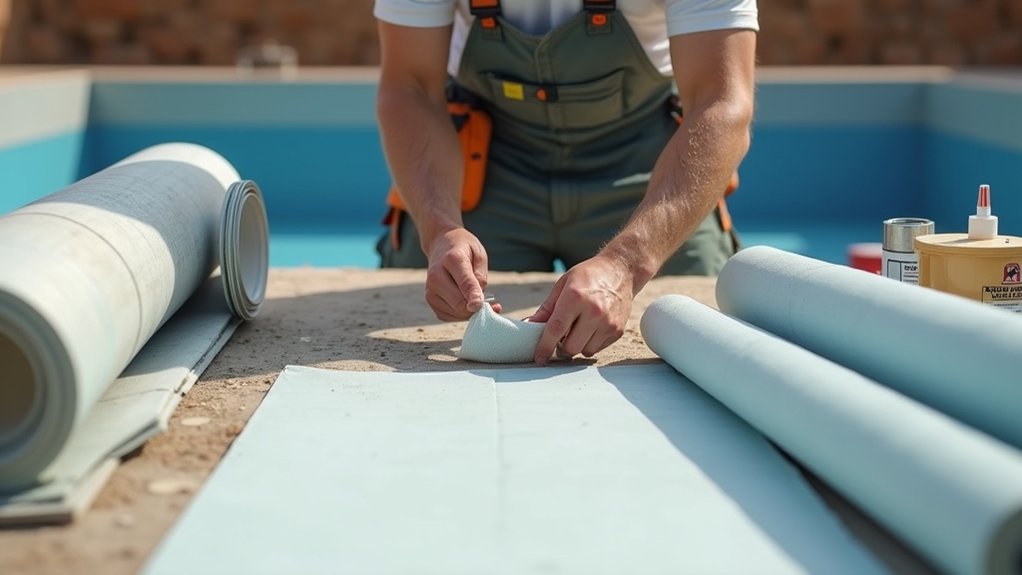
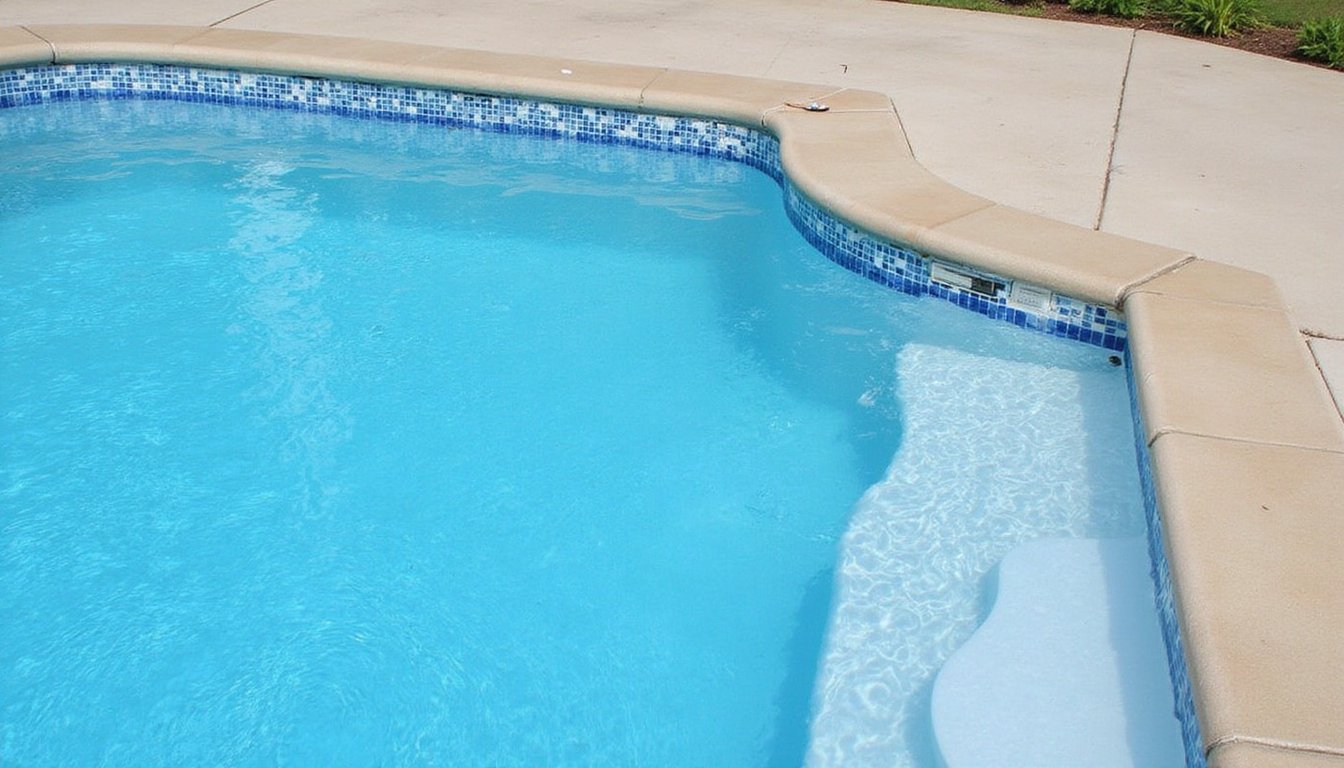
While pool depth parameters set the foundation for performance, the selection of construction materials and structural components shapes the facility’s longevity and functionality. You’ll need to start with a monolithic reinforced concrete shell, engineered for structural stability and watertight performance. This forms your pool’s backbone, complemented by high-density porcelain tiles for internal surfaces. Anti-slip finish materials are mandatory for all pool surfaces to ensure athlete safety. The pool requires a minimum depth of 2 meters to maintain competitive standards and safety.
To guarantee chemical resistance, you must incorporate grade 316L stainless steel for all exposed hardware and anchors. Apply surface sealants like epoxy or polyurethane coatings around fixtures and grout lines for extra protection. The structure requires precise tolerances, particularly for vertical end walls (+0.010, -0.000 m), and must include expansion joints to prevent cracking. Don’t overlook the overflow gutters – they’re essential for maintaining water levels and reducing wave action during competition.
Pool Mechanical Systems and Safety Features
To guarantee ideal performance and safety in Olympic swimming facilities, you’ll need to implement extensive mechanical systems that meet strict international standards. Your water disinfection protocols must include UV treatment systems alongside chemical dosing, while maintaining a complete water turnover every 4 hours. Install surface skimmers at one per 2,500 sq ft with 30 GPM capacity to ascertain effective surface agitation techniques.
The pool requires a minimum depth 2 metres as per international standards. You’ll need self-priming pumps with redundant systems, corrosion-resistant components, and automated temperature controls maintaining 28°C. Verify your starting platforms are mounted over 1.35m depth zones and equipped with non-slip surfaces. Install lane ropes at 1-1.2 kN tension and position backstroke flags 1.8m above water. Your circulation system must deliver uniform flow through strategically placed return inlets, while equalizer pipes prevent pump airlock during operation.
Support Facility Planning and Layout
When planning support facilities, you’ll need to establish clear pathways that separate athlete movement from public areas while ensuring quick access to competition and warm-up zones. Your equipment storage layout must incorporate dedicated spaces near the pool deck for competition gear, maintenance tools, and emergency response equipment. You must position initial aid stations and emergency exits strategically throughout the facility to enable rapid response times while maintaining efficient traffic flow during both regular operations and crisis situations. Following FINA compliance standards, effective spectator seating design should accommodate capacity requirements while providing unobstructed views of the entire competition area.
Athlete Flow and Access
Three critical factors govern effective athlete flow and access in Olympic swimming facilities: entry/exit design, circulation routes, and support space proximity. You’ll need to incorporate dedicated entry and exit points with non-slip surfaces, while facilitating inclusive changing rooms positioned close to the pool deck for efficient transitions.
Design your circulation routes with athlete-only corridors to maintain athlete privacy measures and prevent unauthorized access. Establish clear zones for competition, warm-up, and cooldown areas, connecting them through wide, unobstructed pathways. Position support spaces strategically; physical therapy rooms and medical suites should be adjacent to the pool deck, while coaches’ stations need direct sightlines to competition areas. Implement buffer zones near competition lanes and ensure all pathways feature non-slip surfaces that meet FINA standards.
Equipment Storage Solutions
Effective equipment storage solutions form the backbone of any Olympic swimming facility’s operational efficiency. When designing storage areas, you’ll need dedicated rooms with climate control systems and secure access protocols to protect valuable equipment from humidity damage and unauthorized access. Professional mobile storage trolleys ranging from £490 to £3,052 offer versatile options for different equipment types and facility needs.
Key storage components must include:
- Marine-grade mobile trolleys for safe transport of racing lanes and mats
- Wall-mounted racks near competition areas for rapid equipment deployment
- Automated lifting systems for managing bulkheads and pool covers
- Color-coded organizational systems with barcode tracking for inventory control
Incorporate freestanding units and hidden storage compartments beneath deck seating to optimize space utility. A storage bench can provide both seating and waterproof storage for frequently used items while maintaining a clean poolside appearance. Your facility’s storage design should prioritize both accessibility and protection, utilizing waterproof materials and dehumidification systems to extend equipment lifespan while maintaining quick access for competition needs. Consider implementing a stainless steel bulkhead system that can be vertically moved and stored in a pool bottom recess when not in use, maximizing available space during non-competitive events.
Emergency Response Infrastructure
Olympic swimming facilities must lay out a thorough emergency response infrastructure to safeguard athletes, spectators, and staff during critical incidents. You’ll need to implement comprehensive disaster preparedness planning that includes strategic placement of emergency response equipment and clear access routes. Regular staff training sessions should be conducted to maintain emergency readiness and response capabilities.
| Emergency Component | Required Distance | Function |
|---|---|---|
| First Aid Stations | Within 30m of deck | Immediate medical care |
| Emergency Exits | Every major zone | Rapid evacuation |
| Lifeguard Posts | 25 swimmers/guard | Continuous surveillance |
Your emergency response protocols must include dedicated communication systems, with backup power and multiple alert methods. Install emergency phones with direct EMS connection, facility-wide PA systems, and two-way radios for staff. Guarantee all rescue equipment, including spine boards, AEDs, and oxygen units, remains readily accessible at designated first aid stations. Position electronic access controls at critical support areas for secure but quick entry during emergencies.
Frequently Asked Questions
How Long Does It Take to Completely Fill an Olympic Pool?
You’ll find that filling an Olympic pool typically takes between 22-44 hours, depending on your water flow rate. With standard fire hoses delivering 500 gallons per minute, you’re looking at 22 hours for complete filling. However, if you’re using municipal connections at 250 gallons per minute, the pool filling process extends to 44 hours. You can speed this up by utilizing multiple water sources simultaneously or slow it down for system stability.
What Happens if an Olympic Pool Develops a Crack During Competition?
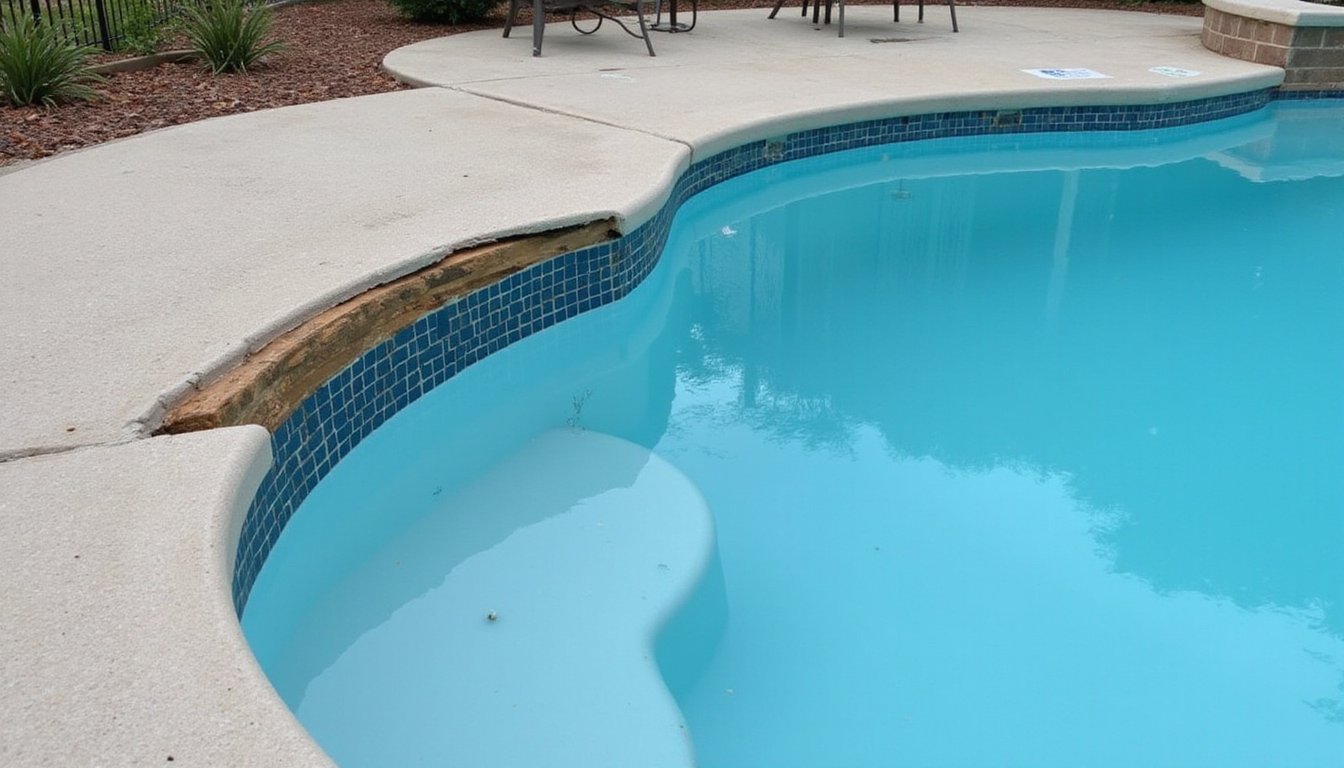
If you’re managing a competition when a crack develops, you’ll need to immediately focus on ensuring structural integrity and managing pool disruptions. You must halt activities and evacuate athletes while specialists assess the crack’s severity. For surface cracks, you might resume after quick repairs, but structural cracks will force competition postponement. You’ll need to activate emergency protocols and notify regulatory bodies like FINA before any resumption’s allowed.
How Often Must the Pool Water Be Completely Replaced?
You’ll typically need to replace Olympic pool water completely every 5-7 years, though some facilities opt for annual or biennial changes. Your decision should be based on water quality monitoring results and chemical balance adjustments. You must replace the water when total dissolved solids exceed 1,500-1,550 ppm, as this affects chemical effectiveness. With proper maintenance and filtration, you can extend intervals between complete replacements while maintaining safety standards.
What Is the Typical Lifespan of an Olympic Swimming Pool?
You’ll find that Olympic pools typically have an average lifespan of 50+ years when properly maintained. For concrete pools, which are most common in Olympic venues, you’ll need to plan for resurfacing every 10-15 years. If you’ve opted for stainless steel construction, you can expect even longer durability with minimal structural maintenance. Regular upkeep, including water chemistry management and cleaning protocols, is essential to optimize the pool’s functional lifespan and maintain competition standards.
How Much Does It Cost to Maintain an Olympic Pool Annually?
You’ll need to budget around $250,000 annually for basic operations, with chemical requirements and energy consumption comprising the largest portions of maintenance costs. Your total expenses will escalate substantially when you factor in professional staffing, which includes lifeguards and maintenance personnel. Don’t forget supplementary costs like liability insurance, regular equipment servicing, and periodic major repairs. Altogether, you’re looking at annual maintenance costs that can readily surpass $500,000.