Chlorine reacts with gunite pool surfaces due to a chemical interaction between hypochlorous acid and the cement-based material. When you maintain chlorine levels above 3 ppm, it accelerates oxidation of the calcium hydroxide in gunite’s cementitious compounds, leading to surface deterioration. You’ll notice signs like pitting, rough patches, and discoloration as the chlorine gradually breaks down the pool’s structural integrity. Understanding these chemical processes is essential for protecting your pool’s longevity.
The Chemical Nature of Gunite and Chlorine
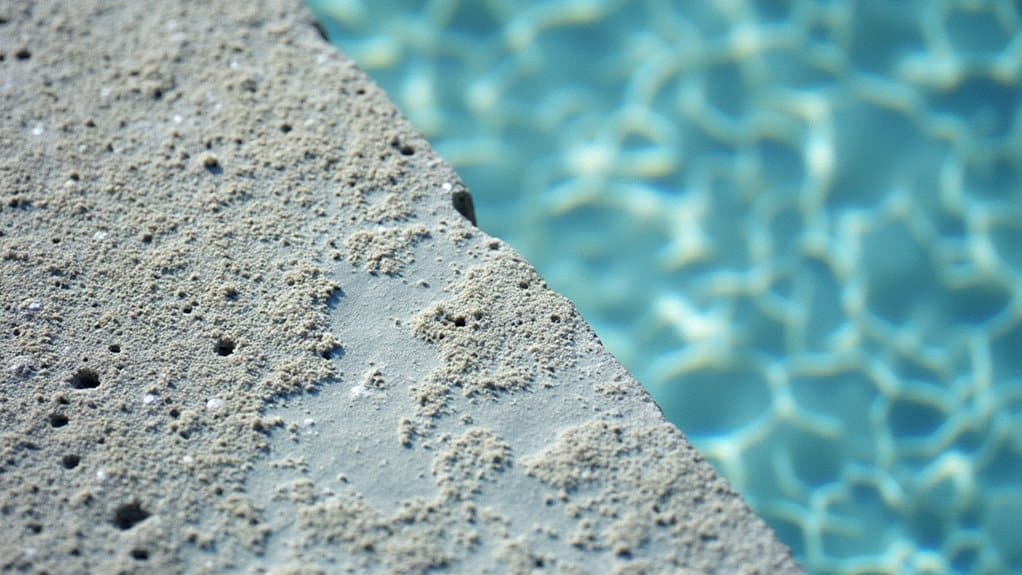
When examining the chemical interactions between gunite and chlorine in swimming pools, you’ll find a complex interplay of cement-based compounds and sanitizing agents. The chemical composition of gunite, primarily consisting of cement and sand, creates a porous surface that’s inherently vulnerable to chlorine reactivity. Regular maintenance is essential since gunite pools require more chemical balancing than other pool types. Your pool’s water chemistry directly affects how chlorine interacts with gunite properties. The presence of calcium hydroxide in the cement makes the surface naturally alkaline, while chlorine converts to hypochlorous acid in water. This combination requires careful pool maintenance to prevent deterioration. Calcium nodules can form when internal pressure forces calcium hydroxide out through surface weaknesses. When chlorine levels exceed 3 ppm, you’ll notice accelerated oxidation of the gunite surface, particularly affecting its pigments and underlying rebar structure. The material’s porosity allows these chemical reactions to penetrate deeper, potentially compromising the pool’s structural integrity over time. A surface resurfacing is typically required every decade to maintain the pool’s protective barrier against chemical damage.
Understanding Pool Surface Deterioration
You’ll recognize chemical erosion patterns in your pool’s gunite surface through distinct signs of chlorine-induced degradation, including localized pitting, rough patches, and discolored areas where mineral dissolution has occurred. The most telling warning signs of surface damage manifest as etched patterns that follow water flow lines, usually appearing first in areas of high turbulence or where chemical concentrations pool. Understanding these deterioration indicators is critical, as they often signal underlying pH imbalances and improper chlorine levels that require immediate adjustment to prevent accelerated structural breakdown. Pool water chemistry testing and adjustments are crucial since out-of-balance levels can significantly damage the protective plaster layer. Regular maintenance involving proper brushing routines helps prevent surface deterioration by removing debris before it can compromise the gunite structure. Consulting a certified technician for regular inspections can help identify these issues before they require extensive resurfacing work.
Chemical Erosion Patterns
Understanding chemical erosion patterns in gunite pool surfaces requires a thorough analysis of multiple deterioration mechanisms. You’ll notice that chlorine reactions play a critical role, as levels above 3 ppm actively degrade the gunite structure through oxidation of cementitious compounds. These surface interactions become more severe when combined with pH imbalances that increase mineral solubility. Regular inspection can identify stubborn stains persisting despite routine cleaning, which often signals deeper chemical erosion issues requiring professional attention.
When your pool’s calcium hardness drops too low, the water becomes aggressive, pulling calcium from the gunite and creating distinct etching patterns. Recent acid washing treatments can accelerate surface deterioration in gunite pools. The need for frequent brushing maintenance helps prevent severe surface degradation in concrete pools. You’ll observe that corrosive conditions often develop in areas where organic debris accumulates, as decomposing matter produces acidic compounds that disrupt local pH levels. The resulting erosion typically manifests as pitting, rough textures, and weakened structural integrity, especially in areas with poor circulation or inadequate stabilizer levels.
Surface Damage Warning Signs
Identifying surface damage warning signs early can prevent catastrophic pool deterioration and costly repairs. When chlorine interaction with gunite composition becomes problematic, you’ll notice several key indicators. Watch for persistent staining that resists normal cleaning, especially green or brown discoloration that signals chemical imbalances and mineral deposits. White or light patches on your pool surface often indicate calcium scaling from elevated pH levels.
Your pool’s texture changes offer vital clues if you’re feeling increasingly rough or abrasive surfaces, it’s likely due to chlorine’s erosive effects on the gunite structure. Regular inspections may reveal loose pebbles around the pool floor, indicating severe surface deterioration. Professional maintenance is essential as proper water chemistry helps extend the resurfaced pool’s lifespan. Look for blistering, delamination, or exposed gunite beneath the surface coating. You’ll also want to monitor for hairline cracks, which can quickly expand due to chemical degradation. Check for unexplained water level drops, as they often indicate compromised surface integrity where chlorine has weakened the structural bonds.
Critical Role of Calcium Hardness
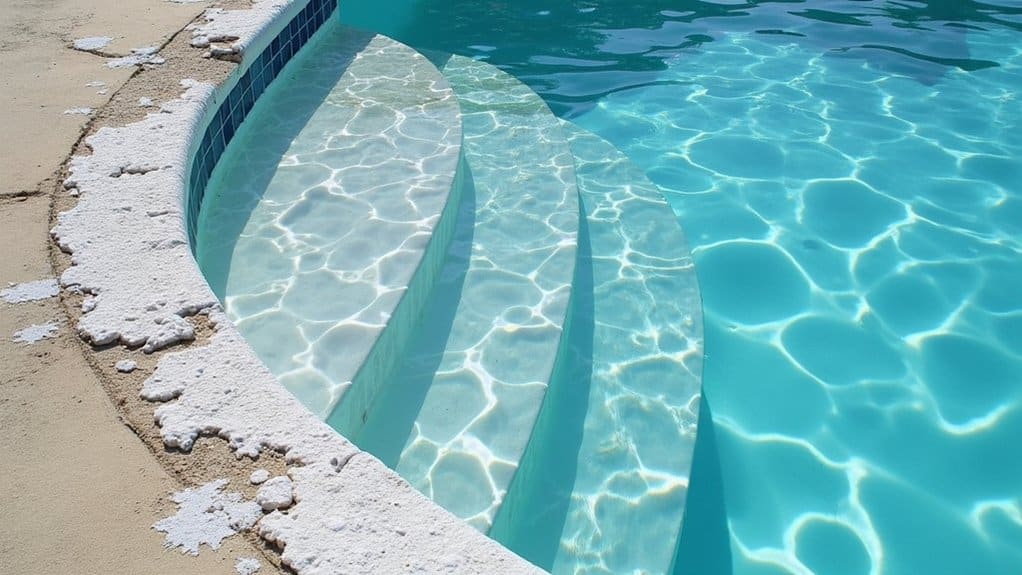
Regular monitoring of your pool’s calcium hardness levels is essential for maintaining the structural integrity of gunite surfaces, as proper calcium balance prevents both etching from low levels and scaling from high levels. You’ll need to maintain calcium hardness between 200-250 ppm while ensuring pH stays balanced, as these factors work together to protect your pool’s surface from erosion and deterioration. Weekly hardness testing enables you to make timely adjustments, preventing the costly damage that occurs when calcium levels remain outside ideal ranges for extended periods. High chlorine levels can cause significant surface pitting damage, requiring expensive repairs to restore the gunite pool’s appearance and functionality. The optimal CSI range of -0.3 to +0.3 helps prevent both scaling and surface deterioration in plaster pools. Using appropriate sealants creates a protective barrier against chlorinated water exposure and helps extend the life of your gunite pool surface.
Balancing Calcium and Ph
The critical balance between calcium hardness and pH levels forms the cornerstone of gunite pool surface maintenance. You’ll need to maintain calcium levels between 200-275 ppm while keeping pH within 7.2-7.8 to protect your pool’s structural integrity. Adequate calcium hardness helps prevent water from leaching minerals from your pool shell.
Your pH stability directly affects calcium balance, as levels above 7.8 trigger calcium precipitation, leading to scaling and cloudy water. Conversely, when pH drops below 7.2, you’ll notice accelerated calcium dissolution from plaster surfaces, causing etching and pitting. To maintain equilibrium, you must regularly test both parameters and make prompt adjustments. Remember that your local water source’s hardness considerably impacts maintenance requirements, and evaporation concentrates calcium over time. When imbalances occur, you’ll need to either add calcium chloride or partially drain and refill your pool.
Preventing Surface Erosion
Maintaining proper calcium hardness levels stands as your primary defense against surface erosion in gunite pools. You’ll need to keep levels between 200-250 ppm specifically for gunite surfaces, as this range prevents your pool’s surface from dissolving and experiencing irreversible damage.
When calcium levels drop below 150 ppm, your pool water becomes aggressive, actively pulling calcium from calcium sources within the gunite material. For erosion prevention, you’ll want to add calcium chloride gradually while monitoring ppm levels. Don’t overlook the critical relationship between calcium hardness and other chemical parameters proper balance prevents both etching and scaling issues. If you neglect calcium maintenance, you’re risking costly structural damage, including surface pitting, grout delamination, and equipment corrosion that could require extensive repairs or complete resurfacing.
Hardness Testing Frequency Guidelines
Proper monitoring of calcium hardness through systematic testing serves as the foundation for preventing surface deterioration in gunite pools. You’ll need to establish a maintenance schedule that includes monthly baseline testing, with increased frequency during challenging conditions. Your testing frequency should adapt to specific factors: weather events, evaporation rates, and pool usage patterns.
You’ll want to conduct immediate tests after storms, significant water additions, or periods of high use. While home test kits work for routine monitoring, professional lab analysis provides deeper insights for persistent issues. Track your results systematically to identify patterns and anticipate needed adjustments. Remember, inadequate testing can lead to costly surface damage through scaling or corrosion. For ideal protection of your gunite surface, complement your monthly calcium hardness tests with quarterly extensive chemical analyses.
The Ph Factor in Surface Reactions
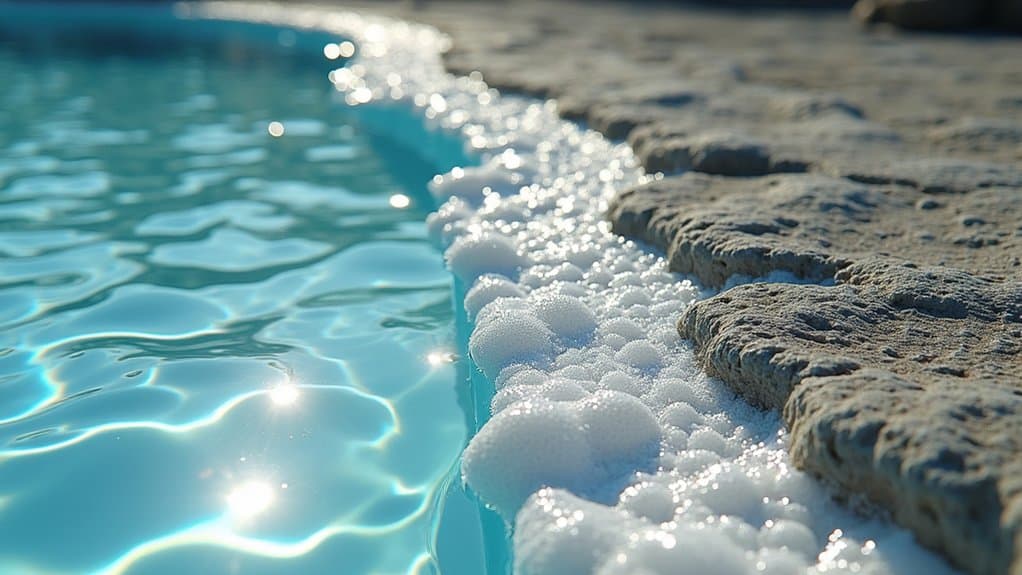
Understanding pH balance stands as an essential factor in the relationship between chlorine effectiveness and gunite surface integrity. When your pool’s pH exceeds 7.6, you’ll notice reduced chlorine efficiency in killing pathogens, while levels below 7.0 accelerate chlorine decomposition and increase corrosion. These pH fluctuations directly impact your gunite surface’s stability.
You’ll find that maintaining pH between 7.4-7.6 optimizes chlorine’s sanitizing power while protecting your pool’s surface. High pH triggers calcium carbonate scaling, while low pH causes surface etching and metal dissolution. Your pool’s total alkalinity (TA) plays a vital buffering role, helping resist sudden pH changes that could compromise both chlorine effectiveness and surface integrity. Keeping TA between 80-120 ppm provides the stability needed to prevent these damaging chemical reactions.
Signs of Chlorine-Induced Damage
When excessive chlorine interacts with your gunite pool surface, several distinctive damage patterns emerge that require prompt attention. These chemical effects manifest through discoloration, where you’ll notice fading, white spots, and chalky deposits indicating active chlorine reactions. Surface symptoms include erosion that creates rough, pitted textures and uneven thinning of the gunite’s top layer.
As gunite deterioration progresses, you’ll observe structural issues like hairline cracks, spalling, and areas where the surface begins flaking away. The presence of efflorescence whitish mineral deposits signals ongoing chemical breakdown requiring specific maintenance strategies. Watch for accelerated wear in areas with high chlorine exposure, particularly around returns and chemical injection points, where the deterioration process intensifies if left unchecked.
Stabilizer’s Impact on Surface Protection
Chlorine stabilizer (cyanuric acid or CYA) plays a complex role in protecting both your pool’s sanitizer and its gunite surface. While it enhances chlorine longevity by 3-5 times in outdoor pools, stabilizer effectiveness can greatly impact your pool’s chemistry balance.
You’ll need to maintain CYA levels between 30-50 ppm to optimize protection without compromising sanitization. When CYA levels exceed 100 ppm, you’ll face reduced chlorine efficiency and potential surface damage. The stabilizer alters your pool’s saturation index, particularly when combined with high calcium or pH levels, which can lead to scaling on gunite surfaces.
If you’re using trichlor tablets containing CYA, watch for declining pH and total alkalinity levels. These chemical shifts can compromise your gunite’s integrity, potentially causing etching and surface deterioration over time.
Preventing Surface Degradation
A thorough approach to gunite surface protection requires vigilant maintenance of your pool’s chemical balance and physical care routines. The chlorine interaction with gunite composition demands careful monitoring of pH levels between 7.2-7.6 to prevent accelerated surface wear. You’ll need to maintain calcium hardness within 200-250 ppm to protect against both scaling and etching of your pool’s surface.
- Test water chemistry weekly to prevent aggressive conditions that can deteriorate gunite surfaces
- Brush pool walls and floor regularly to disrupt early algae formation and prevent biofilm buildup
- Address surface imperfections immediately with professional-grade materials to maintain structural integrity
Regular maintenance coupled with proper chemical balance will greatly extend your gunite surface’s lifespan. Remember that prevention through consistent care is more cost-effective than major repairs or premature resurfacing.
Long-Term Effects on Pool Structure
The continuous exposure of gunite pool surfaces to chlorinated water triggers a cascade of chemical reactions that gradually deplete calcium content and erode the concrete matrix. You’ll notice the deterioration first appears as surface pitting and hairline cracks, which develop from the repeated chemical assault on the pool’s cement-based structure. The damage typically progresses to more severe scaling over time, especially in areas with high chlorine concentration or where water chemistry remains consistently unbalanced.
Calcium Depletion and Erosion
When exposed to chlorinated pool water over time, gunite surfaces undergo a complex deterioration process driven by calcium depletion and erosion. The calcium cycle begins as chlorine ions bind with calcium compounds, dissolving essential calcium hydroxide that acts as a binding agent. This continuous process creates a destructive loop where erosion factors compound, leading to increased porosity and structural weakening.
- Chlorine attacks calcium hydroxide, forming soluble compounds that leach out of the concrete matrix
- Dissolved calcium creates voids, allowing deeper chlorine penetration and accelerating deterioration
- Surface erosion reduces the protective barrier, making the structure more vulnerable to mechanical damage
You’ll notice this deterioration manifests through surface roughness, staining, and eventual delamination if left untreated. The process dramatically impacts your pool’s structural integrity and can considerably reduce its expected lifespan.
Surface Pitting and Cracks
Prolonged chlorine exposure triggers destructive surface pitting and crack formation in gunite pools, setting off a chain of structural vulnerabilities that compromise your pool’s integrity. When chlorine levels remain high, chemical reactions erode your plaster’s surface, creating weak points that develop into structural defects. These pits trap contaminants and accelerate deterioration, making surface repair increasingly urgent.
You’ll notice your pool’s structural stability weakening as cracks form, allowing water to penetrate deeper into the gunite layer. Without proper erosion prevention, these cracks expand, leading to costly repairs and potential safety hazards. The damaged surface becomes rough and uneven, creating abrasive conditions for swimmers. While replastering can restore aesthetics, it’s essential to address the underlying chemical imbalances to prevent recurring damage.
Scaling Damage Over Time
Beyond surface pitting, scaling represents a complex chemical threat that progressively undermines your gunite pool’s structural integrity. When calcium hardness exceeds 400 ppm, especially combined with high pH and chlorine concentration effects, you’ll face accelerated scale formation that damages pool surfaces and equipment.
- Scale deposits clog pipes and valves, reducing operational efficiency and increasing maintenance costs
- Calcium carbonate buildup at the waterline requires constant brushing and acid treatments
- Persistent scaling erodes the protective gunite layer, leading to structural vulnerabilities
Effective scaling prevention techniques include maintaining calcium hardness between 200-250 ppm, keeping pH levels at 7.2-7.6, and managing chlorine concentrations below 3 ppm. You’ll need to regularly test water chemistry and adjust stabilizer levels to protect your pool’s surfaces while ensuring proper sanitization.
Maintenance Best Practices
Maintaining a chlorinated gunite pool requires systematic attention to water chemistry and physical upkeep to prevent surface deterioration. You’ll need to focus on consistent pool cleaning and chemical balance to protect your gunite surface from chlorine-induced damage.
| Task | Frequency | Purpose |
|---|---|---|
| Test pH levels | 2x weekly | Maintain 7.4-7.6 range |
| Check chlorine | Daily | Keep 2.0-4.0 ppm |
| Brush surfaces | Weekly | Prevent algae growth |
| Backwash filter | Weekly | Guarantee proper filtration |
| Balance alkalinity | Biweekly | Stabilize at 80-120 ppm |
Run your filtration system 8-12 hours daily while monitoring calcium hardness levels between 200-400 ppm. You’ll need to brush pool walls weekly and apply algaecide treatments to prevent biofilm formation that can react with chlorine. During seasonal shifts, adjust your maintenance schedule to accommodate changing environmental conditions.
Alternative Sanitizing Methods
While chlorine remains a popular choice for gunite pools, several alternative sanitizing methods offer unique advantages for pool owners seeking different maintenance approaches. You’ll find that saltwater benefits include reduced eye irritation and automatic chlorine generation, while bromine pros feature better warm-water effectiveness and gentler skin contact. UV advantages and ozone efficiency work together to markedly reduce chemical usage and eliminate resistant organisms.
- Saltwater systems convert regular salt into a milder form of chlorine through electrolysis, requiring less manual maintenance
- UV-C light systems paired with ozone can reduce chemical requirements by up to 50% while effectively targeting parasites
- Hydrogen peroxide offers a chlorine-free solution that’s particularly effective for outdoor pools with good sun exposure
Each system presents distinct trade-offs between initial costs, maintenance requirements, and long-term effectiveness for your specific pool environment.
Frequently Asked Questions
Can Pool Toys and Floats Accelerate Chlorine Damage to Gunite Surfaces?
Yes, your pool toy materials and float wear and tear can greatly accelerate gunite surface damage. When you leave toys in the pool, they trap concentrated chlorine against surfaces, creating damaging “hot spots.” Your toys’ degrading PVC, vinyl, or nylon materials release chemicals that interact with gunite, while physical abrasion from movement scratches protective coatings. Additionally, toys can disrupt water chemistry by leaching compounds that alter pH levels.
Does Saltwater Conversion Eliminate the Need for All Chlorine Treatments?
No, saltwater conversion doesn’t eliminate chlorine it just changes how you generate it. While saltwater benefits include automated chlorine production through electrolysis, you’re still maintaining chlorine levels (1-3 ppm) in your pool. The key difference is that you won’t need to manually add chlorine treatments since the system creates its own. Among chlorine alternatives, saltwater systems simply offer a more hands-off approach to sanitization.
How Does Winter Freezing Affect Chlorine-Damaged Gunite Compared to Normal Surfaces?
You’ll find that winter effects are considerably more severe on chlorine-damaged gunite compared to normal surfaces. When chlorine interaction has already weakened the gunite’s structure and created micro-cracks, water easily penetrates these compromised areas. During freezing temperatures, this trapped water expands, forcing cracks wider and accelerating deterioration. While intact surfaces can resist ice formation, damaged gunite’s increased porosity makes it particularly vulnerable to freeze-thaw cycles, leading to faster structural failure.
Can Certain Paint Colors Make Gunite More Resistant to Chlorine Damage?
No, paint colors don’t enhance your gunite pool’s resistance to chlorine damage. Paint durability and color impact are purely aesthetic considerations that won’t affect the chemical interactions between chlorine and your pool’s surface. While darker finishes might better hide staining or discoloration, they don’t provide any protective benefits. You’ll need to rely on proper chemical balance and quality surface coatings (like quartz or pebble finishes) for true chlorine resistance.
Do Indoor Pools Experience Less Chlorine-Related Surface Deterioration Than Outdoor Pools?
You’ll find that indoor pools typically experience slower surface deterioration than outdoor pools, but not for the reasons you might expect. While controlled indoor humidity helps maintain stable chlorine levels, the enclosed environment can actually concentrate chlorine compounds if ventilation is inadequate. The key advantage is protection from UV exposure and environmental contaminants, which greatly reduces the need for excessive chlorination that often accelerates surface damage in outdoor pools.