To create a safe dog-friendly pool, you’ll need seven key features: secure entry ramps with non-slip surfaces, textured flooring around the perimeter, efficient drainage systems, strategic shade solutions, durable puncture-proof materials, easy-clean surfaces, and proper fencing. Focus on installing adjustable ramps rather than steps, using commercial-grade non-slip materials, and incorporating both natural and artificial shade options. These essential elements will help you build the perfect aquatic retreat for your four-legged friend, with plenty more details to investigate below.
Safe Entry and Exit Points for Every Size
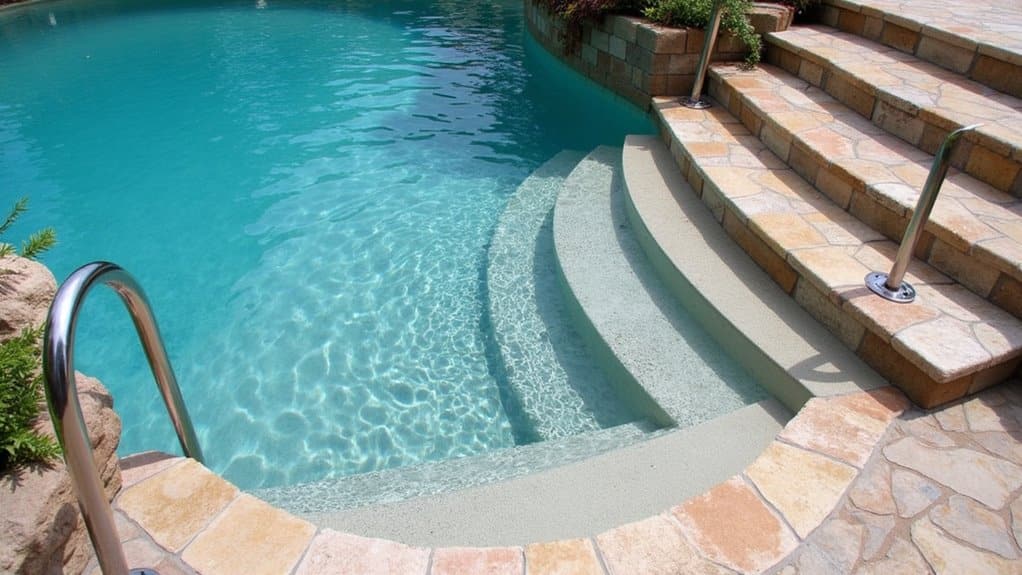
When creating a dog-friendly pool environment, safe entry and exit points serve as the foundation of your pool’s safety system. You’ll want to prioritize ramps over steps, especially for short-legged breeds that might struggle with traditional pool stairs during emergencies. Pool safety measures like proper access points can help prevent thousands of pool accidents annually.
Consider installing adjustable ramp inclines using options like inflatable Dog-DOK ramps or fiberglass-reinforced PetStep models. These feature non-slip surfaces and durable materials that withstand frequent use. With proper exit points, you can help reduce the risk of drowning accidents that affect thousands of pets annually. For existing pools, aftermarket ramps offer portable solutions without requiring permanent modifications. Constant supervision is essential when dogs have access to the pool area, regardless of safety features installed. Pair these entry points with motion activated pool alarms to monitor your pet’s pool activity.
If you’re building a new pool, incorporate built-in ramps during construction, ensuring the slope accommodates dogs of all sizes, particularly those with arthritis or mobility challenges.
Non-Slip Surfaces and Textured Flooring
Beyond safe entry points, your pool’s surrounding surfaces need reliable traction to prevent slips and injuries. You’ll want to focus on materials that combine safety with durability. Consider vinyl flooring with insulation properties or textured tiles treated with stain resistant coatings for ideal protection. For additional safety, select materials with the highest slip rating available, similar to commercial-grade vinyl flooring used in veterinary practices. Our surfaces provide maintenance-free design that stands up to heavy paw traffic and water exposure. Rubber flooring options offer excellent wet traction and are particularly resilient for high-traffic areas.
| Surface Type | Safety Features | Best Application |
|---|---|---|
| Vinyl Flooring | Waterproof, Textured | Pool Deck |
| PVC Mats | UV-Resistant, Raised Patterns | Transitional Areas |
| Epoxy Paint | Micro-Textured, Non-Slip | Pool Interior |
| Stone Pavers | Natural Grip, Heating Compatible | Sunbathing Areas |
| Artificial Turf | Drainage-Ready, Cushioned | Play Zones |
For maximum effectiveness, combine different surfaces strategically. Install seamless vinyl near splash zones, textured pavers in lounging areas, and UV-resistant PVC mats along high-traffic paths. Remember to maintain these surfaces regularly to preserve their slip-resistant properties.
Proper Drainage and Filtration Systems
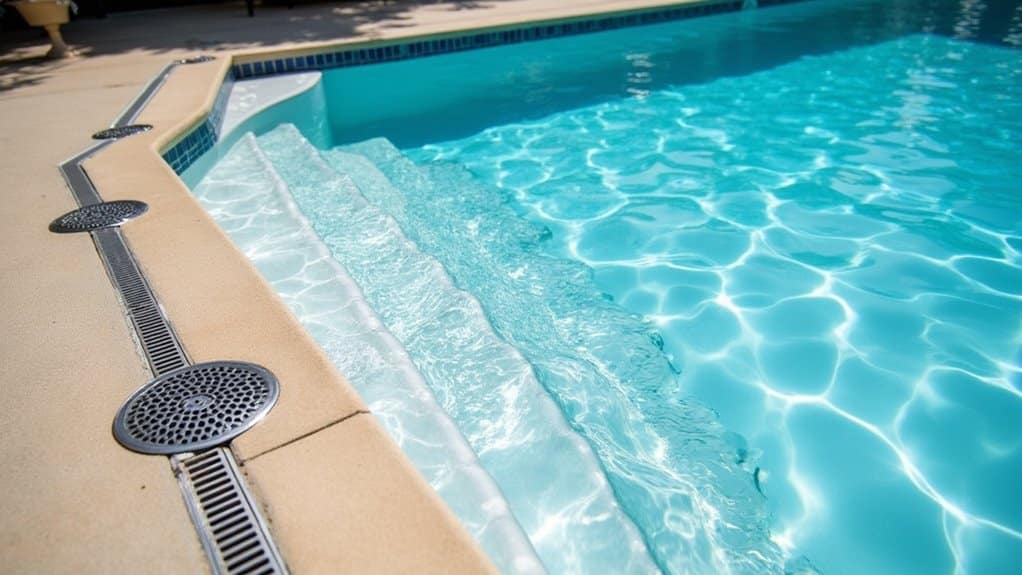
A reliable drainage and filtration system forms the backbone of any dog-friendly pool setup. You’ll want to install perforated pipes and gravel trenches around your pool’s perimeter to manage overflow effectively. For optimal water preservation strategies, consider incorporating multi-directional drainage with both bottom and side drains, especially for larger pet pools. French drain systems are particularly effective for managing water runoff and typically cost between $100-300 to install properly. Many modern pools feature dual drains for efficient water removal and maintenance, similar to the PETEAST XL design. Select drain types that match your pool’s design built-in valves work well for rigid pools, while collapsible models benefit from quick-release ports with garden hose attachments. Consider installing stainless steel covers for enhanced durability and style around pool areas. Don’t forget to implement seasonal maintenance schedules: clean grated covers weekly, backwash foldable pools regularly, and inspect drainage pipes annually for sediment buildup. Using stainless steel components and UV-resistant materials will guarantee your drainage system remains functional year-round while withstanding your dog’s active play.
Shade Solutions for Summer Comfort
Strategic placement of broad-canopy trees around your pool area can create natural shade zones that reduce water temperatures by up to 25°F while providing seasonal benefits through leaf cycles. You’ll want to complement this natural coverage with retractable shade sails that offer flexible UV protection and allow proper airflow, especially during peak summer hours. Installing a well-ventilated pergola near the pool’s edge gives your dog a dedicated cooling station with the option to add misting systems or fans for heightened temperature control. Consider adding shallow splash pools in shaded areas where your pup can cool off while playing. The cooling area should include a non-slip surface to ensure your pet can safely move around while staying comfortable in the shade. Adding a planter umbrella stand near the pool deck creates an attractive permanent fixture while providing additional shade coverage for your dog.
Natural Tree Canopy Placement
Creating natural shade around your pool requires careful consideration of tree placement and species selection. To establish multi-layered canopy structures while minimizing root intrusion, plant tropical species like palms and crepe myrtles 10-20 feet from your pool’s edge. Position shade trees strategically on the east and west sides to block intense afternoon sun. Consider installing retractable shade structures between trees for additional UV protection when needed. Adding overlapping shade sails in a three-dimensional layout between trees creates dynamic coverage patterns.
For year-round protection, combine deciduous trees with evergreens like holly or arborvitae. You’ll get summer shade when you need it most, while still allowing winter sunlight to warm the pool area. Choose native species for better climate adaptation and lower maintenance. When planning your layout, consider wind patterns to direct falling leaves away from the water. Remember to install mesh screens or netting to catch debris before it reaches your pool. These natural shade solutions will create a green living environment that enhances local biodiversity while providing essential pool shade.
Retractable Shade Sail Systems
When summer temperatures soar, retractable shade sail systems offer the perfect blend of functionality and style for your dog-friendly pool area. You’ll find options ranging from manual cord-operated designs to sophisticated motorized systems, all engineered to provide quick coverage when your pup needs a break from the sun.
Material quality is vital for long-term performance. Look for systems featuring 316 or Duplex 2205 stainless steel components, which offer superior corrosion resistance in pool environments. The high-tensile polyester mesh blocks 95% of UV radiation while maintaining durability through countless retractions.
While installation complexity varies, proper setup guarantees your system can withstand winds up to 51-62 mph. Custom sizing prevents gaps that curious pets might slip through, while secure attachments using eye bolts and spring links guarantee stability. Consider seasonal takedown in colder climates to protect your investment.
Pergola Design For Pools
A well-designed pergola transforms your pool area into a sophisticated outdoor retreat while providing much-needed shade for both you and your four-legged companions. These multi functional overhead structures can be customized with adjustable canopies and integrated privacy features to create the perfect balance of sun and shade throughout the day.
Choose from wood-grain aluminum finishes that offer durability while maintaining a natural aesthetic, or opt for sustainable wood materials if you prefer an eco-friendly approach. You’ll improve your poolside comfort with strategically placed fans, misting systems, and UV-resistant screens that keep both humans and pets cool. Consider incorporating corner-mounted designs or asymmetrical layouts that complement your pool’s shape while maximizing space for your dog’s activities. Don’t forget to add integrated seating areas where you can relax while keeping an eye on your pet.
Durable Materials That Resist Pet Wear
When you’re installing a pool for your pup, choosing puncture-proof liners with 30 mil thickness or greater will protect against sharp claws and prevent costly repairs. Heavy-duty edging systems, particularly those made from rust-resistant metal or reinforced PVC, provide essential structural support while keeping liner edges secure and preventing tears. You’ll want to pair these materials with proper installation techniques, ensuring all seams are properly sealed and edges are thoroughly anchored to optimize durability and safety for your four-legged swimmer.
Puncture-Proof Pool Liners
Protecting your pool’s liner from enthusiastic dog claws requires specialized materials engineered for durability and resilience. Your best option is a 30 mil premium American-made vinyl with multi-layer construction, featuring a double-layer topcoat that stands up to pet scratches and regular play.
For maximum protection, you’ll want to install reinforced liner pads beneath your pool liner. These woven or non-woven materials create an additional barrier against sharp objects and ground debris. Consider using ReNew® sustainable production methods, which deliver eco-friendly solutions without compromising on performance. The non-porous antimicrobial surface prevents algae growth while meeting CFFA-P-101 certification standards for pet environments.
Don’t forget to pair your liner with polypropylene underlayment for amplified ground protection and extended service life.
Heavy-Duty Edging Systems
Selecting the right edging system forms a critical barrier between your pool’s perimeter and your dog’s activities. For optimal material durability, consider natural stone edging secured with outdoor adhesive or powder-coated metal frames that provide superior impact resistance against heavy paw traffic.
You’ll want to reinforce your edging with proper drainage integration to prevent structural weakness. Install French drains or perforated pipe networks beneath your chosen material, and guarantee proper grading to direct water away from the edges. For improved safety, incorporate slip-resistant features like textured composite surfaces or rubberized coatings that provide reliable traction even when wet.
Don’t forget to anchor your edging system properly using geogrid stabilizers or concrete anchor bolts, particularly in areas where your dog frequently jumps or plays.
Easy-Clean Features for Maintenance
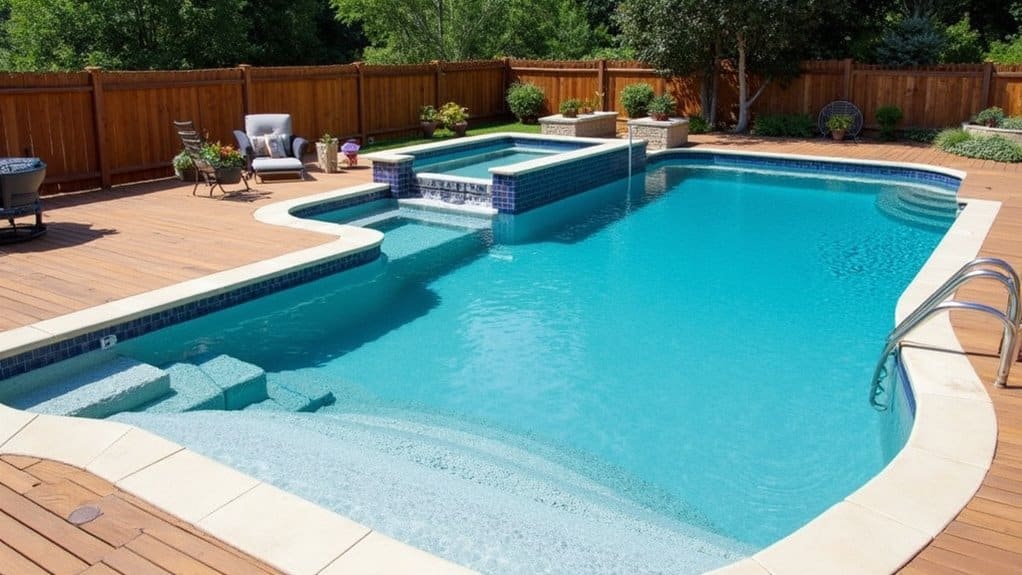
Since maintaining a dog-friendly pool requires extra attention, installing the right easy-clean features can substantially reduce your maintenance workload. Start by upgrading to high-capacity filters and dual filtration systems that can handle increased pet debris. Install secondary strainer baskets and wide-mouth skimmers to capture hair and particles before they reach your main filter.
You’ll want to invest in chemical-free sanitizers like UV light systems and mineral purifiers to generate gentler water conditions. Set up frequent cleaning cycles with a variable-speed pump that guarantees proper water turnover. Don’t forget to install larger diameter pipes to prevent clogs and improve circulation. For daily maintenance, you’ll need efficient tools like automated vacuums and extended skimmer nets. These features work together to keep your pool clean while minimizing your hands-on maintenance time.
Secure Pool Perimeter and Fencing
A secure pool perimeter stands as your initial line of defense in keeping dogs safe around water. While Tennessee requires a minimum 4-foot fence height, consider installing a 5-foot barrier for improved protection. You’ll need durable materials that can withstand your dog’s enthusiasm and strength, along with proper safety features like self-closing gates and secure latches.
- Install gates that automatically close and latch, positioning handles at least 54 inches high to prevent clever paws from reaching them
- Add compliant pool safety signage and water depth indicators at key points around your perimeter
- Maintain a maximum 2-inch ground clearance and confirm mesh openings don’t exceed 4 inches
- Place fencing away from potential climbing aids like trees or furniture, and reinforce barriers with pet-resistant mesh for determined diggers
Frequently Asked Questions
How Deep Should a Dog Pool Be for Different Breeds?
You’ll need to match your dog’s pool depth to their breed size and swimming ability. For most breeds, maintain 8-12 inches of water, ensuring proper pool entry/exit access. Keep small breeds and non-swimmers at 8-9 inches, while water-loving breeds can handle 11-12 inches. Always include shallow wading areas for safety. Large breeds like Great Danes need wider pools but can use the same 11-12 inch depth as medium breeds.
Can Multiple Dogs Safely Use the Pool at the Same Time?
Yes, multiple dogs can safely swim alongside proper precautions. You’ll need constant supervision to monitor their interactions and energy levels. Don’t let more than 2-3 dogs swim at once to maintain control. If you’re using floating devices, guarantee each dog has their own to prevent resource guarding. Keep weaker swimmers near the shallow end and watch for signs of exhaustion or aggressive behavior. Always maintain clear exit points for all dogs.
What Water Temperature Is Best for Dogs When Swimming?
You’ll want to maintain water temperatures between 60-75°F for your dog’s ideal swimming experience. While some dogs can tolerate cooler waters in the 50s, don’t let them swim for more than 20 minutes in these conditions. Keep in mind that puppies and smaller breeds need warmer temperatures, closer to 75°F. Always guarantee there’s a comfortable water depth where your dog can touch the bottom while keeping their head above water.
How Often Should Pool Water Be Changed for Dog Safety?
You’ll need to maintain different water replacement schedules based on your pool’s size. For small dog pools, change the water daily to prevent bacterial growth. For larger pools, perform weekly partial drains and refills if dogs swim frequently. Regular pool water testing is essential to check levels before and after dog swimming sessions. Always maintain proper chemical balance, and don’t hesitate to replace water immediately if there’s fecal contamination or chemical imbalances.
Are There Specific Chemicals That Are Safer for Dogs’ Pools?
You’ll find several dog-safe pool treatment options that minimize chemical exposure. Consider switching to nontoxic disinfectants like enzyme-based cleaners that naturally break down organic matter. Saltwater purification systems are particularly gentle on your dog’s skin and coat, as they use lower chlorine concentrations. UV sanitizers and mineral-based ionizers also provide effective alternatives to harsh chemicals. Whatever system you choose, always maintain proper sanitization levels and rinse your dog after swimming.