You’ll need to budget $2.5-3.5 million for a complete Olympic pool installation in 2025, with costs varying by region and site conditions. Your base construction expenses start at $500,000, but essential infrastructure, specialized engineering, and regulatory compliance will greatly impact the final investment. Northeast and West Coast locations face 15-25% higher costs than the national average. Understanding the full scope of requirements and regional variables will help you optimize your project’s budget.
Core Dimensional Requirements & Standards
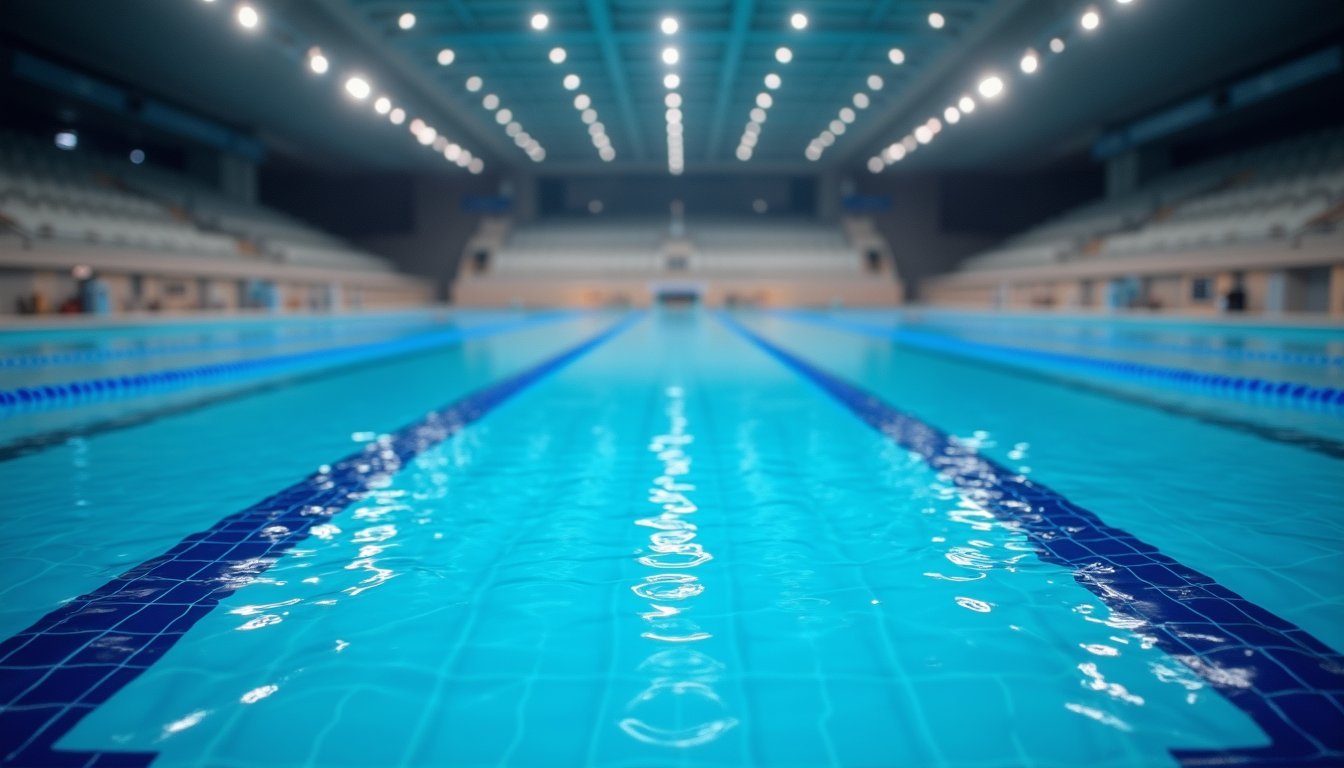
An Olympic-size swimming pool requires precise adherence to World Aquatics’ exacting specifications, with a standard length of 50 meters and width of 25 meters. You’ll need to accommodate exactly 10 lanes, each measuring 2.5 meters wide, with the total installation length not exceeding 50.030 meters when including timing pads. Touch pads at both ends of the pool ensure accurate competition timing. The 50-meter length standard was officially established in 1924 for Olympic competitions.
Lane depth optimization is vital, with a minimum depth requirement of 2 meters. For superior performance conditions, you’ll want to ponder a 3-meter depth to minimize water turbulence. Pool geometry considerations must account for even lane distribution and adequate buffer zones along the edges. The total water volume you’re looking at is approximately 2.5 million liters (660,000 gallons). Remember, any deviation from these strict dimensional requirements will disqualify your facility from Olympic qualification. The pool must maintain optimal water temperature between 77 and 82 degrees Fahrenheit to ensure peak athletic performance.
Base Construction & Installation Expenses
When you’re planning an Olympic pool installation, you’ll need to carefully evaluate material choices between gunite and traditional concrete, with gunite offering superior durability but commanding a 15-20% premium in most markets. Your regional location greatly impacts base construction costs, with labor rates, material availability, and seasonal constraints varying by up to 40% between major metropolitan areas versus rural settings. For enhanced online security measures, many construction companies now require website verification through Cloudflare when accessing project quotes and planning tools. Site-specific excavation challenges, including soil composition, water table levels, and terrain grade, can rapidly escalate your initial budget estimates by $50,000-$120,000 beyond standard baselines. In the Northeast, expect to pay 15-25% higher than the national average due to shorter construction seasons and more complex site preparation requirements. While material options vary, fiberglass pools offer the advantage of easier maintenance and durability compared to other materials, though they may not be suitable for Olympic dimensions.
Material Selection Trade-offs
Selecting the ideal material for an Olympic-size pool requires careful analysis of initial costs, longevity, and maintenance requirements across four primary options. Professional pool maintenance costs typically run $80-150 monthly for these large installations. In comparison to residential installations, these facilities can cost up to $500,000 for comprehensive builds.
Concrete pools offer superior customization and durability (50-100 years) but come with the highest installation costs ($300,000-$400,000) and require attention to surface cracking. Site-specific factors will significantly impact the final installation quote, particularly for concrete pools. Fiberglass provides faster installation and lower maintenance but faces size limitations. Vinyl liners present the lowest upfront costs ($150,000-$250,000) but need specialized crews for installation and regular replacements. Metal options, while extremely durable, command premium pricing ($600,000+) and demand expert engineering.
You’ll need to weigh the trade-offs carefully: concrete’s versatility versus higher maintenance, fiberglass’s efficiency against size constraints, vinyl’s affordability versus replacement cycles, and metal’s longevity against substantial initial investment.
Regional Cost Variables
Location dictates the bottom line when building an Olympic-size pool, with costs varying drastically across U.S. regions. You’ll face higher expenses in the Northeast and West Coast, where labor union requirements and stringent regulatory compliance mandates can add $30,000-$60,000 to your project. An Olympic pool installation typically costs between $50 to $125 per square foot depending on the materials selected. Concrete pools are most commonly chosen for Olympic installations due to their durability and customization options.
Southern and Midwestern locations typically offer more favorable pricing, with labor costs running 10-20% lower than the national average. However, you’ll need to factor in climate-specific considerations: Northern sites require frost-resistant engineering, while coastal hurricane zones demand specialized contractors at a 15-25% premium. Your location’s permit requirements also impact costs noticeably – urban areas charge hefty impact fees and environmental compliance costs, while Southern states often provide streamlined permitting processes. Local market competition affects pricing too, with Sun Belt states offering more competitive rates due to numerous qualified contractors.
Excavation Site Challenges
Three critical factors drive excavation costs for Olympic-size pools: soil composition, site accessibility, and terrain complexity. When planning your excavation, you’ll need to carefully evaluate these site-specific challenges that can greatly impact your budget. For optimal site security during construction, a security service protection system should be implemented to safeguard equipment and materials. If suspicious activity occurs, Cloudflare Ray ID verification can help identify potential security breaches.
- Rockground obstacles require specialized equipment, increasing costs by 300-400% and extending the standard 4-8 hour timeline.
- Uneven terrain demands additional grading ($200-$900) and possible retaining walls ($6,000-$12,000).
- Limited access points force contractors to use smaller equipment, increasing labor hours and costs.
- Poor soil conditions necessitate improved stabilization measures to prevent future structural issues.
Site Preparation & Infrastructure Demands
Before breaking ground on an Olympic-sized pool, you’ll need to address extensive site preparation and infrastructure requirements that directly impact project costs and timeline. You’ll face critical decisions regarding utility rights-of-way considerations and regulatory permit obstacles that can drastically affect your budget.
Your site must accommodate not just the 50m x 25m pool footprint, but also essential mechanical rooms, deck space, and spectator areas. A minimum depth of 2 meters must be maintained throughout the pool to meet international competition standards. The pool design must also include ten racing lanes, each requiring precise width measurements for competition compliance. You’ll need to upgrade water supply lines to handle massive volume requirements, install powerful electrical systems for filtration and lighting, and guarantee proper stormwater management. In addition, you’ll require thorough soil testing and potential stabilization measures before excavation begins. Don’t overlook the necessity of high-capacity filtration systems and chemical dosing equipment, which must meet strict competition standards while maintaining water quality.
Annual Operating & Maintenance Budget
Operating an Olympic-size pool demands substantial annual budgets that greatly impact long-term facility planning. Your sustainability initiatives and labor force flexibility will directly influence these core operational expenses:
- Chemical and water treatment costs range from $2,700-$4,000 annually, with automated dosing systems helping reduce waste while meeting strict regulatory standards
- Staffing represents your largest investment at $150,000+ yearly for lifeguards and maintenance personnel, including certifications and mandated training
- Utility expenses typically exceed $100,000 annually, covering filtration, heating, and water consumption, though efficiency upgrades can offset these costs
- Maintenance, repairs, and insurance requirements add $15,000+ yearly, encompassing routine cleaning, equipment servicing, and regulatory compliance
Consider establishing reserve funds for unexpected repairs and capital improvements to guarantee sustained operations.
Performance Engineering & Technical Features
Engineering an Olympic-size pool demands scrupulous attention to performance specifications that directly impact both competitive integrity and operational efficiency. You’ll need to focus on buoyancy management through strategic depth design, with 3-meter depths reducing wave rebound and maximizing swimmer performance.
Automated monitoring systems integrate digital controls for chemical balance, temperature regulation (25-28°C), and hydraulic flow distribution. You’ll require high-rate filtration systems capable of complete water turnover within 4 hours, alongside dual disinfection methods combining chlorine with UV or ozone treatment. Anti-turbulence features, including specialized lane lines and overflow gutters, minimize cross-lane interference. Your facility must maintain 1,500 lux lighting with 80+ CRI for ideal visibility, while HVAC systems regulate humidity between 50-60% to guarantee consistent air quality and prevent condensation issues.
Long-Term Investment & Market Outlook
The strategic value of Olympic-size pools extends far beyond their technical specifications into compelling market dynamics. With a global swimming pool market projected at $3.54 billion in 2025 and financing options becoming increasingly flexible, your investment outlook remains positive despite moderate growth rates.
Consider these market indicators when evaluating long-term ROI:
- Sustained 2.2-2.5% CAGR through 2029, driven by urbanization and wellness trends
- Growing aftermarket revenue potential through maintenance services, currently a $7.2 billion segment
- Emerging eco-friendly features enhancing asset longevity while meeting regulatory compliance standards
- Rising demand from hospitality sectors utilizing Olympic pools as premium amenities
While tariffs and seasonal volatility pose challenges, strategic positioning in wellness and sustainability-focused markets can optimize your investment returns across economic cycles.
Frequently Asked Questions
How Many Swimmers Can Train Simultaneously in an Olympic-Size Pool?
You’ll find that an Olympic-size pool can accommodate 20-40 swimmers during standard training sessions, with 2-4 athletes sharing each lane. Pool capacity limitations depend on your training intensity and swimmer scheduling requirements. For competitive sessions, you’ll want to maintain lower densities (1-2 per lane), while recreational or clinic settings can support up to 60 swimmers. You’ll need to balance lane allocation based on swimmers’ abilities and workout types.
What Happens to Outdoor Olympic Pools During Severe Weather Conditions?
During severe weather, your outdoor Olympic pool faces significant risks. You’ll need to implement pool winterization procedures to protect against freeze damage, including draining water levels, blowing out pipes, and adding antifreeze to plumbing systems. High winds and storms can cause structural damage to pool walls, deck surfaces, and equipment. You’ll also encounter water quality issues from rainfall contamination and chemical imbalances, requiring immediate maintenance to prevent long-term deterioration and costly repairs.
Can Olympic Pools Be Converted for Other Sports or Activities?
Yes, you can convert Olympic pools for multiple sports and activities through multipurpose pool design strategies. You’ll need to think about installing adjustable floors, removable platforms, or modular components to adapt the space. For recreational pool conversions, you can modify the facility for water polo, synchronized swimming, or even non-aquatic sports like basketball or ice hockey. However, you’ll face significant costs and technical challenges when implementing structural modifications to meet different sports’ requirements.
How Often Must the Entire Pool Water Be Completely Replaced?
You’ll need to completely replace your Olympic pool water every 5-7 years if you maintain proper water filtration and circulation systems. However, you might require more frequent changes if your TDS levels exceed 1,500 ppm. Seasonal maintenance requirements can affect this timeline, especially in high-traffic facilities. You should monitor water quality daily and adjust your replacement schedule based on usage patterns, local regulations, and chemical balance readings to avoid unnecessary full drains.
What Qualifications Do Staff Need to Maintain an Olympic-Size Pool?
You’ll need staff with Certified Pool Operator (CPO) certification, which is legally required in most jurisdictions. Your team must complete CPO training covering water chemistry, filtration systems, and health codes. They’ll also need CPR certification for emergency response. It is crucial to maintain ongoing education as regulations change. Consider hiring professionals with experience in large-scale aquatic facilities, as Olympic pools require specialized knowledge of industrial-grade equipment and chemical management systems.