

To design a rock patio around your pool, start by analyzing your backyard’s sun exposure, drainage patterns, and traffic flow to determine ideal patio zones for activities like lounging and dining. Next, select durable, slip-resistant rock materials that complement your pool’s style while prioritizing moisture resistance and heat deflection. Ultimately, guarantee proper installation with a 2-inch gravel base, landscape fabric, and slight grading away from the pool. These foundational steps will set you up for detailed design decisions.
Planning Your Perfect Pool Patio Layout
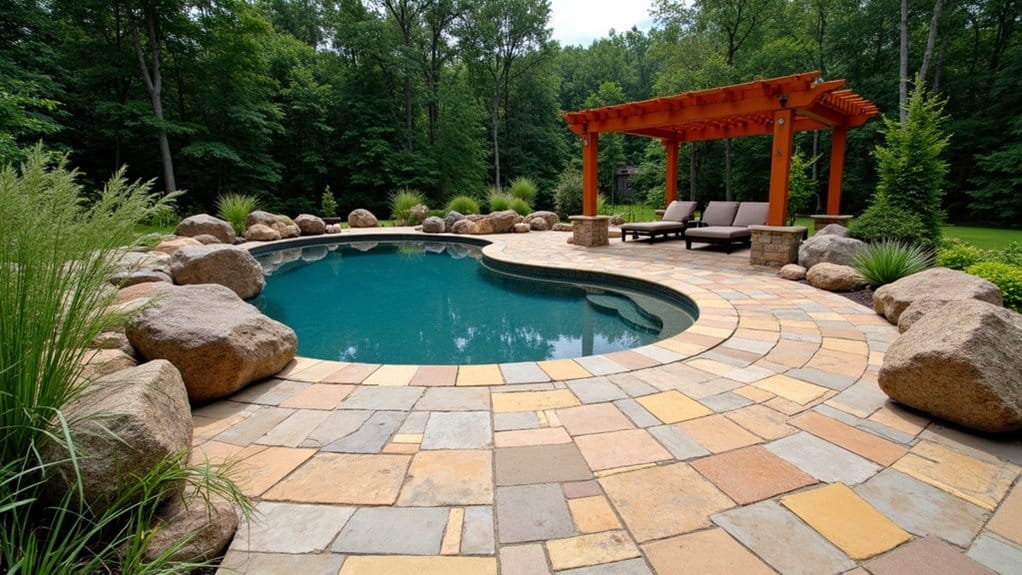
When planning a pool patio layout, a detailed site analysis forms the critical foundation for your design’s success. Start by identifying your property’s sunniest location while accounting for wind patterns that could affect comfort and maintenance. You’ll need to evaluate grade changes that might influence drainage or create opportunities for dramatic features like infinity edges. Include a tanning ledge in your pool design as a versatile shallow platform perfect for both lounging and supervised toddler play. Consider incorporating ornamental grasses along one edge of your pool for a soft, maintenance-friendly border.
Organize your space into distinct zones: water activities, lounging, dining, and social gathering areas. Consider adding a stylish and functional outdoor kitchen area for the perfect entertainment space. Incorporate shade structures strategically to moderate temperature and create comfortable shift zones between wet and dry areas. Guarantee unobstructed sight lines from seating areas to the pool for safety, and maintain clear pathways for emergency access. You’ll want to position trees and plantings away from the patio to prevent root damage and minimize debris accumulation in your carefully planned spaces.
Choosing the Right Rock Materials
The selection of rock materials for your pool patio demands careful consideration of five critical factors: durability, heat resistance, safety, aesthetics, and maintenance requirements. When evaluating your options, focus on materials that offer superior impact resistance and moisture resistance to guarantee long-term performance. For a professional installation with optimal performance, consider applying a Carvestone overlay to existing surfaces. Choose materials with sleek lines for a more sophisticated and polished appearance.
Consider incorporating smooth river rocks as natural accents to create an elegant transition between different patio zones. Your primary choices include:
- Granite and travertine – offering exceptional durability with 6,000+ PSI strength, superior moisture resistance, and minimal maintenance
- Flagstone and limestone – providing natural slip resistance and heat reflection while maintaining structural integrity when wet
- Concrete pavers – delivering customizable aesthetics with engineered texture for safety, plus easy spot repairs
For ideal results, select materials that balance practical performance with visual appeal. Light-colored stones will keep your patio 20-30°F cooler than darker alternatives, while textured surfaces guarantee safety in wet conditions.
Essential Installation and Design Tips
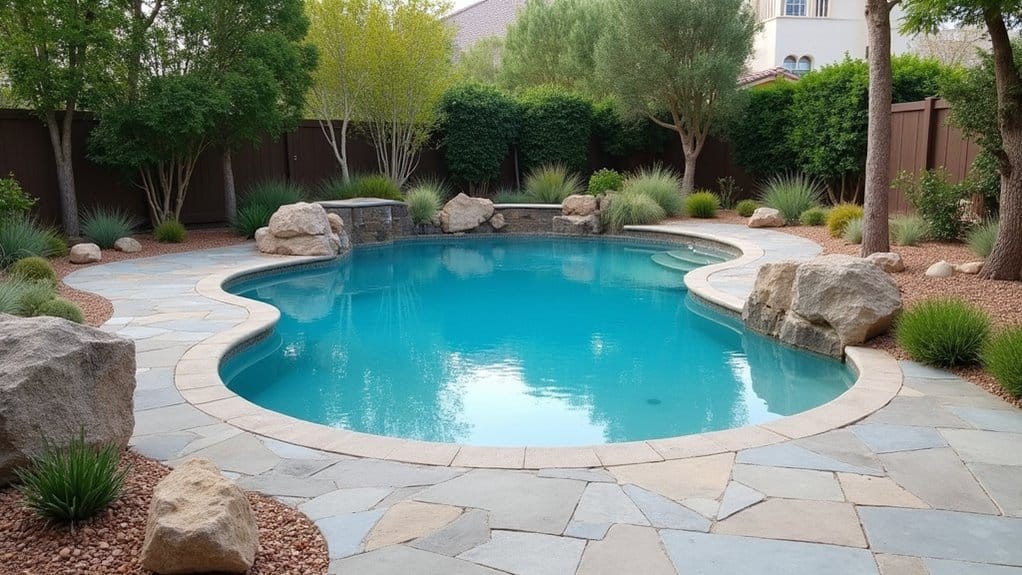
Building on your rock material selection, proper installation techniques and thoughtful design considerations will determine your patio’s longevity and functionality. Start with accurate measurements and proper excavation techniques, extending your dig 8-12 inches beyond the pool’s edge. Ensuring proper sun exposure will enhance your poolside experience throughout the day. Your patio design should complement your overall pool style and shape. Just like the pool installation requires a 2-inch gravel base for stability, you’ll need to install a 2-inch gravel base, followed by landscape fabric and leveling sand.
When laying rocks, guarantee they’re positioned for ideal drainage with a slight grade away from your pool. Apply effective sealing methods like polymeric sand between rocks to prevent shifting and weed growth. You’ll want to incorporate safety features such as slip-resistant surfaces and secured border stones. For enhanced aesthetics and functionality, consider integrating built-in seating or water features on stable sections while maintaining earth-tone color schemes that complement your pool area.
Frequently Asked Questions
How Long Does It Typically Take to Complete a Rock Patio Installation?
Your rock patio’s project timeline typically ranges from 3-14 days, depending on installation complexity and size. You’ll need 3-5 days for small 300-square-foot patios, while larger 1,000-square-foot installations take up to 14 days. If you’re incorporating features like fireplaces or seat walls, expect an additional 2-3 weeks. Keep in mind that site preparation consumes 90% of the timeline, and factors like weather conditions or intricate designs can prolong your completion date.
Can Existing Pool Patios Be Converted to Rock Designs Without Damaging Pools?
Yes, you can convert your existing pool patio to a rock design with proper planning and professional expertise. Initial, you’ll need to assess your existing pool layout considerations, including structural integrity and drainage systems. Common pool patio renovation challenges include protecting pool plumbing, maintaining proper slope for drainage, and ensuring the pool’s shell isn’t compromised during demolition. You’ll want to use protective barriers and carefully staged demolition to prevent debris from entering the pool.
What’s the Average Lifespan of Different Types of Rock Patios?
You’ll get the longest lifespan from natural stone patios, lasting 50-100+ years, especially with granite and cobblestone varieties. Your maintenance requirements will directly impact longevity; regular sealing and cleaning are essential. Concrete pavers offer 25-50 years of use, while brick patios typically last 25-40 years. Gravel patios can last indefinitely with proper repair considerations, including periodic replenishment and releveling to maintain their structural integrity and appearance.
How Does Climate Affect the Choice of Rocks for Pool Patios?
Climate profoundly influences your rock selection through temperature variations and moisture absorption patterns. In freeze-thaw regions, you’ll need dense, non-porous stones like granite or bluestone to prevent water infiltration and cracking. For hot climates, choose lighter-colored stones that won’t absorb excessive heat. You’ll want to ponder your area’s humidity levels, as high moisture can accelerate deterioration in porous rocks. Always factor in UV exposure, which can fade darker materials over time.
Are Special Permits Required for Installing Rock Patios Around Pools?
Yes, you’ll typically need permits for installing rock patios around pools. You must comply with local building codes that regulate construction, drainage, and safety features. Check with your city or county building department, as they’ll require detailed site plans and specifications. If you’re part of an HOA, you’ll also need to obtain homeowner association regulations approval. Structural modifications, grading changes, or raised designs may trigger additional permit requirements.