You’ll need to test five key parameters weekly: pH (7.4-7.6), total alkalinity (80-120 ppm), free chlorine (2.0-4.0 ppm), calcium hardness (200-400 ppm), and cyanuric acid (30-50 ppm). Start by adjusting total alkalinity initially, then balance pH levels using appropriate chemicals. Sample water 12-18 inches below the surface for accurate results. Clean pool components regularly and run circulation 4-6 hours daily. Our detailed guide breaks down each step with precision.
Essential Water Testing Equipment and Methods
How do you maintain perfect pool chemistry without proper testing equipment? You can’t. Regular water testing is essential for safe, clean swimming water, and you’ll need reliable tools to get accurate readings.
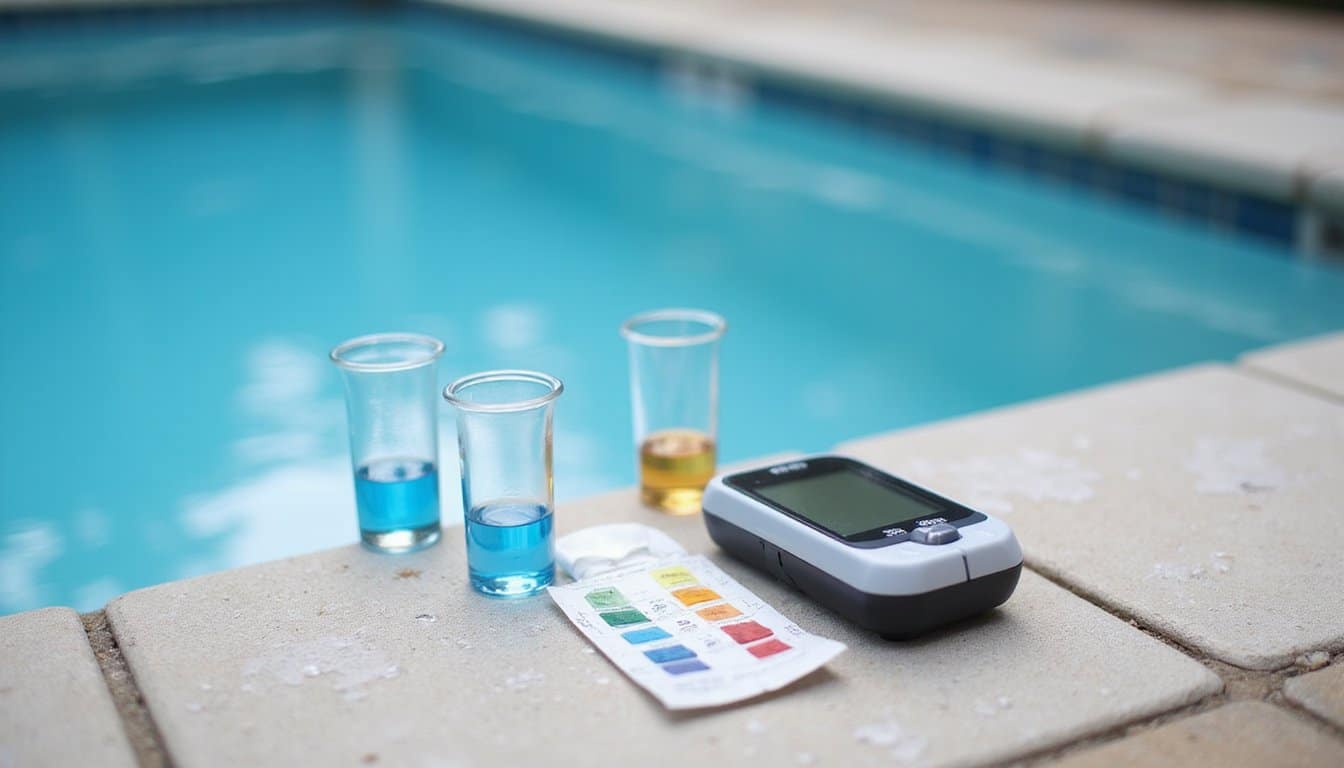
Test strips offer a quick, affordable solution for routine testing frequency, allowing you to check basic parameters like chlorine and pH daily. Drop-count titrations provide accurate results with minimal technical expertise, making them ideal for home pool owners. Remember that even if your pool looks crystal clear, water clarity alone does not guarantee proper chemical balance. Taking samples 12-18 inches below the surface provides the most accurate representation of your pool’s chemistry. For weekly maintenance, liquid test kits provide more precise results through drop-count titration and color matching. If you’re seeking maximum accuracy, professional grade test kits like digital testers and photometers eliminate color interpretation guesswork and deliver exact measurements.
Your testing arsenal should include at least two methods: test strips for daily checks and a more precise option like a liquid kit or digital tester for weekly detailed analysis of multiple parameters including alkalinity, calcium hardness, and stabilizer levels.
Understanding the Core Pool Chemistry Parameters
Now that you’ve got your testing equipment ready, let’s examine the five core chemical parameters that determine pool water quality: pH, total alkalinity, chlorine, calcium hardness, and cyanuric acid. Regular testing helps prevent skin rashes and equipment damage while maintaining water clarity. Total alkalinity is particularly important as low alkalinity can lead to corrosion and surface damage.
| Parameter | Ideal Range | Primary Function |
|---|---|---|
| pH | 7.4-7.6 | Comfort & Equipment Protection |
| Total Alkalinity | 80-120 ppm | pH Buffer System |
| Free Chlorine | 2.0-4.0 ppm | Sanitization |
These parameters work together in your saturation index calculation to guarantee properly balanced water. Maintain pH between 7.4-7.6 for optimal swimmer comfort and chlorine efficiency. Keep total alkalinity at 80-120 ppm to prevent pH fluctuations. Target free chlorine at 2.0-4.0 ppm for effective sanitization. Set calcium hardness at 200-400 ppm to protect surfaces, and maintain ideal chlorine stabilization levels with cyanuric acid at 30-50 ppm for standard pools. When shock treating for cloudy water or after rain, proper shock dosage should be calculated based on your pool’s volume.
Step-by-Step Guide to Chemical Balancing
A systematic approach to pool chemical balancing guarantees safe, clean water while safeguarding your investment. Begin by testing water parameters weekly using reliable test kits, sampling from elbow depth away from return jets. Clean pool components ensure accurate test results and proper chemical distribution. Total dissolved solids should be checked monthly to maintain proper water chemistry. Following regulatory compliance requirements, adjust total alkalinity initially (80-120 ppm), as it’s indispensable for pH stability.
Next, balance pH levels to 7.2-7.8, making gradual adjustments with appropriate chemicals. Your chemical dosing calculations should account for pool volume when adding sanitizers to maintain 1-3 ppm free chlorine. In the end, fine-tune cyanuric acid (30-50 ppm) and calcium hardness (200-400 ppm) levels. After each adjustment, run the pump for proper circulation and retest to confirm desired levels. Remember to document all test results and chemical additions for tracking purposes.
Safe Chemical Handling and Storage Practices
Proper chemical handling and storage practices serve as the foundation for pool safety and maintenance success. To minimize hazardous chemical exposure risks, you’ll need to store chemicals in a cool, dry, well-ventilated location away from your home. Keep chemicals separated on raised shelves to prevent incompatible reactions, and never store different types above or below each other. Only trained personnel should be responsible for handling and maintaining pool chemicals. Emergency response plans should be coordinated with local first responders.
Always wear proper personal protective equipment when handling chemicals, and use designated tools for each chemical type to avoid cross-contamination. Keep your storage area locked and equipped with temperature control and ventilation systems. Store chemicals away from water sources and ignition points, and maintain them in their original containers. Install leak-proof secondary containment systems and consult Safety Data Sheets before developing your storage plan.
Seasonal Maintenance Tips for Crystal Clear Water
Building upon safe chemical handling practices, maintaining crystal clear pool water requires systematic seasonal care and monitoring. You’ll need to adjust your maintenance routine based on usage patterns and weather conditions throughout the year.
For effective seasonal algae prevention strategies, test and balance your water chemistry 2-3 times weekly, focusing on pH (7.4-7.6), alkalinity (80-120 ppm), and chlorine (1-3 ppm). When maximizing sanitizer circulation, vacuum your pool weekly and brush walls to prevent algae buildup. Running circulation 4-6 hours daily helps maintain proper chemical distribution throughout the pool. During heavy use periods or after rainfall, shock your pool weekly. Deep cleaning the pool monthly helps maintain optimal water quality and prevents buildup of contaminants.
Before winter, balance chemistry, add winterizing agents, and lower water below skimmer level. In spring, thoroughly clean the pool, restore water levels, and shock treat to eliminate winter buildup. Don’t forget to maintain equipment monthly, checking filters, pumps, and heaters for ideal performance.
Frequently Asked Questions
How Long Should I Wait to Swim After Adding Pool Chemicals?
You’ll need to wait different times depending on the chemicals you’ve added. For basic treatments like pH adjusters, wait 20-30 minutes. For regular chlorine, wait 4-8 hours to guarantee proper chemical equilibration time. After shocking your pool, wait 8-24 hours. Always verify proper chemical dosage has dispersed by testing water chemistry before swimming. Keep your pump running during this time to help distribute chemicals evenly throughout your pool.
Can I Use Household Bleach Instead of Pool Chlorine?
While you can technically use household bleach, it’s not recommended for pool chemical safety. You’ll face significant challenges: bleach’s low concentration (5-6%) means you’ll need more frequent applications, and its high pH can disrupt water balance. Without stabilizers, the chlorine dissipates quickly in sunlight. Household bleach dangers include inconsistent dosing, potential additives that harm water quality, and storage risks. Stick with pool-specific chlorine products for reliable, safe sanitization.
Why Does My Pool Water Turn Green After Heavy Rain?
Your pool turns green after heavy rain because rainwater disrupts your pool’s chemical balance in three main ways. Initially, it dilutes your sanitizer levels, making them less effective at preventing pool algae growth. Second, rainwater introduces contaminants and phosphates that feed algae. Third, rain’s natural acidity alters your pool’s pH, reducing chlorine’s effectiveness. You’ll need to test and adjust your chemical levels promptly after rainfall to prevent these issues.
What Causes Eye Irritation Even When Chemical Levels Seem Balanced?
Even with balanced chemical readings, your pool can cause eye irritation due to chloramines, compounds that form when chlorine reacts with organic contaminants like sweat, sunscreen residue, and urine. Your pH levels might also fluctuate throughout the day, especially after heavy use or rain. Moreover, microscopic algae growth and accumulated body oils can create irritants that aren’t immediately visible in standard chemical tests. Always guarantee proper swimmer hygiene and maintain consistent filtration.
Should I Drain My Pool Completely to Fix Severe Chemical Imbalances?
Don’t drain your pool completely; it’s risky and usually unnecessary. Instead, start with partial drains of 25-30% if you’re dealing with high chemical stabilizer levels. You’ll preserve your pool’s structural integrity while gradually correcting imbalances. Your pool drain frequency should be minimal; most chemical issues can be resolved through targeted treatments and water chemistry adjustments. If stabilizer exceeds 100 ppm, consider sequential partial drains spread over time.