To maintain clean pool water, you’ll need to test and adjust chlorine levels weekly, keeping free chlorine between 1.0-3.0 PPM and pH at 7.2-7.8. Collect water samples from 18 inches deep in the pool’s center after running the pump for an hour. Apply shock treatments after sunset, using the appropriate chlorine type for your pool setup. Run filtration for 6-24 hours post-treatment. Understanding the intricacies of different chlorine types and testing procedures will improve your pool maintenance success.
Understanding Chlorine Types and Their Applications
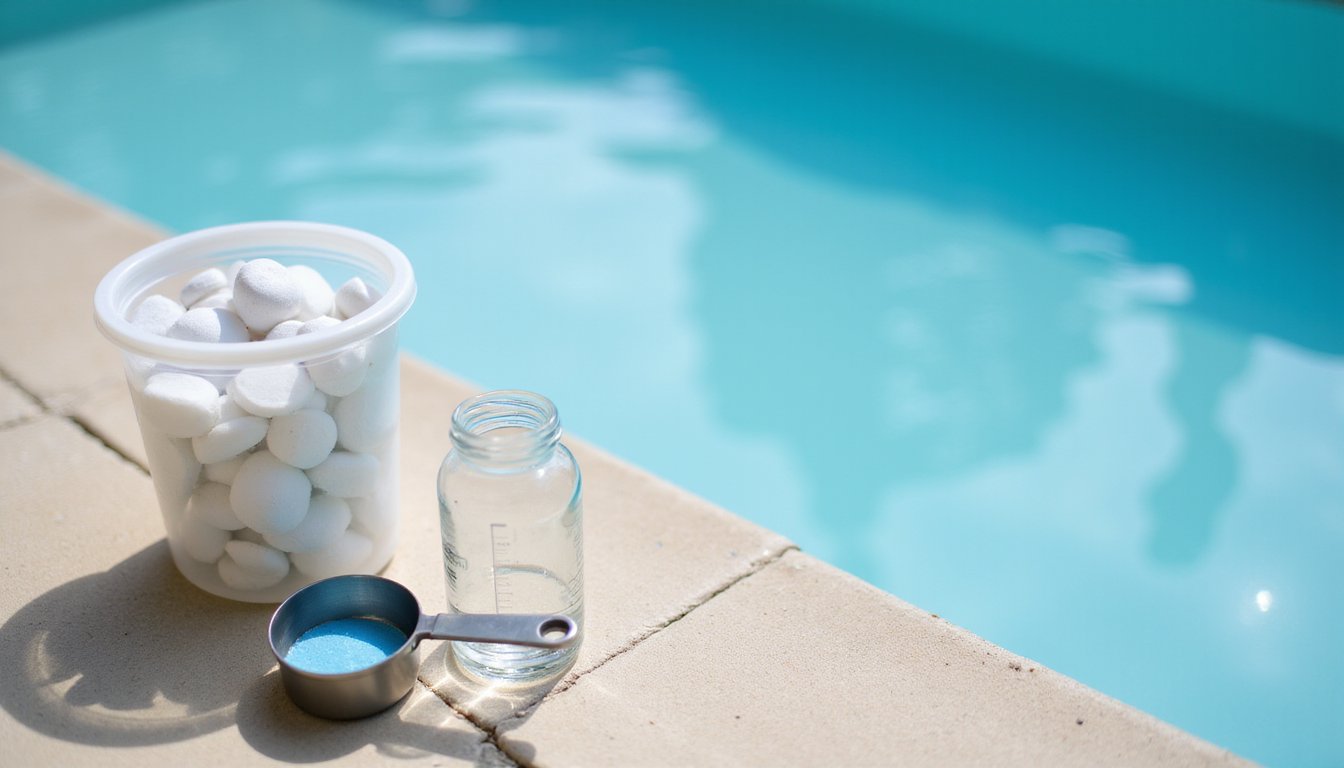
Four main types of chlorine sanitizers serve distinct roles in pool maintenance: liquid chlorine (sodium hypochlorite), calcium hypochlorite (cal hypo), dichlor, and trichlor. Each type offers specific advantages and limitations you’ll need to ponder for your pool’s requirements. Due to its potent nature, chlorine gas can be very toxic substance when handled improperly. The ideal free chlorine level for safe swimming ranges between 1.0 and 3.0 ppm. Chlorine tablets contain 90 percent chlorine to effectively maintain pool chemistry over extended periods.
Liquid chlorine’s short shelf life and rapid decomposition rate make it ideal for indoor pools, while cal hypo’s high available chlorine content makes it perfect for shock treatments. You’ll find dichlor’s neutral pH and built-in stabilizer beneficial for daily maintenance of small pools and spas. Trichlor tablets, with their slow-dissolving properties, work well in automatic feeders for ongoing sanitization. Comprehending these differences is pivotal, unstabilized options like liquid chlorine and cal hypo decompose quickly in sunlight, while stabilized varieties like dichlor and trichlor provide UV protection through their cyanuric acid content.
Essential Pool Water Testing Procedures
Maintaining accurate pool water chemistry requires a systematic approach to testing procedures that encompasses proper sampling techniques, reliable testing methods, and consistent monitoring schedules.
To guarantee accurate results, you’ll need to follow specific sample collection techniques. Collect water from the pool’s center at 18 inches depth, staying clear of skimmers and returns. You’ll want to circulate your pool water for an hour before testing to achieve even chemical distribution. The proper mixing ensures total alkalinity remains stable throughout the pool water. When implementing handling procedures for testing kits, avoid contaminating reagents by not touching vial interiors or rims. Whether you’re using test strips, liquid reagents, or digital meters, follow manufacturer instructions precisely. Test at least weekly, increasing frequency during heavy use periods or after weather events. Professional analysis at your local pool store provides comprehensive monthly testing validation. Testing chlorine and pH levels 2-3 times per week helps maintain optimal sanitization and swimmer comfort. Compare results directly to reference charts and adjust chemicals promptly based on measurements.
Maintaining Optimal Chlorine Levels
The science of maintaining ideal chlorine levels requires careful attention to multiple interdependent factors that affect sanitization efficiency. You’ll need to maintain free chlorine between 1.0-3.0 PPM, with 2.0 PPM or higher preventing algae growth. Chlorine dissipation rates increase with higher temperatures and UV exposure, making it pivotal to monitor levels weekly. Super-chlorination treatments may be needed once or twice monthly, especially during hot weather. Daily chlorine addition is necessary to maintain proper sanitization levels within the ideal range.
Your pH balance directly impacts chlorine’s effectiveness, keep it between 7.2-7.8, ideally 7.4-7.6. To protect against rapid chlorine and temperature correlation effects, maintain cyanuric acid levels at 30-50 PPM. Regular home testing kits provide accurate measurements to help you maintain proper chemical balance. You’ll find that balanced chemistry considerably reduces chlorine demand. Choose between granules for precise dosing, tablets for automatic dispensing, or liquid chlorine for quick adjustments. Keep in mind that unstabilized forms require additional cyanuric acid for UV protection.
Proper Shock Treatment Methods and Timing
Successful pool shock treatment depends on selecting the right chemical formulation and applying it under ideal conditions. For preferred shock application timing, you’ll need to add the treatment after sunset since UV rays degrade unstabilized chlorine. Weekly shock treatments help prevent chloramines from building up in your pool water. Your post-shock safety precautions must include testing chlorine levels before swimming resumes.
| Product Type | Wait Time | Best Uses |
|---|---|---|
| Calcium Hypochlorite | 24-48 hrs | Heavy contamination |
| Sodium Dichlor | 12-24 hrs | Regular maintenance |
| Potassium Monopersulfate | 15 mins | Quick turnaround |
| Lithium-based | 24-48 hrs | Standard shock |
| Multi-shock | 24 hrs | All-purpose |
You’ll need to run your pump on high speed during application and maintain filtration for 6-24 hours afterward. Test water from the deep end until chlorine drops to 1-4 ppm and pH reaches 7.2-7.8 before allowing swimmers to return.
Balancing Ph and Alkalinity for Effective Chlorination
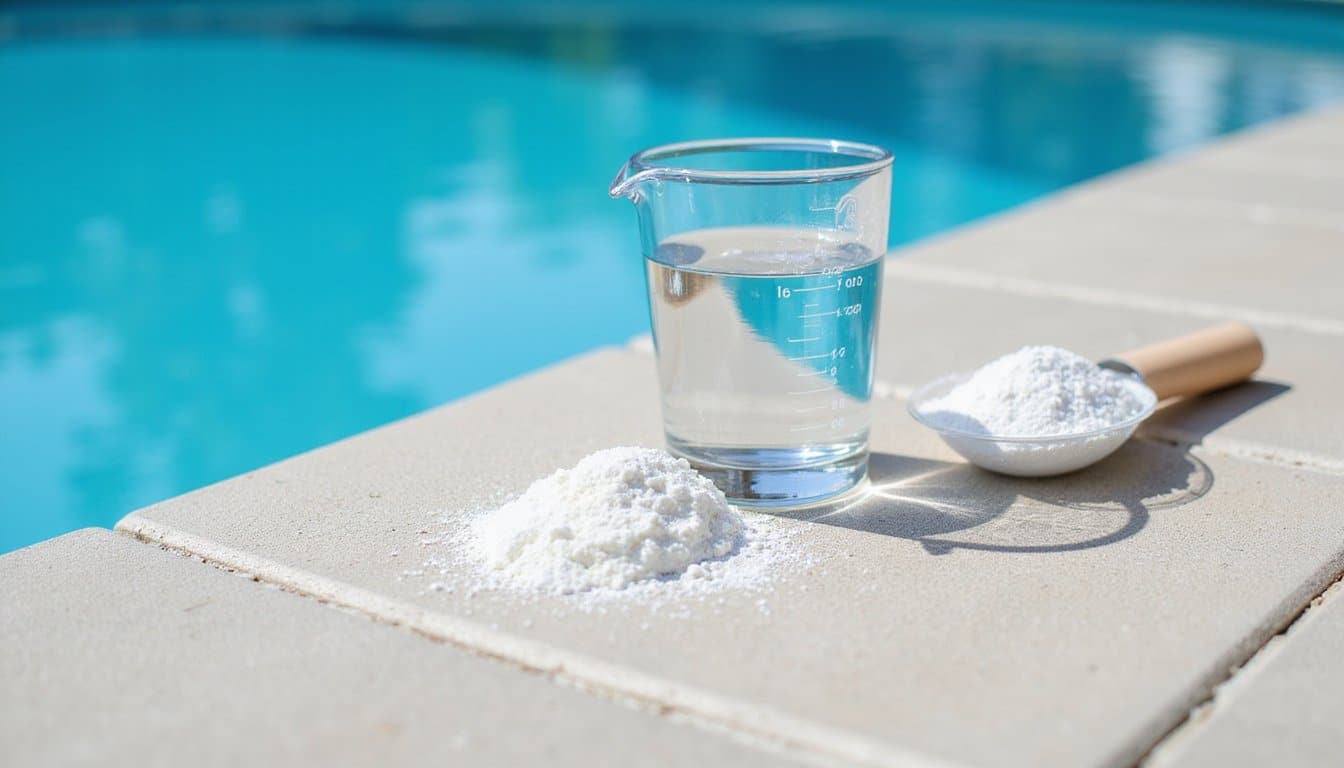
Since proper chlorine effectiveness relies heavily on water chemistry, maintaining balanced pH and alkalinity levels becomes pivotal for your pool’s sanitation. Pool water molecules interact directly with chlorine for optimal sanitizing effects. When adjusting chemical ratios, you’ll need to maintain pH between 7.2-7.8 and total alkalinity at 80-120 ppm to maximize shocking chlorine levels and prevent sanitizer degradation. Sodium bicarbonate is the primary chemical used to increase alkalinity when levels fall too low. High pH levels above 7.8 can cause scale buildup on pool surfaces and equipment.
- Test alkalinity initially and adjust to proper range before modifying pH levels
- Keep pH at 7.4-7.6 for ideal chlorine efficiency and swimmer comfort
- Run circulation system on high while adding chemicals for proper distribution
- Monitor levels regularly between professional services using test strips
- Address imbalances promptly to prevent equipment damage and water quality issues
Your pool’s chlorine won’t effectively sanitize without proper pH and alkalinity balance. Low levels cause rapid chlorine dissipation, while high levels reduce its sanitizing power, potentially leading to bacterial growth and cloudy water conditions.
Safe Chemical Storage and Handling Guidelines
You’ll need to maintain dedicated storage areas for pool chemicals, ensuring strict separation between chlorine products, acids, and other reactive substances to prevent hazardous interactions. Your facility must establish clear emergency response protocols, including spill containment procedures, evacuation plans, and immediate access to safety equipment like eyewash stations and fire extinguishers. When handling pool chemicals, you’re required to wear appropriate personal protective equipment (PPE), including chemical-resistant gloves, safety goggles, protective clothing, and closed-toe shoes. Store all chemicals in a cool, dry location with proper ventilation to prevent the dangerous accumulation of gases.
Separate Chemical Storage Areas
Proper chemical storage plays a vital role in maintaining pool safety and preventing dangerous chemical reactions. Chemical compatibility requires you to store each pool chemical separately in a dedicated area, using proper container labeling to identify contents clearly.
To maintain safe chemical storage areas:
- Designate specific locations for different chemical types, keeping incompatible materials isolated
- Store chemicals in their original containers in a cool, dry, well-ventilated space below 95°F
- Install secure shelving or racks to prevent stacking and minimize accidental mixing
- Keep storage areas locked and protected from sunlight, moisture, and ignition sources
- Maintain clear labeling systems and post safety guidelines for handling procedures
You’ll need to regularly inspect storage conditions, ascertain proper ventilation, and train staff on safe handling practices to prevent hazardous situations.
Emergency Response Protocol
Building on sound storage practices, an exhaustive emergency response protocol forms the backbone of safe chemical handling operations. You’ll need to establish clear spill containment procedures and guarantee your facility meets all regulatory compliance requirements.
Develop a thorough response plan that includes immediate evacuation protocols and designated cleanup procedures. You’ll want to train your staff thoroughly on proper spill management techniques, using dedicated materials for each chemical type to prevent dangerous reactions. Make sure you’ve documented all incidents and maintain detailed records of your response actions.
Install proper ventilation systems and monitor them regularly to prevent toxic fume buildup. Keep emergency exits clear and accessible, and position fire prevention equipment strategically throughout your storage area. Stock appropriate personal protective equipment and confirm it’s readily available during emergencies.
Personal Protection Requirements
The foundation of safe chemical handling lies in rigorous personal protection protocols. When managing pool chemicals, you’ll need comprehensive safety measures to prevent cross contamination risks and guarantee proper disposal procedures. Your safety equipment and practices should include:
- Wear chemical-resistant gloves, eye protection, and face masks during all handling operations
- Don long sleeves, long pants, and closed-toe shoes to minimize skin exposure
- Use dedicated tools for each chemical type to prevent cross-contamination
- Keep separate containers and materials for cleanup of different substances
- Store personal protective equipment in a clean, dry area away from chemicals
Never handle chemicals without proper safety gear, and maintain strict segregation protocols between different chemical types. Always follow manufacturer guidelines for disposal and keep food and drinks away from chemical storage and handling areas.
Common Chlorination Problems and Solutions
Maintaining proper chlorine levels requires vigilant monitoring since both high and low concentrations can create problems in your pool. If your chlorine tests above 5 ppm, you’ll need to either dilute the pool with fresh water or use a chlorine neutralizer, while levels below 1 ppm often indicate issues with your chlorinator’s functionality or excessive chlorine consumption from contaminants. You can address low chlorine by checking for proper chlorinator operation, ensuring adequate CYA levels of 30-50 ppm to prevent UV degradation, and shocking the pool to eliminate chlorine-consuming compounds like algae or chloramines.
Too High Chlorine Levels
While proper chlorination is essential for pool sanitation, excessive chlorine levels can create serious health risks and maintenance challenges for pool owners. Shocking overdose and improper monitoring are common culprits that lead to dangerous chemical imbalances in your pool water.
Here’s what you need to watch for when managing chlorine levels:
- Strong chemical odors and skin irritation indicate potentially hazardous concentrations
- Daily testing with chlorine strips helps prevent unexpected spikes
- Malfunctioning automatic dispensers can silently overload your pool
- Red, itchy eyes and respiratory issues signal immediate action is required
- Swimsuit fabric deterioration suggests long-term exposure to high levels
If you detect excessive chlorine, use CHLOR OUT treatment (50 ml per 10,000 L) to safely reduce levels by 1 ppm. Guarantee proper distribution by walking the pool’s perimeter during application.
Low Chlorine Balance
Proper pool chemistry can quickly spiral into trouble when chlorine levels drop too low, creating an environment where contaminants and pathogens thrive unchecked. You’ll need to identify key indicators and implement effective chlorine stabilization techniques to maintain proper sanitization.
| Problem Sign | Required Action |
|---|---|
| Cloudy water | Shock treat and adjust pH |
| Rapid chlorine loss | Add cyanuric acid stabilizer |
| High combined chlorine | Break point chlorination |
| Algae growth | Remove debris and super-chlorinate |
| Chemical lock | Effects of pool draining may be needed |
When you notice persistent sanitizer depletion, initially remove organic contaminants through thorough cleaning. Test and adjust pH levels to 7.2-7.8 for prime chlorine efficiency. If problems persist despite shock treatments, consider partial water replacement to reset chemical balance. Maintain proper cyanuric acid levels to protect chlorine from UV degradation.
Seasonal Chlorine Management Strategies
Successful pool maintenance requires adapting your chlorine management strategy to match each season’s unique challenges. You’ll need to carefully monitor and adjust your pool’s chemistry based on temperature, UV exposure, and weather conditions throughout the year while maintaining proper CYA levels and managing rainwater dilution.
- Summer demands daily testing and doubled chlorine levels when temperatures exceed 80°F, with evening chemical supplements to prevent UV degradation
- Fall and spring require weekly monitoring with moderate chlorine adjustments due to milder conditions
- Winter allows reduced testing frequency and lower chlorine levels due to decreased temperature and UV exposure
- Post-storm testing becomes critical to maintain chemical balance after rainfall dilution
- UV protection through stabilizer (CYA) maintenance at 30-50 ppm prevents rapid chlorine breakdown during peak sunlight hours
Frequently Asked Questions
Can I Swim Immediately After Adding Chlorine to My Pool?
No, you can’t swim immediately after adding chlorine to your pool. You’ll need to wait at least 4 hours after routine chlorine inclusion or 8-24 hours after shocking your pool. The perfect chlorine dissipation time depends on the type and amount added. You must run your filtration system and test the water before entering. Only swim when chlorine levels drop below 5 ppm, with 1-3 ppm being the recommended range.
Why Does My Pool Smell Strongly of Chlorine Despite Normal Readings?
Your strong chlorine smell actually indicates the presence of chloramines, not excess chlorine. These form when your pool’s free chlorine reacts with contaminants like sweat and urine. Despite normal readings, you’ll need to shock your pool to break down these chloramines. Check your chlorine stabilizer levels too; insufficient stabilizer can lead to rapid chlorine depletion, making it harder for your pool to maintain proper sanitization and combat chloramine formation.
How Do Thunderstorms Affect My Pool’s Chlorine Levels?
Thunderstorms drastically reduce your pool’s chlorine levels through multiple mechanisms. Rain dilution directly decreases chlorine concentration as the pool’s water volume increases. Storm-carried organic debris like leaves and dirt consumes available chlorine while decomposing. While sunlight degradation isn’t a factor during storms, the acidic nature of rainwater lowers your pool’s pH, making remaining chlorine less effective. You’ll need to test and adjust chemicals promptly after storms to maintain proper sanitization.
Should I Adjust Chlorine Levels Differently for Indoor and Outdoor Pools?
Yes, you’ll need to maintain different chlorine levels for indoor and outdoor pools. Keep outdoor pools at 2-4 ppm due to UV degradation and higher debris loads, while indoor pools require only 1-3 ppm. You’ll need regular seasonal chlorine adjustments outdoors to combat sunlight exposure, especially in summer. For indoor pools, focus more on shocking indoor pools frequently to control chloramines, since these harmful byproducts can’t disperse naturally like they do outdoors.
Does Pool Temperature Affect How Much Chlorine I Should Use?
Yes, water temperature variations directly impact the amount of chlorine you’ll need. Higher temperatures accelerate chlorine consumption rates, requiring you to add more sanitizer to maintain proper levels. You’ll need to increase your chlorine dosage during hot weather since warm water depletes chlorine faster. For every 10°F rise in temperature, you should expect to use approximately 20-30% more chlorine to maintain the same sanitization effectiveness in your pool.