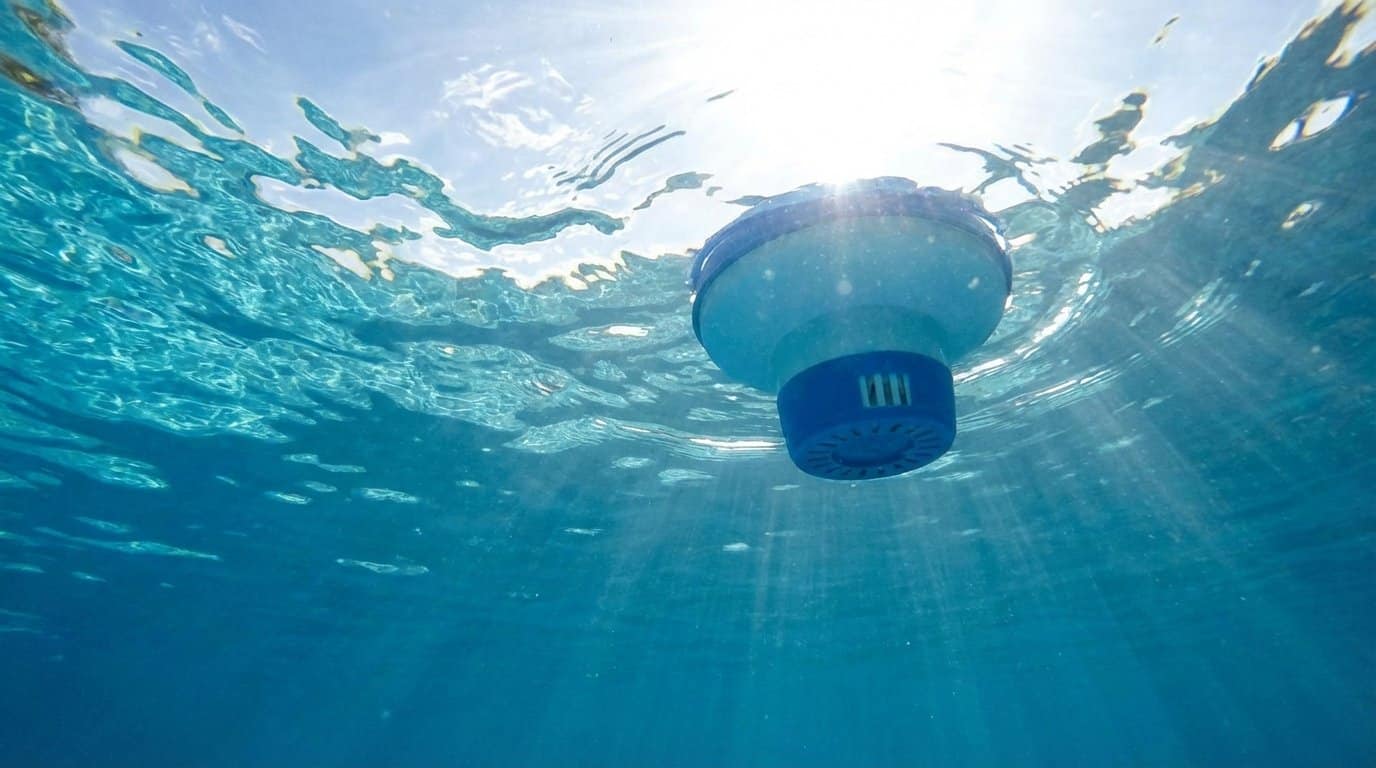
Your pool’s integrated filtration system keeps water crystal clear through synchronized mechanical and chemical processes. The pump’s impeller creates circulation, pushing water through skimmers and drains into specialized filters that trap particles as small as 1-5 microns. Return jets distribute filtered water while maintaining continuous flow that prevents debris settling. Chemical treatments and UV systems provide supplementary sanitization. Understanding these components’ specific roles will improve your pool’s clarity and maintenance efficiency.
The Core Components of Pool Filtration Systems
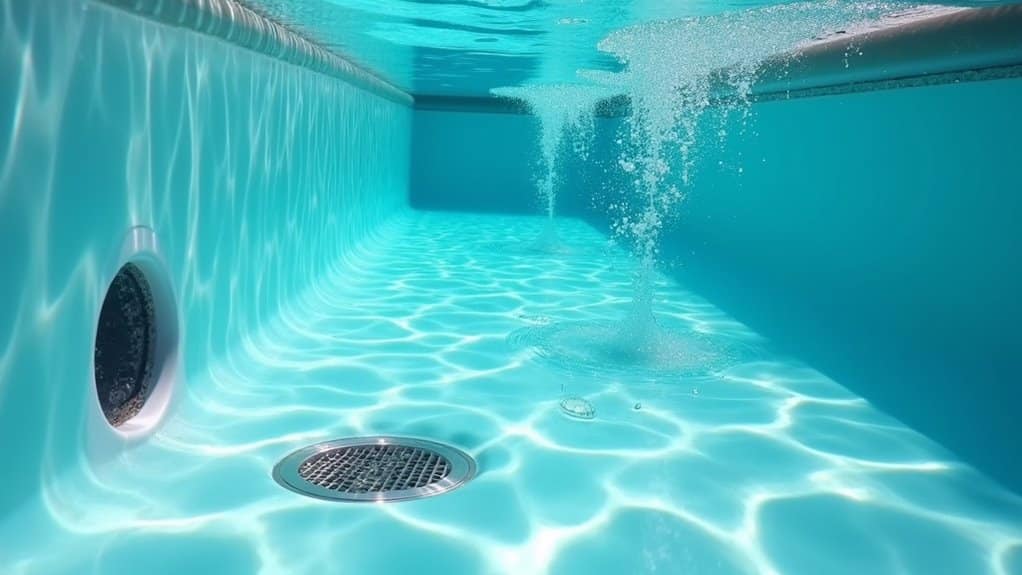
While maintaining crystal-clear pool water requires several interconnected systems, the filtration system serves as the heart of your pool’s cleaning operation. Your pool’s core components work together to guarantee adequate water circulation and effective physical cleaning techniques. The pump size determines the system’s overall effectiveness based on your pool’s volume. For proper operation, the air bleeder assembly must be checked regularly to ensure system safety.
The system starts with skimmers, which collect surface debris through floating weir doors, and main drains that remove settled particles from the pool’s deepest section. PVC suction lines transport this water to your filter unit, which may use sand, cartridge, or D.E. filtration methods. The circular water motion created by properly positioned return jets helps prevent debris from settling and reduces the risk of algae growth. Once cleaned, return lines carry the filtered water back to your pool through strategically placed jets.
For top-notch performance, you’ll need regular maintenance of these components, including cleaning skimmer baskets, inspecting drain covers, and monitoring filter pressure levels.
Understanding the Role of Pool Pumps and Water Flow
Because your pool’s circulation system depends on reliable water movement, understanding how pool pumps work is essential for maintaining pristine water quality. Your pump’s impeller creates pump flow dynamics through centrifugal force, converting electrical energy into mechanical motion that drives pool water recirculation. This system doesn’t actually pull water; instead, it relies on atmospheric pressure to push water through the circulation loop.
| Component | Function |
|---|---|
| Skimmers | Remove surface debris and channel water to pump |
| Main Drain | Provides continuous water intake from pool bottom |
| Pump Basket | Traps large debris before reaching impeller |
| Impeller | Generates water velocity and continuous flow |
| Return Jets | Push filtered water back into pool |
You’ll achieve ideal filtration when your pump maintains consistent flow, enabling proper chemical distribution and preventing water stagnation throughout your pool.
Different Types of Pool Filters and Their Efficiency
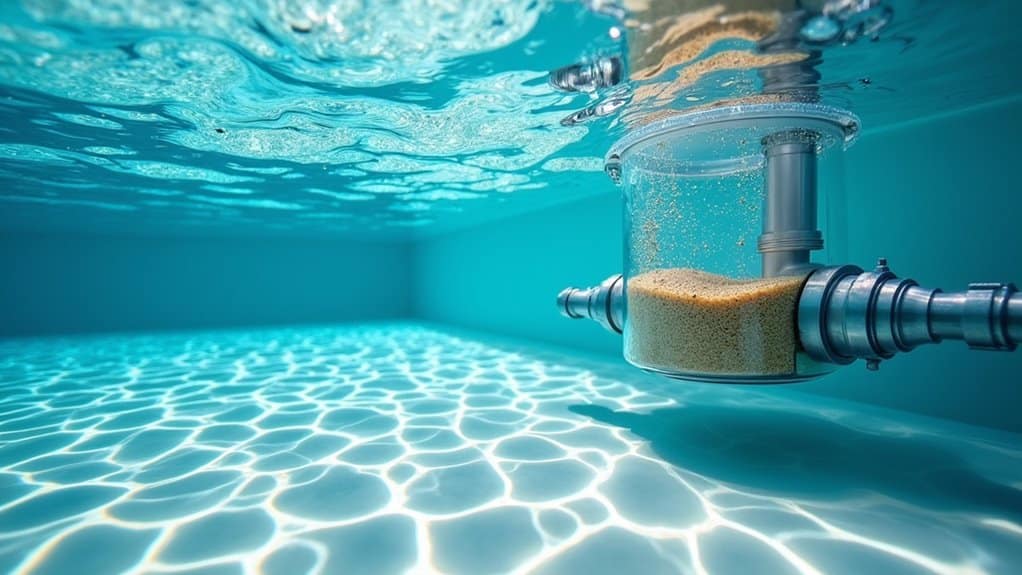
Since proper filtration forms the backbone of pool water clarity, understanding the three main types of pool filters, sand, cartridge, and diatomaceous earth (D.E.), is crucial for maintaining your pool. Each type offers distinct advantages and trade-offs in terms of filter longevity and maintenance requirements. When pressure readings indicate 8-10 psi above the normal range, it’s time for filter maintenance procedures.
Sand filters, while requiring periodic backwashing, effectively capture particles 20-40 microns in size and need replacement every 5-8 years. Sand filters also use silica sand as their primary filtration media to trap debris and contaminants. Cartridge filters eliminate backwashing frequency altogether and trap smaller particles (10-20 microns), though you’ll need to replace them every 2-3 years. D.E. filters provide the finest filtration (1-5 microns) but demand regular maintenance and D.E. powder replenishment after each cleaning cycle. Your choice should depend on your pool’s size, desired water clarity, and willingness to perform maintenance tasks. Being the most expensive option, D.E. filters are particularly well-suited for large and commercial pools.
The Science Behind Crystal Clear Pool Water
The pursuit of crystal clear pool water involves complex physical and chemical processes working in harmony. Your pool’s filtration system combines microscopic particle removal with chemical disinfection processes to maintain optimal clarity. Water continuously cycles through filters that trap contaminants as small as 2-4 microns while strategically placed return jets guarantee complete circulation. The treated water enters through two DN160 channels at the pool bottom to ensure proper distribution. Regular monitoring of pressure gauge readings helps determine when filters need cleaning or maintenance. For maximum effectiveness and safety, the system employs multiple filter types working together to remove over 99% of unwanted particles.
| Process | Function | Result |
|---|---|---|
| Coagulation | Binds small particles | Larger, filterable chunks |
| Membrane Filtration | Traps microorganisms | 99% contaminant removal |
| Chemical Treatment | Disinfects water | Eliminates bacteria |
| UV Irradiation | Destroys pathogens | Supplementary sanitization |
| Circulation | Prevents dead zones | Even distribution |
The system requires your pool’s entire volume to cycle through filters at least once daily, typically in two 4-hour periods, while maintaining specific flow rates and pressure levels for maximum effectiveness.
Essential Maintenance for Optimal Filter Performance
Maintaining ideal filter performance requires a systematic approach to cleaning, monitoring, and preventive maintenance. You’ll need to clean cartridge filters every 2-4 weeks during peak season, while sand and DE filters require backwashing when pressure rises 8-10 psi above baseline. Regular gentle scrubbing with appropriate brushes helps remove stubborn debris without damaging filter components. With service technician guidance, you can optimize backwash cycles to avoid excessive cleaning that could reduce filtration efficiency. Each filter type has unique maintenance requirements, with pressure gauges serving as the key indicator for cleaning schedules.
Monitor your pressure gauge readings consistently and maintain detailed records to identify performance trends early. You should deep clean sand filters twice yearly and DE filters quarterly for year-round pools. Don’t forget to inspect O-rings, connections, and seals during each cleaning cycle. Remember to balance your water chemistry regularly, as improper levels can lead to scale buildup and shortened filter life. Keep spare parts on hand and follow manufacturer specifications for cleaning procedures.
Common Problems and Troubleshooting Filter Issues
Regular inspection of your pool’s filter system can quickly identify common issues like poor water flow, clogged media, and equipment leaks before they escalate into major problems. You’ll need to monitor pressure gauge readings, check for proper water circulation, and maintain clean filter cartridges to guarantee ideal filtration performance. The optimal pressure reading should stay within 10-20 psi for most residential pool filters. When troubleshooting filter issues, start with the basics: examine skimmer baskets for debris, verify pump operation, and inspect all seals and connections for potential leaks that could compromise your system’s efficiency. If you notice consistently cloudy water despite regular maintenance, consider using a pool clarifier treatment to help restore crystal-clear conditions.
Poor Water Flow Solutions
Problems with poor water flow can severely impact your pool’s filtration system and essential water quality. When troubleshooting flow issues, start by checking your water level; it should reach at least halfway up the skimmer mouth. Next, inspect and clean your skimmer and pump baskets as part of regular pump maintenance routines.
Check for air leaks in the suction line by looking for bubbles in the pump strainer or return jets. You’ll need to address any cracks or loose fittings immediately. Remove blockages in the impeller or pipes, which may require partial disassembly. If you’re still experiencing issues, examine your filter media replacement intervals and make sure sensors aren’t malfunctioning. Remember, consistent flow is indispensable for proper filtration, chlorination, and heating operations.
Filter Media Maintenance Tips
Proper filter media care serves as the foundation of your pool’s water quality and system efficiency. You’ll need to monitor your filter pressure gauge regularly, as an 8-10 psi increase above normal signals immediate maintenance needs. Watch for telltale signs of filter problems, including cloudy water, increased chlorine demand, and media discharge into your pool.
To optimize your filter’s lifespan, adjust cleaning frequencies based on seasonal variations. During peak summer months, clean cartridges every 2-4 weeks, backwash sand filters biweekly, and service DE filters when pressure rises 20%. Maintain proper water chemistry to prevent media scaling, and don’t overlook your strainer baskets. Keep in mind that while regular maintenance is essential, excessive backwashing can actually reduce filtering efficiency. By following these systematic maintenance steps, you’ll extend your filter’s service life considerably.
Equipment Leak Prevention
Identifying and addressing equipment leaks promptly can prevent costly water loss and system damage in your pool’s filtration setup. Regular filter components maintenance and corrosion prevention strategies are essential to maintain system integrity. You’ll want to routinely inspect O-rings, gaskets, and seals while monitoring for any visible drips or unusual sounds during operation.
- Pressure test your system quarterly to detect hidden leaks before they become major issues
- Lubricate all O-rings and gaskets during reassembly to extend their lifespan
- Check chemical balance weekly to prevent premature deterioration of components
Don’t overlook the importance of proper alignment when installing multiport valves and unions. If you notice water loss is greater when your pump is running versus off, immediately inspect your filter system’s fittings and connections. Early detection through systematic maintenance can reduce repair costs by up to 60%.
Modern Innovations in Pool Filtration Technology
Modern pool filtration has evolved with smart monitoring systems that let you track water quality and filter performance in real-time through your mobile device. You’ll find significant energy savings with variable-speed pumps that automatically adjust their power based on your pool’s specific needs and usage patterns. Advanced filter materials, including perlite-coated tubes and bolstered DE systems, now offer superior particle removal while requiring less maintenance and fewer chemical treatments.
Smart Monitoring Systems
Three key advances in smart monitoring systems have revolutionized pool maintenance: real-time water quality tracking, automated chemical recommendations, and remote management capabilities. You’ll find data analytics driving precise measurements of pH, chlorine, and other vital parameters, delivering laboratory-grade accuracy 24/7. These systems integrate seamlessly with your mobile devices, enabling instant notifications and adjustments from anywhere.
- Advanced sensors monitor water chemistry continuously, reducing maintenance costs by up to 30%
- Smart algorithms provide customized chemical dosing recommendations based on real-time readings
- Cloud-based platforms store historical data for trend analysis and proactive maintenance
Your pool’s health is constantly monitored through weather-resistant devices that offer reliable, long-term operation. With DIY installation and intuitive dashboards, you’ll maintain crystal-clear water with unprecedented precision and convenience.
Energy-Saving Variable Pumps
While traditional single-speed pool pumps drain energy and inflate utility bills, variable speed pumps revolutionize pool filtration with dramatic efficiency gains. You’ll reduce energy consumption by 50-90% through customizable speeds that optimize filtration based on your pool’s needs.
| Feature | Benefit | Impact |
|---|---|---|
| Variable Frequency Drive | Precise speed control | 80% energy reduction |
| Multi-speed programming | Off-peak electricity savings | $2,800 lifetime savings |
| Lower operational speeds | Pump lifespan extension | Less maintenance cost |
These pumps operate quietly while delivering superior filtration quality through slower, more thorough water circulation. You can adjust settings in real-time based on pool usage, weather conditions, or water quality needs. With utility rebates and a payback period under two years, upgrading to a variable speed pump proves both economically and environmentally beneficial.
Advanced Filter Materials
Recent advances in filter media technology have transformed pool water clarity and maintenance efficiency. You’ll find creative materials like Hi-Tech Filter Glass and Zeolite offering superior filtration down to 2-5 microns while reducing chemical usage by up to 30%. Filter media lifespan varies greatly based on operating conditions, with premium glass options lasting 10-15 years compared to traditional sand.
- Advanced glass beads and high-purity filter glass capture ultra-fine particles while minimizing bacterial growth
- Volcanic-derived zeolite requires 50% less material volume and controls chloramines effectively
- Cellulose fiber and perlite additives enable precision filtration at 2-3 microns while reducing equipment wear
These modern filtration solutions deliver consistently clear water quality through improved particle capture, extended maintenance intervals, and boosted system efficiency. While initial costs may be higher, long-term benefits justify the investment in advanced filter media.
Maximizing Filter Effectiveness Through Proper Setup
Setting up your pool’s filtration system correctly from the start guarantees ideal water clarity and minimizes long-term maintenance issues. For proper installation techniques that optimize filter lifespan, you’ll need to focus on strategic plumbing configuration and equipment placement.
Start by installing larger diameter pipes with minimal turns to reduce resistance and improve flow effectiveness. Position your shut-off valves strategically for easy maintenance access, and secure your heater and sanitizer are downstream from the filter. You’ll want to adjust your suction manifold to balance flow between skimmers and main drain, maximizing debris capture.
Don’t forget to configure your plumbing layout for optimal pressure distribution. This means carefully sizing your filter based on pool volume and maintaining proper distances between components to prevent flow restrictions and ensure thorough filtration.
The Impact of Weather and Environment on Filtration
Since weather conditions profoundly affect pool water quality, understanding their impact on filtration is essential for maintaining crystal-clear water. You’ll need to make seasonal maintenance adjustments as rainfall dilutes chemicals, sunlight breaks down chlorine, and humidity accelerates chemical reactions. Environmental impact mitigation becomes critical when dealing with contaminants from runoff, airborne debris, and changing weather patterns.
- Storm preparation requires securing covers and maintaining proper chemical levels to prevent equipment damage
- Humidity levels affect chemical stability and water clarity, demanding more frequent testing and adjustments
- Sunny conditions accelerate chlorine breakdown and promote algae growth, necessitating enhanced filtration
Your filtration system’s efficiency depends on how well you adapt to these environmental challenges through consistent monitoring, timely chemical balancing, and proper equipment maintenance. Regular testing and adjustments help maintain optimal filtration despite weather variations.
Best Practices for Year-Round Water Clarity
Five essential practices form the foundation of year-round pool water clarity: regular testing, proper filtration, chemical treatment, physical cleaning, and professional maintenance.
You’ll need to test pH (7.4-7.6), chlorine (1-3 ppm), alkalinity (80-120 ppm), and calcium hardness (180-250 ppm) weekly. Maintain chemical stabilization through proper cyanuric acid levels (30-50 ppm) to protect chlorine effectiveness. Your filtration system requires regular backwashing and cleaning to trap debris efficiently.
For debris removal management, skim daily and vacuum regularly to prevent particle buildup. You’ll also need to empty strainer baskets and maintain proper water levels for ideal skimming. Apply shock treatments to control chloramine levels, and use algaecide weekly during peak seasons. Have qualified technicians inspect your equipment periodically to guarantee sustained clarity.
Frequently Asked Questions
Can I Swim Immediately After Adding Filter Media or DE Powder?
No, you shouldn’t swim immediately after adding filter media or DE powder. You’ll need to wait until the filter media adjustment time is complete, typically several hours, but up to 24 hours in some cases. After adding new media, run your system through a conducive filter backwash duration to clear any residual particles. Only enter the pool once the water’s crystal clear and filter pressure has stabilized to safeguard your safety.
How Does Pool Water Hardness Affect the Lifespan of Filter Components?
Your pool’s water mineral content directly impacts filter longevity. High hardness creates calcium scaling that clogs and damages filter components, while low hardness becomes corrosive, attacking filter materials. You’ll need a more frequent filter maintenance schedule in either extreme condition. To optimize your filter’s lifespan, keep calcium hardness between 200-400 ppm. Otherwise, you’ll face premature component failure, increased operational costs, and the need for early filter replacement.
Do Indoor Pools Require Different Filtration Settings Than Outdoor Pools?
Yes, you’ll need different filtration settings for indoor versus outdoor pools. While indoor pools typically require shorter run times of 6-8 hours daily with pool surface skimming, outdoor pools need 8-12 hours due to higher contamination levels. You can optimize energy efficient filtration indoors by using finer filter media and shorter cycles, whereas outdoor pools demand more powerful settings to handle environmental debris, weather impacts, and seasonal variations.
What Happens to Filter Efficiency at Extremely High Altitudes?
You’ll notice significant decreases in filter efficiency at high altitudes due to reduced oxygen content in the air, which affects both mechanical and chemical filtration processes. Your filter’s performance can drop by up to 15% at 5,000 feet elevation. You’ll need to compensate for filter temperature sensitivity and increased UV exposure by adjusting maintenance schedules, increasing backwashing frequency, and possibly installing pressure compensation systems to maintain proper filtration rates.
Can Pool Filters Remove Sunscreen and Cosmetic Products From Water?
Your pool’s standard filters (sand, cartridge, or DE) won’t effectively remove sunscreen and cosmetic products on their own. While they’ll catch some particles, oil-based substances often slip through or cause filter clogging. You’ll need to combine your filtration with enzyme treatments to break down these contaminants. For ideal filter effectiveness for sunscreen and cosmetic product removal from pool water, consider using scum-absorbing sponges in skimmer baskets and maintaining regular filter cleaning schedules.