The best epoxies for fiberglass pool repairs in 2026 include ArmorKote Epoxy System, which delivers 5X stronger bonds than standard options, and AquaGuard 5000 with its 12,000+ psi compressive strength. You’ll also want to examine Glasscoat 600 for severe corrosion issues and Marine Grade Gelcoat for 25-35 year durability. Each formula offers specific advantages, from chemical resistance to UV protection, and understanding their unique properties helps you select the right product for your repair needs.
ArmorKote Epoxy System
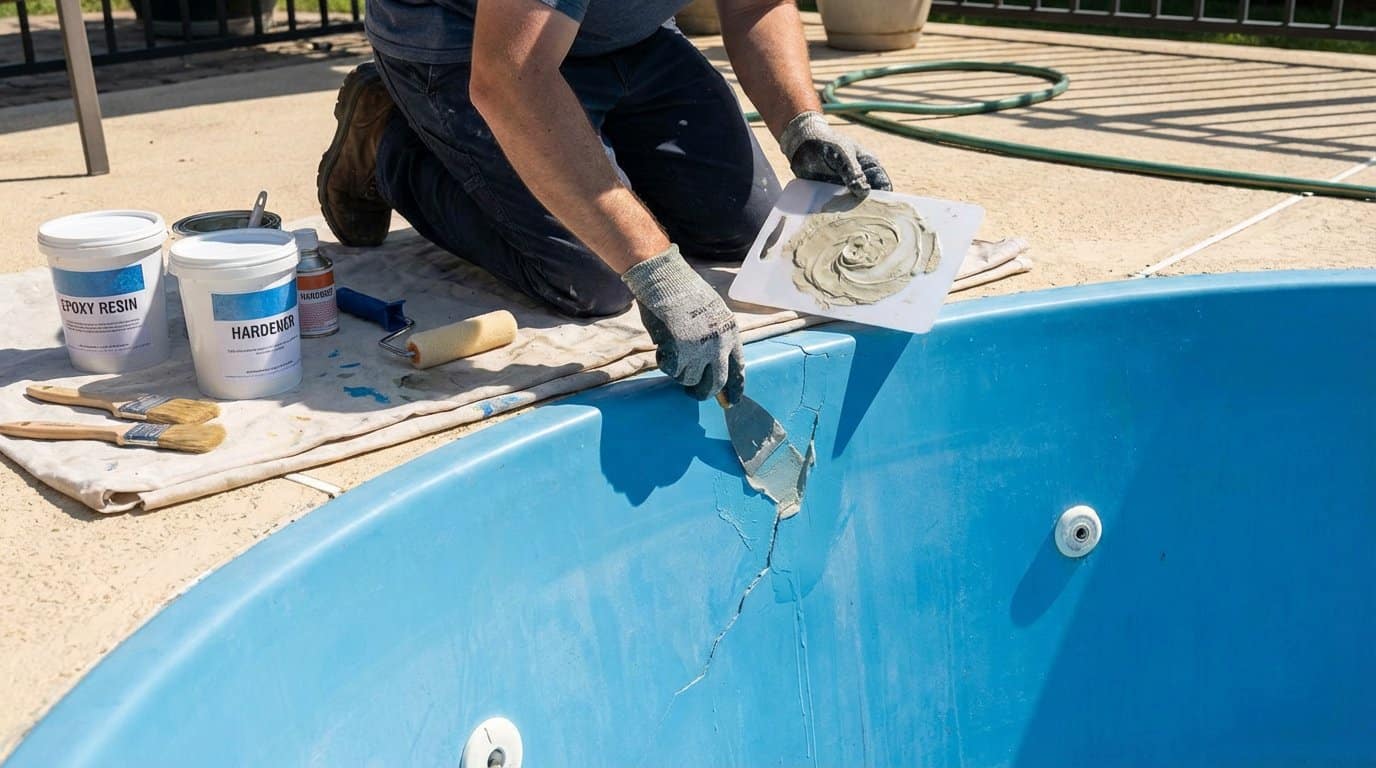
When your fiberglass pool shows signs of wear, the ArmorKote Epoxy System delivers professional-grade results without hiring a contractor. This DIY-friendly solution utilizes SafeResin™ technology, creating a 20ml self-leveling coating that’s 5X stronger than standard epoxy pool paint.
You’ll appreciate the fast curing application, fully hardened in 24-48 hours at 70°F. The system’s moisture barrier properties stem from its non-permeable surface and ultra-low VOC formula, providing outstanding chlorine and chemical resistance. The formula is also antibacterial and antifungal, making it environmentally safe for your family and pool environment.
Mix the components at a 1:1 ratio by volume, then apply with a lint-free 3/8″ nap roller. You’ve got 20 minutes of pot life in the container, extending to 35 minutes once spread thin. For best results, do not apply in temperatures below 50°F. One 3-gallon unit covers up to 300 square feet, delivering industrial-grade protection with tensile strength reaching 5420 psi. The 100% solids formula is engineered to withstand time, weather, and regular use, ensuring your pool restoration lasts for years to come.
Glasscoat 600 Re-Lining Epoxy
Although ArmorKote handles standard pool maintenance, Glasscoat 600 Re-Lining Epoxy tackles severe corrosion environments that demand industrial-strength protection. You’ll achieve up to 24 mils DFT with this 89% volume solids formulation, applying it via single-leg airless spray without thinning.
Your substrate surface preparation requires abrasive blast cleaning to achieve a 75-100 micron profile. The curing temperature range extends down to -7°C for related epoxy systems, with full cure completing in 7 days at 25°C. For projects requiring even higher film builds, Carboguard 696 HBE can achieve 0.4mm to 1.5mm in a single coat and offers excellent abrasion resistance suitable for demanding applications.
Key performance specifications include:
- NSF/ANSI/CAN 61 and 600 compliance for potable water contact
- Zero leachable solvents in the cured film
- VOC content below 100 g/L
- High edge-retention for coating welds and corners
This xylene-free, toluene-free formula delivers excellent abrasion resistance and flexibility for demanding pool rehabilitation projects. The formulation is also completely free of ethylbenzene, making it compliant with the strictest environmental regulations. Similar epoxy coatings certified for drinking water contact can achieve up to 60 mil maximum dry film thickness with proper application techniques.
AquaGuard 5000 Pool Epoxy Paint
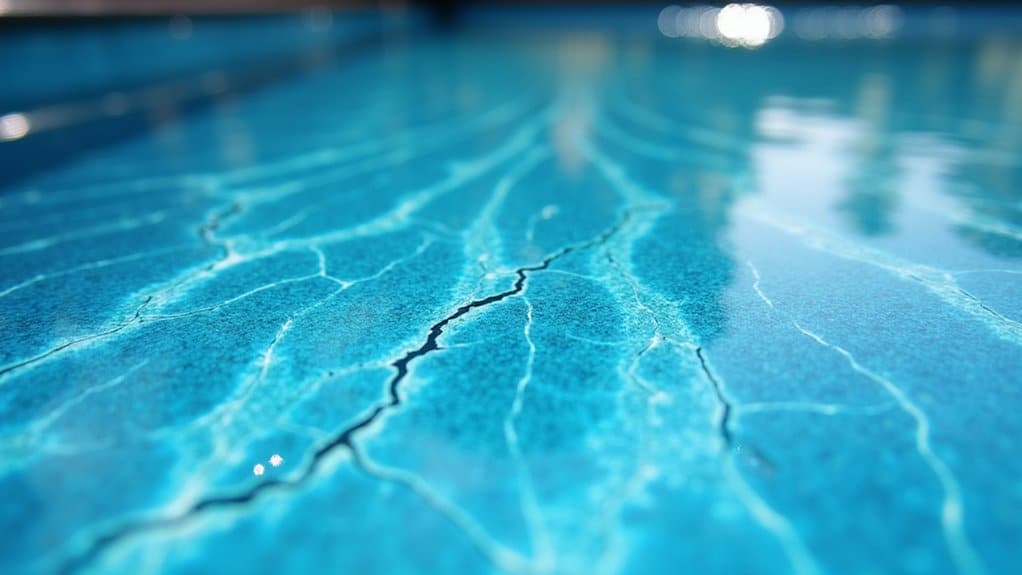
When you’re resurfacing fiberglass pools for residential or commercial applications, AquaGuard 5000 delivers a 100% solids epoxy phenolic coating that you can spray at 40-60 mils or roll on in multiple coats at 20-30 mils. The cured surface achieves impressive mechanical properties, 12-14,000 psi compressive strength and 2,000+ psi bond strength, creating a non-porous barrier that resists chlorine, algae, and chemical penetration. You’ll find this FDA-compliant epoxy forms a monolithic liner that strengthens your fiberglass shell while reducing long-term maintenance requirements. The coating is reinforced with proprietary additives that enhance its physical strength and durability in demanding aquatic environments. For fiberglass applications, surface preparation requires grinding or abrasion to achieve an adequate profile, with no additional sealer or primer needed before coating. The product requires adding 12 oz. of epoxy reducer (xylene) per gallon to achieve proper application consistency.
Residential and Commercial Use
Both residential and commercial pool owners benefit from AquaGuard 5000’s versatile application range, which extends beyond standard swimming pools to include spas, hot tubs, fountains, and decorative ponds. DIY application procedures work well for homeowners tackling concrete and fiberglass surface repairs, while professional installation considerations become essential for larger commercial projects requiring spray-on application at 40-60 mils DFT. Before applying the epoxy coating, fiberglass surfaces must be properly profiled using an orbital sander with 60-grit sandpaper to ensure optimal adhesion.
The Designer Series colors offer practical advantages for various settings:
- Camouflages osmotic blistering and surface imperfections on fiberglass pools
- Covers vinyl liner fiberglass pool stairs up to 8 feet wide per gallon
- Creates uniform appearance across repaired and original surfaces
- Maintains aesthetic consistency in high-visibility commercial environments
You’ll find this epoxy strengthens fiberglass by forming a monolithic liner that resists cracks from ground movement, delivering lasting results for both property types.
Epoxy Paint Application
How effectively your AquaGuard 5000 application performs depends largely on proper surface preparation and technique selection. For fiberglass surfaces, you’ll need to grind or abrade with a coarse grain emery disk to achieve an adequate anchor pattern, no primer required since the formula bonds instantly to fiberglass.
Your surface restoration methods determine which DIY application techniques work best. You can spray apply a single coat at 40-60 mils DFT, covering approximately 130 square feet per unit. Alternatively, roll-on application in 2-3 coats at 20-30 mils DFT extends coverage to 650-850 square feet per unit.
Keep pot life in mind: you’ve got approximately 13 minutes at 90-95°F for the top coat. Use a portable dot sprayer for efficient DIY application when tackling larger surface areas.
Surface Durability Features
AquaGuard 5000’s surface durability stems from its non-porous cured finish that blocks penetration by chlorine, algae, rust, and other reactive compounds. The embedded fiber reinforcement creates a hard, smooth surface comparable to bathtub durability, while the abrasion-resistant formulation minimizes wear over extended use cycles.
You’ll find the textured application surface achieves these performance metrics:
- Flexural strength of 8-10,000 psi supporting impact resistance
- Tensile strength of 5,000 psi enhancing surface toughness
- Barcol hardness of 65 minimum within 24 hours of cure
- Compressive strength reaching 12-14,000 psi
This coating won’t chip, crack, peel, or chalk because the flexible epoxy formulation accommodates ground movement without compromising integrity. You’ll experience reduced maintenance demands since the non-porous finish allows easy stain removal with light washing. With proper maintenance, the AquaGuard 5000 finish typically lasts 7-10 years, making it a long-term investment in your pool’s surface protection.
Marine Grade Gelcoat With UV Enhancers
When you apply marine grade gelcoat with UV enhancers, the chemical bonding process activates at 200°F to create a permanent fusion with your fiberglass pool surface. You’ll need to build up the coating to 35-38 mil thickness to achieve ideal protection against UV degradation, chemical exposure, and saltwater corrosion. This differs from standard factory application, where gelcoat is applied in 3 passes to achieve a 25-30 mil thickness. The gelcoat finish offers excellent chemical resistance to both saltwater and chlorine, making it superior to flexible PVC materials for long-term pool protection. This ISO/NPG high-performance formula delivers 25-35 year durability when properly applied and maintained with annual inspections. Since gelcoats are commonly made of pigmented polyester resin, you can match your existing pool color while ensuring proper adhesion to the fiberglass base.
Chemical Bonding at 200°F
Although most pool repair guides focus on standard temperature applications, understanding how marine-grade gelcoat behaves during heightened thermal conditions, particularly around 200°F, proves critical for achieving lasting bonds in demanding environments.
Your bonding performance depends heavily on proper preparation. Epoxy primers deliver the strongest adhesion for high temperature application scenarios, while vinylester-based gelcoats outperform standard epoxy in flexibility and robustness. This is especially important since UV rays and chemicals can break down the gelcoat over time, causing discoloration and surface degradation.
For ideal results, follow these guidelines:
- Mix primers thoroughly for 2-3 minutes to eliminate air pockets
- Apply within the 65°F-85°F range before gelcoat application
- Account for shortened pot life as temperatures increase
- Use vinylester formulations for superior chemical resistance
At raised temperatures, working time decreases drastically. You’ll need to work efficiently, ensuring complete coverage before the material begins curing. Proper technique prevents weak bonds and premature failure. Even with perfect application, poor water chemistry remains the leading cause of premature surface deterioration and can significantly reduce the lifespan of your repair.
35-38 Mil Thickness Application
The 38 mil thickness specification represents the industry standard for marine-grade gelcoat resurfacing, delivering appropriate durability without excessive material buildup. You’ll achieve consistent application by using spray equipment set to a 6-8 inch pattern with 50% overlap, maintaining 8-12 inches distance from the surface.
Your curing time depends heavily on environmental conditions, expect 24-48 hours at temperatures between 65-85°F with humidity below 50%. Mix your gelcoat with professional MEKP catalyst for 2-3 minutes, then apply within the 15-20 minute working window.
After full cure, wet sand using 400-grit paper to achieve that professional finish. This controlled thickness ensures seamless integration with existing pool surfaces while providing the chemical and UV resistance that vinylester-based marine gelcoat delivers over its 10+ year lifespan.
25-35 Year Durability
Marine-grade gelcoat with UV enhancers delivers 35+ years of reliable pool surface protection because it’s engineered to resist the specific degradation factors that destroy standard finishes. You’ll achieve long term durability when you combine AQUA-GLASS™ resins with professional MEKP catalysts that guarantee consistent cure rates throughout the repair.
Your UV-enhanced gelcoat system provides:
- Chemical resistance against salt damage and corrosion in coastal environments
- Color stability that prevents fading under prolonged sun exposure
- Seamless, non-porous surfaces that block algae growth and water intrusion
- Structural integrity matching aerospace composite standards
When you apply epoxy bond coats before gelcoat finishing, you’re creating moisture barriers that prevent osmotic blistering. This layered approach eliminates the resurfacing cycles concrete requires every 10, 15 years, giving you decades of maintenance-free performance.
Ecofinish Aquatic Coating
Fiberglass pool surfaces degrade over time, but ecoFINISH’s polyFIBRO coating offers a permanent solution that outperforms traditional repair methods. This pool resurfacing technology uses flame-sprayed polyethylene powder that creates a chemical bond penetrating the existing gelcoat’s pores, delivering superior adhesive bonding properties compared to temporary epoxy putties.
You’ll appreciate the streamlined application process. Technicians sand the surface, apply a 100% epoxy primer, then torch the coating to create a seamless finish. The entire process takes one day, and you’re swimming within 24 hours.
The results speak for themselves: a flexible, waterproof surface that resists UV rays, chemicals, and staining. Unlike gelcoat alternatives that chip and crack, polyFIBRO maintains its smooth, non-slip texture for years. You’ll get a 10-year manufacturer warranty backing its durability claims.
Rebound Pool Surface Epoxy
While ecoFINISH excels at full-surface restoration, Rebound Pool Surface Epoxy targets a different niche: homeowners seeking slip-resistant, comfortable finishes for fiberglass steps, pool decks, and splash pads.
This system combines liquid polymers with thermo-plastic granules, creating a textured surface that’s soft underfoot yet durable. You’ll apply it directly over existing plaster, fiberglass, or select composites, no demolition required. Proper surface preparation guarantees firm adhesion and longevity.
Key performance characteristics include:
- UV resistance and chlorine stability for extended maintenance schedule intervals
- Multiple protective layers withstanding heavy foot traffic
- Customizable color options through granule selection
- Compatibility with vinyl liner installations
The installation process eliminates heavy equipment and minimizes disruption. You’re converting worn surfaces into safer, family-friendly zones without the mess of traditional resurfacing methods.
High-Build Fiberglass Repair Epoxy
When structural damage penetrates beyond surface coatings, high-build fiberglass repair epoxies deliver the strength and adhesion you’ll need for lasting repairs. These systems create chemical bonds with fiberglass fibers, providing superior tensile strength and waterproof barriers that prevent delamination.
| Feature | Specification | Benefit |
|---|---|---|
| Mix Ratio | 5:1 or 3:1 | Consistent cure strength |
| Build Thickness | 5-8 mils per coat | Fewer application layers |
| Working Temperature | 60-80°F | Conducive cross-linking |
Your surface preparation techniques must include brushing a thin epoxy coat before laying fiberglass cloth. Work the resin from center outward until the cloth turns clear. Temperature-controlled curing between 60-80°F facilitates complete cross-linking. Pour depth shouldn’t exceed 1/4 inch per layer to prevent exothermic reactions.
Chemical-Resistant Pool Basin Epoxy
When you’re repairing fiberglass pool basins, you’ll need epoxies that can withstand constant exposure to chlorine, salt water, and aggressive pool chemicals that break down standard coatings. Chemical-resistant formulations like AquaGuard 5000 and Atlas Epoxybond resist over 28 chemicals including muriatic acid and bromine, while KoreKote ArmorKote delivers 40% more bond strength than ordinary primers to seal substrates against chemical penetration. These non-permeable barriers prevent the molecular breakdown that occurs when acidic pH levels, high chlorine concentrations, or alkalinity imbalances attack unprotected surfaces.
Chlorine and Chemical Barrier
Because high chlorine concentrations steadily erode gelcoat surfaces, you’ll need a chemical-resistant epoxy barrier to protect your fiberglass pool’s substrate from ongoing degradation.
Quality epoxies demonstrate exceptional chemical compatibility with pool environments. ArmorKote delivers the strongest chlorine barrier available, while AquaGuard resists over 28 chemicals including muriatic acid and pool salts. For harsh environment resistance, consider these proven performers:
- ArmorKote: Provides superior hydrostatic back pressure protection with 40% stronger substrate bonding
- AquaGuard: Handles chlorine, salt systems, and aggressive sanitizers
- Atlas Epoxybond: Withstands chlorine, bromine, and saltwater exposure
- CR-2000: Self-leveling formula with excellent chemical resistance
These professional-grade options last 8-10 years when you maintain proper water chemistry, keeping pH between 7.2-7.6 and alkalinity at 80-120 ppm.
Non-Permeable Protection Benefits
Beyond chemical resistance, these epoxy coatings deliver a critical secondary function: they form a completely impermeable barrier that blocks water infiltration into your pool’s fiberglass substrate.
This seamless water barrier prevents osmosis blisters, a common failure point where moisture penetrates porous surfaces and causes delamination. The non-porous finish bonds directly to your existing fiberglass, eliminating gaps where water could seep through and compromise structural integrity.
You’ll notice resilient surface protection that withstands constant submersion without degradation. The cured epoxy resists cracking from ground movement and handles heavy foot traffic without deformation. This impermeability translates to reduced maintenance since algae struggles to colonize the smooth, sealed surface.
With proper application, you’re looking at up to 15 years of protection, significantly cutting long-term repair costs while maintaining your pool’s structural soundness.
Self-Leveling Structural Repair Epoxy
Self-leveling structural repair epoxy addresses one of the most challenging aspects of fiberglass pool maintenance: achieving flat, professional-grade repairs on horizontal surfaces without extensive tooling or finishing work.
This high performance coating dispenses as a thin liquid that flows into cracks and voids, creating seamless bonds with concrete, fiberglass, and ceramic surfaces. You’ll appreciate the 30-minute hardening time that minimizes downtime.
Key advantages include:
- Bond strength 5X greater than standard epoxy pool paint
- Solvent-free formula with ultra-low VOCs for safer application
- Mildew-inhibiting properties that reduce long-term maintenance
- Flexible finishes through post-cure sanding and painting options
For structural repairs, pump the epoxy into drilled holes after releveling bond beams. The self-leveling properties eliminate guesswork, delivering consistent results on uneven surfaces.
Low-VOC Antibacterial Pool Coating
When environmental regulations and pool hygiene intersect, low-VOC antibacterial coatings deliver dual-purpose protection that standard epoxies can’t match. These specialized formulations reduce VOC emissions by up to 50% while incorporating bacterial growth inhibitors that suppress colony formation on fiberglass surfaces.
You’ll find antimicrobial protection built directly into products like Aquaguard Eco Plus Gelcoat, featuring EPA, EFSA, and FDA-approved additives that won’t leach into pool water. ArmorKote Pool Epoxy offers similar antibacterial properties with confirmed performance data and produces no foul odors during application.
These coatings create a durable shield that actively suppresses bacteria on fiberglass, plaster, and tile substrates. You’ll spend less time on maintenance while extending your pool surface’s longevity. The smooth, virtually non-porous finish also reduces chemical requirements for ongoing sanitation.
Frequently Asked Questions
How Long Should a Fiberglass Pool Dry After Surface Preparation Before Applying Epoxy?
You’ll need at least 5 dry sunny days after surface preparation before applying epoxy to your fiberglass pool. Cure time requirements extend to 5-7 days for ideal results, adding one extra day for each rain day you’ve experienced. To confirm proper drying conditions, tape 2’x2′ transparent plastic sheets to the surface and check for condensation after 4 hours. No moisture underneath means you’re ready to proceed with your epoxy application.
Can Epoxy Coatings Be Applied Over Existing Pool Paint or Prior Coatings?
Yes, you can apply epoxy coatings over previously painted surfaces, but compatibility with existing coatings is crucial. Before application over previously painted surfaces, you’ll need to identify the current paint type using solvent tests, acetone rub detects chlorinated rubber, which isn’t compatible and requires stripping. Epoxy binds well over existing epoxy after proper abrading and compatibility testing. Always match technologies: epoxy over epoxy guarantees adhesion and prevents peeling or delamination issues.
What Causes Blistering and Delamination in Fiberglass Pool Surfaces?
Blistering and delamination occur when water and air penetrate your fiberglass shell, becoming trapped beneath the gel coat. You’ll see pressure build until it bursts through the surface. Common causes include improper curing during manufacturing, excessive pool chemicals like high chlorine or acid levels, and environmental stressors such as sun exposure and groundwater pressure. Pools from the 1970s-1990s are particularly vulnerable due to inferior polyester resins and poor-quality gel coats used during construction.
Is Full Resurfacing Better Than Spot Repairs for Color Matching?
Yes, full resurfacing delivers superior color consistency compared to spot repairs. When you patch aged gelcoat, you’re fighting against years of UV fading and chalking that make seamless matching nearly impossible. Your spot repairs will stand out against the weathered surrounding surface, compromising your pool’s aesthetic appearance. Full resurfacing applies uniform coating across the entire area, eliminating color variations and giving you a cohesive finish that spot applications simply can’t achieve.
What Surface Preparation Method Works Best for Fiberglass Pool Repair Bonding?
For ideal bonding, you’ll want to combine mechanical and chemical cleaning methods. Start by sanding with 60-80 grit sandpaper in straight lines, this creates the perfect surface texture with parallel grooves that grip epoxy effectively. Follow up with thorough chemical cleaning using TSP solution or acetone to remove oils and contaminants. You should always perform a condensation test before applying primer, ensuring your surface is completely dry and residue-free.