

Year-round fiberglass pool maintenance involves mastering five core disciplines: water chemistry management, consistent cleaning routines, filtration system care, proper water level maintenance, and strategic seasonal adjustments. You’ll need to test your water 2-3 times weekly during swimming season, skim debris daily, and run your filter at least 6 hours per day. Each season brings specific tasks, from spring shock treatments to winter equipment winterization, that keep your pool in ideal condition year after year.
Water Chemistry Management Throughout the Seasons
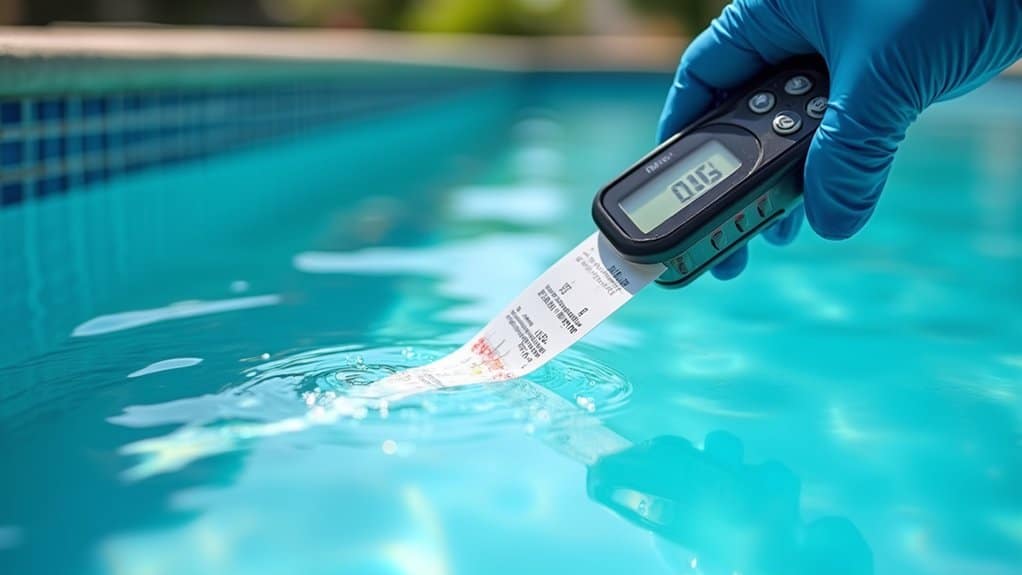
How often should you really test your fiberglass pool water? During swimming season, you’ll need to check pH, chlorine, and alkalinity two to three times weekly. Off-season, bi-weekly testing maintains stability.
Your target ranges remain consistent: pH between 7.2, 7.4, free chlorine at 1, 3 ppm, and total alkalinity at 80, 120 ppm. Proper sanitizer application requires increasing chlorine during summer months when UV exposure accelerates breakdown. Avoid using calcium-based chlorine products like calcium hypochlorite, as they can contribute to surface discoloration issues when combined with elevated pH levels.
For off season storage preparations, balance all chemistry parameters before covering. Add chelating agents to prevent metal staining and scale buildup. Cold water becomes more aggressive, so maintain calcium hardness between 200, 400 ppm to protect your fiberglass surface. Products like SC-1000 chelating agent have proven effective in preventing fiberglass chalking by binding calcium in the water.
Test more frequently after rain, heavy swimmer loads, or nearby lawn fertilization to catch imbalances early. Conduct a monthly water test to verify total alkalinity, calcium hardness, and cyanuric acid levels remain within optimal ranges.
Daily and Weekly Cleaning Routines for Fiberglass Pools
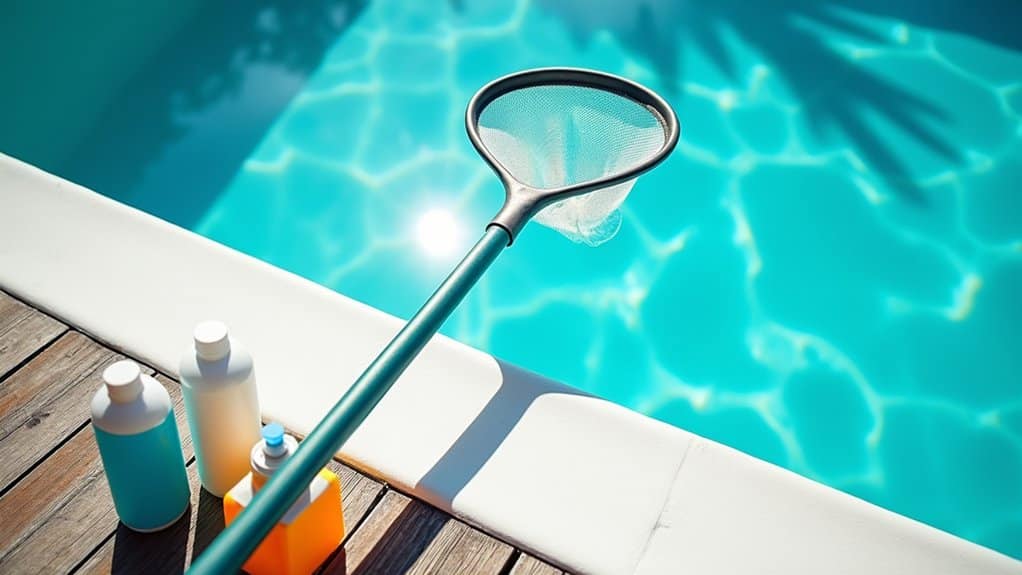
Keeping your fiberglass pool clean requires consistent daily and weekly routines that protect the gelcoat surface while maintaining water clarity. You’ll need to skim debris from the surface daily using a pool scoop, which takes just 5-10 minutes and prevents leaves from sinking and staining. Empty your skimmer box and pump basket daily to ensure proper water circulation throughout your pool system. On a weekly basis, you should brush walls and steps with a fiberglass-safe nylon-bristle brush, then vacuum the floor to remove settled sediment before it strains your filtration system. Always use cleaning products made for fiberglass to protect the gelcoat finish and maintain your pool’s smooth, lustrous appearance. Avoid using metal scrapers or abrasive tools, as these can damage the gelcoat and lead to costly repairs over time.
Daily Surface Skimming Tasks
Daily surface skimming stands out as one of the most effective preventive measures you’ll perform on your fiberglass pool. You’ll want to remove leaves, bugs, and floating debris before they sink and contribute to microbial growth. Use smooth sweeping motions across pool sections, working against the water flow to retain debris in your net.
A telescopic pole aids pole transport and reaches all corners without strain. For pine needles, apply a subtle bouncing motion to capture them without stirring bottom sediment. Skim the tile line first, then move to the middle sections. The Mainstays Pool Skimmer w/ 42 Aluminum Pole is a practical and cost-friendly option that effectively captures surface debris and extends to provide easy reach across the pool.
After each session, proper net storage prevents damage and extends equipment life. Empty skimmer baskets twice weekly to maintain unrestricted flow and ideal filtration efficiency throughout your fiberglass pool system. Consistent skimming also protects equipment longevity by preventing debris from overworking the pump and causing unnecessary wear. For a more hands-off approach, consider investing in an automatic or robotic pool cleaner that handles vacuuming effortlessly while you focus on other maintenance tasks.
Weekly Brushing and Vacuuming
While daily skimming tackles floating debris, weekly brushing and vacuuming address what accumulates on your fiberglass pool’s surfaces and floor.
Perfecting brushing patterns requires using a soft-bristle brush designed for fiberglass surfaces. Work methodically from top to bottom, focusing on walls, steps, and the waterline. Identifying high traffic zones, areas where body oils and sunscreen collect, ensures you’re targeting buildup effectively. Using the correct brush is crucial because improper tools can cause scratches on the gelcoat.
Follow your weekly brushing and vacuuming routine with these essential steps:
- Brush all surfaces using gentle pressure to disrupt algae spores before they establish
- Vacuum the floor slowly with a manual or robotic unit to capture settled particles
- Empty skimmer baskets to maintain ideal filtration
This combination reduces strain on your filter system and preserves your pool’s gelcoat finish, extending its longevity while minimizing professional intervention needs. Be careful to avoid over-cleaning, as excessive brushing can actually wear down the surface over time.
Filtration and Equipment Care Essentials
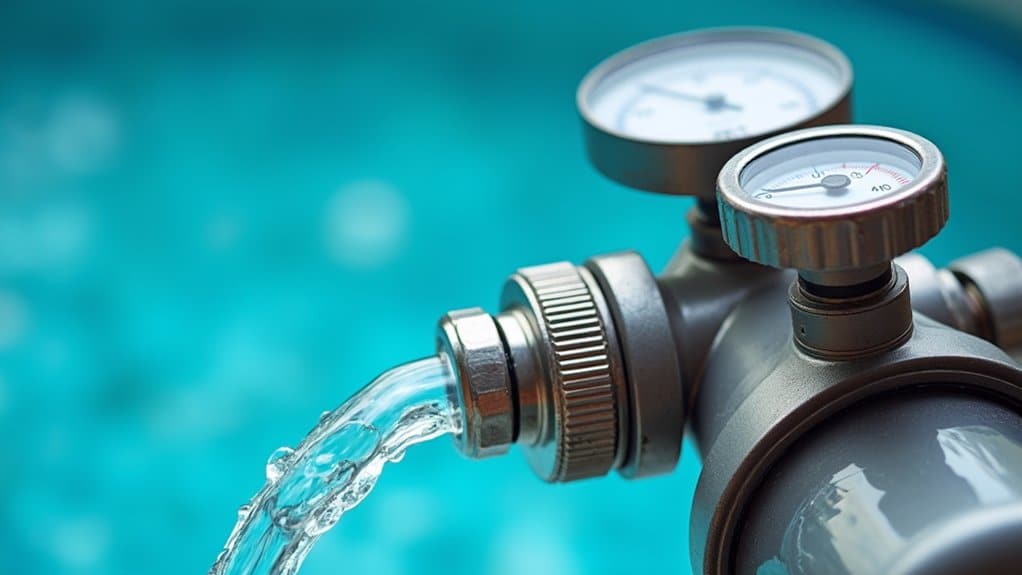
Because your fiberglass pool’s filtration system handles the heavy lifting of water clarity, proper equipment maintenance directly impacts both performance and longevity. Biweekly filter monitoring guarantees you catch debris buildup before it compromises circulation. Empty your filter basket weekly during peak season and inspect the skimmer basket every few days in debris-heavy environments.
For cartridge filters, drain the unit by opening the top vent and bottom ball valve, then rinse all four cartridges thoroughly. Use specialized cleaner for deeper maintenance. Before reassembling, ensure all gaskets are clean and properly seated to prevent air leaks and maintain optimal pressure. During quarterly equipment inspections, check pump sight glass for debris bypass, inspect gaskets for integrity, and listen for unusual noises during operation. Run your filter at least six hours daily, fiberglass pools require one full water circulation daily, half that of concrete pools. To calculate your specific needs, divide your pool volume by your filter’s gallons-per-hour rating to determine the exact hours to run your system. When cleaning around the pool or performing maintenance, always use nylon bristle pool brushes rather than abrasive tools that could damage the gelcoat surface.
Maintaining Proper Water Levels
Keeping your water at the skimmer’s midpoint guarantees prime filtration performance and safeguards your pump from running dry. Your fiberglass pool is designed to remain full of water at all times, so only drain it under the supervision of a pool professional. You’ll need to top up with a hose after heavy use or splashing, checking levels daily during peak swimming season. When rainstorms push water above the skimmer opening, use a submersible pump to restore proper levels and maintain effective debris collection.
Skimmer Midpoint Basics
Your pool’s skimmer works best when water sits at the midpoint of the skimmer opening, typically halfway up the skimmer window during swim season. This position guarantees proper circulation and prevents debris accumulation on the surface.
Understanding skimmer adjustment requirements helps you maintain optimal performance throughout the year. Mid season flow adjustments become necessary as evaporation and splash-out affect levels. Maintaining proper water levels also protects the gelcoat from potential damage caused by improper circulation and chemical imbalances.
Follow these guidelines for precise water positioning:
- Keep water between the midpoint and one inch below the top of the skimmer to confirm adequate suction without air intake.
- Never let levels drop below the skimmer opening, which causes pump damage from air suction.
- Avoid overfilling, which reduces skimming efficiency and hinders debris removal.
Weekly inspections during swim season catch level fluctuations early.
Topping Up After Use
After establishing the correct skimmer midpoint, you’ll need to restore that level following each swim session. Maintaining proper water levels becomes critical after heavy use, as splashing and swimmer displacement can drop water below ideal height. Use a garden hose to add water gradually until it reaches the skimmer’s midpoint.
Check levels daily during peak activity periods, especially after gatherings or sessions with children. This prevents your pump from losing prime and protects against filter clogs from insufficient circulation.
While restoring water height, focus on avoiding over topping. Excessive levels reduce skimmer effectiveness by preventing proper surface debris collection. Fill slowly, monitoring the rectangular skimmer plate’s center mark. This measured approach guarantees your filtration system operates efficiently without strain on circulation components.
Managing Excess Rainwater
When heavy rainstorms hit your area, excess water can quickly push pool levels above the skimmer’s ideal midpoint, reducing surface debris collection and potentially flooding your deck or equipment pad.
Storm runoff effects compound this problem by introducing contaminants from surrounding landscapes. To manage excess water efficiently, follow these steps:
- Divert overflow using a 3-way valve and hose connected to your stormwater drain if you’re running a cartridge filter system.
- Set sand filters to waste mode and run your pump to lower levels without recirculating contaminated water.
- Never fully drain your pool, as rising water tables can crack your fiberglass liner from beneath.
The debris accumulation impact intensifies when levels remain heightened, so act promptly. You’ll also want to pump out any water collecting under your pool shell through the inspection pipe.
Seasonal Adjustments for Spring, Summer, Fall, and Winter
Seasonal changes directly impact your fiberglass pool’s chemical balance, equipment demands, and maintenance frequency.
In spring, remove your cover, refill water to skimmer midpoint, and inspect for cracks or leaks. Balance pH to 7.2-7.6 and apply shock treatment to restart the season.
Summer requires daily skimming, weekly vacuuming, and running your filter at least six hours daily. Increase shock treatments during heavy use periods.
Fall preparation involves frequent debris removal, maintaining chemical levels, and lowering water below the skimmer before freezing temperatures arrive. Install your cover early.
Winter demands thorough equipment winterization and proper pump maintenance to prevent freeze damage. Drain all equipment, balance chemistry before closing, and continue minimal pump operation. Inspect your fiberglass shell for cracks throughout the off-season to catch damage early.
Preventing Stains and Algae Buildup
Preventing stains and algae buildup on your fiberglass pool requires consistent chemical management and proactive cleaning habits. You’ll need to maintain proper water balance with pH between 7.2-7.6 and chlorine residual at 1.0-2.0 ppm to inhibit algae growth and prevent metal oxidation control issues.
Follow these essential prevention steps:
- Apply metal sequestrant weekly after filling or heavy rains to bind iron, copper, and manganese before they oxidize on surfaces.
- Shock weekly during peak use with calcium hypochlorite at dusk, then brush walls to remove residues.
- Skim daily and vacuum weekly for organic discoloration mitigation by eliminating debris before it stains.
Maintain your filter’s efficiency through regular backwashing and add filter aid monthly to trap micro-particles that cause staining.
Frequently Asked Questions
How Long Does a Fiberglass Pool Typically Last With Proper Maintenance?
With proper maintenance techniques, your fiberglass pool typically lasts 25 to 50+ years. You’ll maximize this lifespan by maintaining balanced water chemistry, scheduling professional inspections, and addressing minor repairs promptly. Key pool lifespan factors include installation quality, climate conditions, and consistent care routines. You should expect gelcoat refinishing after 20-30 years. By following recommended maintenance protocols, you’re investing in decades of reliable performance from your fiberglass pool.
Can I Use Robotic Pool Cleaners on Fiberglass Pool Surfaces?
Yes, you can safely use robotic pool cleaners on fiberglass pool surfaces. Choose models with soft bristles designed for low friction operation to protect your pool’s smooth gel coat finish. Dolphins like the Nautilus CC or Escape work exceptionally well, featuring gentle scrubbing action that won’t scratch the surface. Adjust your cleaning frequency based on debris levels, typically 2-3 times weekly maintains ideal clarity while preserving your fiberglass finish’s integrity.
How Much Does Annual Fiberglass Pool Maintenance Cost on Average?
Your average annual cost for fiberglass pool maintenance typically ranges from $500 to $1,200, depending on your approach. Typical maintenance expenses break down into chemicals ($175-$360), electricity for pumps and heaters ($400-$900), and filter servicing ($50-$400). If you handle cleaning yourself, you’ll stay at the lower end. Hiring professional services adds $1,200-$2,400 yearly but guarantees consistent water chemistry and equipment performance.
Are Fiberglass Pools More Expensive to Maintain Than Concrete Pools?
No, fiberglass pools cost markedly less to maintain than concrete pools. You’ll spend $200-$400 annually on fiberglass versus $500-$1,200 for concrete. Fiberglass offers lower repair costs because its non-porous surface resists algae and cracking, reducing chemical usage by 70%. The improved durability means you’ll avoid concrete’s $8,000-$15,000 resurfacing every 7-15 years. Over 10 years, you’re looking at under $5,000 for fiberglass compared to $10,000+ for concrete.
When Should I Hire a Professional Instead of Doing Maintenance Myself?
You should hire a professional when equipment failures exceed basic DIY troubleshooting tips, water chemistry repeatedly tests outside safe ranges, or you can’t maintain a consistent seasonal maintenance schedule. Complex pump repairs, heater malfunctions, and persistent chemical imbalances require specialized expertise. If your busy lifestyle prevents weekly upkeep or you need documented service records for warranty protection, professional technicians provide the technical precision and preventive care that safeguards your investment long-term.