You shouldn’t mix bromine and chlorine in your hot tub because the combination creates unstable chemical compounds and produces irritating bromochlorine fumes. When chlorine contacts bromine-treated water, it triggers a halogen exchange reaction that causes unpredictable sanitizer levels, making proper disinfection nearly impossible. The reaction also accelerates corrosion of your pumps, heaters, and seals. However, there’s one important exception, small amounts of chlorine shock can safely reactivate your bromine system when done correctly. Adding chlorine to bromine pool systems should be approached with caution, ensuring that the right balance is achieved to maintain water quality. It’s essential to monitor the water chemistry closely to prevent any adverse reactions that may compromise the efficacy of your sanitation methods. By adhering to proper guidelines, you can effectively harness the benefits of both chemicals while minimizing risks.
Never Mix Chlorine and Bromine in Your Hot Tub
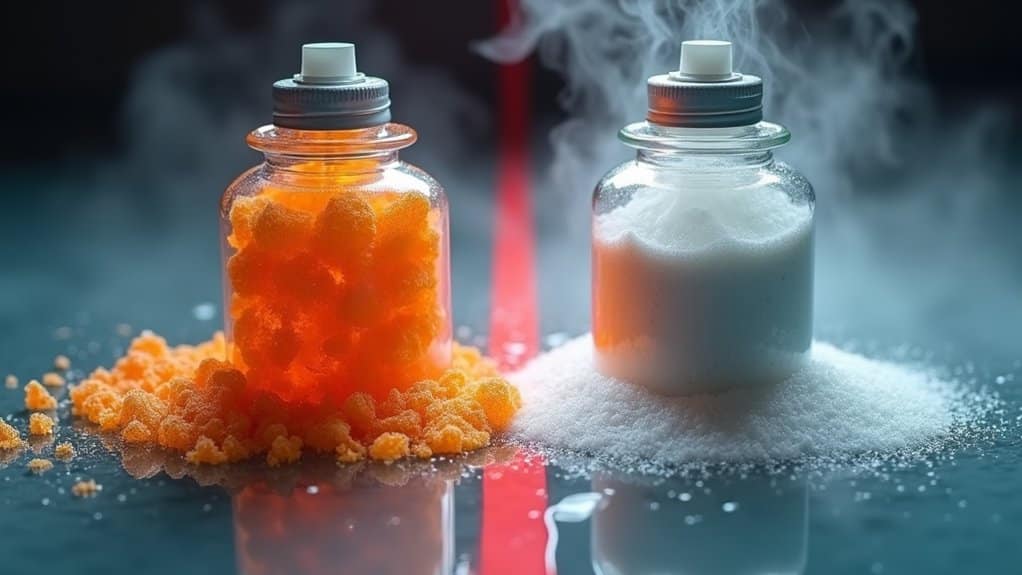
When you combine chlorine and bromine in your hot tub, you’re not getting double the sanitizing power, you’re creating unstable chemical compounds that compromise both safety and water quality. When you combine chlorine and bromine in your hot tub, you’re not getting double the sanitizing power, you’re triggering reactive chemical interactions that destabilize the water balance. Mixing chlorine and bromine in hot tub systems leads to the formation of unpredictable oxidizing byproducts, which can reduce sanitizer efficiency, increase irritation potential, and ultimately compromise both user safety and overall water quality.
The chemical interaction in spa water doesn’t produce two independent sanitizers. Instead, chlorine converts the bromide bank in hot tub systems into active bromine through the halogen regeneration process. This causes unpredictable sanitizer residual shifts that make maintaining proper disinfection nearly impossible.
Spa sanitizer compatibility matters because bromine stability high temperature environments depend on consistent chemistry. Adding chlorine disrupts this balance. Chlorine degradation heat accelerates the formation of irritating bromochlorine compounds that off-gas aggressively under covers. These fumes can irritate eyes, lungs, and skin, especially in enclosed spa rooms.
The mixing process also triggers corrosion of metal components, including pumps, heaters, and nozzles, leading to costly repairs and shortened equipment lifespan. The one exception is that small amounts of chlorine shock can be safely added to a bromine-treated hot tub specifically for reactivation purposes.
Understanding chlorine bromine compatibility spa requirements protects your equipment, your health, and your investment.
What Happens When Chlorine and Bromine React?
Three chemical reactions occur simultaneously when chlorine contacts bromine-treated hot tub water. First, the halogen exchange reaction converts your added chlorine into bromine almost immediately. Second, bromine residue accumulates as bromide ions, creating a reservoir that captures future chlorine additions. Third, combined bromine formation occurs when these halogens interact with organic matter.
Chlorine added to bromine-treated water doesn’t boost sanitization, it simply converts to bromine through halogen exchange.
Understanding these reactions helps you manage your spa effectively:
- Bromine degrades to bromide, which reactivates when you add chlorine shock
- Oxidation removes irritating chloramines/bromamines that cause eye and skin discomfort
- Bromine exhibits milder odor than chlorine, though mixing produces pungent byproducts
- Chlorine maintains crystal clear water, but bromine lowers pH reduces oil removal effectiveness
You’re fundamentally converting one sanitizer into another rather than doubling your disinfection power.
Health Dangers and Equipment Damage From the Reaction
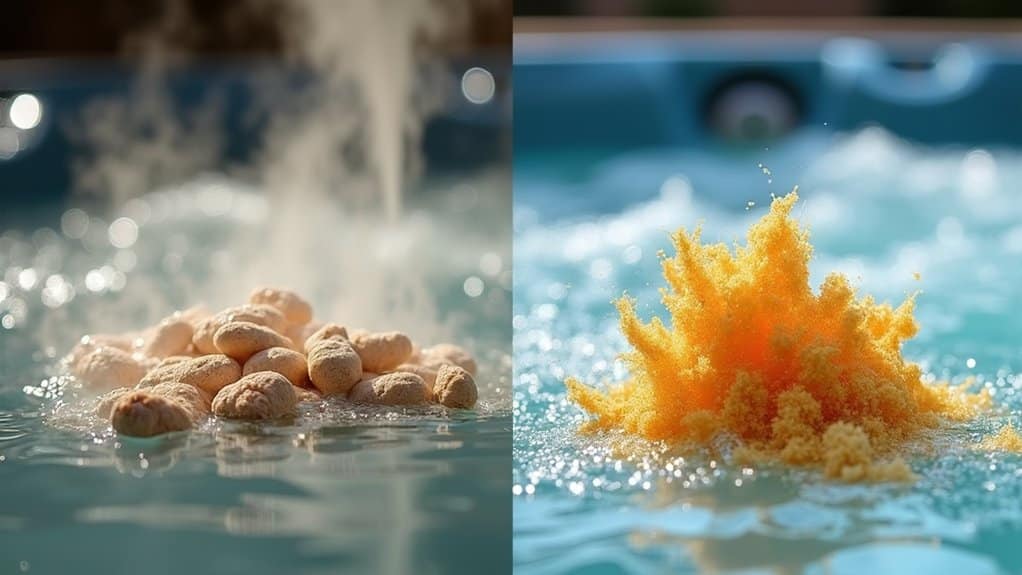
Although the chemical conversion from chlorine to bromine might seem harmless, the reaction generates compounds that pose genuine risks to your health and hot tub components.
The bromine chlorine reaction produces unstable intermediates that cause significant respiratory irritation hot tub users shouldn’t ignore. Bromine chlorine off-gassing releases fumes that trigger coughing, wheezing, and throat discomfort. You’ll also experience skin eye irritation from bromine chloride, which proves more aggressive than either sanitizer alone.
Beyond health concerns, sanitizer effectiveness interference leaves your water inadequately protected against bacteria. The bromine chlorine compound instability accelerates equipment corrosion bromine chlorine exposure causes, damaging seals, heaters, and filtration systems. This degradation leads to higher maintenance costs and compounds further chemical usage compounds further. You’re fundamentally paying more while receiving less protection and risking costly component replacements. Beyond the immediate health concerns, sanitizer interference can leave your water inadequately protected against bacteria, while unstable bromine, chlorine compounds accelerate corrosion that damages seals, heaters, and filtration components. When evaluating can bromine replace chlorine, it’s important to recognize that improper crossover between the two systems not only reduces disinfection efficiency but also increases maintenance costs, leading to higher chemical consumption, diminished protection, and a greater risk of expensive equipment replacement.
What to Do If You Already Mixed Chlorine and Bromine
Accidentally mixing chlorine and bromine in your hot tub requires immediate corrective action to protect both your health and equipment. Understanding halogen conversion spa chemistry helps you respond effectively when sanitizer fluctuations spa occur unexpectedly.
Quick action after accidentally mixing spa sanitizers prevents equipment damage and keeps your water safe for soaking.
Immediate Steps to Take:
- Test immediately, Use your spa test kit readings to check total bromine measurement and chlorine levels, ensuring pH stays between 7.2-7.8
- Stop all additions, Remove bromine floaters and chlorine dispensers to halt chemical input into your spa water sanitation system
- Run circulation, Operate jets for 8 hours minimum to disperse chemicals and prevent localized concentrations
- Apply non-chlorine shock, Use 2 oz per 500 gallons to oxidize byproducts without triggering additional warm water halogen behavior
The chlorine oxidizer role spa environments create increases sanitizer demand hot tub owners must address through proper drainage or natural depletion.
How to Switch Between Sanitizers Safely
When you’re ready to shift between bromine and chlorine in your hot tub, proper preparation prevents cross-contamination and guarantees your new sanitizer works effectively from day one.
Start by testing your spa chemical balance thoroughly. Adjust pH stability spa levels to 7.4-7.6 and alkalinity to 100-150 ppm. Clean your spa chemical feeders to remove residue from the previous sanitizer.
Allow your current sanitizer to dissipate naturally over 7-10 days. For bromine spa system changes, wait until levels reach zero before introducing chlorine in spa water. Apply dichlor shock spa treatment to eliminate remaining traces.
Monitor spa water temperature chemistry closely, as warmth accelerates reactions. Test sanitizer efficiency warm water conditions twice weekly, maintaining chlorine at 1.5-3.0 ppm or bromine at 3-5 ppm.
Frequently Asked Questions
Can I Use Chlorine Shock in a Bromine Hot Tub Occasionally?
Yes, you can use chlorine shock in your bromine hot tub occasionally. Dichlor shock is 100% compatible with bromine systems and actually converts bromide ions into active hypobromous acid, restoring your sanitizer’s effectiveness. You’ll want to shock approximately once weekly for ideal results. Wait at least 30 minutes after application before testing the water, and don’t enter until levels stabilize. Avoid mixing dry chemicals simultaneously to prevent unwanted reactions.
Why Does My Test Kit Show Chlorine Readings in My Bromine Spa?
Your test kit shows chlorine readings because standard DPD reagents can’t distinguish between bromine and chlorine, they react identically. Free bromine registers as free chlorine, and total bromine appears as total chlorine on typical strips. When you see 3-5 ppm “chlorine,” you’re actually measuring bromine. For accurate results, use bromine-specific test kits or multiply your chlorine reading by 2.25 to determine your true bromine level.
Which Sanitizers Work Better for People With Sensitive Skin Conditions?
Bromine works better for sensitive skin conditions. When you use chlorine, it produces chloramines that cause itchy skin, red eyes, and strong chemical odor. Bromine creates bromamines instead, which remain active sanitizers without the irritation or harsh smell. You’ll find bromine considerably gentler on your skin, hair, and swimwear. Many users with skin sensitivities report remarkably fewer reactions when they switch from chlorine to bromine-based sanitation systems.
How Long Does Bromine Stay Active Compared to Chlorine in Hot Water?
Bromine stays active considerably longer than chlorine in hot water. You’ll find that chlorine gases off quickly at temperatures between 100-104°F, requiring frequent additions to maintain proper levels. Bromine, however, persists longer and provides extended residual sanitation without rapid degradation. You can typically add bromine tablets weekly to maintain 3-5 ppm levels effectively, while chlorine demands more frequent dosing due to its faster breakdown in heightened temperatures.
Are There Any Safe Dual-Sanitizer Systems Designed for Hot Tub Use?
No, there aren’t any safe dual-sanitizer systems that run bromine and chlorine simultaneously in your hot tub. Direct mixing creates volatile chemical reactions and releases toxic fumes, including chlorine gas. You’ll also generate numerous harmful byproducts. If you’re switching sanitizers, you must drain your hot tub completely first. However, you can safely use chlorine-based shock treatments occasionally with a bromine system, just don’t run both as ongoing sanitizers together.