

Above-ground pools offer you the most versatile and cost-effective swimming solution in 2025, with sizes ranging from compact 8-foot round models to expansive 30-foot entertainment spaces. You’ll need to factor in 2-3 feet of perimeter clearance for equipment access and maintenance. Select from steel-framed, resin, or soft-sided options based on your space constraints and budget. Whether you’re planning for solo swimming or family gatherings, modern pool configurations provide durability-focused engineering that meets your specific yard dimensions. Our extensive size guide will help you navigate the perfect pool selection.
Understanding Above-Ground Pool Dimensions and Space Requirements
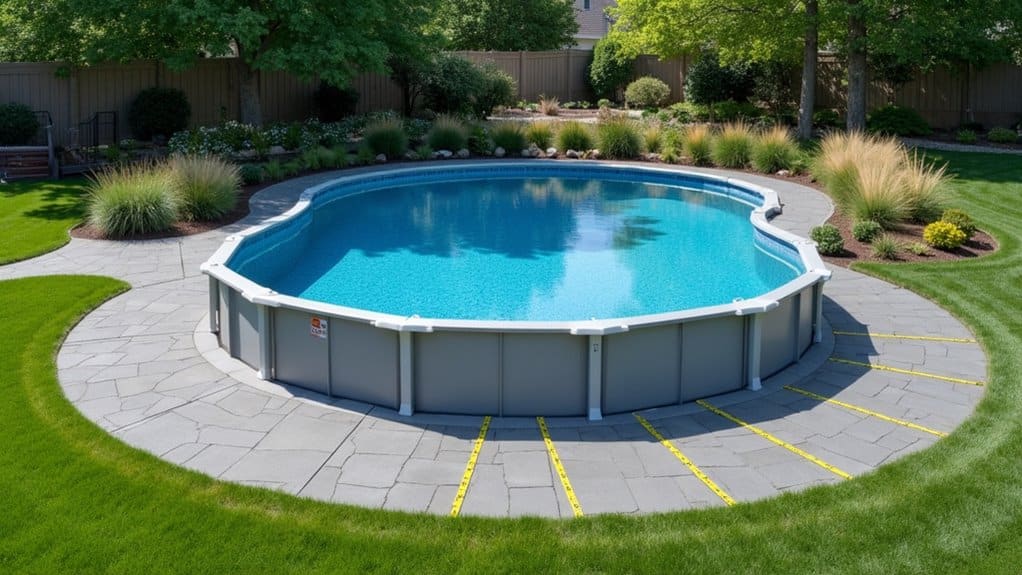
When selecting an above-ground pool, understanding the precise dimensional requirements guarantees ideal placement and long-term satisfaction with your investment. The most popular configurations include 24-foot round pools and oval options ranging from 12×24 to 21×41 feet, each requiring 2-3 feet of perimeter clearance for equipment and access. For those seeking more affordable alternatives, soft side pools offer an excellent entry-level solution while still providing complete functionality. To ensure secure online research, be aware that some pool websites may trigger security measures when submitting product inquiries. If you encounter access issues while researching pools, you may need to contact the website owner with your Cloudflare ID for assistance.
Pool depth requirements typically range from 48-54 inches, with 42-inch entry zones for safety. Your pool perimeter planning must account for mechanical systems, decking structures, and ground leveling needs. When measuring your available space, utilize precise tools and consider creating a physical template with stakes and rope. This helps you visualize the total footprint, including essential clearances for pump equipment and maintenance access, while ensuring compliance with yard boundaries and obstacle constraints.
Small Pool Solutions for Compact Backyards (8-15 Ft)
The compact dimensions of 8-15 foot above-ground pools provide strategic solutions for homeowners with limited yard space. The 15-foot round pools can comfortably accommodate 3-4 swimmers for family enjoyment. You’ll find space-saving features in both round and oval configurations, with 12-foot diameter models efficiently accommodating 1-3 swimmers while minimizing perimeter requirements. Remember to maintain 2-3 feet clearance around the pool’s exterior for safe access and routine maintenance.
For multi-season usability, consider steel-framed options that withstand year-round exposure. The 8x12ft oval design enhances swimming functionality without compromising yard space, supporting 4-6 users simultaneously. If you’re seeking flexibility, inflatable variants offer quick assembly and seasonal storage options, with costs ranging from $500-$1,500. These portable solutions include essential accessories like filter pumps and maintenance kits. When selecting your pool, factor in vertical elevation possibilities for uneven terrain and simplified decking requirements to optimize your compact outdoor space.
Mid-Size Pool Options for Growing Families (15-21 Ft)
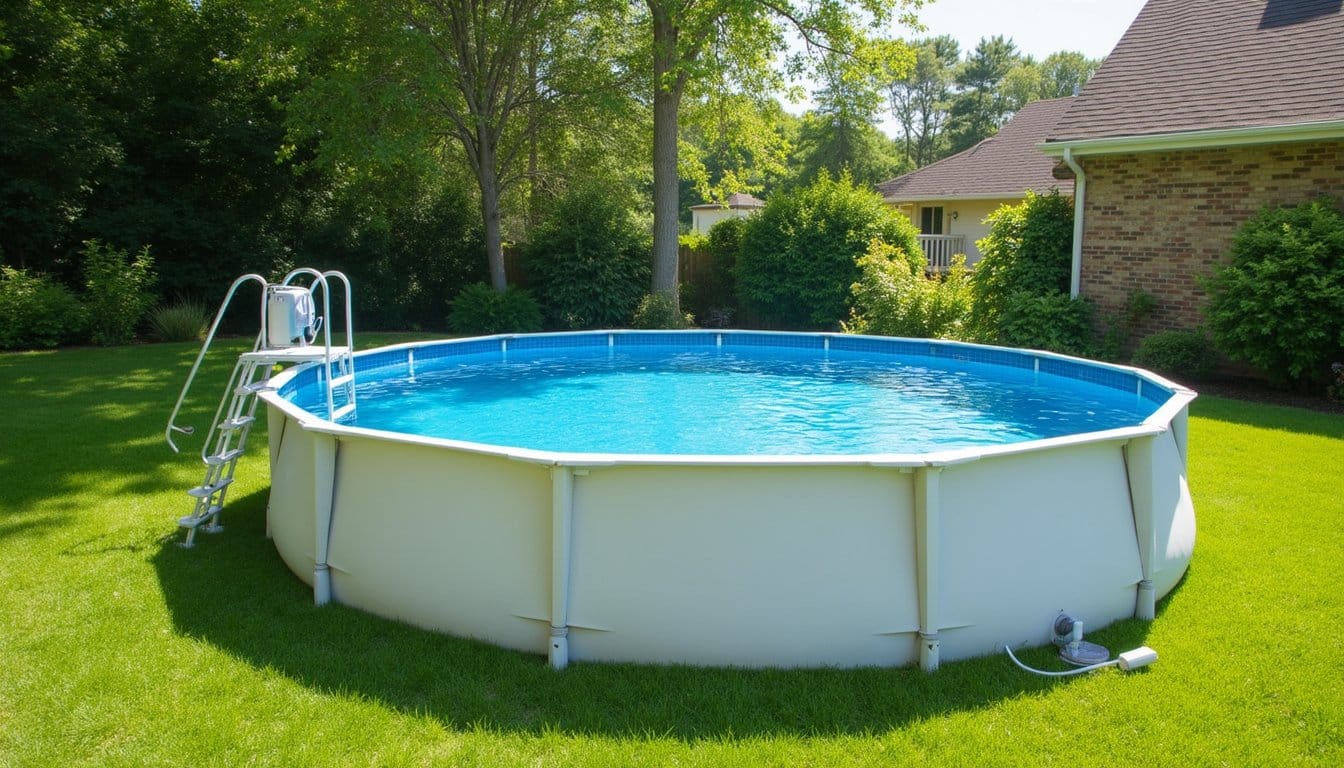
Mid-size above-ground pools ranging from 15 to 21 feet offer ideal solutions for growing families seeking recreational aquatic spaces. A 15-foot round pool accommodates 3-4 swimmers, while an 18-foot model comfortably fits 4-6 people, making these dimensions particularly suitable for regular family use. These installations require energy-efficient filtration systems rated for their specific water volumes: 4,646 gallons for 15-foot and 7,646 gallons for 18-foot round configurations. A two speed pump option provides flexibility between high-power cleaning and energy-efficient daily filtration. The incorporation of virgin vinyl liners ensures durability and lasting aesthetic appeal for these pool sizes.
Seasonal maintenance recommendations include installing a safety cover during off-seasons and maintaining proper chemical balance throughout operational months. Consider your yard’s layout, ensuring a minimum 6-foot clearance around the pool’s perimeter for safety compliance and maintenance access. The structural integrity of round designs typically requires less reinforcement than oval configurations, potentially reducing installation complexity and long-term maintenance requirements.
Large Pool Designs for Spacious Yards (21-30 Ft)
Expansive yards measuring 21-30 feet present ideal conditions for installing large-scale above-ground pools that optimize both recreational space and aesthetic appeal. You’ll find maximum versatility with oval pools spanning 15×30 feet or round options up to 30 feet in diameter, supported by 54″ steel walls and corrosion-resistant components. A resin walk-in step system offers the safest entry and exit solution for family members of all ages. Overhead lighting installations create the perfect ambiance for evening swimming and entertainment. Our pools offer classic appeal while maintaining modern durability standards.
| Feature | Specification | Feature | Specification |
|---|---|---|---|
| Wall Height | 54″ Steel | Deck Material | Composite |
| Pool Shape | Oval/Round | Safety Barrier | Built-in |
| Size Range | 21-30 ft | Support | Resin Frame |
| Installation | Semi-inground | Drainage | Integrated |
Consider implementing multi-level decking layouts with integrated retaining walls to increase your space utilization. These structural elements additionally create distinct zones for swimming, lounging, and equipment storage. Your installation can incorporate saltwater systems and solar accessories while maintaining essential barrier requirements for family protection.
Premium Pool Choices for Entertainment Spaces (30+ Ft)
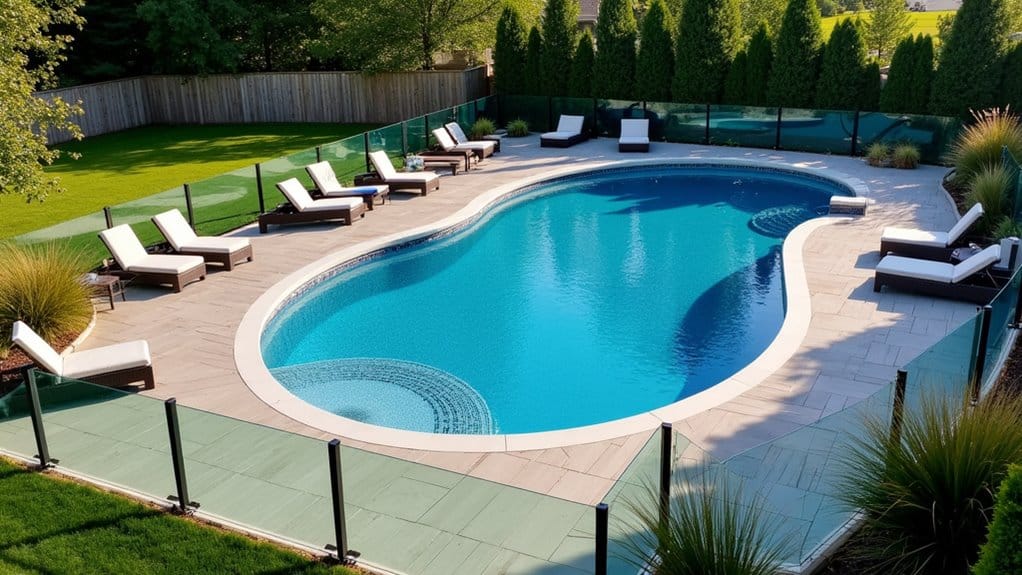
Premium above-ground pools spanning 30+ feet deliver unmatched entertainment potential while incorporating advanced structural innovations for 2025. You’ll find these models featuring reinforced supports and galvanized steel frames with powder-coated exteriors, ensuring multi-seasonal enjoyment and structural integrity. The extensive selection includes 52-inch steel options that combine durability with value.
For ideal durability, consider models with saltwater compatibility, like the Silver Interlude Resin Frame, which offers improved corrosion resistance. These pools incorporate composite T-joints and tool-free assembly systems, streamlining installation while maintaining safety standards. These premium models are elegantly engineered to combine both strength and visual appeal. Most models include essential equipment bundles that come with filters, liners, and pumps for complete setup. Price points range from $3,399.99 for basic bundles to $8,999.99 for semi-inground configurations, with each tier offering specific structural advantages.
Select models feature LED lighting packages and corner-step designs, maximizing entertainment functionality. Semi-inground conversion options allow partial burial, creating seamless integration with existing terrain features while maintaining structural stability.
Comparing Round vs. Oval vs. Rectangular Shapes
Beyond basic pool dimensions, the shape of your above-ground pool enormously impacts its functionality, installation requirements, and thorough backyard integration. Round pools excel in structural integrity with their naturally stress-resistant design and offer cost-effective solutions for smaller spaces, though they’re limited in visual aesthetics when paired with modern architecture. Round pools remain the most economical choice for homeowners seeking straightforward installation. With a typical lifespan of 8-15 years, proper maintenance is essential for maximizing your investment.
Oval configurations strike a balance between recreational versatility and space utilization, featuring adequate width for basic swimming activities while maintaining reasonable installation footprints. They’ll require reinforced frame support compared to round models, particularly in humid environments.
Rectangular designs prioritize fitness functionality and contemporary visual integration, making them ideal for lap swimming and modern landscaping schemes. You’ll need to account for more rigorous structural requirements and higher material costs, but they optimize usable swimming space and deck integration possibilities.
Material and Frame Construction Guide
The structural integrity of an above-ground pool hinges critically on its material composition and frame construction methodology. When selecting your pool’s framework, you’ll encounter options ranging from galvanized steel and aluminum to resin and hybrid constructions. Each material presents distinct weatherproofing components and long-term maintenance considerations.
Steel frames offer superior durability but require corrosion-resistant coatings, while aluminum provides lighter weight and natural rust resistance. Resin models feature chemical resistance but may crack in freezing conditions. Hybrid designs balance these attributes by combining metal and resin elements. For ideal structural support, guarantee proper installation of pressure-treated lumber framing, concrete footings, and protective ground padding. Your pool’s liner selection, ranging from $100-$660, serves as the final critical component in preventing leaks and maintaining water integrity.
Budget Planning and Cost Breakdown
When planning your above-ground pool investment, you’ll need to factor in both the initial kit purchase ($800-$4,500) and professional installation costs ($800-$3,000), which vary considerably based on pool dimensions and material quality. You’ll encounter additional expenditures beyond the base price, including mandatory safety features like fencing ($1,500-$3,000), permitting fees ($200-$500), and essential chemical maintenance supplies. For accurate budgeting, consider long-term maintenance requirements such as liner replacement every 5-10 years ($500-$2,000) and potential upgrades like decking systems ($2,000-$10,000) that might boost your pool’s functionality and value.
Initial Purchase Vs Installation
Planning your above-ground pool budget requires careful consideration of both initial purchase and installation costs, which can vary greatly based on size, materials, and site requirements.
You’ll find pool kits ranging from $1,500 for basic models to $10,000 for premium options with reinforced liners and energy-efficient systems. While DIY installation can save you money, starting at just $150 for small pools, you’ll need to weigh this against professional installation benefits, particularly for larger or metal pools that demand specialized expertise ($1,500-$3,000). Site preparation challenges like uneven terrain or soil remediation may necessitate professional installation to guarantee structural integrity and safety compliance. Consider that metal pools, though more durable, typically incur higher installation fees than resin alternatives due to their complex assembly requirements and specialized tools needed.
Hidden Costs to Consider
Beyond initial purchase and setup costs, successful above-ground pool ownership requires budgeting for numerous hidden expenses that can substantially impact long-term affordability. Essential maintenance schedules involve quarterly chemical treatments ($50-$100), filter replacements ($75-$200 semi-annually), and seasonal opening/closing services ($150-$300 each). You’ll need to factor in water-related expenses, including periodic top-offs and chemical balancing.
Safety compliance often necessitates installing protective fencing ($1,500-$5,000) and upgraded electrical systems with GFCI protection ($1,200-$3,000). Ongoing service fees encompass routine water testing, equipment checks, and potential emergency repairs. To guarantee proper upkeep and longevity, anticipate increased homeowners insurance premiums ($50-$100 annually) and municipal water usage fees. Moreover, creating a dedicated maintenance fund of 5-10% of your pool’s value secures its long-term viability.
Installation Requirements and Site Preparation
Before installing your above-ground pool, you’ll need to verify your site meets local building permit requirements, which typically apply to pools exceeding 18 inches in depth or 3,000 gallons in capacity. Your installation surface must be professionally leveled with a maximum variance of 1 inch across the entire pool footprint, requiring the removal of grass, rocks, and organic material to create a stable foundation. You’ll need to maintain proper clearances from utility lines and property boundaries while establishing a flat, compacted base that can support your pool’s weight when filled.
Ground Leveling Essentials
Successful installation of an above-ground pool requires thorough ground preparation to guarantee structural stability and durability. You’ll need to focus on sloped terrain stabilization by initially removing all grass, rocks, and debris from your chosen site. Employ proper soil compaction techniques to prevent future settling issues.
Start by marking your pool’s boundaries with stakes and string, then verify the ground slope using a laser level. You’ll need to add a 2-3 inch sand base layer, extending 6-12 inches beyond the pool’s perimeter. Allow 24 hours for ground stabilization after initial excavation. For ideal drainage, install French drains and regrade slopes to direct water flow away from your installation area. Remember to compact each material layer thoroughly to eliminate air pockets and confirm even weight distribution throughout the base.
Building Permit Guidelines
Installing an above-ground pool requires careful attention to local building permit regulations and safety standards. You’ll need to navigate the permitting process details if your pool exceeds 24 inches in depth, regardless of whether it’s permanent or inflatable. Start by obtaining both municipal zoning and building permits, submitting your property survey and manufacturer’s specifications.
Ensure your installation meets code compliance criteria, including proper barrier requirements – typically 48-inch fencing with self-closing gates. You’ll need to address electrical requirements through licensed professionals, especially for pump and filter installations. Above-ground pools can utilize their structure as a barrier if it meets height requirements, but removable ladders must be secured when not in use. Remember to schedule post-installation inspections and retain all documentation for your records.
Top-Rated Pool Models and Manufacturers
The current above-ground pool market features several industry-leading manufacturers offering novel designs that balance durability with user-friendly installation. You’ll find Intex and Bestway dominating the market with their steel-frame innovations, while specialized manufacturers like Aquarian focus on DIY-friendly configurations with pool customization options.
- The Ultra XTR Deluxe series leads with a 54-inch depth capacity and galvanized steel construction, ideal for year-round use with minimal seasonal storage considerations.
- Bestway’s Power Steel line incorporates advanced powder coating technology, protecting against UV damage and corrosion while maintaining structural integrity.
- Premium resin models from Elegance and Morada’s hybrid designs offer superior weather resistance and reduced maintenance requirements, though they command higher initial investment.
Always verify weight capacity and installation requirements before selecting your above-ground pool model.
Frequently Asked Questions
How Long Does an Above-Ground Pool Typically Last Before Needing Replacement?
Your above-ground pool’s lifespan varies considerably based on its construction material. You’ll get 10-15 years from steel pools, while wooden models can last 30+ years with proper maintenance. Pool liner lifespan typically ranges from 5-10 years, requiring replacement before the main structure. Above ground pool durability depends heavily on your maintenance routine, chemical balance management, and winterization practices. Regular inspections and prompt repairs will optimize your pool’s service life.
Can Above-Ground Pools Be Heated for Year-Round Swimming?
Yes, you can heat your above-ground pool for extended swimming season using several heated pool systems. Heat pumps work efficiently in moderate climates, while gas heaters provide quick heating in colder regions. For maximum efficiency, pair your heating system with a solar cover to retain heat overnight. Guarantee your chosen heater’s BTU rating matches your pool’s volume, and consider professional installation for gas systems to maintain safety compliance.
What Chemicals Are Essential for Maintaining Proper Above-Ground Pool Water Quality?
You’ll need three essential chemical categories to maintain your above-ground pool. Initial, maintain chlorine levels at 1-3 ppm for proper sanitization. Second, keep your pH balance between 7.2-7.8 to protect swimmers and equipment. Third, you’ll need alkalinity balancers (80-120 ppm) to stabilize pH levels. Don’t forget to use a stabilizer (CYA) at 30-50 ppm to prevent chlorine degradation from sunlight. Test these levels regularly with reliable test strips.
Are Building Permits Required for Installing an Above-Ground Pool?
You’ll typically need building permits for above-ground pools based on your local zoning regulations. Pool installation permits are mandatory if your pool exceeds 48 inches in height or holds more than 3,000 gallons. You must also obtain permits if you’re installing electrical components. Check with your municipality’s building department, as requirements vary by location. Failure to secure proper permits can result in hefty fines and potential pool removal orders.
How Difficult Is It to Winterize an Above-Ground Pool?
Winterizing your above-ground pool isn’t overly complex, but it requires careful attention to detail. You’ll need to manage the draining process correctly, lowering water 4-6 inches below the skimmer without over-draining. Insulation requirements vary by climate, but you’ll typically need a winter cover and possibly an air pillow. The most challenging aspects are balancing chemicals precisely and ensuring all plumbing is properly drained to prevent freeze damage.