You’ll need to gather accurate testing equipment like DPD kits or test strips before collecting water samples from your pool’s midsection at elbow depth. Test essential parameters including pH, alkalinity, and free chlorine levels according to recommended frequencies. Compare your results to standard ranges, ensuring pH stays between 7.4-7.6 and chlorine at 1-4 ppm. Follow the A-P-C sequence when making adjustments mastering these steps will transform your pool maintenance routine.
Gathering the Right Testing Equipment

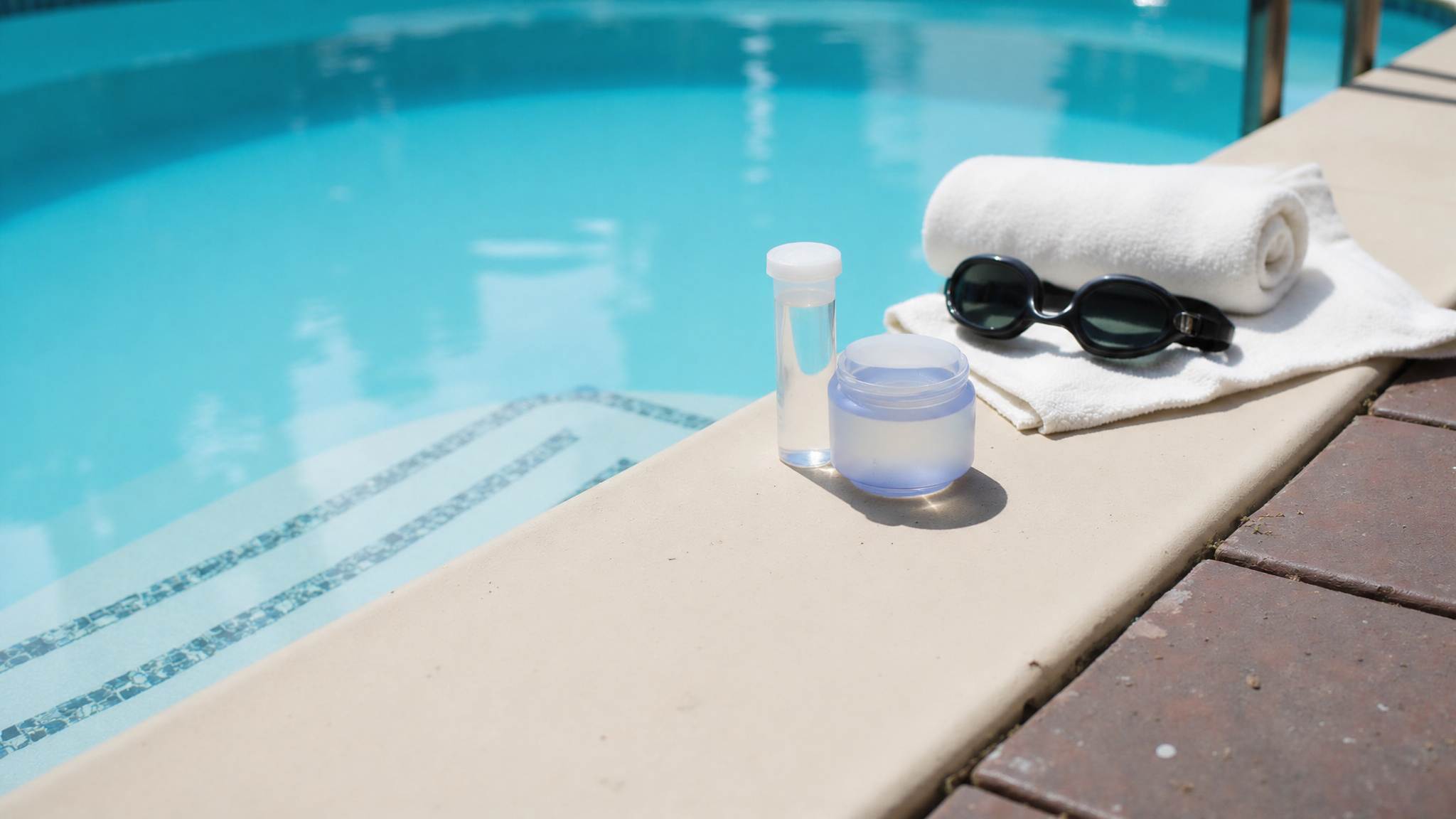
Before you can accurately monitor your pool’s chemical balance, you’ll need to select appropriate testing equipment based on your specific needs and desired precision level. Your essential testing tools should include either test strips for basic monitoring or more sophisticated options like DPD liquid kits and digital testers for enhanced accuracy. Regular chemical level checks are recommended 2-3 times per week to maintain proper water balance. DPD tablets are highly recommended for testing free chlorine levels as they provide reliable results.
When choosing the right kits, consider whether you need a basic 2-way kit that measures total chlorine and pH, or a thorough FAS-DPD kit for precise chlorine testing. For residential pools, a complete DPD kit measuring free chlorine, total chlorine, pH, alkalinity, calcium hardness, and cyanuric acid will suffice. Commercial pool operators should invest in FAS-DPD titration kits that offer superior accuracy and can detect chlorine levels between 0.2 and 50 ppm. A SpeedStir can significantly reduce your testing time while allowing simultaneous dropping and counting of reagents.
Proper Water Sample Collection Method
When collecting water samples from your pool, following proper methodology guarantees accurate chemical readings and reliable test results. Select clean, rinsed testing bottles and label them with your contact information and pool details.
For ideal sampling locations, collect water from the pool’s midsection at elbow depth, avoiding areas near jets, skimmers, or shaded zones. During container preparation, invert the bottle to expel gases before submerging it. Don’t touch the container’s rim or interior to prevent contamination. Taking samples from the deep end is recommended for the most accurate readings. Test once weekly for proper chemical balance and maintenance.
Wait 24 hours after chemical additions before sampling, and avoid collection during or after rain. You’ll need 8 oz. of water per sample, stored in a cool, shaded area. For bacteriological testing, target high-bather-contact areas and transport samples to the testing facility within two hours.
Testing Essential Chemical Parameters

Regular testing of your pool’s chemical parameters forms the foundation of proper water maintenance. You’ll need to monitor five critical levels to maintain ideal water chemistry and prevent pH fluctuations. Understanding chlorine synergy with other chemicals guarantees effective sanitization and balanced water conditions. Maintaining proper alkalinity levels helps stabilize pH and prevents equipment corrosion. Liquid test kits provide the most accurate results for thorough water analysis. Proper storage of chemicals in a ventilated space helps maintain their effectiveness and ensures safety.
| Parameter | Ideal Range | Testing Frequency |
|---|---|---|
| pH | 7.4-7.6 | Weekly |
| Total Alkalinity | 80-150 ppm | Weekly |
| Free Chlorine | 1.0-4.0 ppm | 2-3x Weekly |
| Calcium Hardness | 175-275 ppm | Biweekly |
Test your water using reliable methods: test strips for quick checks, liquid test kits for precision, or digital testers for immediate results. Increase testing frequency during heavy pool usage periods and after environmental disruptions like storms. For saltwater pools, maintain monthly salt level checks between 2,700-3,400 ppm, and monitor TDS levels to prevent equipment damage.
Understanding Your Test Results
Accurate interpretation of pool test results enables you to maintain ideal water chemistry and prevent potential problems. When evaluating test readings, focus on key parameters: pH should stay between 7.4-7.6 to prevent irritation and equipment damage, while alkalinity needs to remain at 80-120 ppm to stabilize pH levels. Free chlorine levels should be maintained between 1-4 ppm for effective sanitization. pH Reducer amounts vary based on pool size and desired pH reduction. Regular testing two to three times per week ensures optimal water balance and swimmer safety.
Your test interpretation should include analyzing sanitizer efficiency through ORP readings; levels below 600 mV indicate insufficient disinfection. For outdoor pools, you’ll need to monitor cyanuric acid levels between 30-50 ppm to protect chlorine from UV degradation. Guarantee proper chemical balance by maintaining calcium hardness at 200-400 ppm, as higher levels cause scaling while lower levels lead to etching. For accurate results, compare test strips within 15 seconds under natural light, and avoid contamination through proper handling. Regularly check the pH levels, aiming for a range of 7.2 to 7.8, as this ensures optimal sanitizer effectiveness and swimmer comfort. Additionally, it’s essential to follow pool chemical safety tips, such as storing chemicals in a cool, dry place and away from direct sunlight to prevent degradation.
Making Chemical Level Adjustments
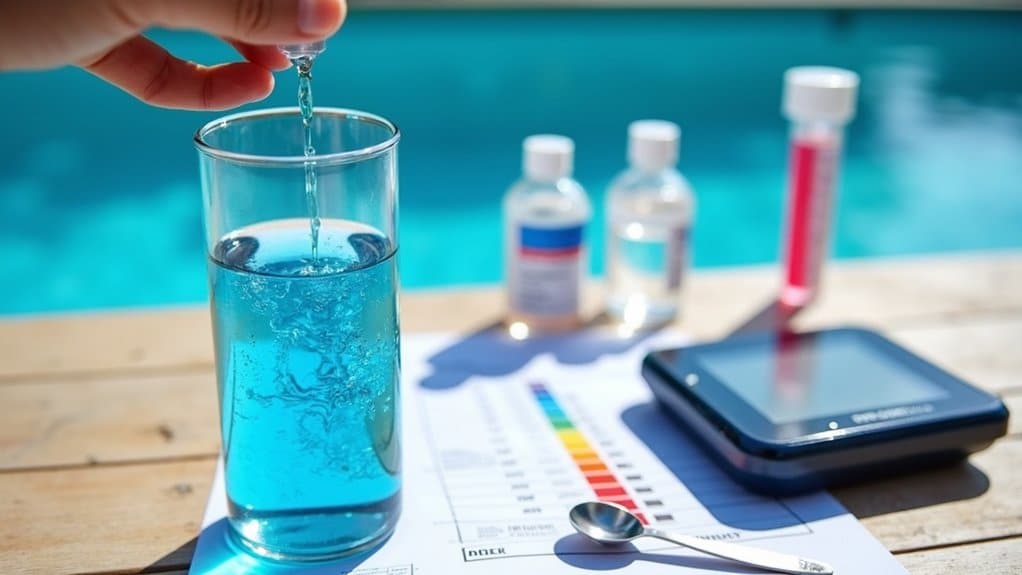
Maintaining proper pool chemistry requires a systematic approach to chemical adjustments. You’ll need to follow specific adjustment sequences, starting with alkalinity, then pH, calcium hardness, and finally sanitizers. Following the A-P-C sequence ensures optimal chemical balance and prevents potential conflicts between additives. Before making any changes, test your current levels and calculate your pool’s exact volume for accurate chemical dosage. Testing should be performed at least once per week to maintain proper water chemistry.
When adjusting pH, use soda ash to raise levels or muriatic acid to lower them, maintaining a range of 7.4-7.6. For alkalinity, add sodium bicarbonate to increase levels or muriatic acid to decrease them, targeting 80-120 ppm. Calcium hardness adjustments require pre-dissolving calcium chloride to prevent clouding. Finally, address sanitizer levels by gradually adding chlorine or other chosen products, ensuring proper stabilization with cyanuric acid to protect against UV degradation. The Langelier Saturation Index helps determine if your water is balanced by considering multiple chemical factors simultaneously. Always follow safety precautions when handling pool chemicals, such as wearing gloves and goggles to protect yourself. Additionally, it’s essential to store chemicals in a cool, dry place and to keep them out of reach of children. By following best practices for handling pool chemicals, you can ensure a safe and enjoyable swimming experience for everyone.
Frequently Asked Questions
Can I Test Pool Chemicals Immediately After Heavy Rain?
You shouldn’t test pool chemicals immediately after heavy rain due to rainwater impact on chemical concentrations. Instead, wait 24-48 hours after rainfall stops to guarantee accurate readings. During this time, run your pump continuously, remove debris, and let the water chemistry stabilize. The testing frequency should resume only after proper circulation (30-40 minutes minimum) and when the water is clear of sediment or cloudiness.
How Often Should I Replace My Digital Pool Tester Batteries?
You’ll need to replace your digital pool tester batteries every 1-6 months, depending on your usage frequency. For ideal battery lifespan, monitor your tester’s low battery indicators and replace all batteries simultaneously when capacity drops below 50%. As part of regular tester maintenance, mark replacement dates on your device and inspect batteries quarterly. Don’t wait for complete battery failure, as this can affect reading accuracy and calibration.
Why Do My Test Results Vary Between Morning and Afternoon Readings?
Your test results vary between morning and afternoon primarily due to temperature fluctuations and sunlight exposure. These environmental factors greatly impact chemical readings. Warmer afternoon temperatures accelerate chemical reactions and can increase evaporation, while direct sunlight degrades reagents and affects color-comparison accuracy. Additionally, daytime pool use introduces organic matter that consumes chemicals. You’ll get more consistent results by testing at the same time each day.
Does Swimming Activity Affect Chemical Test Accuracy?
Yes, swimming activity considerably affects your test accuracy. When swimmers are active, they introduce organic contaminants through sweat, oils, and other bodily substances that react with pool chemicals, altering the chemical balance. You’ll notice your readings fluctuate based on swimming frequency, especially during peak usage times. These organic inputs create disinfection byproducts that interfere with standard testing methods, making it harder to obtain consistent, accurate measurements throughout the day.
Should Pool Chemicals Be Tested Differently During Winter Months?
Yes, you’ll need to modify your winter testing approach for accurate results. During cold months, collect water samples from at least 18 inches below the surface to avoid ice interference. Switch to digital testing kits for better precision in low temperatures, and increase your testing frequency initially after winterization to monitor chemical stability. Store your reagents in a dry area and test more frequently when temperatures fluctuate to maintain proper balance.