



Transform your backyard into a luxurious retreat with 2025’s top rock landscaping innovations. You’ll bolster impact through natural waterfalls with LED-illuminated grottos, drought-resistant zen gardens featuring tonal stone gradients, and permeable rock paving that reduces water consumption by 75%. Strategic lighting transforms spaces with submersible LEDs and dark sky-friendly fixtures, while multi-level terraces integrate seamlessly with pools and gardens. Eco-friendly irrigation and locally sourced materials guarantee sustainability. These cutting-edge approaches offer just the beginning of your outdoor transformation odyssey.
Natural Rock Waterfalls: Creating a Tranquil Pool Paradise
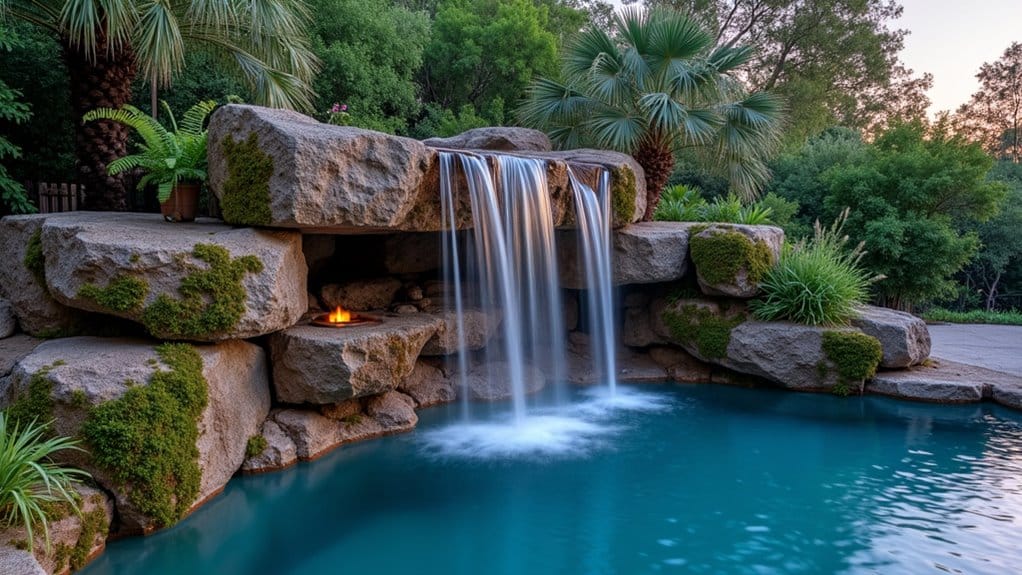
While natural rock waterfalls have become increasingly popular in backyard pool designs, they require careful planning to achieve the perfect balance of aesthetics and functionality. Robust waterproofing systems are crucial to prevent water seepage and structural damage over time. You’ll find diverse options ranging from creek-bed cascades extending 20-30 feet to towering boulder drops reaching heights of 8-16 feet. A sophisticated choice is the layered Tennessee flagstone that creates thin, even water sheets for a more refined look. Sensory engagement adds another dimension as the rhythmic sounds of cascading water create a soothing atmosphere.
When integrating natural rock waterfall cascades, consider incorporating a built-in grotto entertainment space with swim-through features and LED lighting for evening ambiance. You’ll need sturdy foundations to support heavy stonework, and proper waterproofing is essential to prevent maintenance issues. While your pool pump’s 100-gallon-per-minute flow won’t match nature’s torrential streams, strategic placement of flagstone and boulders can create impressive water effects. These features not just increase property value by 7% or more but also provide natural water aeration and cooling through continuous circulation.
Modern Rock Garden Designs for Low Maintenance Beauty
When planning your modern rock garden’s color scheme, you’ll want to select stones in tonal gradients from light granite to dark basalt, creating sophisticated visual depth without overwhelming the space. Your layered formations should progress from larger anchor stones at the base to progressively smaller stones as you build upward, maintaining structural integrity while achieving an architectural presence. Position contrasting textures strategically, smooth river rocks against rough-hewn pieces, to establish distinct zones and natural shifts within your low-maintenance topography design. Drought-tolerant succulents can thrive among the rocks while requiring minimal care throughout the seasons. Incorporating creeping ground cover between rock formations helps soften harsh edges while maintaining the garden’s contemporary aesthetic. The addition of intentional negative space between stone groupings creates contemplative areas that enhance the garden’s zen-like atmosphere.
Minimalist Stone Color Combinations
Modern rock gardens have evolved beyond traditional designs to adopt minimalist color schemes that optimize visual impact while minimizing maintenance requirements. You’ll find sophisticated combinations like white sand paired with gray boulders creating textured rock mosaics that deliver both visual interest and meditation-friendly spaces. Creating a Zen rock garden with geometric patterns adds natural appeal while maintaining the minimalist aesthetic. Japanese Stewartia trees with striking white flowers provide dramatic contrast against stone elements.
| Stone Type | Color Impact | Maintenance Level |
|---|---|---|
| River Rock | Subtle Gray | Minimal |
| Quartz | Bright White | Low |
| Basalt | Deep Black | Minimal |
| Slate | Cool Gray | Low |
| Volcanic | Earth Tones | Minimal |
For maximum effect, incorporate sculptural rock accents through contrasting arrangements, think black stones against white pebbles or monochromatic grey gradients. These pairings work especially well in Zen-inspired spaces where you’re aiming to create focal points without overwhelming the senses. Utilize local stone varieties to guarantee your design remains authentic to your region’s natural palette.
Layered Rock Formation Ideas
Three fundamental principles guide successful layered rock formations in contemporary garden design: strategic elevation changes, textural contrasts, and sustainable material selection.
You’ll optimize visual impact by combining different rock types, from fine gravel to substantial boulders, creating sculptural rock formations that serve as focal points. Integrate drought-resistant plants between layers to soften harsh edges while maintaining low maintenance requirements. Consider adding cascading rock waterfalls to introduce movement and ambient sound to your space. Using drought tolerant plants like succulents and cacti ensures your rock garden thrives with minimal water requirements. Create visual interest by having flowers tumble over walls for an added romantic touch.
For ideal sustainability, source local materials and incorporate LED lighting to highlight key features after dark. You can improve functionality by incorporating seating areas within your rock formations, while vertical elements like retaining walls help maximize limited space. This approach creates a modern, eco-conscious design that seamlessly blends hardscape elements with natural beauty.
Strategic Rock Lighting to Transform Your Outdoor Space
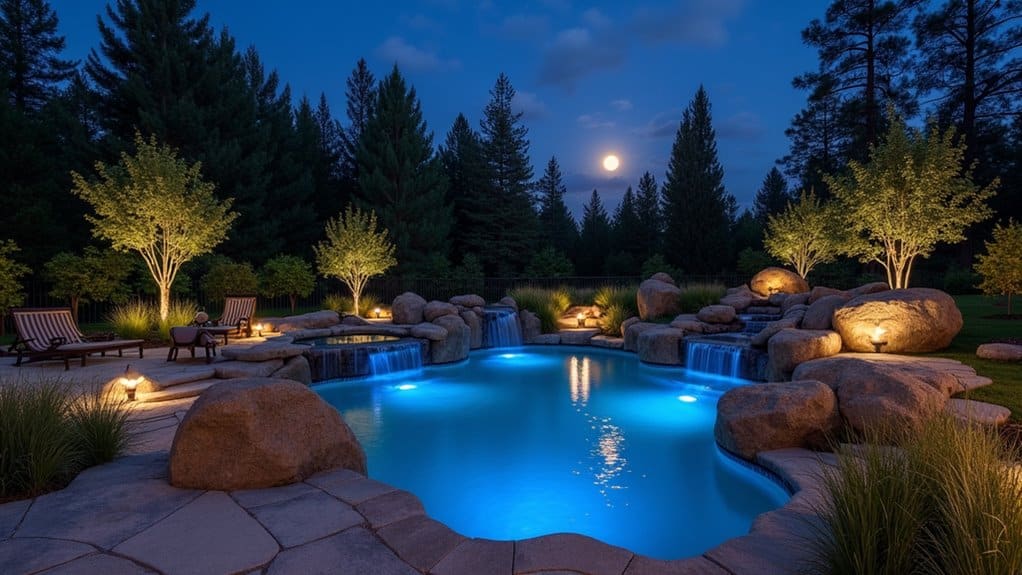
Transform your outdoor space with strategically layered lighting that combines uplight grazing on textured rocks, downlight pathway markers, and solar-powered accent stones to create distinct zones of illumination. You’ll augment visual impact by positioning solar stones along garden borders where they’ll charge during the day and automatically activate at dusk, creating an eco-friendly nighttime display. Your poolside rocks can be accentuated with submersible LEDs and carefully angled spotlights to establish safety-conscious glow zones that reflect off both stone and water surfaces, amplifying the evening ambiance. Integrating smart scheduling controls allows you to automate your rock lighting for consistent activation times throughout the year. The strategic placement of dark sky-friendly fixtures ensures your rock lighting enhances the space while minimizing light pollution that could disrupt the natural environment. Consider adding fairy tale-like string lights draped overhead to create an enchanting atmosphere that complements your illuminated rock features.
Layered Rock Lighting Effects
Strategic lighting placement around rocks creates dramatic layered effects that improve your outdoor space from simple to spectacular. By combining uplighting, downlighting, and side lighting techniques, you’ll achieve dynamic shadows that add depth and dimension to your rock features. For added convenience and safety, incorporate programmable timers to automatically adjust lighting levels from dusk till dawn.
Position narrow-beam uplights (15-30 degrees) at the base of large stones to accentuate natural textures, while mounting soft downlights in trees creates moonlight-like effects. The reflection of warm lighting on rocks mimics the appearance of fire in cave-like settings. Install customizable brightness LEDs with warm color temperatures (2500K-3000K) to fine-tune the atmosphere and control shadow intensity. For ideal results, alternate lit and unlit areas to produce contrast, and conceal fixtures between rocks for a seamless appearance.
Consider integrating smart lighting systems with motion sensors for energy efficiency, ensuring your layered lighting design remains both sustainable and visually striking throughout the evening.
Solar Stones After Dark
While traditional scenery lighting often requires complex wiring and professional installation, solar stone lights offer an elegantly simple solution for illuminating your outdoor spaces after sunset. You’ll achieve optimal peak performance by strategically positioning these self-sustaining fixtures where they’ll receive maximum sun exposure, ensuring 6-12 hours of consistent nighttime illumination.
To maintain top-notch efficiency, incorporate regular solar panel maintenance into your routine, gently cleaning the surfaces to prevent dust and debris from compromising charging capability. While battery replacement options are available for most models, quality units typically operate effectively for 3-5 years before requiring attention. Position these weatherproof fixtures along pathways or near water features, where their 30-60 lumen output provides perfect ambient lighting. For enhanced improved control, select models with remote capabilities, allowing you to adjust brightness and color settings to match your desired atmosphere.
Poolside Glow Zones
Ready to improve your poolside experience? Transform your outdoor space with strategic ambient rock lighting effects that blend functionality with natural aesthetics. Position spotlights to accentuate rock formations while embedding recessed LEDs within pool walls for a seamless glow that defines swim zones.
Your custom rock lighting installations should incorporate boulder-integrated lights and fiber optic systems, creating an organic ambiance that mimics starlight. Install downlights in overhanging structures to cast focused beams on water features, and integrate path lighting into rock structures for safe navigation. Consider smart-controlled, color-changing LED systems that allow you to adjust the mood from relaxing blues to vibrant party scenes. For sustainability, opt for energy-efficient fixtures that reduce power consumption while maintaining the dramatic impact of your illuminated rock setting.
Sustainable Rock Landscaping Solutions for Water Conservation
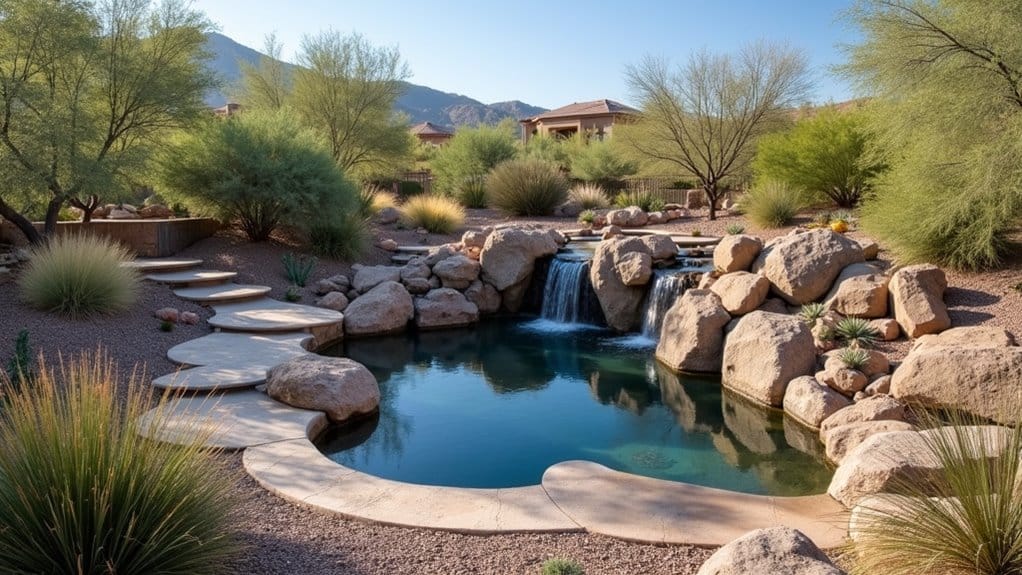
As environmental concerns drive terrain, scenery, or setting design choices, sustainable rock landscaping has emerged as a powerful solution for water conservation in residential yards. You’ll optimize water efficiency by incorporating permeable rock paving that allows rainwater to recharge groundwater naturally, while repurposed rock sculptures add artistic elements without compromising sustainability.
Strategic placement of locally sourced stones can reduce your outdoor water consumption by up to 75% through xeriscaping techniques. By integrating smart irrigation systems with drought-resistant plantings among your rock features, you’re creating a self-sustaining ecosystem that requires minimal maintenance. The combination of gravel mulch and strategically positioned boulders helps retain soil moisture, prevents erosion, and discourages weed growth without chemical herbicides. This approach also conserves water and supports local biodiversity, reducing your landscape’s environmental impact.
Multi-Level Rock Terraces for Pool and Garden Integration
Three key design principles drive successful multi-level rock terraces: structural stability, seamless integration, and ideal water management. You’ll achieve cohesive pool garden integration by starting with larger foundation stones at the base, shifting to smaller decorative rocks above. This gradation guarantees structural integrity while creating natural-looking shifts.
Optimize your space through functional zoning with terraces, incorporating dedicated areas for swimming, lounging, and gardening. Install gabion baskets for contemporary appeal and superior drainage, while strategically placing planting pockets between rocks to soften hardscapes. Connect your levels using stone steps and accessible pathways that complement your comprehensive design.
For lasting stability, implement proper drainage systems behind retaining walls and use erosion-control groundcovers in planting beds. Consider ADA-friendly features to ensure your terraced space remains accessible to all users.
Artistic Rock Pathways and Border Designs
Creating artistic rock pathways demands a thoughtful balance between aesthetic appeal and functional design. Your rustic stone pathways can transform ordinary garden spaces into stunning visual experiences by incorporating diverse materials and novel lighting solutions. When designing mosaic stone borders, you’ll want to ponder both aesthetics and practicality, ensuring proper drainage and sustainable material choices.
Thoughtful garden pathways blend artistic vision with practical function, creating enchanting spaces through carefully selected materials and innovative design elements.
- Combine different stone types like flagstone and river rock for textural contrast while maintaining a cohesive design theme
- Integrate solar-powered or recessed LED lighting along pathway edges for safety and ambiance
- Install water-permeable surfaces using interlocking pavers to manage rainwater runoff effectively
- Layer various materials such as exposed aggregate concrete and metal edging to create distinct borders that complement your garden’s style
For maximum impact, you’ll find that mixing Mediterranean-inspired mosaics with modern minimalist elements creates uniquely sophisticated pathways that stand the test of time.
Rock-Based Water Features for Garden Serenity
Rock-based water features deliver both visual impact and acoustic serenity to your garden space while promoting sustainable water management through recirculation systems. You’ll find diverse options that complement your environment’s seasonal rock foliage while utilizing efficient water circulation methods.
| Feature Type | Water Usage | Best Placement |
|---|---|---|
| Bubbling Rock | Low | Near seating |
| Multi-Tiered | Medium | Large spaces |
| Basalt Column | Low-Medium | Meditation areas |
| Pondless | Minimal | Child zones |
| Sculptural | Variable | Focal points |
Consider pondless designs for child-safe environments or basalt columns for zen-inspired spaces. Multi-tiered waterfalls create dramatic focal points in larger gardens, while bubbling rocks offer subtle tranquility for intimate settings. Each feature integrates seamlessly with your existing hardscape while supporting local wildlife and maintaining suitable moisture levels in surrounding plant beds.
Frequently Asked Questions
What’s the Average Cost per Square Foot for Installing Decorative Rocks?
You’ll typically spend $1 to $3 per square foot for standard decorative rock installation, including material costs and labor. However, your project’s final price can vary vastly based on installation considerations like site accessibility and ground preparation. Premium materials and intricate designs may push costs up to $20-$30 per square foot, while basic terrain gravel starts lower at $0.85-$1.81 per square foot. Consider bulk purchasing for larger areas to reduce total costs.
How Often Should Rocks Be Cleaned or Treated for Algae Growth?
You’ll need to inspect your rocks monthly and implement a routine maintenance schedule that includes cleaning every 3-4 months. For high-moisture areas near pools or gardens, perform spot treatments whenever you notice algae formation. Chemical treatment options range from eco-friendly vinegar solutions to commercial algaecides. Plan deep cleanings annually, and apply preventative sealants every 1-2 years. Consider using a power washer for larger installations, and always maintain proper drainage to minimize algae growth.
Can Existing Pool Areas Be Retrofitted With Rock Features?
Yes, you can retrofit your existing pool with rock features through careful structural assessment and planning. When incorporating existing pool structures, you’ll need professional evaluation to guarantee 2,000+ pounds per square foot bearing capacity. You’ll want to use artificial rocks or hollow veneers to minimize stress on pool walls, while blending rock features with environment design through matching textures and colors. Consider marine-grade hardware and waterproof gaskets for durability and safety compliance.
Which Types of Rocks Are Best for Hot Climates?
For hot climates, you’ll want to focus on heat resistant stone varieties like limestone and travertine, which naturally stay cool under intense sun. Drought tolerant rock selections such as light-colored granite and buff sandstone effectively reflect sunlight rather than absorbing it. You’ll find that decomposed granite and crushed limestone work exceptionally well for pathways and borders, as they maintain lower surface temperatures. For pool surrounds, stick with lighter-toned stones that prioritize both comfort and durability.
Do Rock Gardens Attract Unwanted Wildlife or Insects?
While rock gardens can attract some unwanted visitors, you’ll find they generally create a balanced ecosystem. Yes, you might encounter potential pest infestations like ants or rodents seeking shelter, but proper design minimizes these risks. By maintaining adequate spacing between rocks, ensuring proper drainage, and incorporating dense plantings, you’re actually supporting beneficial wildlife without disrupting local ecosystem balance. The key is strategic placement and regular maintenance of your rock features.