
Design your family pool with distinct zones that cater to everyone’s needs, incorporate a zero-entry area for toddlers, dedicated lap lanes for adults, and interactive water features for older kids. You’ll want to include essential safety elements like non-slip surfaces, proper fencing, and clear sight lines throughout. Add comfortable seating areas and an outdoor kitchen to create a complete backyard retreat. Reveal how thoughtful design choices can transform your pool into the ideal family gathering space.
Creating Safe Splash Zones for Every Age
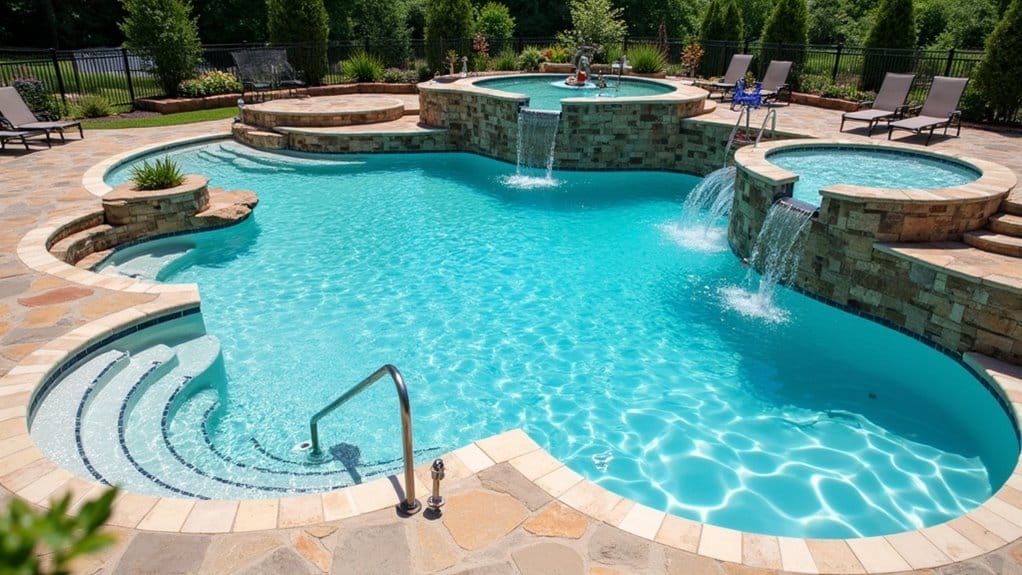
Every well-designed pool needs strategically planned splash zones that prioritize safety while maximizing enjoyment across demographics. Start with a zero-entry design that gradually slopes like a beach, making it easier for toddlers and those with mobility challenges to enter confidently. You’ll want to incorporate multiple depth sections to accommodate different swimming abilities while maintaining parent supervision requirements. Consider adding outdoor kitchens near shallow areas to keep a watchful eye on swimmers while preparing poolside meals and snacks.
Install slip-resistant surfaces both on the deck and pool interior to prevent accidents, and add wide steps and sun shelves that serve as safe play areas. Consider adding interactive features like gentle sprayers and mushroom fountains in shallow zones where younger children can stand. Position these variable water depths strategically, ensuring clear sightlines for monitoring swimmers from any vantage point around the pool area. Installing pool alarms provides an extra layer of security by alerting homeowners when someone unexpectedly enters the water. A properly installed safety fence around the pool perimeter acts as a critical barrier to prevent unsupervised access by young children.
Essential Safety Features for Family-Friendly Pools
Building upon smart splash zone design, implementing thorough safety features forms the foundation of any family pool. Your top priority should be installing a four-sided isolation fence that’s at least 4 feet high, using climb-resistant materials like solid wood or vinyl. Install durable safety gates with self-closing, self-latching mechanisms for reliable protection. Adding this critical barrier can reduce a child’s drowning risk by 83 percent compared to pools without proper fencing. Since most child drownings occur when kids aren’t expected to be at the pool, maintaining these safety features is crucial at all times.
A secure pool fence is your first line of defense, make it four-sided, climb-resistant, and equipped with self-closing gates.
Essential safety elements must include:
- Anti-entrapment drain covers that meet Virginia Graeme Baker Act standards
- Strategically placed lifesaving equipment visibility stations
- Pool alarms and monitoring sensors
- Automatic pool covers for added protection
Don’t overlook the importance of proper lighting around your pool area and maintaining clear sightlines. Regular inspection of safety features, combined with designated Water Watchers during swim time, creates multiple layers of protection for your family’s aquatic environment.
Interactive Water Features That Bring Joy
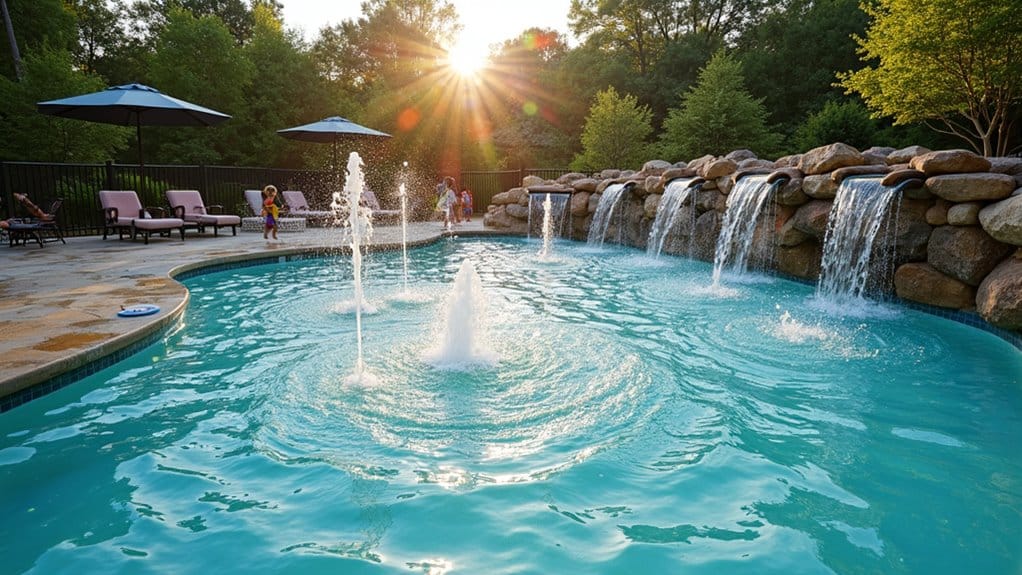
Three key elements transform an ordinary pool into an engaging aquatic playground: splash pads, multi-level play structures, and digital interactive features. You’ll find non-slip surfaces with sensor-activated jets that respond to movement, creating dynamic play opportunities for all generations and capabilities. The thoughtful design helps foster community interaction as families spend quality time together. The facility maintains proper disinfection standards by ensuring four complete water turnovers before opening each day.
Multi-level structures featuring tipping buckets and interactive valves let your family control water effects while learning basic STEM principles. Since the invention of the tipping bucket mechanism in the late 1980s, these features have become iconic favorites at waterparks worldwide. For added excitement, you can incorporate evocative thematic design elements like jungle motifs or ocean adventures, complete with choreographed lighting effects and sound-responsive features that create an immersive experience.
These installations prioritize safety with flush-mounted jets, clear sightlines, and mobility-friendly access points. You’ll appreciate how modular components allow for future expansions while maintaining the visual appeal of your aquatic space.
Smart Design Elements for Maximum Family Use
When designing a family-focused pool environment, smart integration of safety features and comfort elements creates an ideal space that serves everyone’s needs. Consider multi-generational design elements like gradual-entry areas and designated zones that accommodate both active play and quiet relaxation. Incorporating splash pad zones near the main pool area provides endless entertainment options for younger children while keeping them safely engaged.
Leverage integrated automation solutions to boost safety and convenience:
- Smart covers and alarms for unauthorized access prevention
- Automated chemical dispensers for consistent water quality
- Voice-controlled lighting and temperature systems
- Smartphone-managed pool functions for remote monitoring
Consider adding a plunge pool option for a more intimate family gathering space that’s easier to maintain. Incorporate thoughtful landscaping with non-toxic plants and soft borders to create natural boundaries. Position comfortable seating areas under permanent shade structures, and install slip-resistant surfaces throughout. Add flexible spaces like tanning ledges that double as children’s play areas, maximizing the pool’s functionality for every family member. Installing a self-closing gate with a reliable locking mechanism adds an essential layer of protection for young children around the pool area.
Building the Perfect Pool Layout
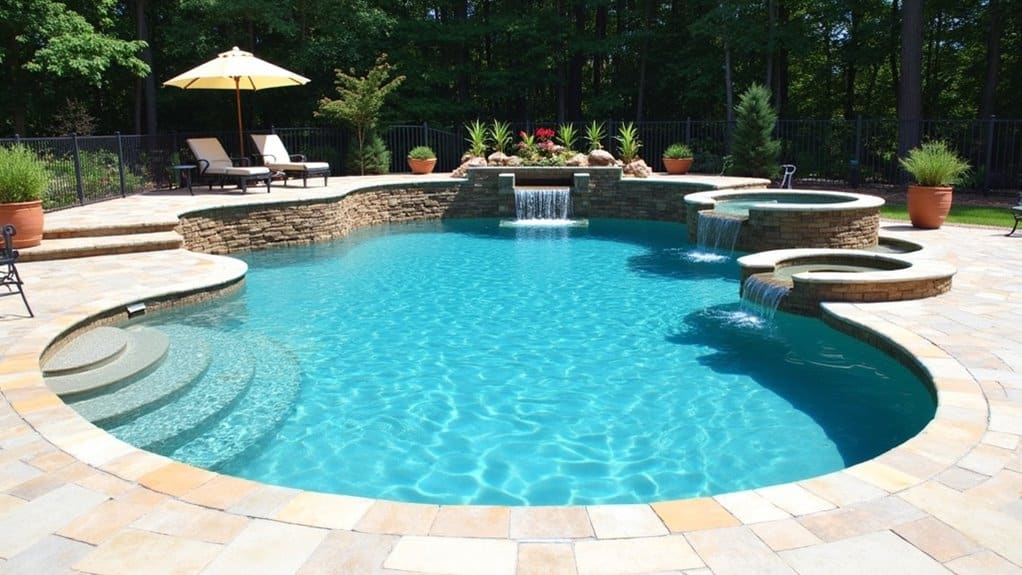
Creating an ideal pool layout requires careful consideration of multiple factors, from site selection to functional zoning. Your strategic pool siting should optimize sun exposure while maintaining clear sight lines from primary living spaces. Consider installing soft ornamental grasses along one or two edges for an elegant natural border. You’ll want to position the pool where it serves as both a functional amenity and visual centerpiece. Indoor pool options provide year-round swimming opportunities regardless of weather conditions.
For maximized functionality, guarantee you’re incorporating distinct zones for various activities. Consider a rectangular design if you’re prioritizing lap swimming and safety covers, or choose curved shapes for casual family gatherings. Urban properties may need to incorporate on-structure pools due to space limitations. Your aesthetic pool orientation should balance privacy needs with accessibility to outdoor living areas.
Don’t forget to include safety-compliant entry points and adequate decking space. Install slip-resistant materials around the pool’s perimeter, and integrate features like benches or shallow shelves to create safe gathering spots for all family members.
Combining Fun and Function in Your Pool Space
A well-designed pool space must balance enjoyment with practicality, offering features that appeal to every family member while maintaining rigorous safety standards. Create versatile deck spaces with inclusive seating options that accommodate both active play and relaxation zones.
A thoughtfully planned pool environment creates harmony between fun and function, ensuring every visitor finds their perfect spot to swim, play or unwind.
Your pool area should incorporate these essential elements for maximum functionality:
- Zero-entry zones with non-slip surfaces for safe, gradual water access
- Interactive features like splash pads and adjustable water jets
- Dedicated lounging areas with shade structures
- Smart storage solutions that double as seating
You’ll optimize your pool’s potential by implementing removable features that allow quick shifts between activities. Install automated safety systems and maintain clear sight lines from all angles. Choose durable, low-maintenance materials that withstand heavy use while protecting sensitive skin and ensuring proper grip in wet conditions. Consider installing a single-depth pool that provides a consistent 4-6 feet depth for safer family activities and entertainment.
Outdoor Living Areas That Complement Pool Time
Your pool area transforms into a complete outdoor retreat when you incorporate dedicated dining zones and fire pit gathering spaces. You’ll optimize your investment by installing weather-resistant dining furniture and built-in seating areas that create natural flow between swimming and socializing. Strategic placement of a fire pit away from splash zones, yet within sight of the pool, extends your outdoor enjoyment well into the evening hours while maintaining safety and functionality.
Poolside Dining Destinations
When designing the perfect poolside dining destination, integrating an outdoor kitchen and comfortable seating areas transforms your backyard into a resort-like entertainment hub. Position your U-shaped layout strategically to maintain visibility of swimmers while keeping food prep zones splash-free. Guarantee weather-resistant furnishings and ambient lighting solutions to create a lasting, functional space.
Your poolside dining area should include:
- Built-in appliances like grills, sinks, and refrigerators for seamless meal preparation
- Shaded seating under pergolas or umbrellas with integrated cooling systems
- Dedicated beverage stations with ice makers for quick refreshments
- Counter seating with durable surfaces that withstand pool moisture
Install proper drainage and non-slip decking around dining zones to safeguard safety. Consider modular furniture arrangements that adapt to both intimate family meals and larger gatherings.
Fire Pit Social Spaces
Modern fire pit installations have revolutionized poolside entertainment by creating seamless shifts between water activities and evening gatherings. You’ll optimize extended outdoor use by incorporating strategically placed fire features that complement your pool’s design. Design customization options range from sleek see-through models to dramatic wrap-around features.
| Feature Type | Safety Level | Best Placement |
|---|---|---|
| Fire Bowls | Moderate | Pool Corners |
| Glass-Enclosed | High | Near Seating |
| Low-Profile Tables | High | Entertainment Areas |
| Wrap-Around | Moderate | Pool Perimeter |
| River Rock | High | Transition Zones |
When selecting your fire pit, consider integrating water features for added ambiance. You’ll need to establish proper safety measures, especially with open flames near pool areas. Remember to check local regulations and maintain adequate distance between fire features and swimming zones to create a secure social space that your family can enjoy year-round.
Modern Pool Trends Worth Considering
Ready to transform your backyard into a contemporary haven? Today’s pool designs emphasize seamless integration with environment through clean geometric shapes and minimalist features. Modern pools aren’t just for summer; they’re engineered for year-round pool enjoyment with integrated wellness features and smart technology.
Consider these cutting-edge trends that optimize both form and function:
- Rectangular designs with dark finishes create mirror-like surfaces, reflecting surrounding environments while maximizing energy efficiency
- Built-in Baja shelves provide safe, shallow areas for lounging and child supervision
- Smart automation systems control everything from temperature to water chemistry
- Integrated spa features with hydrotherapy jets guarantee your pool serves as a wellness retreat
These innovations combine sophisticated aesthetics with practical functionality, making your pool a central feature of modern outdoor living while facilitating easier maintenance and enhanced safety.
Frequently Asked Questions
How Long Does It Typically Take to Build a Family Pool?
Your pool installation timeline typically ranges from 6 to 16 weeks, depending on several construction considerations. You’ll need to factor in weather conditions, permit processing, and required inspections throughout the build. If you’re installing a standard in-ground pool, expect 8-12 weeks from start to finish. However, you can expedite the process by working with experienced builders and making timely decisions about design features and materials.
What Temperature Should I Maintain for Comfortable Family Swimming?
You’ll want to maintain your pool’s ideal water temperature between 78°F-82°F (26°C-28°C) for general family swimming. If you’ve got young children or seniors, consider raising it to 84°F-88°F (29°C-31°C). For babies, you must keep temperatures between 86°F-92°F (30°C-33°C). Don’t let it drop below 78°F to avoid discomfort and safety risks, and avoid exceeding 88°F as it can cause fatigue and increase maintenance needs.
How Much Does Pool Insurance Cost for Families?
You’ll typically pay an extra $50-$75 per year on your homeowners insurance for an in-ground pool, while above-ground pools generally have minimal impact. Don’t forget to factor in umbrella liability coverage, which costs $200-$300 annually for $1 million in protection. Consider bundling your policies for discounts, but keep in mind that annual pool maintenance costs and potential health risks of pool chemicals may affect your comprehensive coverage requirements and premiums.
When Is the Best Season to Start a Pool Construction Project?
Fall is your best season to start pool construction due to favorable weather conditions and timely project planning advantages. You’ll benefit from mild temperatures that won’t delay construction, and contractors typically have more availability after the spring rush. By starting in fall, you’ll guarantee your pool is ready for summer enjoyment. Plus, you’ll have adequate time for landscaping preparation and can effectively manage a split-build project if needed.
Can Pool Chemicals Affect Children’s Sensitive Skin Differently Than Adults?
Yes, you’ll find that pool chemical sensitivities affect children more intensely than adults due to their thinner, less developed skin barrier. Your child’s skin can lose moisture more rapidly when exposed to chlorine, leading to increased children’s skin irritation, dryness, and rashes. They’re also more susceptible to chemical burns and “pool dermatitis.” To protect your child, guarantee they shower immediately after swimming and apply moisturizer. Consider pools with alternative sanitization methods if sensitivity persists.