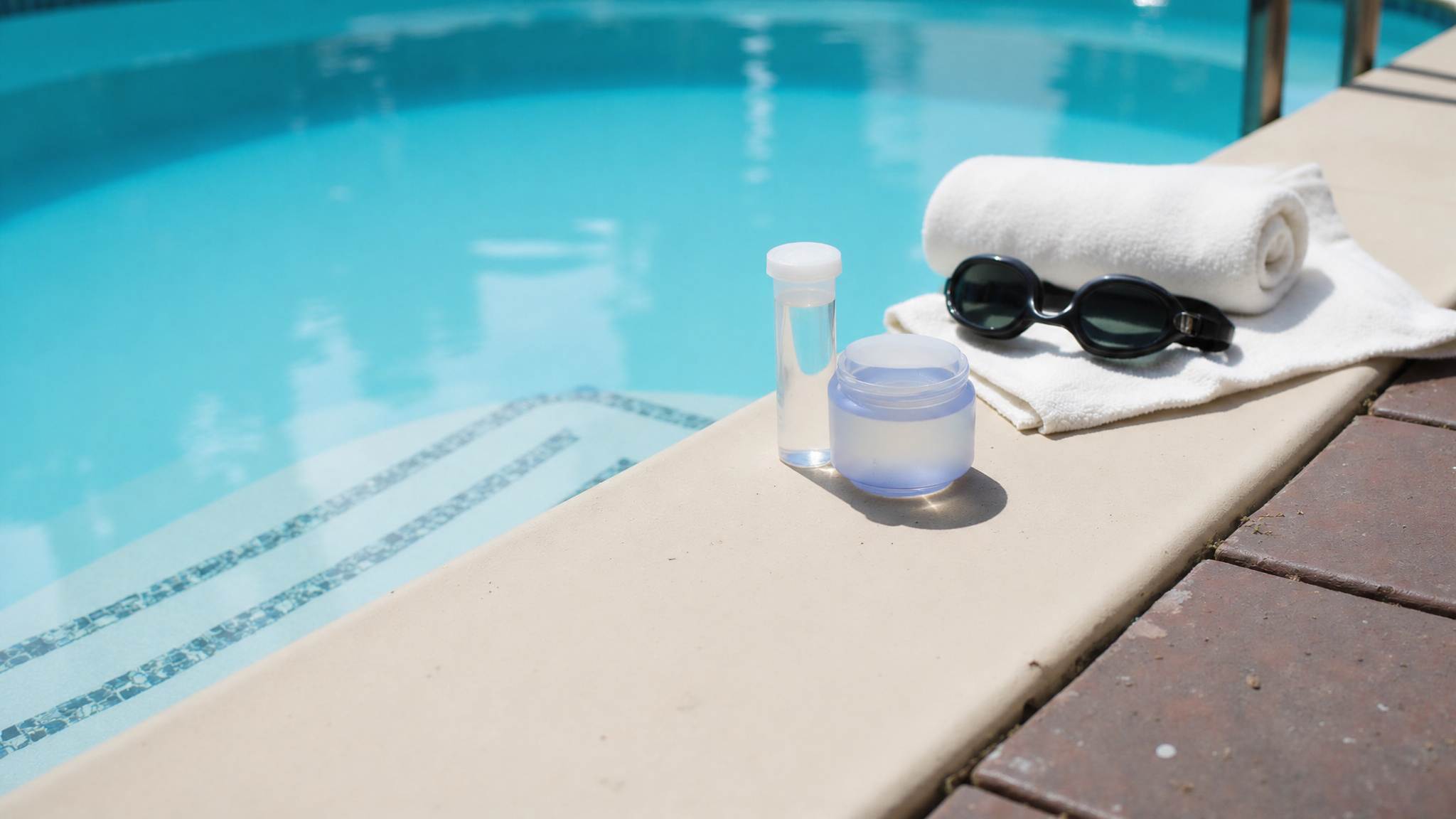
To properly winterize your pool, you’ll need five essential chemicals: a thorough testing kit to check pH and alkalinity levels, pool antifreeze to protect plumbing, chlorine-free shock for sanitization, winter algaecide (one quart per 25,000 gallons), and pH/alkalinity balancers. Start the chemical process 3-7 days before closing, applying treatments in sequence: clarifiers first, followed by shock and algaecide. Understanding the proper timing and application of these chemicals guarantees ideal winter protection.
Essential Pool Chemicals for Winter Protection

A well-planned chemical strategy forms the foundation of proper pool winterization. Proper preparation includes skimming and brushing the pool thoroughly before adding any winterizing chemicals. You’ll need to start with a thorough testing kit to measure your pool’s chemical composition, including pH, alkalinity, calcium, and chlorine levels. This baseline assessment determines which adjustments are necessary. Pool antifreeze must be added to protect plumbing components from winter damage.
Your essential chemical arsenal should include chlorine-free shock or oxidizer for immediate sanitization, along with a winter-specific 60% Polyquat algaecide to prevent winter algae growth. A typical dosage of one quart algaecide per 25,000 gallons of pool water is recommended for effective protection. You’ll also require pH and alkalinity balancers to achieve ideal levels between 7.2-7.8 pH and 80-120 ppm alkalinity. Finally, incorporate stain and scale prevention products, such as slow-release winter balls, which combine multiple protective elements. Always follow manufacturer guidelines for dosage and application timing to guarantee maximum effectiveness during the dormant season.
Timing Your Chemical Applications
Proper timing of pool winterization chemicals directly impacts their effectiveness and interactions throughout the dormant season. You’ll need to start the chemical timing process 3-7 days before closing, beginning with water balance adjustments to pH, total alkalinity (200-250 ppm), and calcium hardness (150-250 ppm). Clean the pool thoroughly by removing debris and brushing walls before starting any chemical treatments. Monitor the water temperature daily to ensure conditions remain stable for chemical applications. Store pool chemicals safely in a cool, dry location away from children’s reach.
Follow this application sequence: First, add clarifiers and enzymes two days before closing, allowing 1-2 days of circulation. Next, apply a double dose of chlorine-free shock when water temperature exceeds 65°F. Wait at least eight hours, then add your algaecide, broadcasting it evenly around the pool’s perimeter. Finally, incorporate antifreeze and scale preventers before lowering the water level. For new plaster pools, factor in higher pH and alkalinity levels from ongoing carbonate release when planning your chemical additions.
Testing and Balancing Water Chemistry
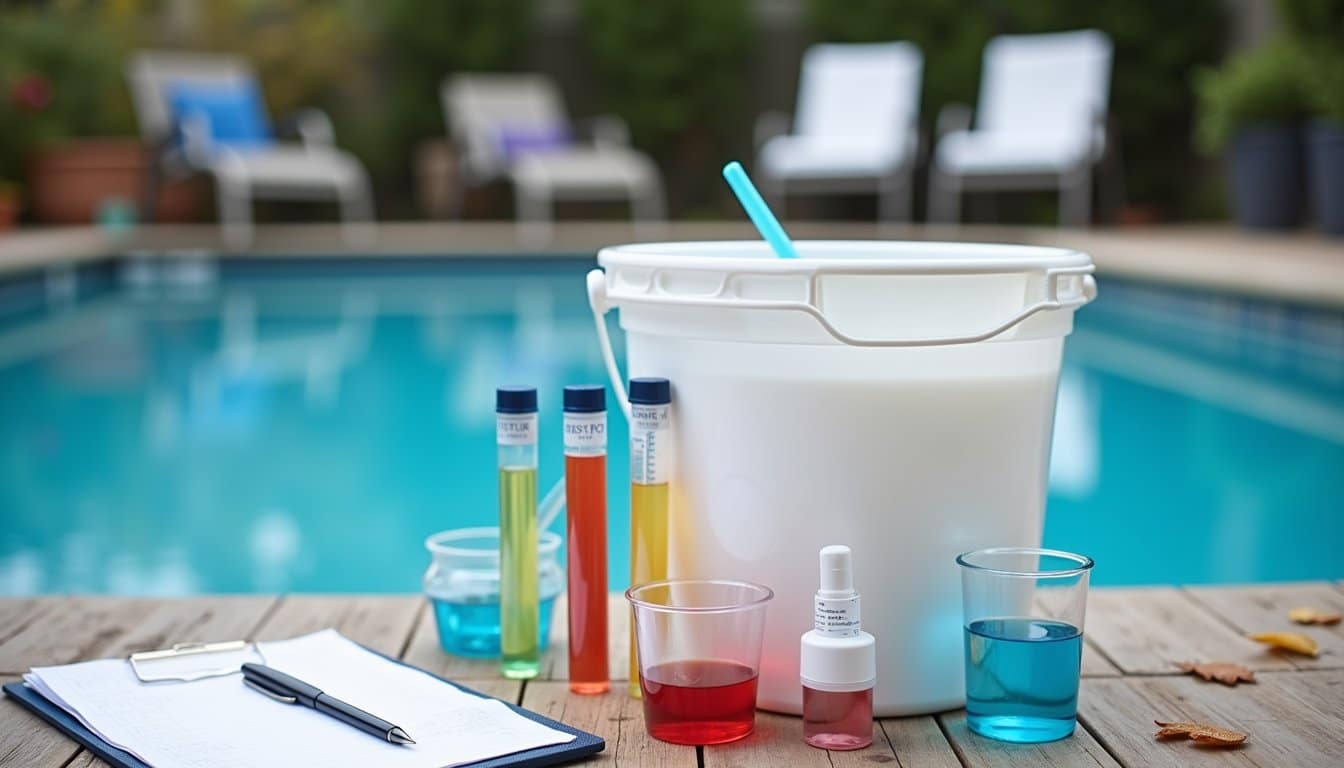
Before winterizing your pool, you’ll need to conduct thorough water testing using a combination of methods to establish accurate baseline chemistry levels. Use test strips for quick assessments and liquid test kits for precise measurements, guaranteeing your samples come from at least 18 inches below the surface to avoid contamination. Warm water temperature ensures chemicals dissolve and circulate effectively during the balancing process. Consider testing at your local pool store for professional monthly analysis to validate your readings and catch any hard-to-detect issues.
Focus your chemical balancing efforts on achieving these critical parameters:
- Maintain pH between 7.4-7.6 using soda ash to raise or muriatic acid to lower
- Adjust alkalinity to 80-120 ppm with baking soda or muriatic acid
- Keep free chlorine at 1-3 ppm for proper sanitization
- Verify calcium hardness stays within 150-400 ppm range
After making adjustments, wait 24 hours before retesting to verify your chemical balance. Document all readings to track changes and identify potential issues requiring professional attention. Proper chemical balancing helps prevent pool corrosion and ensures your pool equipment remains protected throughout the winter months.
Advanced Chemical Options for Enhanced Winter Care
Enhanced winter pool care demands strategic deployment of specialized chemical treatments beyond basic sanitization. You’ll find enzyme treatments particularly effective for breaking down organic contaminants, with products like Pool Magic offering sustained protection through WinterPill technology. These treatments work synergistically with your existing chemical balance while targeting oils, lotions, and bacterial buildup. For security reasons, some product information may be access restricted on certain pool maintenance websites. Proper pH levels must be achieved before adding any winterizing chemicals to ensure their effectiveness.
Winter algaecides formulated for cold-water stability provide essential defense against both green and black algae growth in stagnant conditions. When you’re managing larger pools, consider high-volume solutions that incorporate multi-component systems. Products like Robelle’s Winterizer and In The Swim’s Ultimate Kit offer thorough protection for pools up to 35,000 gallons. Due to increased online threats, many pool chemical retailers employ security measures to protect their product information. For best results, pair these treatments with stain and scale preventatives that utilize chelating agents to protect your pool’s surfaces during hibernation.
Proper Chemical Storage and Safety Measures
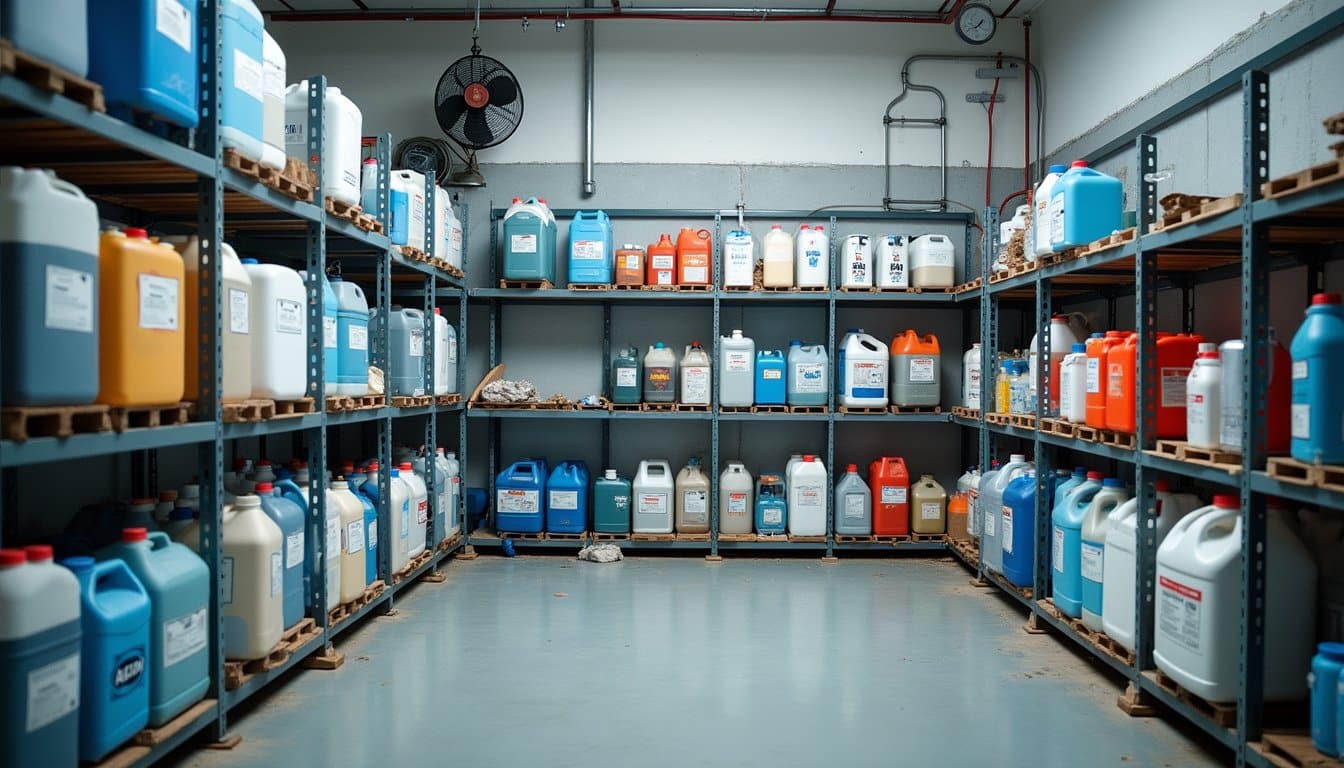
Safeguarding your pool chemicals during winter requires a secure, locked storage area that’s cool, dry, and well-ventilated, with containers positioned below eye level to prevent accidental spills. You’ll need to maintain temperatures between 50-95°F (10-35°C) while protecting chemicals from moisture, sunlight, and potential ignition sources. It’s critical that you separate incompatible chemicals, particularly chlorine products from acids, and store all substances in their original, properly labeled containers with tight seals. Having spill containment features in your storage area will help prevent chemical leaks from spreading and make cleanup safer and more manageable. Always keep a fire extinguisher readily accessible in your chemical storage area for emergency situations. Ensure you use dedicated tools when handling chemicals to minimize the risk of cross-contamination and accidents.
Secure Chemical Storage Methods
Proper chemical storage serves as a critical foundation for pool winterization safety. Following established safety protocols guarantees your chemicals remain stable throughout winter while protecting your family and property. Container management requires keeping products in their original packaging, properly labeled, and stored in designated areas away from heat sources and moisture. Using hard plastic bins provides secure containment for pool chemicals during seasonal storage.
- Store incompatible chemicals at least 6 feet apart, using physical barriers and separate containment systems to prevent accidental mixing
- Position liquid chemicals below dry products on waterproof surfaces, utilizing spill trays for leak protection
- Maintain a detailed inventory log tracking chemical quantities, expiration dates, and storage locations
- Install proper ventilation systems and restrict access to trained personnel who understand proper handling procedures
For maximum safety, inspect your chemical storage area weekly and address any container damage or leaks immediately.
Temperature and Moisture Control
To maintain chemical stability throughout winter storage, precise temperature and moisture control measures must be implemented. You’ll need to keep your storage area between 50°F-70°F to preserve chemical potency and prevent degradation. Monitor temperature fluctuations using digital sensors, and install alerts for critical threshold violations.
For effective moisture control, store chemicals in airtight, waterproof containers away from humid environments. You’ll want to add silica gel packets to absorb residual moisture and prevent condensation buildup. In cold climates, use insulated sheds or heated garages, while humid regions require dehumidifiers. If you’re in a coastal area, select rust-proof containers and apply additional moisture barriers. Remember to check your hygrometer readings weekly and maintain a detailed log of temperature and moisture data for ongoing monitoring.
Hazard Prevention Guidelines
Beyond temperature and moisture control, thorough hazard prevention forms the cornerstone of winter chemical storage safety. You’ll need to implement strict chemical safety protocols to protect your pool chemicals and prevent dangerous reactions during the off-season. Start by organizing your storage space according to established storage protocols, keeping incompatible chemicals separated and properly labeled.
- Store chemicals in their original containers with intact labels, placing them at eye level to prevent spills
- Keep all pool chemicals locked in a dedicated shed or cabinet, away from household items and food storage
- Maintain an updated inventory list and emergency response plan, including contact numbers for hazmat services
- Position storage areas away from ignition sources, and equip the space with appropriate spill containment materials
Common Chemical Application Mistakes to Avoid
Chemical mistakes during pool winterization can lead to costly damage and spring maintenance headaches. When following winterizing procedures, you’ll need to carefully monitor pH and alkalinity levels, not just chlorine. Your chemical balancing tips should start with maintaining pH between 7.2-7.8 and stabilizing alkalinity before closing.
Don’t skip the essential shock treatment before winter it removes organic contaminants and chloramines that can cause problems during the cold months. You’ll also need to apply proper concentrations of algaecide and metal sequestrants, especially in metal-rich water areas. Avoid adding chemicals to cold water or mixing incompatible products. Be thorough with enzyme treatments to break down organic waste and oil buildup. Reapply algaecide after heavy rains, but don’t overuse it as this wastes chemicals and money. Additionally, ensure that your pool’s filtration system is functioning efficiently, as this is crucial for maintaining water quality. When preparing your pool for winter, consider investing in a quality cover to prevent debris accumulation and minimize maintenance needs.
Preparing Your Pool Equipment for Chemical Treatment
Proper equipment preparation serves as the foundation for successful pool winterization and chemical treatment. Before applying winter chemicals, you’ll need to verify your equipment maintenance routine is thorough and complete. Start by cleaning all filter components, pump housings, and plumbing lines to remove debris that could interfere with chemical circulation.
Thorough equipment preparation and maintenance creates the essential groundwork for effective pool winterization and balanced chemical treatment.
- Remove and clean skimmer baskets, pump baskets, and automatic cleaner parts to prevent chemical buildup during winter storage
- Backwash sand filters or clean cartridge filters to guarantee ideal chemical distribution
- Inspect and lubricate valve O-rings and seals for proper winter preparation
- Lower water levels appropriately based on your pool type before adding winterizing chemicals
Complete these equipment maintenance tasks first, as they directly impact how effectively your winterizing chemicals will work throughout the dormant season. Proper preparation prevents chemical imbalances and equipment damage during winter months.
Frequently Asked Questions
Can I Reuse Leftover Winter Chemicals From the Previous Season?
You can reuse some leftover chemicals, but it depends on their type and storage conditions. Stable granular chlorine and non-liquid stabilized formulas maintain chemical effectiveness for 3-5 years when stored in airtight containers away from sunlight. However, you shouldn’t reuse liquid chlorine, muriatic acid, or any chemicals showing signs of degradation. Always check expiration dates and avoid mixing old batches with new supplies to prevent contamination.
What Happens if It Rains Right After Adding Winterizing Chemicals?
If it rains right after you’ve added winterizing chemicals, you’ll experience reduced chemical effectiveness due to dilution. The rain impact can considerably weaken your sanitizer levels and disrupt chemical balances. You’ll need to retest your water and likely add additional chemicals to compensate for the dilution. It’s best to winterize when there’s no rain in the forecast for at least 24-48 hours to guarantee proper chemical distribution and effectiveness.
How Long Should I Run the Pump After Adding Winter Chemicals?
You’ll need to run your pool pump for 2-4 hours after adding winter chemicals to guarantee proper distribution and chemical effectiveness. If you’re using a single-speed pump, operate it for about 1 hour per 10°F of air temperature. For variable-speed pumps, run at low speed (2,000-2,500 RPM) for 4-6 hours. Monitor water clarity during this process, and you may need to extend pump run time if you notice uneven chemical distribution.
Should I Shock My Pool if the Water Is Already Clear?
Yes, you should shock your pool even if the water appears clear. Pool shock benefits extend beyond visible clarity it breaks down invisible organic contaminants like sweat, oils, and sunscreen that can accumulate in your water. Regular shocking also eliminates chloramines, prevents algae growth, and maintains proper sanitizer levels. For ideal water clarity maintenance, you’ll want to shock weekly during peak season and whenever you’re experiencing heavy pool usage.
Can I Mix Different Brands of Winterizing Chemicals Together?
You shouldn’t mix different brands of winterizing chemicals due to serious chemical compatibility risks. Each manufacturer uses proprietary formulations that aren’t guaranteed to work safely together. Different brands may contain varying concentrations or incompatible additives that could react dangerously, reducing brand effectiveness or creating toxic gases. For your safety, stick to a single brand’s complete winterizing system, and always follow the manufacturer’s specific guidelines for best results.