

To locate your perfect pool size, consider your available space initially – you’ll need at least 1,200 sq ft total for the pool and surrounding features. Match the pool type to your primary use: traditional pools (16-40 ft) work for families, lap pools (up to 50 ft) suit exercise enthusiasts, and plunge pools (6×10 ft) optimize compact yards. Factor in 15 sq ft of pool surface per person and maintain a 1:1 pool-to-patio ratio. Explore how depth requirements and lifestyle factors can further refine your ideal dimensions.
Understanding Pool Size Categories and Their Benefits
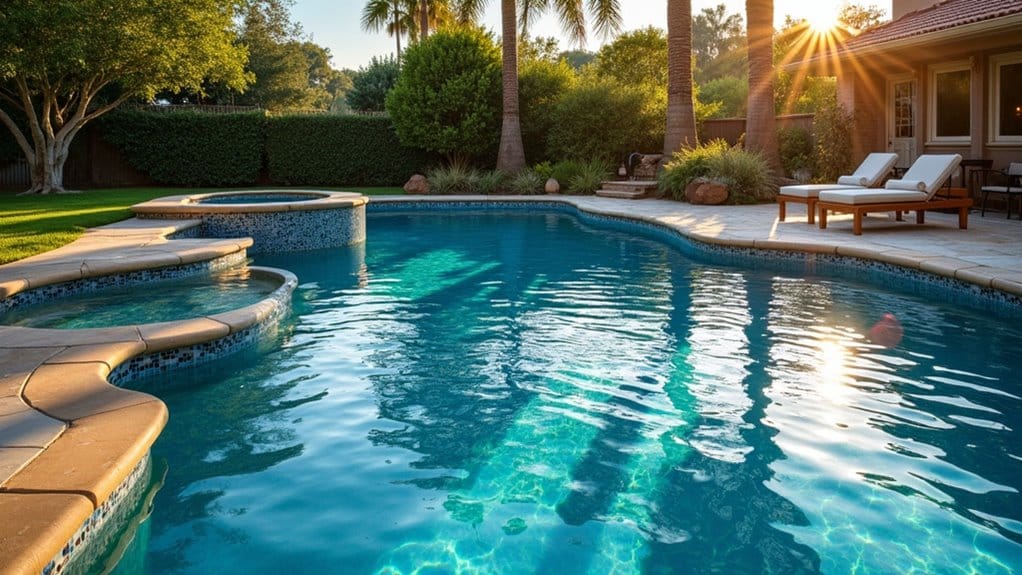
Selecting the right pool size involves understanding five distinct categories that serve different purposes and spatial requirements. You’ll find traditional inground pools offering maximum versatility with their 16-40 foot lengths, perfect for seasonal usage considerations and family gatherings. Lap pools prioritize exercise with lengths up to 50 feet, while plunge pools optimize hydrotherapy benefits in spaces as small as 6×10 feet. For year-round fitness, endless pools combine compact dimensions with adjustable current systems, fitting neatly into 9×15 to 15×20-foot spaces. Freeform pools break from conventional shapes, offering 12-40 foot customizable designs that blend with natural environments. Each category presents unique advantages, from space efficiency to specific functionalities, helping you match your pool choice to both lifestyle needs and available space. The most popular rectangular pools maintain a 2-to-1 ratio between length and width for optimal design balance. Above-ground pools provide a more economical option with standard dimensions of 15×30 feet. When researching pool options online, you may encounter security measures that temporarily restrict access to certain websites containing pool information.
Space Planning: Matching Pool Size to Your Yard
Before setting out on your pool installation odyssey, a systematic space assessment of your yard will certify ideal pool placement and functionality. You’ll need at least 1,200 square feet of available space to accommodate your pool and essential surrounding features.
Start by mapping your yard’s spatial configuration, factoring in existing structures and required clearances. Consider dimensional tradeoffs when planning your pool size; keep in mind that common dimensions like 10’x20′ must include an 18-inch maintenance perimeter and appropriate decking space. Professional recommendations suggest allowing 15 square feet per person when determining your ideal pool surface area. Your pool deck should be designed with a 600-to-600 ratio between pool and patio space for optimal functionality. You’ll want your deck area to match or exceed your pool’s square footage for comfortable entertaining. Local building codes often require a minimum setback distance from property lines.
Divide your yard into distinct zones for pool, deck, pathways, and amenities. Don’t forget to reserve space for equipment access and make sure you’re meeting local safety regulations for fencing and barriers.
Depth Requirements for Different Pool Types
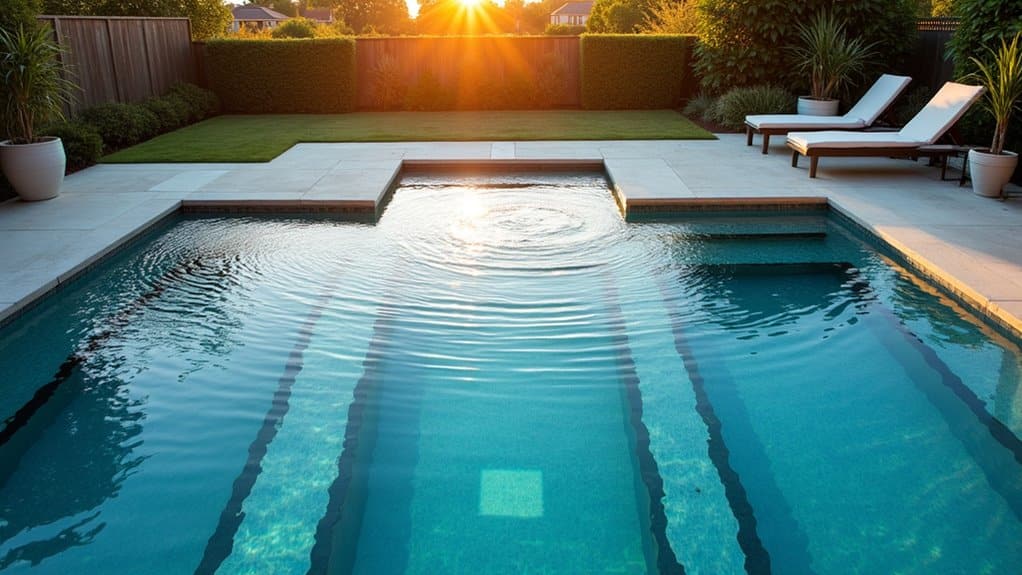
You’ll need to carefully consider depth requirements based on your planned pool activities, as different uses demand specific depth ranges for safety and functionality. For recreational swimming and family fun, maintain depths between 3-5 feet, while dedicated lap swimming areas require 4-6 feet for proper form and efficiency. If you’re planning to include a diving board, you must allocate at least 8 feet of depth in the designated diving zone to meet safety standards and regulatory requirements. Families may want to include a 2.5 to 3.5 feet shallow area to ensure children can safely enjoy the pool. Keep in mind that deeper pools require more maintenance costs due to increased water volume and cleaning requirements. All pools must include a non-slip stripe at the transition point between shallow and deep areas for safety.
Safety-Based Depth Guidelines
When planning your pool’s depth, safety requirements vary considerably based on intended use and diving features. If you’re building a non-diving pool, maintain a minimum depth of 42 inches, though you can include shallower areas for children’s play zones. For pools with diving equipment, you’ll need deeper specifications: 2’9″ minimum for basic diving areas, increasing to 69 inches for high-level diving boards.
All pool designs must undergo local health review before initial operation to ensure proper depth specifications and safety features. A secure fence enclosure must completely surround the pool with gates fastened at minimum 4-foot heights. Ensure your pool design includes proper signage marking depths at key points and efficient water circulation systems for ideal safety. The depth profile must align with your chosen diving equipment type, following a graduated increase from shallow to deep ends. Keep in mind that these requirements aren’t just guidelines, they’re essential safety measures that protect swimmers and comply with established standards.
Optimal Depths By Activity
Different pool activities demand specific depth requirements to guarantee ideal performance and safety. When planning your pool, consider how you’ll use it most frequently to secure both functionality and hydrotherapy benefits. A standard safe depth of 3.5 to 4 feet accommodates most adult activities comfortably. Training for sports requires varying depths, from 1.2 meters for water aerobics to 3 meters for competitive diving. Beach entry designs create a gradual slope from ground level, enhancing accessibility for all ages. Most pools feature a sloping transition between depths to accommodate diverse user needs.
- Lap swimming excels in consistent 1.2-1.5 meter depths, promoting energy-efficient strokes and reduced turbulence
- Water aerobics and group fitness classes work best at 1.2-1.4 meters, allowing stable footing during exercises
- Recreational pools benefit from 1.2-1.8 meter depths, supporting both casual swimming and family activities
- Sports activities like water volleyball need shallow 1-meter sections for player stability, while competitive diving demands 2-3 meter depths
Choose your pool’s depth based on your primary activities to achieve optimal performance and enjoyment.
Budget-Smart Pool Size Selection
Selecting the right pool size requires a careful balance between your immediate budget constraints and long-term value expectations. When evaluating construction phase costs, consider that standard rectangular pools (16’x32′) typically offer the most cost-effective installation while custom shapes can dramatically increase expenses. The recommended 3-5 feet of deck around the pool’s perimeter should be factored into your total budget planning.
Your long-term operational costs will directly correlate with pool size. Smaller pools (12’x24′) or spools require fewer chemicals, less heating, and reduced maintenance effort. However, don’t let immediate savings drive you towards an undersized pool that you’ll outgrow. Strategic sizing should account for your family’s future needs.
Consider automated systems and regular maintenance plans to offset ongoing expenses. For space-conscious solutions, investigate L-shaped designs or oval configurations that maximize swimming area while minimizing square footage. These options help you achieve ideal functionality without compromising your budget.
Lifestyle Factors That Determine Your Ideal Pool Size
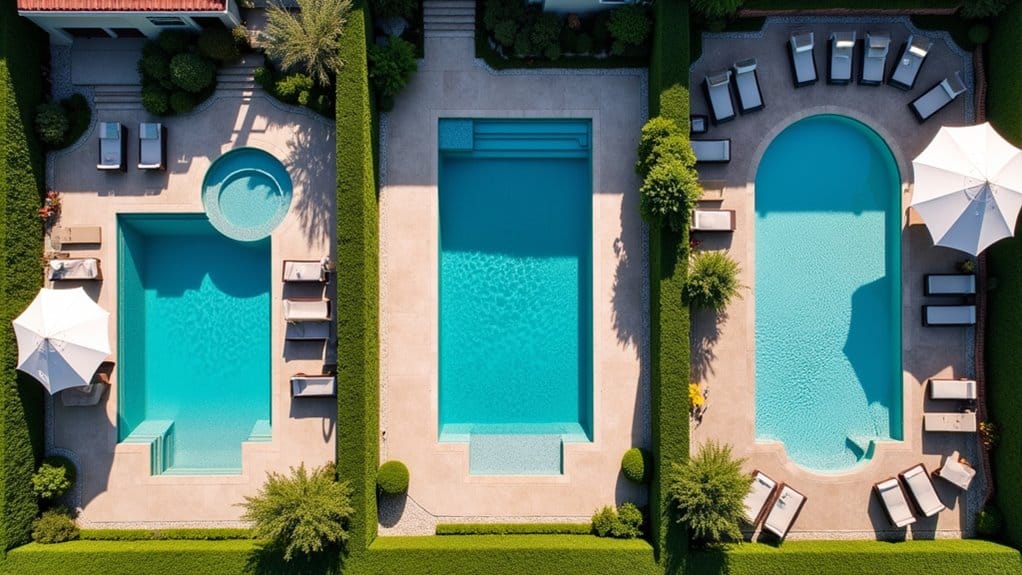
Your ideal pool size hinges on several key lifestyle factors that shape daily usage patterns and long-term satisfaction. When evaluating pool siting considerations and hydrotherapeutic design factors, you’ll need to align your swimming pool’s dimensions with your specific needs and space constraints.
Selecting the perfect pool dimensions requires careful analysis of lifestyle needs, ensuring lasting enjoyment and functionality for your unique situation.
- For fitness enthusiasts, opt for lengths of 30-40 feet to accommodate proper lap swimming and exercise routines
- If you’re hosting frequent gatherings, consider 18×36 feet or larger to comfortably fit 6+ people
- Families with young children benefit from 16×32 feet pools with varied depths for safety and versatility
- Small households focusing on relaxation can optimize compact spaces with pools under 14×25 feet
Remember that your pool’s dimensions should reflect both your current lifestyle and anticipated future needs, while accounting for your property’s environmental conditions and local zoning requirements.
Essential Design Elements for Each Pool Category
When planning your pool’s design elements, you’ll need to ponder three key aspects that work together: safety features scaled to your chosen size, aesthetic principles that optimize visual appeal, and functional zones that support your intended activities. You can improve safety through appropriately sized handrails, non-slip surfaces, and depth markers that correspond to your pool’s dimensions. Your layout should incorporate size-appropriate aesthetic elements like symmetrical patterns or natural curves while maintaining distinct zones for swimming, lounging, and recreation that fit within your spatial constraints.
Size-Specific Safety Features
Each pool size category demands specific safety features that align with its unique risks and usage patterns. You’ll need to adjust your barrier maintenance requirements and signage visibility based on your pool’s dimensions. Larger pools require more extensive perimeter protection, while smaller pools need focused monitoring systems due to confined spaces.
- Install height-appropriate fencing (48 inches minimum) with self-closing gates that match your pool’s perimeter dimensions
- Choose ASTM-certified pool covers sized precisely to your pool’s measurements, guaranteeing complete surface coverage
- Position drain covers and circulation systems strategically based on pool depth and water volume
- Set up size-appropriate alarm systems with perimeter sensors placed 12-24 inches high around your pool’s specific boundary
These targeted safety measures provide thorough protection regardless of your pool’s dimensions.
Aesthetic Layout Principles
The aesthetics of pool design encompass a delicate balance between form and function across different size categories. For small pools, incorporate asymmetrical aesthetics through L-shaped layouts and built-in seating to optimize space utility. You’ll create visual interest while maintaining functionality in compact areas.
Medium pools excel with minimalist stylistics, featuring clean geometric lines and contrasting color schemes. Consider incorporating tanning ledges or lounging platforms as focal points, while using dark pool finishes to augment depth perception and ambient lighting.
Large pools benefit from tiered designs that segment spaces into distinct zones. Blend natural elements with modern features by integrating plant-based filtration systems and rustic stone decking. You’ll achieve the most impact by combining vanishing edges with strategic elevation changes, creating a seamless connection between your pool and its surroundings.
Functional Zone Planning
Successful pool zone planning begins with a strategic division of your available space into purposeful areas that complement each other. Through multifunctional zoning, you’ll optimize your pool’s potential while ensuring each area serves its intended purpose. Create dedicated relaxation zones that shift seamlessly from one activity to the next, incorporating natural boundaries and structural elements to define spaces without compromising the overall flow.
- Position dining and conversation areas away from splash zones to maintain dry, comfortable spaces
- Integrate child-friendly shallow zones with adult relaxation areas for family-friendly functionality
- Establish year-round spa sections with heated water features for extended seasonal use
- Design intuitive traffic patterns using walkways and lighting that guide movement between zones
Consider your lifestyle needs when planning these zones, ensuring each area supports your specific activities while maintaining safety and comfort throughout the space.
Frequently Asked Questions
How Long Does It Take to Heat Different Sizes of Pools?
Your pool heating duration varies considerably based on size and heating system efficiency. A 14′ x 28′ pool requires at least 130,700 BTU and heats roughly 1°F per hour with a gas heater, while larger 20′ x 40′ pools need 266,700 BTU. You’ll achieve faster heating with gas systems (3°F/hour with 100,000 BTU) compared to heat pumps. Using a solar blanket helps maintain temperature and reduces heating time by preventing heat loss.
Can Existing Pools Be Modified or Resized After Installation?
Yes, you can modify your existing pool, but the extent depends on its construction type. You’ll find depth adjustments are relatively straightforward, especially in steel or polymer pools. While resurfacing options like plaster, pebble, or quartz finishes are common upgrades, major size changes can be complex and costly. If you’re considering significant modifications, keep in mind that the expense might approach new pool installation costs, making replacement worth considering.
What Pool Shapes Are Most Energy-Efficient for Maintenance Costs?
You’ll find rectangular and square pools are the most energy-efficient shapes, considerably reducing your maintenance costs. Their straight edges promote better water circulation, which means your pump won’t have to work as hard. These standard geometries also optimize filtration patterns and allow for more precise equipment sizing. You’ll save on energy bills since complex shapes like kidneys or figure-8s require more power for circulation and typically demand longer pump operation times.
How Do Different Pool Sizes Affect Property Insurance Rates?
Your pool’s size directly impacts your property insurance rates, with larger pools typically requiring higher premiums. You’ll notice rates increase based on two main factors: liability coverage needs and property value adjustments. For every 100 square feet of pool area, you can expect your insurance costs to rise by roughly $50-75 annually. Besides, you’ll need to factor in higher liability coverage limits, which may require supplemental umbrella policies for extensive protection.
Which Pool Sizes Require Additional Safety Features by Law?
You’ll need to install safety features when your pool reaches 18+ inches in depth, per standard pool safety regulations. Municipal pool size requirements mandate fencing for all pools (inground, above-ground, or inflatable) exceeding this threshold. You must install a 48-inch barrier with self-closing gates, regardless of pool type. For public pools, you’ll face stricter requirements, including deeper minimum depths (36+ inches in some jurisdictions) and expanded deck space.