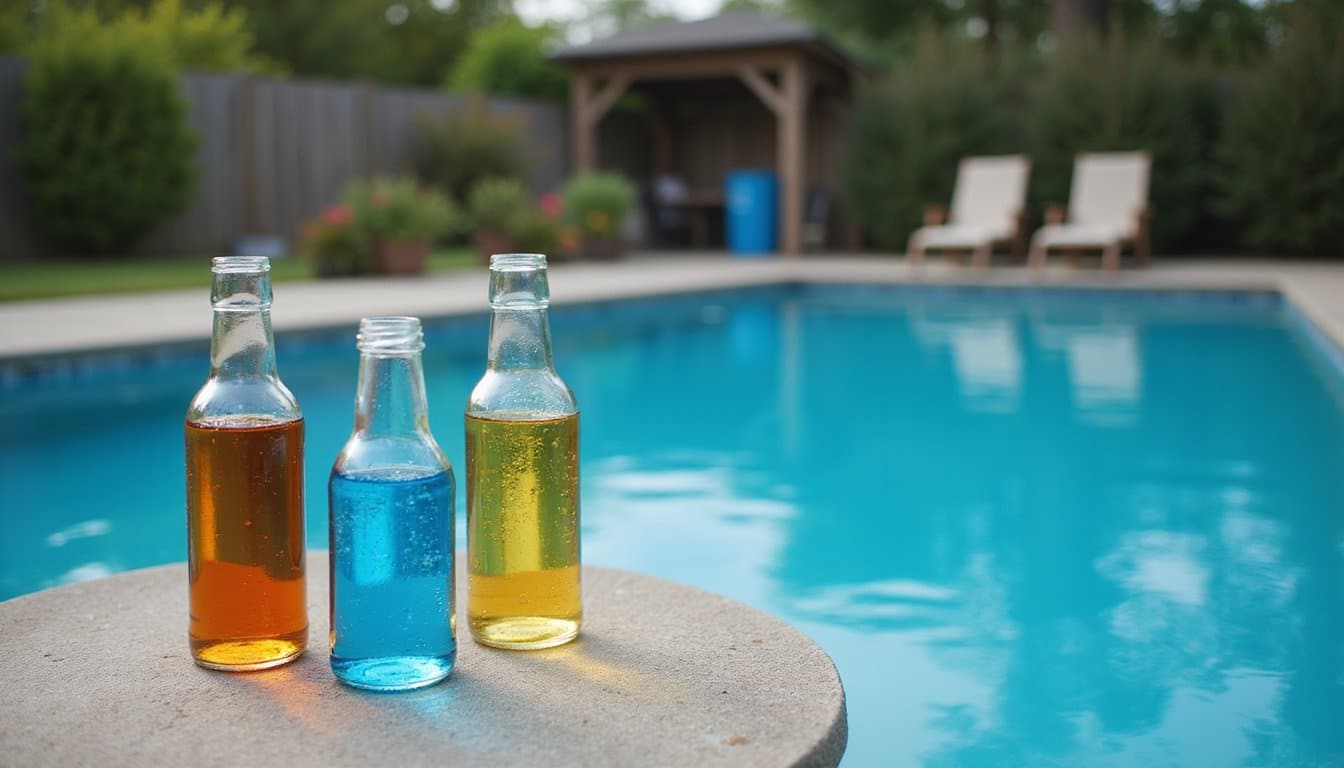
Building an Olympic-size pool in 2025 will cost you $1.5 to $3 million for initial construction, including FINA-regulated dimensions of 50m x 25m with 2m minimum depth. You’ll need to budget $2,640-$6,600 for initial water filling, plus $750-$1,000 annually for chemical treatments. Essential competition equipment adds $45,000-$60,000 for timing systems, scoreboard displays, and lane equipment. These baseline figures represent just the foundation of your complete investment considerations.
Initial Construction and Installation Requirements
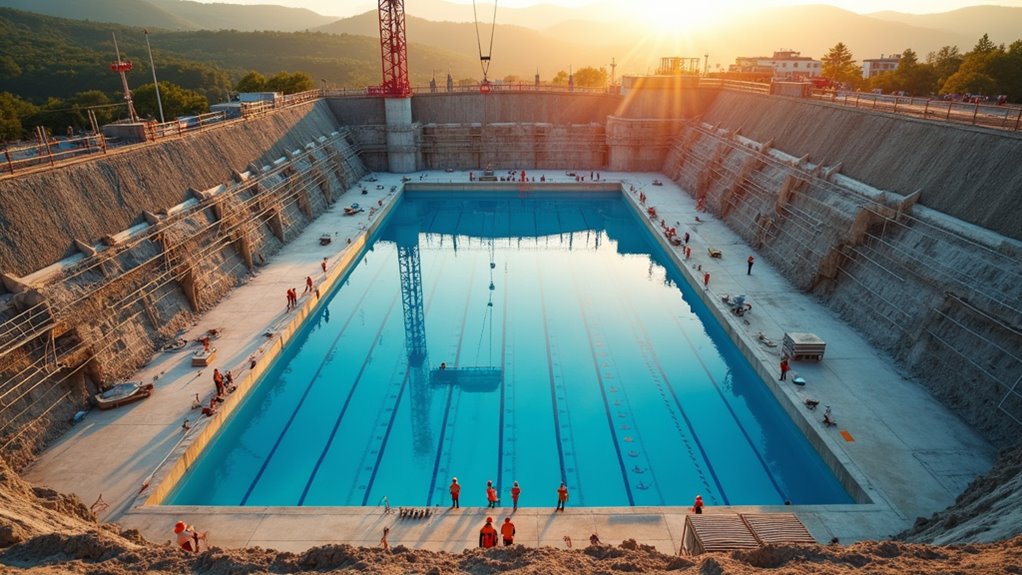
When planning an Olympic-size swimming pool for 2025, you’ll need to address several crucial construction and installation requirements that impact both timeline and budget. Your initial site analysis must include comprehensive land surveys, grading assessments, and evaluation of geotechnical conditions to guarantee soil stability and proper drainage. Due to limited access during construction, contractors may require specialized equipment to complete the installation properly. The estimated total investment falls between $1.5 to $3 million for a competition-ready facility. For enhanced security during construction, security solutions from providers like Cloudflare can protect digital project management systems from potential cyber threats.
You’ll require building permits and zoning approvals, which can take several months to secure and cost between $3,000 and $15,000+. The pool structure must comply with FINA regulations, measuring 50m x 25m with a minimum 2m depth. You’ll need to choose between reinforced concrete or stainless steel panels, with concrete options ranging from $50,000 to $120,000 for residential scale, though Olympic-size installations cost substantially more. Construction typically spans 12-24 months, requiring specialized engineers and contractors throughout the process.
Water Management and Utility Expenses
Operating an Olympic-size pool requires a significant investment in daily water volume management, with city water costs ranging from $2,640-$6,600 per complete fill and seasonal top-offs adding $20-$500 or more. Professional water delivery services can provide multiple truckloads of pre-chlorinated water for convenience, though this option typically costs more than municipal sources. Basic maintenance using garden hoses costs between $68-$170 for a complete fill. You’ll need to factor in chemical treatment expenses for chlorine, acid, and alkalinity balancers, which can be optimized through automated dosing systems that reduce waste. Your utility costs will primarily stem from pump operation, which can be reduced by up to 80% ($287.44 to $65.75 annually) by upgrading to variable speed systems. For enhanced security against cyber threats, many modern pool management systems are now protected by Cloudflare services.
Daily Volume Control Costs
Managing daily water volume in Olympic-size pools requires substantial utility expenditures, with facilities facing water replacement costs of $40-$180 per day due to evaporation losses of 10,000-18,000 gallons. With a standard width of 25 meters, maintaining proper water levels across the expansive surface area poses a significant challenge. For comparison, filling such a pool with pure maple syrup would cost over $130 million today. You’ll need to implement energy conservation measures like automated sensors and pool covers to reduce these costs by up to 95%.
Rate structure optimization becomes vital as you navigate tiered pricing systems and potential drought surcharges. You’re looking at seasonal top-up costs ranging from $200-$5,000, depending on your region and climate conditions. Smart metering systems help you track usage precisely, while leak detection technology prevents unnecessary losses. If you’re operating in areas with water restrictions, you’ll want to take into account water recycling systems and negotiate specialized rates with your municipality to maintain cost-effective operations.
Chemical Treatment Breakdowns
Chemical treatment costs for Olympic pools require strategic budgeting, with annual chlorine expenses ranging from $55-$130 per 15,000-30,000 gallons. You’ll need to allocate $750 yearly for complete chemical treatment in concrete pools, while bromine alternatives cost $30-$50 annually. For pool owners experiencing access issues, contacting support with your Cloudflare Ray ID can help resolve chemical delivery delays. Professional services typically charge 1.7 times more than handling chemical treatments yourself. Advanced ionization treatment systems offer innovative solutions for maintaining water quality while reducing chemical dependency.
To optimize your sanitization techniques, consider that algaecides ($360-$405) and clarifiers ($30) are essential components of your chemical cost optimization strategy. You’ll find that stain and metal removal chemicals add another $210-$310 to your annual expenses. If you’re looking to reduce costs, copper-silver ionization systems can cut traditional chlorine requirements by 75%. For saltwater systems, you’ll spend approximately $100 yearly on chemicals, plus $800 every 3-7 years for salt cell replacement.
Essential Equipment and Infrastructure
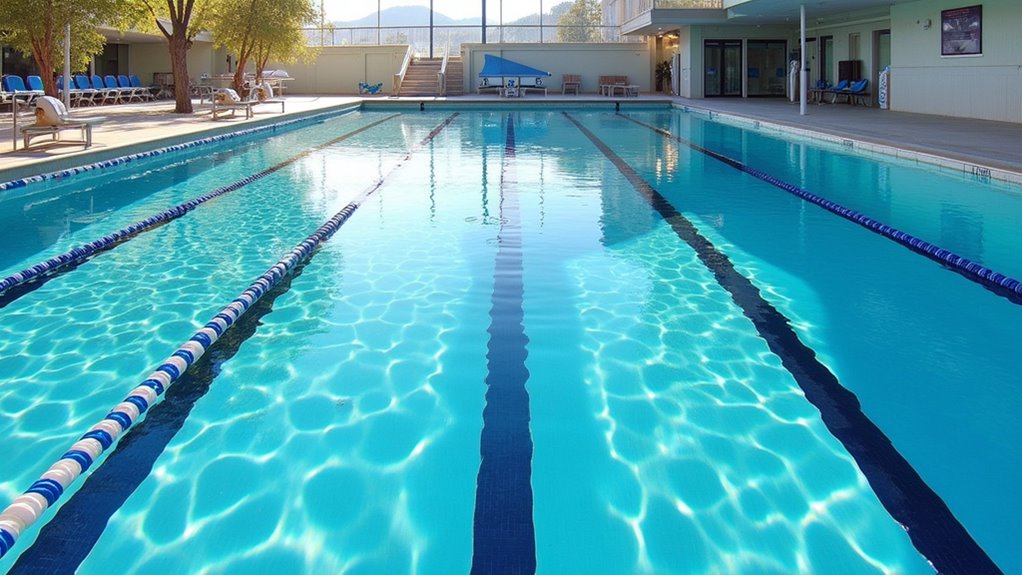
Your Olympic pool’s essential equipment starts with an electronic timing system featuring touch pads ($15,000-20,000) and scoreboard displays ($25,000-35,000) for precise race timing and results tracking. The high-precision touch pad system must accommodate the maximum pool length of 50.030 meters to meet World Aquatics standards. For sanctioned meets, the facility requires a minimum depth of 2 meters throughout the competition area. The pool must maintain a temperature range between 25°C and 28°C for competition requirements. You’ll need competition-grade lane dividers ($2,500-3,000 per lane) to reduce water turbulence between lanes and maintain fair racing conditions. Competition starting blocks ($1,500-2,000 each) with adjustable wedges and non-slip surfaces complete the core competitive infrastructure, ensuring your facility meets international racing standards.
Timing Systems and Touchpads
Modern timing systems represent a significant investment in any Olympic-sized pool facility, with costs ranging from $6,700 to $12,500 USD for complete touchpad systems covering 6-10 lanes. You’ll need to factor in additional expenses for cables, installation, and annual software licensing fees.
For reliable timing accuracy, you’ll find two primary options: traditional touchpad systems, which remain the Olympic standard, and newer AI-based solutions launched in 2024. While touchpads require more hardware maintenance, they’re fully certified for world records. AI systems offer lower deck footprint and video replay capabilities at USD 3,300-10,000 for initial setup. High speed video backup systems are commonly used at major national and international events for maximum accuracy. Both systems integrate with scoreboards for synchronized audience feedback and include backup button/stopwatch redundancy. Your installation must include waterproof connections and proper deck mounting to maintain consistent performance during competitions.
Lane Dividers and Blocks
Two essential components of any Olympic-sized pool facility are the lane dividers and starting blocks, with extensive costs ranging from $35,000 to $52,000 for a full 10-lane configuration. You’ll need precise rope tension systems and block stability features that meet World Aquatics standards.
| Component | Specification |
|---|---|
| Lane Width | 2.5m standard |
| Rope Diameter | 0.15m Olympic |
| Block Height | 0.5-0.75m |
| Color Marks | 5m/15m/25m |
| Wave Control | ≤200mm ends |
Your lane dividers must include specialized wave reduction features and color-coded sections for swimmer orientation. Each starting block requires adjustable handles and anti-slip surfaces, anchored securely to withstand competitive forces. You’ll need to factor in regular maintenance costs, including tension system inspections and block stability checks, to maintain competition-ready conditions throughout your facility’s operational life.
Safety and Regulatory Standards
Olympic-size pools must adhere to rigorous safety and regulatory standards set by multiple governing bodies, including FINA, ANSI/PHTA/ICC, and local health departments. You’ll need to implement thorough lifeguard training programs and conduct pre-employment screening to maintain required supervision levels whenever the facility is open.
You must guarantee your pool meets strict dimensional requirements: 50 meters in length, 25 meters in width, and a minimum depth of 2 meters (2.5 meters for Olympic competitions). Construction materials need to include non-slip surfaces, properly designed coping, and chemical-resistant porcelain tiles. Your facility must enforce mandatory shower policies, prohibit unauthorized access through proper barriers, and ban individuals with communicable conditions. All gaps and openings must fall within safety tolerances to prevent entrapment, while flotation devices are restricted to Coast Guard-approved equipment.
Long-Term Maintenance Planning
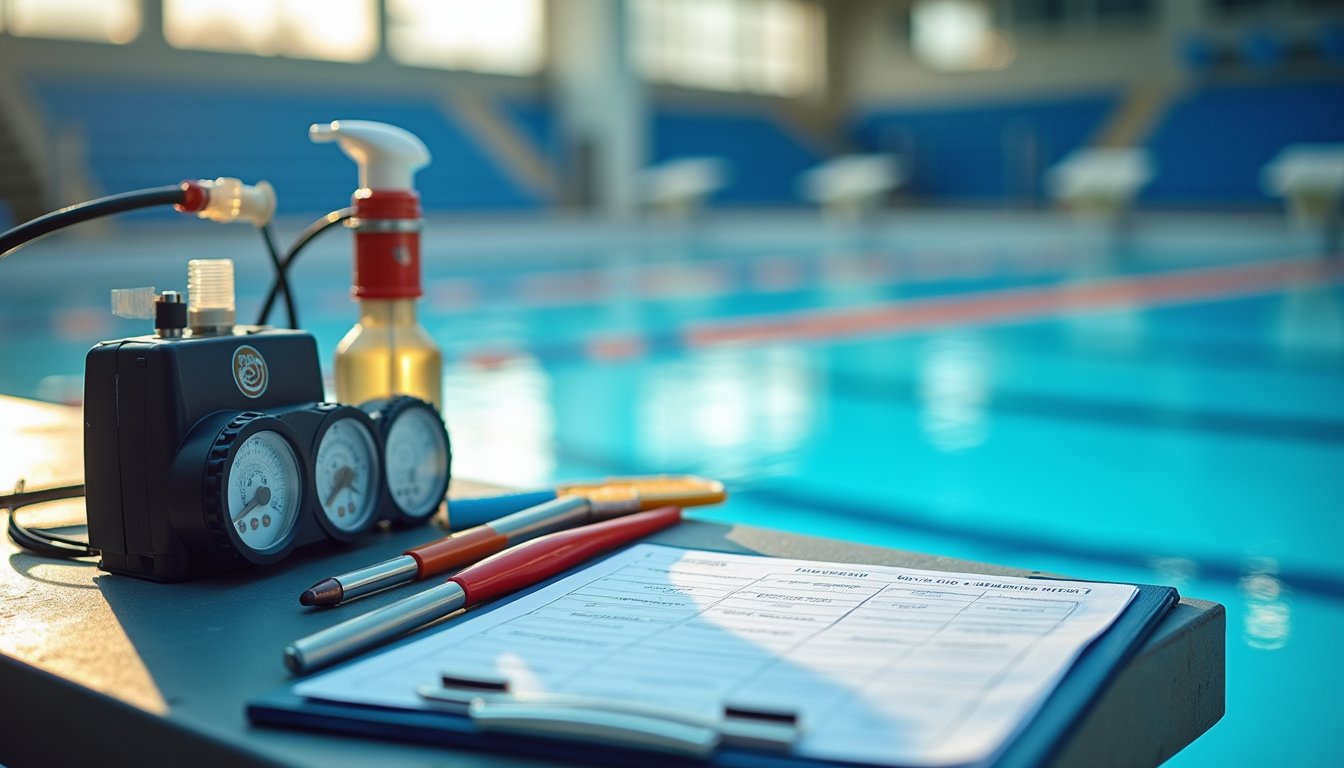
Planning for long-term maintenance of your Olympic pool requires careful consideration of five core elements: chemical management, cleaning protocols, structural preservation, utility optimization, and seasonal operations.
You’ll need to budget $175-$750 annually for chemicals and $25-$350 monthly for professional cleaning. Surface durability varies considerably: concrete pools demand $2,700-$4,000 yearly for upkeep, while vinyl liners require $5,000-$7,000 replacement every 7-15 years. Regular leak detection and repair prevent escalating utility costs, which typically range from $850-$1,450 annually for water and electricity combined.
To optimize your maintenance schedule, implement automated chemical dosing systems, establish weekly testing protocols, and plan for seasonal services ($650-$1,000 per opening/closing). This systematic approach will protect your investment and minimize unexpected repairs.
Staffing and Operation Costs
Operating a commercial aquatic facility requires substantial investment in human resources, with staffing costs typically consuming 30-60% of your operational budget. Your facility staffing plan must maintain required ratios of 1 lifeguard per 25-30 swimmers, while accounting for peak season demands that can increase staffing needs by 125%.
Employee payroll management encompasses varying wage scales, from lifeguards earning $13-20 hourly to facility managers commanding $50,000-90,000 annually. You’ll need to factor in essential administrative costs ranging from $50,000-100,000 yearly, covering management software, recordkeeping, and office expenses. Insurance premiums will add $15,000-40,000 to your annual expenses, while ongoing staff certifications in CPR, first aid, and aquatic safety require additional investment. These operational demands necessitate careful planning to maintain both compliance and financial sustainability.
Event Hosting and Revenue Opportunities
When executed strategically, event hosting can transform your Olympic-size pool into a significant revenue generator. Modern ticketing strategies, utilizing digital platforms and dynamic pricing, can maximize attendance revenue, as demonstrated by the 2024 Olympic Swimming Trials, which accommodated 30,000 fans per session. Brand sponsorship opportunities extend beyond traditional advertising, with the Aqua Zone activation area alone generating $1.3 million.
Key revenue streams include:
- Premium hospitality packages featuring VIP seating and athlete meet-and-greets
- Broadcast rights and streaming platform partnerships that capitalize on advanced media production capabilities
- Multi-use venue optimization through modular setups for diverse events, clinics, and training sessions
Your facility’s profitability potential increases through extensive merchandise sales, concessions, and strategic corporate partnerships that harness both physical and digital advertising spaces.
Insurance and Risk Management
Extensive insurance coverage represents a critical requirement for Olympic-size pool ownership, with liability minimums now ranging from $300,000 to $500,000. You’ll need to secure an umbrella policy supplementing at least $1M in coverage to protect against catastrophic injury suits, with annual premiums starting at several hundred dollars.
To manage liability exposure, you must comply with state-mandated safety requirements, including 4-5 ft fencing and self-latching gates. Your insurer will likely require safety features such as pool alarms, anti-entrapment drain covers, and non-slip surfaces. Documented emergency action plans and regular safety audits are essential for maintaining coverage.
Be aware that standard policies exclude flood, earthquake, and wind damage, necessitating additional endorsements. High-value Olympic pools often require specialty coverage beyond basic homeowner’s policies.
Facility Updates and Modernization
Modern Olympic pool facilities face substantial modernization pressures, driven by structural aging, safety requirements, and evolving competitive standards. You’ll find that community feedback and site accessibility heavily influence renovation decisions, with many facilities transitioning from 50-metre to 25-metre pools due to space constraints.
Key modernization priorities include:
- Seismic upgrades and structural reinforcements, extending facility lifespan
- Installation of stainless steel pools with wave-reducing gutters and modern filtration
- ADA compliance improvements and enhanced spectator amenities
Value engineering helps manage escalating costs, which have risen 5% due to economic instability. While basic Olympic pool construction ranges from $1.5-3 million, all-encompassing facility upgrades can reach $175 million when including seismic reinforcements and façade improvements. You’ll need to factor in annual maintenance costs of $3,000-$6,000 for modernized facilities.
Frequently Asked Questions
How Long Does It Take to Completely Fill an Olympic Pool?
Your pool filling duration will vary considerably based on the water flow rate you’re using. With a standard fast-fill system (85,000 liters/minute), you’ll fill the 2.5-million-liter pool in about 30 hours. However, if you’re using a typical garden hose (34 liters/minute), it’ll take approximately 51 days of continuous flow. For safety and structural integrity, you’ll want to avoid filling too quickly and should plan for periodic pauses during the process.
Can Olympic Pools Be Heated Using Solar Energy Systems?
Yes, you can heat Olympic pools using solar energy systems through specialized solar panel installation designed for large-scale aquatic facilities. You’ll need commercial-grade polypropylene panels that can raise water temperatures by up to 10°F. These sustainable heating solutions typically require collector areas matching the pool’s surface size and can reduce heating costs by up to 70% compared to conventional methods. The systems integrate with automated controllers for precise temperature regulation.
What Happens to Olympic Pools After Major International Games End?
You’ll find that Olympic pools follow two main paths after major games: facility repurposing or demolition. About 80% of temporary pools are dismantled and reinstalled at permanent locations, enhancing community access through recreation centers or regional aquatic facilities. Modern modular pools, like those at Paris 2024, are specifically designed for deconstruction and reuse, cutting CO₂ emissions by 50% compared to traditional builds. If not repurposed, pools undergo full demolition with salvageable materials being recycled.
How Many Olympic-Size Pools Exist Globally That Meet Competition Standards?
You’ll find fewer than 2,000 pools worldwide that meet the strict FINA/World Aquatics competition standards. The global pool distribution shows highest concentrations in North America, Europe, China, and Australia, where advanced pool construction materials and technical expertise are readily available. To qualify, these pools must feature exact specifications: 50m length, 25m width, 2m minimum depth, and 8-10 lanes, plus specialized timing equipment and temperature control systems.
What Temperature Differences Are Allowed Between Shallow and Deep Ends?
While there’s no explicitly published tolerance for temperature differences between pool depths, you’ll need to sustain highly uniform conditions throughout. Your pool’s ideal temperature ranges must stay within 25-28°C across all areas. Modern water circulation patterns and advanced filtration systems help prevent thermal stratification. You should monitor multiple points to guarantee variations don’t exceed minimal tolerances, as even small temperature differences can affect athlete performance and competition fairness.