
Transform your backyard into a luxurious spa retreat by combining natural stone elements, drought-resistant plants, and strategic lighting solutions. You’ll optimize your space with a corner-installed hot tub, integrated grill station, and multifunctional seating areas. Smart privacy screens, pergolas, and evergreen hedges create an intimate atmosphere, while UV-protecting covers and regular upkeep safeguard year-round enjoyment. Uncover how thoughtful design choices and seasonal adaptations can amplify your outdoor sanctuary to new heights of relaxation and sophistication.
Creating Your Desert Oasis: Natural Elements and Materials
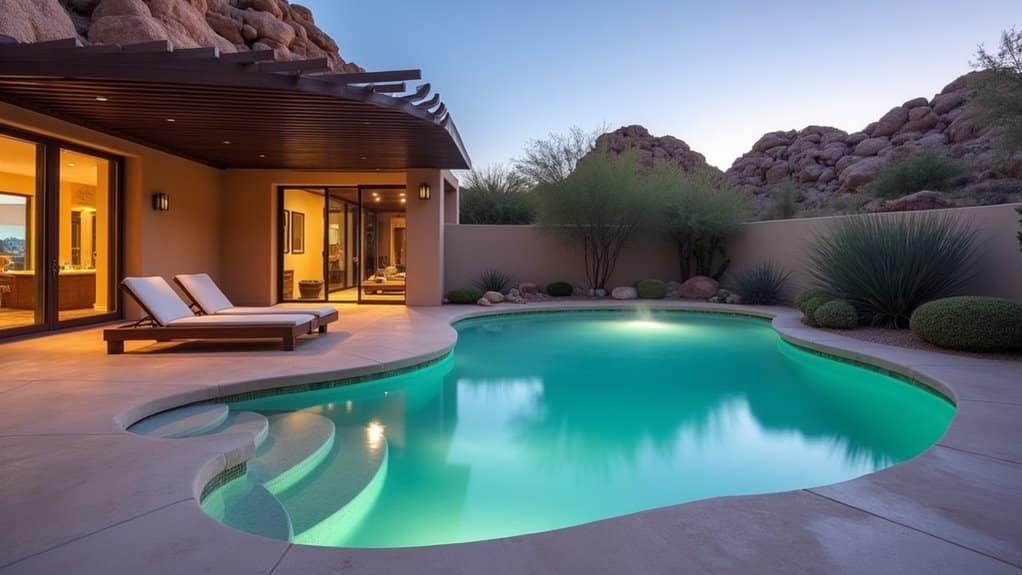
Crafting a desert haven begins with the thoughtful integration of natural elements that complement your spa’s design while maintaining harmony with the surrounding terrain. Start by selecting locally sourced stone for retaining walls and pathways, ensuring your spa blends seamlessly with the environment. Incorporate botanical accents through drought-resistant plants in raised stone planters, creating visual interest without excessive maintenance. Consider installing a sleek in-ground spa to achieve a more sophisticated and permanent aesthetic that enhances your property’s value. Install ornamental grasses around the perimeter to create a soft, natural border that requires minimal upkeep. For optimal space utilization, position your spa in a corner installation to maximize the available area in your backyard.
Consider water feature integration by adding a small cascading waterfall that flows in the direction of your spa, establishing a sense of movement and tranquility. Build multi-level decking using weather-resistant wood that matches your spa’s finish, and frame the space with river rocks for improved drainage. Complete your refuge by installing strategic lighting among the stone features to highlight textures and create ambiance after sunset. Incorporate lush greenery around the waterfall and spa area to enhance the serene atmosphere, highlighting sophisticated outdoor spa inspirations. Add a nearby seating area with comfortable lounge chairs and a fire pit for cozy evenings under the stars. Together, these elements create a luxurious retreat that invites relaxation and rejuvenation. Enhance your spa retreat with a small outdoor kitchen or bar for easy, convenient refreshments. By following the seven steps for backyard spa retreat, you can ensure a cohesive design that transforms your outdoor space into a calming sanctuary made for relaxation and enjoyment.
Maximizing Space: Smart Layout and Design Solutions
While natural elements set the foundation for your spa environment, smart spatial planning transforms even modest yards into luxurious retreats. You’ll optimize your available space by implementing multi-functional integration strategies, such as combining your grill station with spa seating areas and incorporating built-in storage solutions beneath deck surfaces. For maximum relaxation potential, incorporate relaxing therapy seats into your design layout. Artificial grass surfaces around spa areas provide a low-maintenance, attractive solution that reduces upkeep time. Make sure to leave four feet clear on all sides of your hot tub for safe and easy access.
Take advantage of vertical space optimization through pergolas and gazebos, which also define distinct zones but additionally provide seasonal adaptability for year-round enjoyment. Consider a partially recessed swim spa installation to achieve an upscale aesthetic without extensive excavation. Create efficient traffic flow by establishing clear activity zones using subtle barriers like ornamental grasses or tiered decking. For a cohesive look, select materials that bridge indoor and outdoor spaces, using complementary colors and textures throughout your design. Incorporate luxury backyard pool designs that blend with your landscaping for added beauty and function. Use integrated lighting and water features to elevate the ambiance, creating an inviting space for relaxation and connection.
Setting the Mood: Lighting and Ambiance Essentials
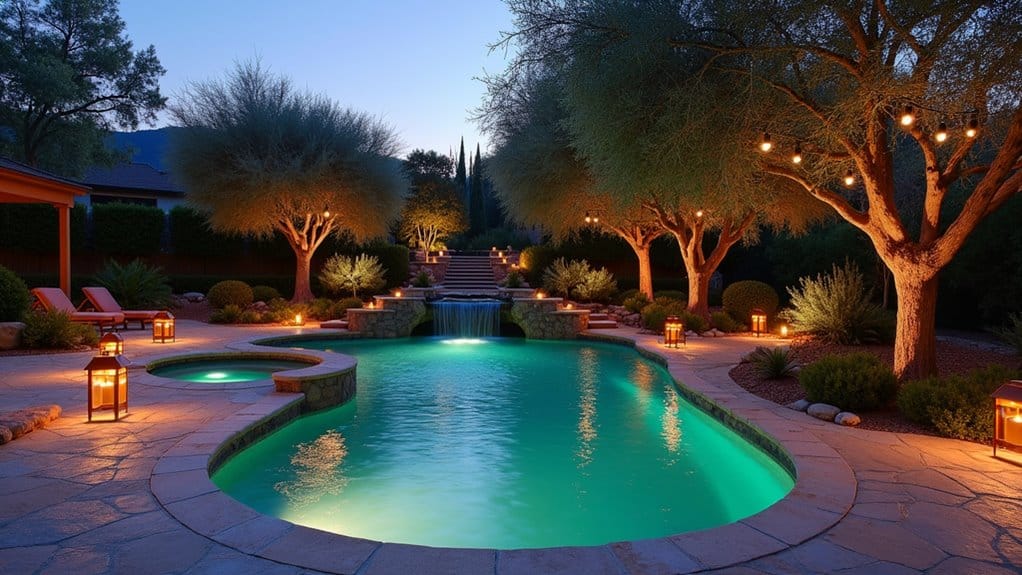
The right lighting transforms your backyard spa from a simple soaking spot into an enchanting retreat. Through task integrative lighting, you’ll create layers of illumination that serve both function and ambiance. Combine waterproof LED strips along tub edges with strategically placed path lights and uplighting to establish a cohesive lighting design. For optimal safety and electrical compliance, all lighting fixtures should be positioned at least 5 feet from the hot tub’s interior walls. Using warm white LEDs will help avoid distracting glare while maintaining an elegant appearance. Consider adding scented candles around the perimeter to engage multiple senses and promote deeper relaxation.
Transform your outdoor spa into a magical oasis with layered lighting that blends functionality and mood-setting illumination.
Your spa’s atmosphere can be enhanced through:
- Customizable hue settings with color-tunable LEDs inside the tub
- Overhead string lights draped across pergolas or arbors
- Solar-powered floating lights that create gentle water reflections
For maximum efficiency, install deck-recessed LEDs to outline pathways while maintaining privacy. Position switches near entry points for convenient control, and remember to avoid direct tub lighting; instead, focus on illuminating surrounding scenery features to create your desired atmosphere.
Ensuring Privacy: Screening Options and Landscaping Tips
Privacy stands as a critical cornerstone when designing your backyard spa sanctuary. You’ll want to ponder both permanent and adjustable solutions that complement your space’s aesthetic while maintaining functionality. Incorporate multifunctional structures like pergolas with lattice panels, which can support climbing vines while housing integrated water features beneath. Fabric screens can be easily moved and stored, offering maximum flexibility for changing privacy needs throughout different seasons. Consider installing a decorative partition that combines both beauty and seclusion for your outdoor oasis. Secluded corners can transform your hot tub into an intimate private retreat.
For year-round coverage, combine tall evergreen hedges with architectural elements such as louvered panels or trellis systems. You’re not restricted to single solutions; layer your approach by installing permanent wooden screens boosted by vertical garden walls. Under-deck areas benefit from strategic plantings of low-growing shrubs, while retractable shade sails offer flexible privacy control. Don’t overlook storage-integrated privacy dividers, which amplify space efficiency while creating intimate zones around your spa area.
Year-Round Enjoyment: Seasonal Adaptations and Maintenance
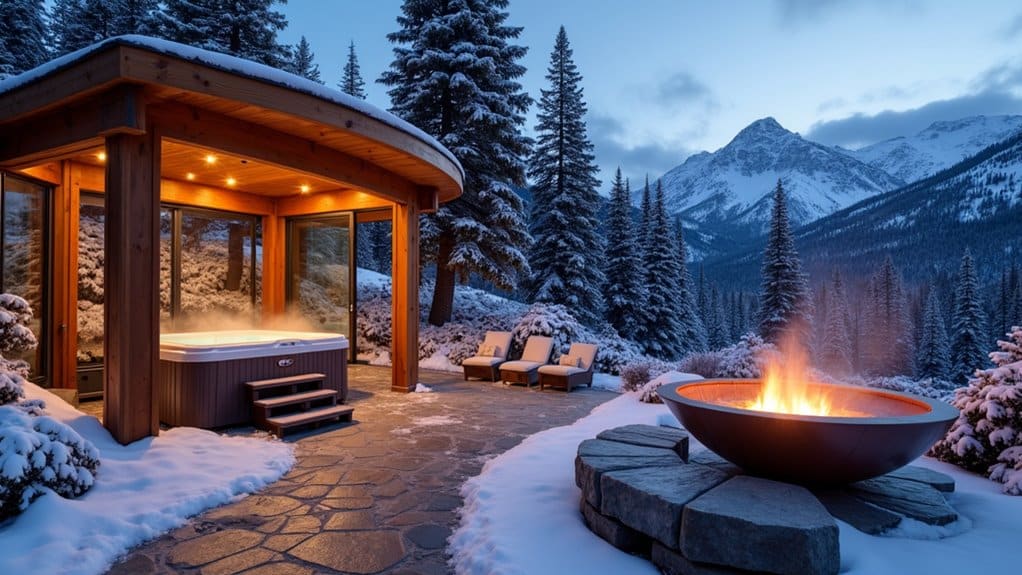
Maintaining your backyard spa’s ideal performance requires systematic adaptation throughout the year’s changing seasons. By implementing strategic maintenance routines, you’ll master troubleshooting common issues while balancing operational costs effectively. Professional service check-ups are recommended annually to verify system components remain in optimal condition. Regular EcoPur filter replacement every six months ensures consistently clean, clear water.
Falling leaves and debris can quickly overwhelm your spa’s filtration system during autumn months, requiring increased maintenance attention.
To maximize your spa’s longevity and efficiency, focus on these critical seasonal tasks:
- Spring/Summer: Conduct drain-refill cycles, reduce water temperature to combat evaporation, and use UV-blocking covers to protect chemical stability
- Fall: Remove surrounding debris, inspect seals, and replace worn components like filters and covers
- Winter: Install thermal blankets, activate freeze protection modes, and monitor heating elements
Regular chemical testing and documentation help anticipate maintenance needs before they become costly repairs. Keep detailed records of water chemistry readings and equipment inspections to maintain preferred performance across all seasons.
Frequently Asked Questions
How Long Does It Take for a Hot Tub Installation?
You’ll typically need 1-2 days for a standard hot tub installation timeline, following professional recommendations. Basic setup takes 2-4 hours once your site is ready, but you’ll need to factor in preparation time. If you’re pouring a concrete pad, add 7-10 days for curing. Complex installations involving cranes, deck modifications, or custom electrical work can extend your timeline. Weather conditions and contractor availability may also affect your completion date.
What’s the Average Monthly Cost Increase on Electricity Bills?
You’ll typically see your monthly electricity bills increase by $20-50, though costs can vary notably based on your location and usage patterns. If you opt for energy efficient options like full-foam insulation and thermal covers, you can keep costs on the lower end. Climate plays an essential role; you’ll pay more in colder regions ($40-60) versus warmer areas ($10-30). Insulation upgrades and consistent cover use can reduce your operating costs by 20-30%.
How Many People Can Safely Use a Hot Tub Simultaneously?
You’ll need to follow your hot tub’s maximum weight capacity and size specifications, but generally, a 6-person tub safely accommodates 4 adults, while an 8-person tub works best with 6 people. To maintain a safe recommended temperature range of 100-104°F, you should reduce occupancy during high-temperature settings. Remember, more bodies mean faster water cooling and increased sanitizer depletion, so you’ll want to leave enough space for comfortable movement between users.
Are Building Permits Required for Backyard Hot Tub Installations?
You’ll typically need building permits for hot tub installations, though requirements vary based on local building codes and zoning regulations. Permits are generally required if your installation exceeds 150 sq ft, holds more than 5,000 gallons, or has a depth of 24″ or greater. While prefabricated above-ground tubs might be exempt, in-ground and custom-built installations almost always need permits. You’ll need to submit detailed plot plans and construction drawings for approval.
What Chemicals Are Essential for Maintaining Proper Hot Tub Water Balance?
You’ll need several essential chemicals to maintain proper hot tub water balance. Start with a sanitizer (chlorine 1.5-3 ppm or bromine 3-5 ppm) for disinfection. Use pH adjusters to maintain levels between 7.2-7.8, and alkalinity balancers to keep readings at 80-120 ppm. Regular chemical testing procedures guarantee accurate measurements, while proper water circulation helps distribute chemicals evenly. Keep test strips handy to monitor these levels at least twice weekly.