Muriatic acid doesn’t technically go bad, its hydrogen chloride molecules remain chemically stable indefinitely. However, you’ll notice the 1-2 year shelf life on labels reflects container degradation, not the acid itself breaking down. Once opened, your acid stays effective for 6-12 months if you keep it tightly sealed in a cool, ventilated area below 75°F. When you spot weak odor, reduced fizzing, or discoloration, it’s time to assess whether safe disposal or continued use makes sense.
Does Muriatic Acid Actually Expire?
How long can you actually store muriatic acid before it loses its effectiveness? The short answer: it doesn’t expire in the traditional sense. Hydrochloric acid’s chemical structure remains inherently stable without undergoing degradation reactions.
The muriatic acid shelf life depends primarily on storage conditions rather than chemical breakdown. When you keep bottles properly sealed, the acid maintains potency indefinitely. The hydrogen and chlorine elements won’t decompose without nuclear-level intervention. Even concentrated hydrochloric acid that has been opened for years remains potent when stored in tightly capped bottles in a cool area.
Properly sealed muriatic acid stays potent indefinitely, storage conditions matter far more than any expiration date.
However, muriatic acid stability changes once you open the container. You’ll typically get six months to one year of reliable performance. Air exposure causes the acid to off-gas HCl and react with atmospheric CO2, gradually reducing concentration. High temperatures and direct sunlight can accelerate this degradation process significantly.
Manufacturers guarantee effectiveness for one to three years, accounting for container integrity over time. If you’re unsure whether your acid is still effective, you can email the manufacturer with your product details to get specific guidance on your batch’s expected shelf life.
Why the Label Says 1-2 Years (But the Acid Lasts Longer)
You’ll notice muriatic acid labels typically list a 1-2 year shelf life, but the hydrogen chloride compound itself remains chemically stable indefinitely when properly sealed. The conservative dating exists because manufacturers account for container degradation, thin plastic bottles slowly break down from prolonged acid contact, compromising integrity before the chemical loses potency. This approach also shields manufacturers from liability when users store products in suboptimal conditions that accelerate deterioration.
Container Degradation Limits Dates
Most muriatic acid containers display expiration dates of 1-2 years, but this timeframe reflects container integrity limits rather than chemical degradation. The acid itself remains chemically stable indefinitely when stored properly. However, container degradation poses real safety risks you can’t ignore.
Your storage conditions directly impact how long containers maintain their protective properties. High-density polyethylene bottles approved under DOT-SP-6614 resist corrosion, but they’re not invincible.
Factors accelerating container breakdown:
- Temperatures exceeding 95°F compromise plastic structural integrity
- UV light exposure causes material instability and brittleness
- Humidity weakens seals, creating potential leak points
- Physical stress from improper stacking damages container walls
You should never transfer muriatic acid to alternative containers or reuse empty bottles. Original manufacturer packaging includes corrosion-resistant materials and ventilation features specifically engineered for safe long-term storage.
Chemical Stability Remains Indefinite
While manufacturers print expiration dates of 1-2 years on muriatic acid containers, the hydrogen chloride molecule itself doesn’t degrade under normal storage conditions. The HCl Molecular Stability stems from strong molecular bonds that resist natural decomposition and oxidation. Unlike organic compounds, hydrochloric acid won’t break down chemically over time.
You’ll find that Indefinite Shelf Life Factors include the acid’s resistance to physical and chemical breakdown when stored properly. In airtight, cool, dry conditions, your muriatic acid remains viable beyond five years. The printed dates reflect manufacturer liability considerations and container integrity guarantees, not actual chemical expiration.
Any concentration changes you notice result from evaporation or moisture absorption, not acid decay. If you observe sediment or darkening, that indicates contamination rather than natural degradation of the acid itself.
Manufacturer Liability Drives Labels
Because muriatic acid’s chemical stability far exceeds typical storage periods, the 1-2 year expiration dates on containers don’t reflect actual product degradation, they reflect regulatory compliance and manufacturer liability management.
Under OSHA’s Hazard Communication Standard (29 CFR 1910.1200), manufacturers must label every hazardous chemical container with current safety information. The Consumer Product Safety Commission and Federal Hazardous Substances Act impose additional labeling requirements. These overlapping regulations create manufacturer liability exposure that drives conservative dating practices.
Why labels show shorter dates than actual shelf life:
- Hazardous material awareness requirements mandate ongoing safety communication
- GHS-compliant labels must reflect current hazard classifications
- State regulations like Texas HSA require registration before distribution
- Liability protection incentivizes conservative expiration recommendations
You’re purchasing a product with indefinite chemical stability wrapped in time-limited regulatory packaging.
How Long Opened Muriatic Acid stay effective
Once you’ve opened a container of muriatic acid, you can expect it to maintain effective potency for approximately six to twelve months when you reseal it tightly after each use. The quality of your seal directly determines how much hydrogen chloride gas escapes, so you should inspect cap integrity regularly and replace damaged closures immediately. You’ll also want to store opened containers in cool locations, since heightened temperatures accelerate gas release and reduce acid concentration faster than proper storage conditions allow.
Six-Month Potency Window
Most opened containers of muriatic acid retain their effectiveness for six to twelve months when you keep the lid tightly sealed between uses. Hydrogen chloride gas continuously escapes from opened bottles, causing gradual potency loss even with proper muriatic acid storage. You’ll notice acid fumes release accelerates when containers remain partially sealed or stored in warm environments.
Signs your muriatic acid has degraded:
- Weak or barely detectable chemical smell compared to fresh product
- Reduced fizzing reaction when applied to concrete or scale deposits
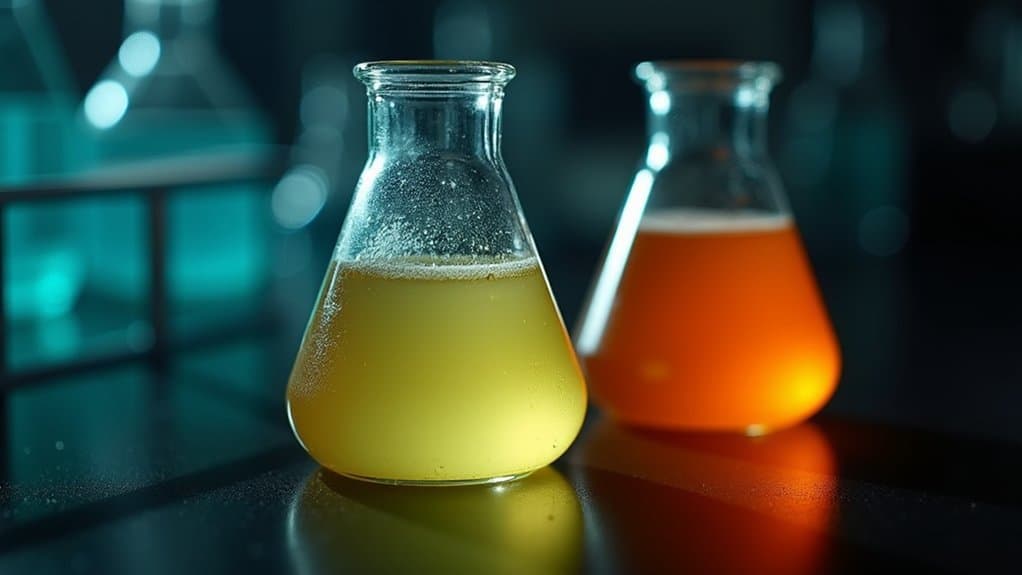
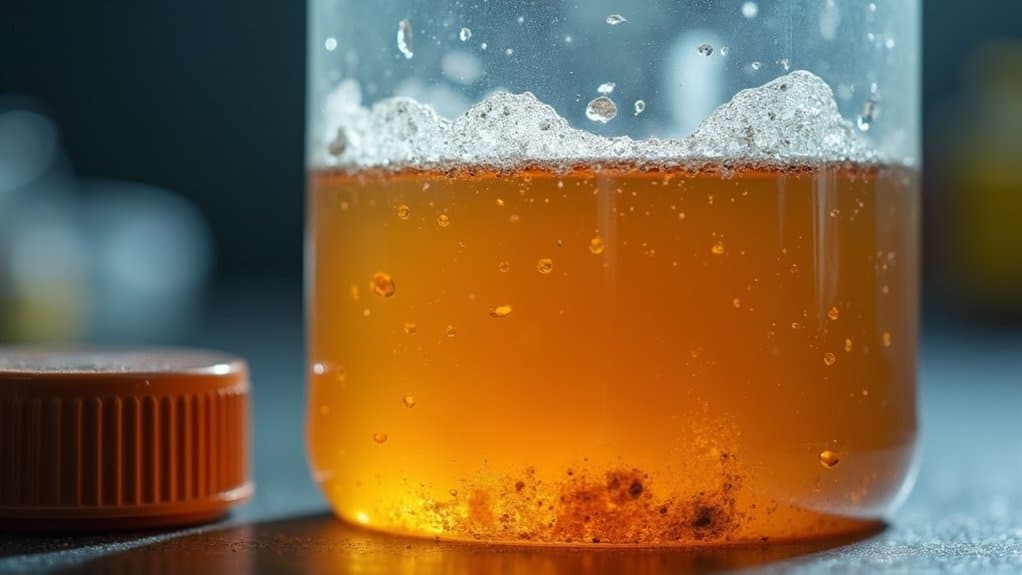
- Yellow or amber discoloration indicating chemical changes
- Noticeably diminished effectiveness in pH adjustment applications
Store your opened containers in cool, ventilated areas below 75°F. Test suspect acid on appropriate surfaces before committing to major cleaning or pool maintenance tasks.
Seal Quality Matters
Everything about muriatic acid storage hinges on seal integrity, which directly determines how long your opened container remains effective. The tight lid impact on potency preservation cannot be overstated, airtight seals minimize HCl gas escape, locking out moisture and contaminants that accelerate degradation.
You’ll notice container material degradation when thin plastic bottles break down from prolonged acid contact. Original manufacturer containers with proper closures maintain acid strength for years when stored correctly. Check your container regularly for signs of corrosion, as physical deterioration signals potential potency loss inside.
A poor seal leads to depleted strength, evident when etching power diminishes noticeably. Vented caps allow pressure release but permit continuous HCl escape. For maximum effectiveness, store your muriatic acid in original packaging with tight closures in ventilated, dry locations away from heat and sunlight.
Storage Temperature Effects
Temperature directly controls how long your opened muriatic acid retains its working strength. Heat exposure acid degradation accelerates rapidly when storage temperatures exceed 95°F, triggering off-gassing that diminishes concentration. You’ll notice that sunlight degradation and chemical breakdown occur faster in containers exposed to UV light and warmth simultaneously.
Store your opened muriatic acid in climate-controlled spaces below 95°F to maximize potency retention. Temperature fluctuations compound evaporation rates, drastically shortening effective shelf life.
- Heat above 85°C causes decomposition, destroying your acid’s pH-adjusting capability
- Direct sunlight accelerates chemical breakdown, wasting your investment
- Temperature swings increase vapor loss, creating hazardous fume conditions
- Consistent cool storage preserves strength, ensuring reliable pool maintenance results
Maintain stable, moderate temperatures to protect both product effectiveness and your safety.
Signs Your Muriatic Acid Has Gone Bad
Several warning signs indicate your muriatic acid has degraded and may no longer perform safely or effectively. Check for container corrosion acid damage, including bulging, cracking, or discoloration of the plastic. White or yellowish crystallization around the cap signals off-gassing or leakage, while rust on nearby metal objects confirms corrosive fume exposure.
When you open the container, assess the odor carefully. An intensified, irritating smell suggests water evaporation has concentrated the acid, increasing hazards. Conversely, a weak odor indicates HCl gas loss and reduced potency.
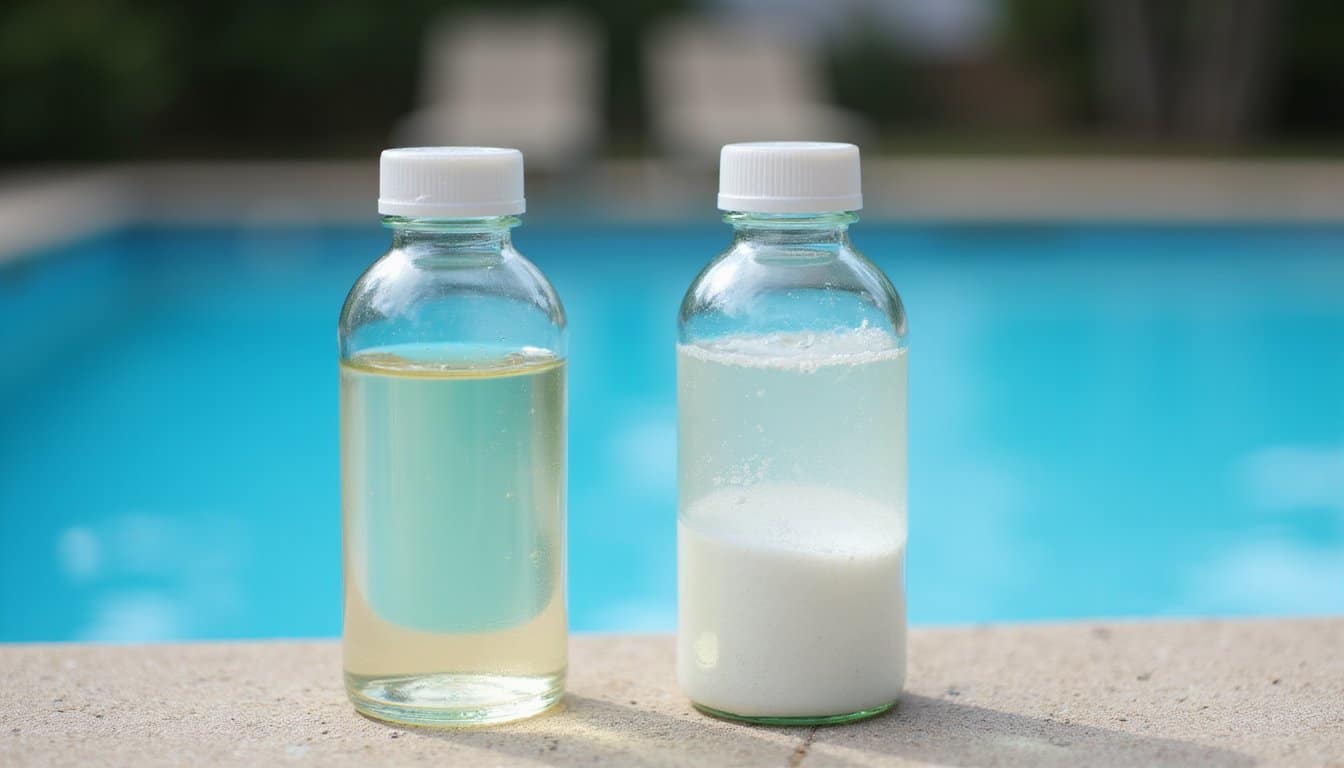
Visually inspect for darkening, sediment, or separation in the solution. These changes warn of contamination or degradation. Always follow chemical labeling safety guidelines and dispose of compromised acid properly. If it looks, smells, or behaves abnormally, don’t use it.
Storage Conditions That Extend Muriatic Acid Shelf Life
Proper storage conditions directly determine how long your muriatic acid remains effective and safe to use. You’ll maximize chemical shelf life of pool products by maintaining temperatures below 95°F in well-ventilated, dry locations. Keep containers tightly sealed in their original packaging to prevent air exposure and concentration changes. Proper storage conditions directly influence how long muriatic acid remains potent and safe, with optimal shelf life achieved by keeping containers below 95°F in a dry, well-ventilated area and tightly sealed in their original packaging to prevent fume release or concentration shifts. Before reviewing how to add muriatic acid to swimming pool, ensure the product has been stored correctly, as degraded or contaminated acid can lead to inaccurate dosing and unstable water chemistry. Proper storage conditions determine how long muriatic acid remains stable and safe, with maximum shelf life achieved by keeping containers below 95°F in a dry, well-ventilated space and tightly sealed in their original packaging to prevent fume loss or concentration changes. Verifying product integrity before use is essential, because degraded acid can lead to inaccurate dosing and unstable chemistry, especially when calculating how much muriatic acid to add to pool to lower ph, where precision directly affects both pH balance and total alkalinity control.
Store your muriatic acid storage area away from direct sunlight, as UV rays cause photochemical degradation. Separate containers from incompatible materials including oxidizers, bases, metals, and organic compounds.
- Keep muriatic acid away from bleach, gasoline, and other pool chemicals to prevent dangerous reactions
- Store in dark cabinets or shaded areas to protect chemical integrity
- Guarantee adequate ventilation to prevent harmful fume accumulation
- Use only corrosion-resistant, manufacturer-issued containers for long-term storage
When to Transfer Acid to a New Container
Container integrity determines when you’ll need to transfer muriatic acid to a new vessel. You should initiate transfer when you notice cracks, brittleness, or compromised seals in your current container. Acid container material compatibility is critical, always select polyethylene tanks rated for 1.9 specific gravity.
| Warning Sign | Action Required | Container Selection |
|---|---|---|
| Visible cracks | Immediate transfer | Polyethylene with corrosive-resistant liner |
| Degraded seal | Replace within 24 hours | Tightly sealed hazardous material container |
| Discoloration | Assess and transfer | Glass or approved plastic only |
For safe pool chemical handling, use drum dispensing cradles and funnels during transfer. Wear full PPE including goggles, face shields, and impervious gloves. Implement secondary containment to capture potential drips.
Can You Still Use Slightly Degraded Muriatic Acid?
Slightly degraded muriatic acid doesn’t necessarily require immediate disposal, you can often still use it for less demanding applications if you verify its condition first. When storing pool chemicals safely, you’ll want to test the acid’s pH level and inspect for clarity before proceeding. Slightly degraded muriatic acid doesn’t always require immediate disposal, as it may remain suitable for minor pH adjustments if you first verify its clarity and relative strength through careful inspection and testing. When storing pool chemicals safely, always confirm the container is intact and properly sealed, and keep in mind that while some ask will muriatic acid kill algae in pool, acid alone is not an algaecide, it primarily adjusts pH to optimize chlorine’s effectiveness against algae growth.
Degraded muriatic acid can still work for lighter tasks, just test its pH and clarity before use.
Following pool chemical safety guidelines, assess usability through these indicators:
- Slight cloudiness typically retains 80-90% effectiveness when pH remains stable
- Up to 10% strength loss works for non-critical cleaning tasks
- Faint discoloration is acceptable if reactivity stays unchanged
- Avoid use entirely if sediment is present, regardless of other factors
Always wear chemical-resistant gloves, goggles, and face shields when handling degraded acid. Work in well-ventilated areas to minimize exposure to potentially altered fumes.
How to Safely Dispose of Old Muriatic Acid
When your muriatic acid has degraded beyond practical use, you’ll need to dispose of it through one of three accepted methods: dilution and drain disposal, neutralization with baking soda, or hazardous waste facility drop-off.
For acid disposal via dilution, mix approximately 1/4 cup of acid into 2-3 gallons of water, always adding acid to water, never the reverse. Pour slowly down the drain and flush pipes for 60 seconds.
Neutralization involves adding acid to a baking soda solution until fizzing stops, converting it to harmless salt and water.
For hazardous waste disposal, contact local facilities to confirm they accept muriatic acid. This method is mandatory where drain disposal violates regulations.
During any disposal process, wear acid-resistant gloves, safety goggles, and a respirator while ensuring proper ventilation.
Frequently Asked Questions
Can Muriatic Acid Freeze in Cold Garage Temperatures During Winter?
Muriatic acid won’t freeze in typical cold garage temperatures. Pool-grade 15% muriatic acid freezes at -46.9°C (-52.5°F), far below what you’ll encounter in most winter conditions. However, you should still store it properly in a well-ventilated, dry area using corrosion-resistant containers. Keep it away from extreme temperature fluctuations, metals, and oxidizing agents. While freezing isn’t your primary concern, maintaining stable storage conditions guarantees the acid retains its effectiveness.
Is It Safe to Store Muriatic Acid Near Other Pool Chemicals?
You shouldn’t store muriatic acid near other pool chemicals, especially chlorine-based oxidizers. These incompatible substances can trigger violent reactions, releasing toxic fumes or causing explosions. You’ll need to maintain at least 8 feet of separation between muriatic acid and oxidizers, alkaline materials, or bleach. Use color-coded labels and dedicated containers to prevent accidental mixing. Store acid in a well-ventilated area with secondary containment to guarantee safe handling.
Does Muriatic Acid Release Dangerous Fumes While Sitting in Storage?
Yes, muriatic acid can release dangerous fumes while in storage, especially if you don’t seal the container tightly or store it in poorly ventilated areas. You’ll minimize vapor buildup by keeping the original container closed and placing it in a well-ventilated, cool location below 95°F. Avoid exposing it to heat, sunlight, or humidity, as these conditions accelerate decomposition and increase fume production, creating serious respiratory hazards.
Can Old Muriatic Acid Damage My Pool Surfaces or Equipment?
Yes, old muriatic acid can damage your pool surfaces and equipment. As the acid degrades, evaporation concentrates impurities that etch plaster, pit concrete, and brittlize vinyl liners. Weakened acid also fails to maintain proper pH, causing scale buildup on pumps, heaters, and filters. You should test stored acid’s concentration before use and discard solutions older than 1-2 years. Always neutralize residues with baking soda and inspect surfaces quarterly after application.
What Container Materials Are Safest for Long-Term Muriatic Acid Storage?
You should store muriatic acid in corrosion-resistant polyethylene containers, ideally the original manufacturer-issued bottles designed for chemical compatibility. Never use metal containers, as they’ll react with the acid and generate flammable hydrogen gas. Keep containers tightly sealed and upright in secondary containment like spill pallets. Don’t transfer acid to unapproved containers or mix old product with new batches, this prevents dangerous reactions and maintains container integrity throughout storage.