
Transform your sun-soaked pool area into a revitalizing sanctuary with three stylish DIY shade solutions. You’ll love the modern look of geometric shade sails, which offer flexible coverage and easy installation. A cozy poolside cabana creates an intimate retreat perfect for lounging, while a custom pergola adds architectural interest with the bonus of supporting climbing vines. Each option combines practicality with design-forward aesthetics, and you’ll find just how attainable these projects can be.
Shade Sails: The Simple Solution for Maximum Coverage
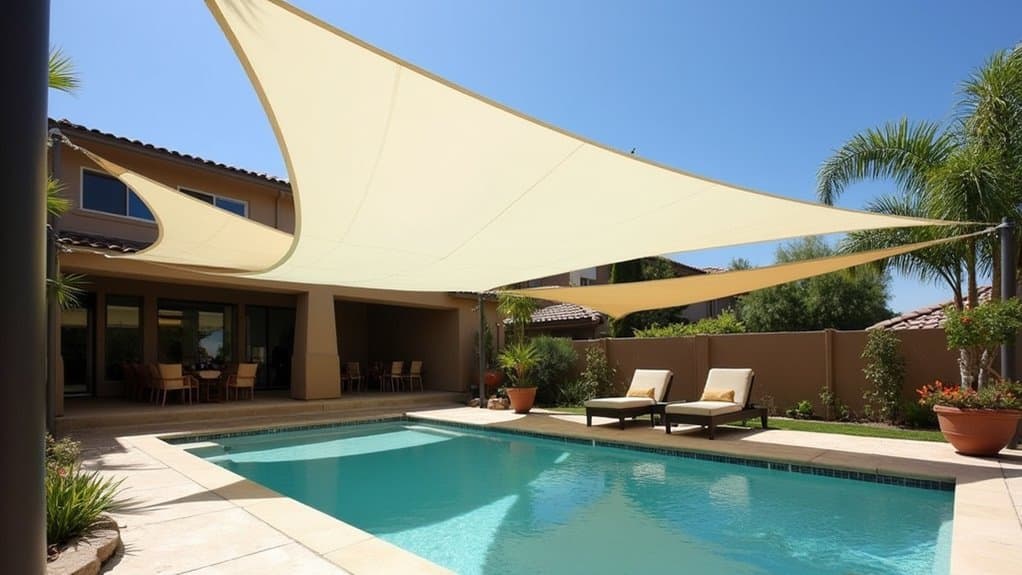
Looking to transform your pool area into a more comfortable and stylish outdoor retreat? Shade sails offer an elegant and practical solution, blocking up to 95% of harmful UV rays while creating a striking architectural element in your outdoor space.
When planning your installation, focus on fabric selection and anchoring options. High-density polyethylene (HDPE) fabric stands out for its durability and breathability, while proper anchoring to walls, trees, or steel posts guarantees structural integrity. Professional installers can ensure optimal shade sail angles for maximum sun protection and visual appeal. Creating a design with three dimensional shapes by varying corner heights will provide enhanced stability and improved aesthetics. Regular mild soap cleaning helps maintain the sail’s appearance and performance. You’ll want to angle at least one corner lower for effective drainage and carefully tension the sail at all points for peak performance.
These versatile shades not only reduce water and ambient temperatures but also help prevent algae growth. Available in multiple shapes and UV-stabilized colors, they’ll improve your pool’s aesthetics while providing essential protection throughout the swimming season.
Setting Up a DIY Poolside Cabana Retreat
Whether you’re seeking a luxurious poolside sanctuary or a practical changing space, a DIY cabana retreat transforms your pool area into a multi-functional haven. Start by selecting a shaded location with proper drainage and a solid concrete foundation. With sizes ranging from 10×10 feet up to 12×14 feet, you can customize the dimensions to fit your space requirements. Choose weather-resistant materials like cedar or treated lumber for the frame, and consider pre-built kits to streamline your construction process. For ultimate personalization, incorporate soft neutral colors into your design scheme to create a calming atmosphere. The innovative Tojagrid Double Pergola provides a substantial and focal design that outperforms typical store-bought options.
- Create a resort-like atmosphere with integrated storage options behind built-in benches, keeping towels and pool accessories neatly tucked away
- Install UV-blocking drapes and adjustable panels for customizable privacy and shade throughout the day
- Amplify the ambiance with lighting solutions, including waterproof pendant fixtures and string lights for evening enjoyment
Remember to check local building codes before construction and gather a team of 4-6 people to help with assembly. Select finishes that complement your home’s architecture while ensuring maximum durability against pool moisture.
Creating a Custom Pergola Paradise
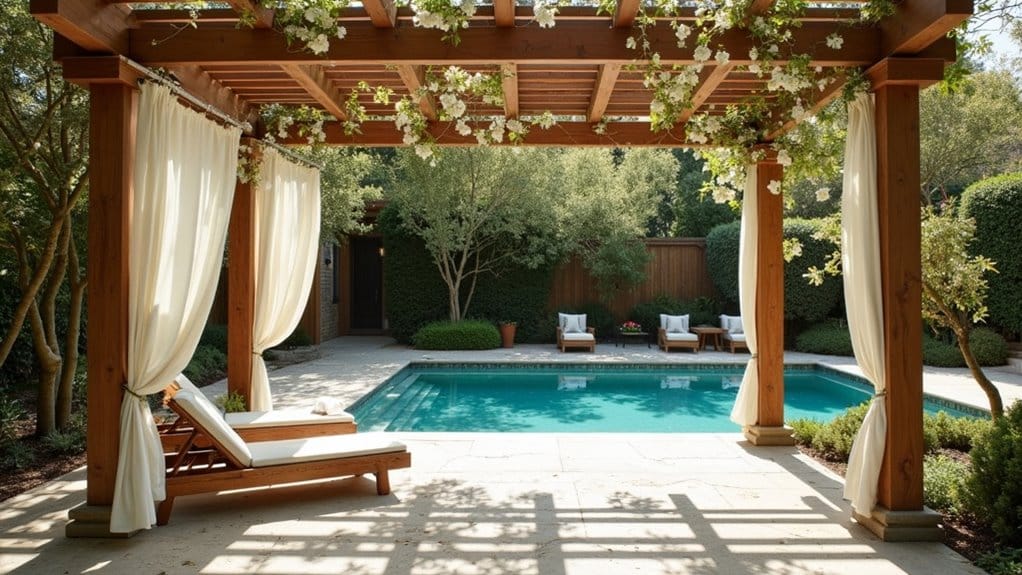
A custom pergola serves as both an architectural focal point and a strategic shade solution for your pool area, combining form and function in a stunning overhead structure. When choosing weather resistant materials, you’ll find options ranging from pressure-treated pine and cedar to modern metal and low-maintenance composites. Each material offers unique benefits for your poolside paradise. Consider planting climbing vines and plants alongside your pergola posts to create additional natural shade and visual interest. Enhance the overall aesthetics with stone pathways and decorative elements around the base. The sense of achievement from building your own pergola creates lasting satisfaction and pride in your outdoor space.
Before construction, you’ll need to address pivotal structural considerations, including proper post depth, concrete anchoring, and local building codes. Position your pergola to optimize shade coverage during peak hours, and don’t forget to check for underground utilities before digging. For a personalized touch, add decorative beam ends or curved rafters using basic woodworking tools. Whether you opt for a DIY kit or build from scratch, guarantee consistent rafter spacing and secure connections for lasting stability.
Frequently Asked Questions
How Long Do Shade Sails Typically Last Before Needing Replacement?
You’ll find that shade sails typically have an average lifespan of 5-15 years, depending on the material you choose. High-quality HDPE sails can last up to 15 years with proper maintenance, while PVC options generally serve you well for 5-10 years. To amplify longevity, you’ll want to maintain regular cleaning schedules, perform timely repairs, and consider seasonal removal in harsh weather. Commercial-grade options will typically outlast residential ones due to their superior construction.
Can Shade Structures Withstand Heavy Snow Loads During Winter Months?
Most fabric shade structures can’t withstand heavy snow loads and you’ll need to remove them before winter. If you’re in a snowy climate, consider alternative materials for winter like all-steel shelters that can handle up to 20-40 pounds per square foot of snow. Design considerations for heavy snow include supplementary struts and reinforcements. You’ll find that certified steel structures offer the best protection, while fabric options require seasonal removal to prevent damage and collapse.
What Permits Are Required for Installing Permanent Pool Shade Structures?
You’ll typically need a building permit and zoning approval for permanent pool shade structures. Local zoning regulations will determine specific requirements, but most jurisdictions require permits for structures exceeding certain height and size thresholds. You’ll need to submit detailed plans showing dimensions, materials, and anchoring methods to meet building code requirements. Don’t skip this step; working without proper permits can result in fines and forced removal of your structure.
How Much Wind Can Various Pool Shade Options Safely Handle?
You’ll find varying wind tolerances across different pool shade options. High-end HDPE shade sails offer the best protection, handling up to 55 mph when properly tensioned. The wind resistance of umbrella shades is much lower, typically safe only up to 20 mph. The durability of retractable awnings falls in between, withstanding 20-30 mph winds when extended. For maximum safety, always choose permeable fabrics over waterproof ones, as they’ll better handle gusty conditions.
Are There Specific Pool Chemicals That Can Damage Shade Materials?
Yes, certain pool chemicals can damage your shade materials if you’re not careful about chemical compatibility. High concentrations of chlorine, particularly when trapped as vapor, can weaken fabric fibers and compromise material durability. Algaecides containing copper compounds may stain your shade fabrics, while acidic pool chemicals can corrode metal frame components. You’ll want to be especially mindful of shock treatments, as these concentrated chemicals can discolor and degrade shade materials through direct contact or airborne exposure.