
When you work with a fiberglass pool company, you’ll typically find tiered packages starting with base installations around $30,000 that cover excavation, shell placement, gravel backfill, and essential equipment like variable speed pumps and cartridge filtration systems. Mid-tier options add brushed concrete decking and extended workmanship warranties, while premium packages include pavers or natural stone. Most companies also offer permit assistance, financing programs, and owner-builder alternatives that can dramatically/considerably/profoundly affect your final investment.
Base Package Components and What They Include
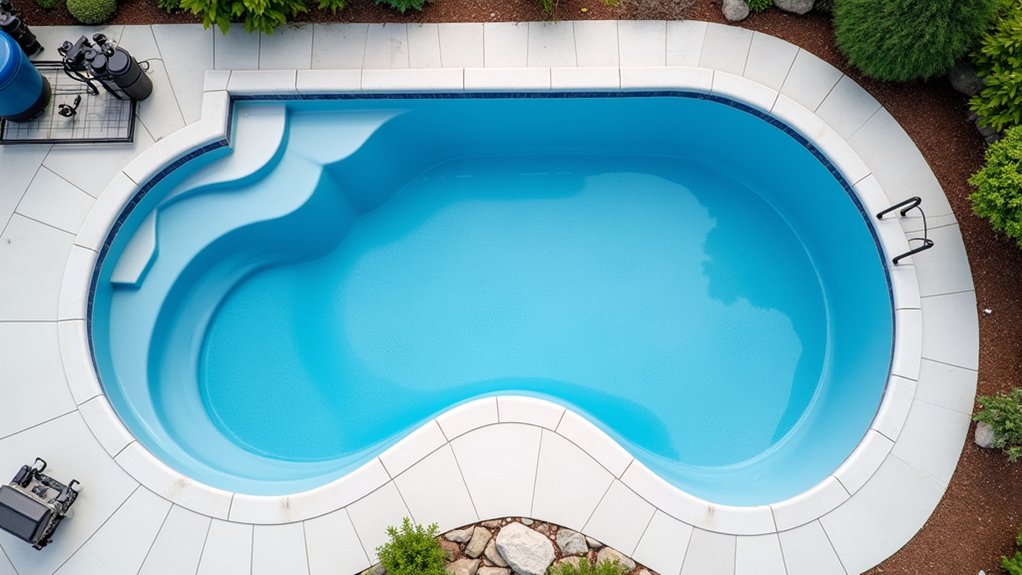
When you invest in a fiberglass pool base package, you’re getting the essential components needed for a complete installation. Your package typically includes excavation following precise pool dimensions, 8-12 inches beyond the shell’s footprint and 4 inches deeper for base material types like crushed stone or sand.
The base preparation involves a 2-inch compacted layer, with gravel preferred based on soil condition considerations to prevent settling. You’ll receive delivery of your pre-molded fiberglass shell featuring integrated inlets, outlets, and skimmers. Crane positioning guarantees precise placement into the excavation. Some deliveries can be particularly challenging depending on your property’s access points, as even the toughest pool deliveries require careful navigation to reach your backyard.
Backfilling completes the base package, alternating 6-inch layers of gravel with water to balance hydrostatic pressure. A sump line installation at the deep end maintains structural integrity throughout your pool’s lifetime. Improper backfilling is one of the most common DIY mistakes that can lead to serious shell issues, which is why professional base packages ensure this critical step is done correctly. The entire pool setting and backfilling process can take 1 to 4 days depending on your specific site conditions and pool size.
Equipment and Filtration Systems Provided
Your fiberglass pool package includes a variable speed pump that adjusts RPM to match filtration demands while cutting energy costs by up to 80% compared to single-speed units. The cartridge filtration system captures particles down to 10-15 microns, eliminating backwashing requirements and reducing water waste throughout the season. This design also conserves water since cartridge filters don’t require the periodic flushing that sand-based systems demand. Strategically positioned skimmers and return jets create ideal circulation patterns, ensuring debris removal and even chemical distribution across your pool’s entire volume. For pools requiring superior water clarity, many companies offer Diatomaceous Earth filter upgrades that capture the finest particles for crystal-clear results. Some installers also provide zeolite filter options that reduce chloramine formation, improving water quality while decreasing overall chemical usage for your pool.
Variable Speed Pool Pumps
Because variable speed pool pumps utilize Permanent Magnet Motors (PMM) that achieve 90% efficiency, compared to just 30-70% for traditional induction motors, they’ve become the industry standard for fiberglass pool installations. You’ll benefit from pump efficiency that drops power consumption from 2000 watts to approximately 300 watts during typical operation. The Pump Affinity Law means your energy use decreases non-linearly as speed and flow reduce. Unlike single speed pumps that run at one fixed speed regardless of actual needs, variable speed models adapt to your pool’s requirements throughout the day.
Your energy efficiency gains translate to real savings, up to 90% reduction in operating costs, with annual savings reaching $1,300 in high-rate utility areas. You’ll recover the higher upfront investment within 1-2 years. These units feature programmable speeds, digital control panels, and built-in timers, allowing you to customize RPM ranges for filtration, backwashing, or cleaning operations while maintaining ideal water turnover. U.S. DOE regulations have made variable speed pumps the only option for most residential pool installations. Many pool equipment manufacturers implement security measures to protect their online resources, so if you encounter access issues when researching pump specifications, you may need to contact the website owner with your Cloudflare Ray ID and IP address.
Cartridge Filtration Systems
Pairing your variable speed pump with a cartridge filtration system maximizes equipment performance while simplifying maintenance routines. Pool water flows through pleated polyester media, trapping particles finer than sand filters can capture, including microscopic contaminants invisible to the naked eye.
Your fiberglass pool benefits from cartridge filtration’s water-saving design since no backwashing is required. Single-piece fiberglass-reinforced polypropylene tanks resist corrosion, while tool-free clamp rings provide quick cartridge access. The High-Flow Manual Air Relief Valve works with continuous internal air relief to maintain optimum filtration efficiency throughout operation.
Routine maintenance schedules require monitoring your pressure gauge and cleaning when readings exceed 10 PSI above baseline. Hose off debris, allow complete drying, and reinstall, keeping a spare cartridge guarantees zero downtime during cleaning cycles.
Cartridge media upgrades become necessary every one to two years, depending on bather load and debris accumulation. Proper drying between cleanings extends media life and maintains ideal filtration performance. Cartridge filters use accordion-style cloth or paper media elements that can be removed and cleaned, making them a popular choice among the three main filter categories.
Skimmers and Return Jets
While your pump and filter handle water treatment, skimmers and return jets work together to guarantee proper circulation throughout your fiberglass pool. Your installer will position flush-mount skimmers against the pool wall, utilizing the 6 5/16″ maximum mounting width designed specifically for fiberglass applications.
Proper skimmer placement safeguards optimal surface debris collection. This system includes:
- Integral Flo-Control slide plate for precise flow management between skimmer and main drain lines
- Standard cover and collar with 1.5″ weir adjustment for varying water levels
- Return Guard Bulkhead positioned adjacent to skimmers with gaskets aligned using fiberglass-specific tabs
Your technician will divide skimmers equally across the pool’s hydraulic system, ensuring balanced water circulation. Port sizes of 1.5″ or 2″ accommodate your specific plumbing configuration. These skimmers are molded from durable ABS plastic with no assembly seams below water level, ensuring long-lasting performance and leak prevention. The skimmer basket should be cleaned regularly to prevent clogging and protect your filtration system from damage.
Installation and Site Preparation Services
Before any excavation begins, a thorough site assessment determines the feasibility and scope of your fiberglass pool installation. Your contractor evaluates crane access, driveway load capacity, and property characteristics like sloped terrain requiring retaining walls. Underground utilities mapping identifies gas, electric, and water lines needing relocation before excavation.
Landscape preparation involves clearing vegetation, removing obstacles, and establishing benchmark grades for accurate pool positioning. Using detailed dig sheets with 3D measurements, crews outline the pool shape and run center string lines for precise excavation dimensions. This site preparation phase typically takes 2-4 days to complete depending on property conditions and complexity. Contractors may also need to secure permission from neighbors if equipment or materials must temporarily occupy adjacent properties during installation.
Base preparation includes compacting a 25cm gravel bed with 8-16mm coarse aggregate, then constructing a laser-leveled rail system. During pool setting, technicians lower the shell via crane, connect plumbing and filtration systems, and complete staged backfilling with crushed stone while simultaneously filling with water.
Warranties and Ongoing Support Options

Your fiberglass pool installation represents a significant investment, and understanding warranty coverage protects that investment long after the crane leaves your property. Manufacturers typically structure coverage across three tiers:
Understanding your fiberglass pool warranty coverage is essential for protecting your investment for decades to come.
- Structural warranties, Range from 25 years to lifetime coverage, with premium manufacturers like SwimUSA offering transferable 50-year protection
- Gelcoat/surface warranties, Cover fading, cosmetic cracks, and defects for 3-15 years depending on manufacturer
- Osmosis protection, Addresses blistering concerns, with coverage spanning 15 years to lifetime
Before installation, verify material compatibility with salt chlorination systems, some manufacturers void coverage entirely. For claims processing, register your warranty online and contact your certified installer first. Quality manufacturers maintain documentation indefinitely and require professional installation to validate coverage terms.
Popular Add-Ons and Upgrade Extras
When you’re ready to enhance your fiberglass pool installation, strategic upgrades in decking materials, heating systems, and safety features deliver the greatest return on investment. You’ll choose from composite, travertine, or stamped concrete decking based on your budget and aesthetic preferences, while solar heating systems and automatic covers extend your swimming season and cut energy costs by up to 70%. Safety fencing installations meet local code requirements and provide essential protection, completing your pool package with both functionality and peace of mind.
Decking Material Options
The decking material you choose directly impacts your pool area’s durability, safety, and long-term maintenance costs. Fiberglass pool companies typically offer several proven options featuring decorative finishes and low maintenance materials suited to your climate and budget.
Top decking solutions include:
- Broom-finished or stamped concrete, Cost-effective, extremely durable, and customizable with cool deck coatings for slip resistance and temperature control.
- Interlocking pavers, Available in travertine, stone, or concrete; frost-proof, easily replaceable, and moisture-resistant with mix-and-match design flexibility.
- Composite decking, Combines wood fibers with recycled plastics for rot resistance, minimal upkeep, and sustainable performance alongside fiberglass shells.
You’ll also find porcelain pavers and natural stone options like flagstone or bluestone for premium installations requiring heat resistance and non-slip surfaces.
Heating and Cover Systems
Because fiberglass pools retain heat more efficiently than concrete alternatives, pairing your installation with the right heating system maximizes your investment and extends your swimming season considerably.
When evaluating heat retention methods, you’ll encounter four primary options: gas heaters deliver rapid temperature increases for on-demand heating, electric heat pumps extract ambient air warmth for superior energy efficiency, solar collectors harness free sunlight with minimal operating costs, and electric resistance heaters provide weather-independent performance.
Energy efficiency comparisons reveal heat pumps offer the lowest operational expenses, while gas units excel in colder climates requiring quick heating.
Pool cover systems complement any heater by reducing evaporation and overnight heat loss. Most fiberglass pool companies bundle covers with heating packages, delivering enhanced thermal retention, reduced energy consumption, and year-round usability for your investment.
Safety Fencing Installations
Beyond thermal efficiency, your fiberglass pool installation requires compliant safety barriers that meet strict regulatory standards. You’ll need fencing that meets minimum 48-inch height requirements, with California mandating 5 feet for residential pools. Manufacturer recommended installation tips specify vertical support posts extending 3 inches below grade, spaced no more than 40 inches apart.
Your fence maintenance guidelines should address these critical specifications:
- Gate mechanisms: Self-closing, self-latching hardware with latches positioned at least 5 feet above ground, opening away from the pool
- Opening restrictions: Gaps must not exceed 4 inches, preventing passage of a 4-inch diameter sphere
- Positioning requirements: Mesh fencing installed minimum 20 inches from pool edge with ground clearance under 2 inches
Non-compliance risks substantial fines and liability exposure.
Pricing Ranges and Package Tiers
When evaluating fiberglass pool investments, understanding the distinction between base, mid-tier, and premium packages helps you allocate your budget effectively. Base packages typically include your pool shell, excavation, variable speed pump, and cartridge filter, starting around $30,000. You’ll need to budget separately for electrical wiring and decking.
Mid-tier options add brushed concrete decking at $6-10 per square foot and include 5-year workmanship warranties. For enhanced aesthetics, stamped concrete runs $12-18 per square foot.
Premium packages deliver full-service installations featuring pavers ($15-25 per square foot) or natural stone ($25-40 per square foot), plus permits, fencing, and detailed maintenance plans. Your cost benefit analyses should factor in long term maintenance planning, as premium packages often reduce future repair expenses. Total project costs range from $30,000 to $100,000.
Full-Service Versus Owner-Builder Installation Options
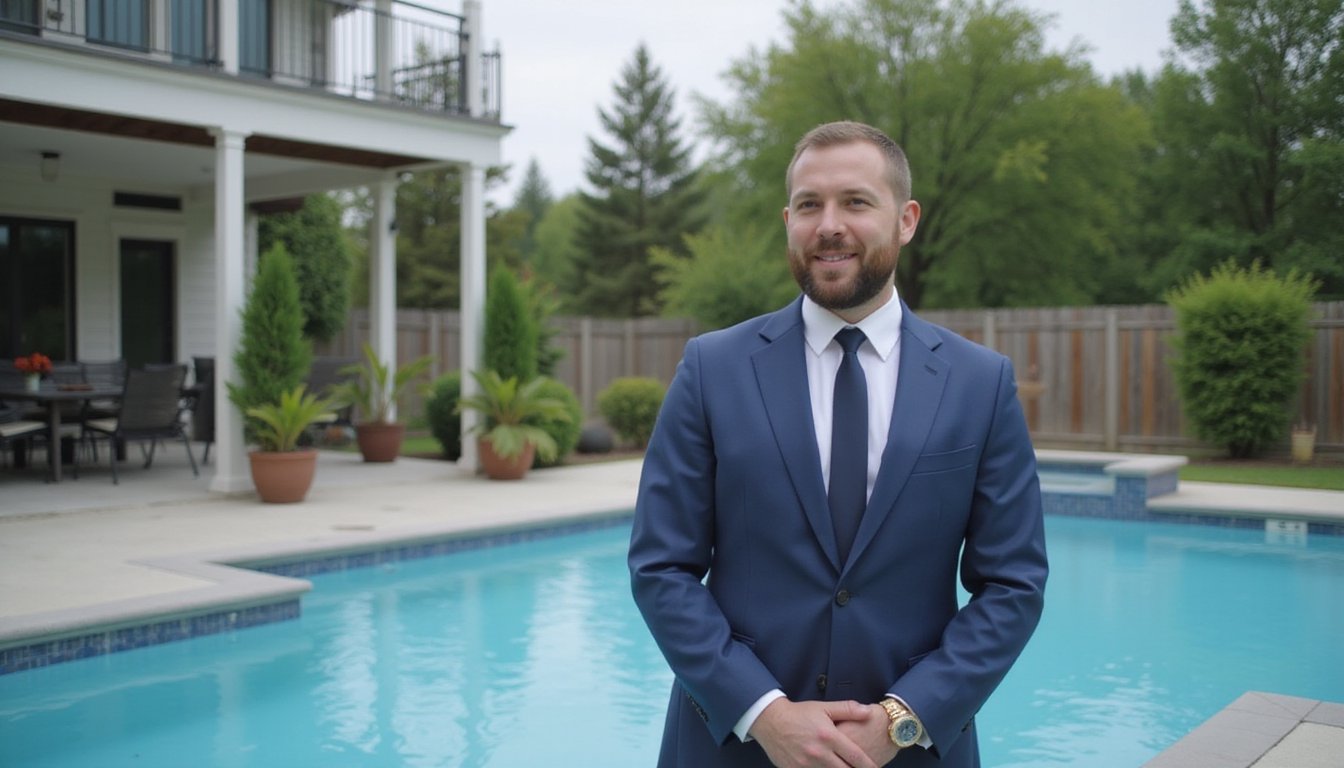
Most fiberglass pool buyers face a critical decision between full-service installation and owner-builder approaches, each offering distinct advantages depending on your project management capabilities and budget constraints.
Full-service packages deliver thorough execution from permits through landscaping, including lifetime structural and 5-year workmanship warranty coverage expectations. You’ll receive professional handling of excavation, equipment installation, and startup training under single-point accountability.
Owner-builder options reduce costs by shifting project management demands to you. Consider these key distinctions:
- Coordination responsibility: You’ll manage electrical, fencing, and subcontractor scheduling independently.
- Site requirements: Level properties with easy access optimize DIY success.
- Timeline variables: Completion accelerates when you’ve pre-arranged utility connections and permits.
Professional shell installation guidance remains available, ensuring structural integrity while you control labor-intensive phases.
Financing and Permit Assistance Programs
Whether you choose full-service installation or manage the project yourself, securing the right financing structure determines your pool’s affordability and long-term financial impact.
Effective loan application strategies include comparing three or more lenders, leveraging credit union rates, and negotiating autopay discounts. Pool-specific lenders like HFS Financial and LightStream offer terms tailored to fiberglass installations.
| Financing Type | APR Range | Key Advantage |
|---|---|---|
| Home Equity/HELOC | Lowest available | Tax-deductible interest |
| Personal Loan | 3.99%-16.99% | No collateral required |
| Dealer Financing | 5.99%-13% | Flexible qualification |
Full-service dealers provide permit application assistance as part of extensive project management. They’ll navigate municipal requirements while specialized lenders structure funds to cover regulatory expenses within your overall budget, including the recommended 15-20% safety buffer.
Frequently Asked Questions
How Long Does a Fiberglass Pool Typically Last Before Needing Replacement?
Your fiberglass pool‘s typical lifespan ranges from 25-50 years or more before requiring replacement. The pool shell durability stems from hand-laid fiberglass layers with a reinforced resin core, providing exceptional resistance to cracking and weather damage. You’ll avoid the resurfacing cycles concrete pools need every 10-15 years and eliminate liner replacements entirely. With proper installation and routine maintenance, your structural warranty often extends lifetime coverage on the shell itself.
Can Fiberglass Pools Be Installed in Cold Climates With Freezing Winters?
Yes, you can install fiberglass pools in cold climates with freezing winters when proper protocols are followed. Cold climate installation requires excavating below the frost line and using freeze-resistant backfill materials like Rhino Lock polymer. Your winterization options include lowering water levels, blowing out plumbing lines, and applying antifreeze to equipment. You’ll want reinforced shells and proper drainage systems to withstand freeze-thaw cycles and prevent ground heave damage.
What Colors and Finishes Are Available for Fiberglass Pool Shells?
You’ll find fiberglass pool shells in diverse options ranging from standard blues like Sapphire Blue and Ocean Blue to tropical tones including Island Teal and Caribbean Sparkle. Neutral finishes such as Storm Grey and Pebble Beach deliver contemporary aesthetics, while premium Galaxy collections feature aggregate finishes with metallic flakes for enhanced depth. You can also incorporate custom mosaics to personalize your shell’s appearance, creating distinctive visual effects that complement your backyard design.
How Does Fiberglass Pool Maintenance Compare to Concrete or Vinyl Pools?
Fiberglass pools require drastically less maintenance than concrete or vinyl alternatives. You’ll spend about 30% less on chemical treatment needs since the non-porous gelcoat prevents algae growth and maintains stable pH levels. Unlike concrete, you won’t face resurfacing requirements every 10-15 years or frequent acid washing. Compared to vinyl’s liner replacements every 5-9 years, fiberglass demands only weekly water testing, monthly filter cleaning, and annual inspections, saving you $3,000-$23,000 over a decade.
Are Fiberglass Pools Customizable in Shape or Only Pre-Made Molds?
Fiberglass pools rely on pre-made molds, so you won’t get fully custom shapes. However, you’ll find over 700 designs, rectangles, freeforms, and lap configurations, with integrated features like tanning ledges and splash decks. Your custom design options include gel coat colors and modular combinations. While the shell shape remains fixed, flexible installation requirements let builders adapt excavation, decking, and equipment placement to your site’s specifications, delivering a tailored result within standardized parameters.