
The three most common fiberglass pool problems you’ll encounter are spider cracks from impact damage, surface discoloration caused by poor water chemistry, and osmotic blistering in the gelcoat layer. Spider cracks develop when blunt force stresses the gelcoat beyond its flexibility threshold. Chemical imbalances lead to calcium deposits, metal staining, and UV fading. Blistering occurs when water penetrates the gelcoat and reacts with underlying resins. Understanding these issues helps you prevent costly repairs down the road.
Spider Cracks and Gelcoat Fractures From Impact Damage
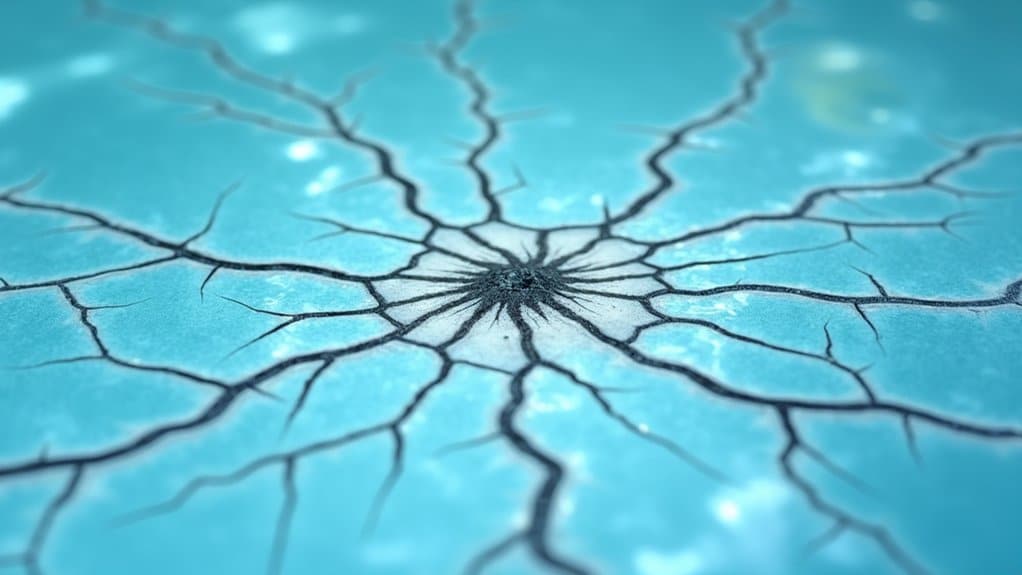
Spider cracks represent one of the most common cosmetic issues fiberglass pool owners encounter. These surface-level fractures typically develop when blunt force impacts stress the gelcoat beyond its flexibility threshold. Sharp or heavy objects dragged across your pool’s surface can also create these distinctive web-like patterns. Shallow scratches may buff out, but deeper damage may require gelcoat repair from a professional.
You’ll find that uneven backfill pressures and loosely compacted backfill contribute considerably to gelcoat fractures. When external pressure causes the shell to flex beyond the gelcoat’s capability, cracks inevitably form. Using improper materials like clay instead of clean sand or crushed stone during installation increases the risk of these pressure-related issues. Even small cracks like these can compromise structural integrity over time if left unaddressed.
The good news: spider cracks remain superficial and don’t compromise your pool’s structural integrity or water-holding ability. You can address minor damage using color-matched gelcoat repair kits. Sand the affected area gently, apply a bond coat, fill with putty, and finish with matching gelcoat.
Surface Discoloration and Fading From Poor Water Chemistry
While impact damage creates visible surface fractures, chemical imbalances pose an equally significant threat to your fiberglass pool’s appearance. When you allow pH levels to drift above 7.6 combined with heightened calcium hardness, you’ll notice calcium deposits forming on your gelcoat surface. This scaling creates rough, discolored patches that worsen over time.
Key factors contributing to surface discoloration include:
- Metal oxidation, Iron produces rust-colored stains while copper creates blue-green discoloration
- Waterline staining, Body oils and sunscreens accumulate at the water’s edge
- Organic matter, Decomposing leaves release tannins causing brown staining
- UV degradation, Sunlight breaks down pigment bonds, causing fading
You’ll prevent most discoloration by maintaining pH between 7.2 and 7.6, monitoring calcium hardness levels, and removing organic debris promptly. Testing water chemistry weekly allows you to identify and correct imbalances before they cause lasting damage to your pool’s surface. Using UV protection products like specialized coatings and sealants creates an effective barrier against sun damage that accelerates fading. Adding a metal sequestrant to your maintenance routine binds to iron, copper, and manganese in the water, preventing these metals from oxidizing and settling on your pool surface.
Osmotic Blistering That Develops on the Gelcoat Layer

Osmotic blisters manifest as small, raised bumps on your pool’s gelcoat surface when water molecules penetrate this protective layer and become trapped within the underlying laminate. These molecules react with polyester resin, creating solutes that draw additional water through osmosis, building pressure until the gelcoat separates from the fiberglass substrate. The gelcoat acts as a semipermeable membrane, allowing water molecules to pass through while preventing the solutes from escaping back out.
Manufacturing quality directly influences blister development. Pools built with cheap polyester resins and inadequate gelcoat integrity inspection during production face higher risks. Proper barrier layer application using vinyl ester resin behind the gelcoat prevents water migration and chemical reactions that cause blistering. When researching manufacturers, evaluating a company’s history and reputation helps identify those with consistent quality standards.
While primarily a cosmetic concern rather than a structural threat, you should address blisters promptly. Repair involves opening affected areas, draining accumulated fluid, and resurfacing. The blistering process becomes accelerated by heat or sunlight, which causes the trapped fluid to expand and worsen the damage. Modern manufacturers using 100% vinyl ester barriers have virtually eliminated this issue in quality fiberglass pools.
Frequently Asked Questions
How Do I Prevent My Fiberglass Pool From Floating Out of the Ground?
To prevent your fiberglass pool from floating, you’ll need proper pool shell anchoring and an adequate drainage system working together. Install a hydrostatic pressure relief valve beneath the pool to redirect groundwater when the water table rises. Use clean 3/4-inch gravel for backfill instead of dirt, it allows free drainage and prevents moisture retention. Never drain your pool without professional assistance, and always maintain full water levels to counteract external hydrostatic pressure.
What Type of Backfill Material Should Be Used Around Fiberglass Pools?
You should use compacted gravel backfill for your fiberglass pool installation. Clean crushed stone (¾” or smaller) maintains stability whether wet or dry, drains effectively, and won’t shift over time. Avoid sand based backfill in wet climates or clay-rich soils, it retains water and can cause wall bulging when saturated. Install gravel in compacted layers, maintaining backfill levels within 10cm of your interior water level to prevent structural damage.
Can Groundwater Pressure Cause Structural Damage to My Fiberglass Pool?
Yes, groundwater pressure can cause significant structural damage to your fiberglass pool. When hydrostatic pressure exceeds the internal water counterforce, you’ll see bulging walls, shell cracks, or even complete pool displacement. Insufficient groundwater monitoring and improper pool construction methods dramatically increase these risks. You can prevent damage by installing hydrostatic relief valves, maintaining proper water levels, and using dewatering systems. Never fully drain your pool without professional supervision, especially during wet seasons.
Why Are Hydrostatic Relief Valves Important for Fiberglass Pool Installation?
Hydrostatic relief valves protect your fiberglass pool from floating out of the ground when groundwater pressure builds up beneath the shell. During proper installation, contractors position the valve at the main drain’s deepest point, where it automatically releases pressure without manual intervention. You’ll also need adequate drainage through a gravel bed foundation to support valve function. This system prevents costly structural damage like buckling or cracking that occurs when empty pools face uplift forces.
What Causes Fiberglass Pool Walls to Bulge or Shift Over Time?
Your fiberglass pool walls bulge or shift primarily due to sand backfill liquefaction, where saturated sand exerts pressure stronger than the internal pool water. An improper curing process during manufacturing weakens the shell’s resistance to external forces. Additionally, inadequate structural support from thin laminates or cosmetic-only comb systems fails to reinforce walls against ground pressure. High water tables compound these issues, pushing liquefied backfill against flexible walls. You’ll prevent problems by ensuring proper installation and selecting structurally engineered shells.