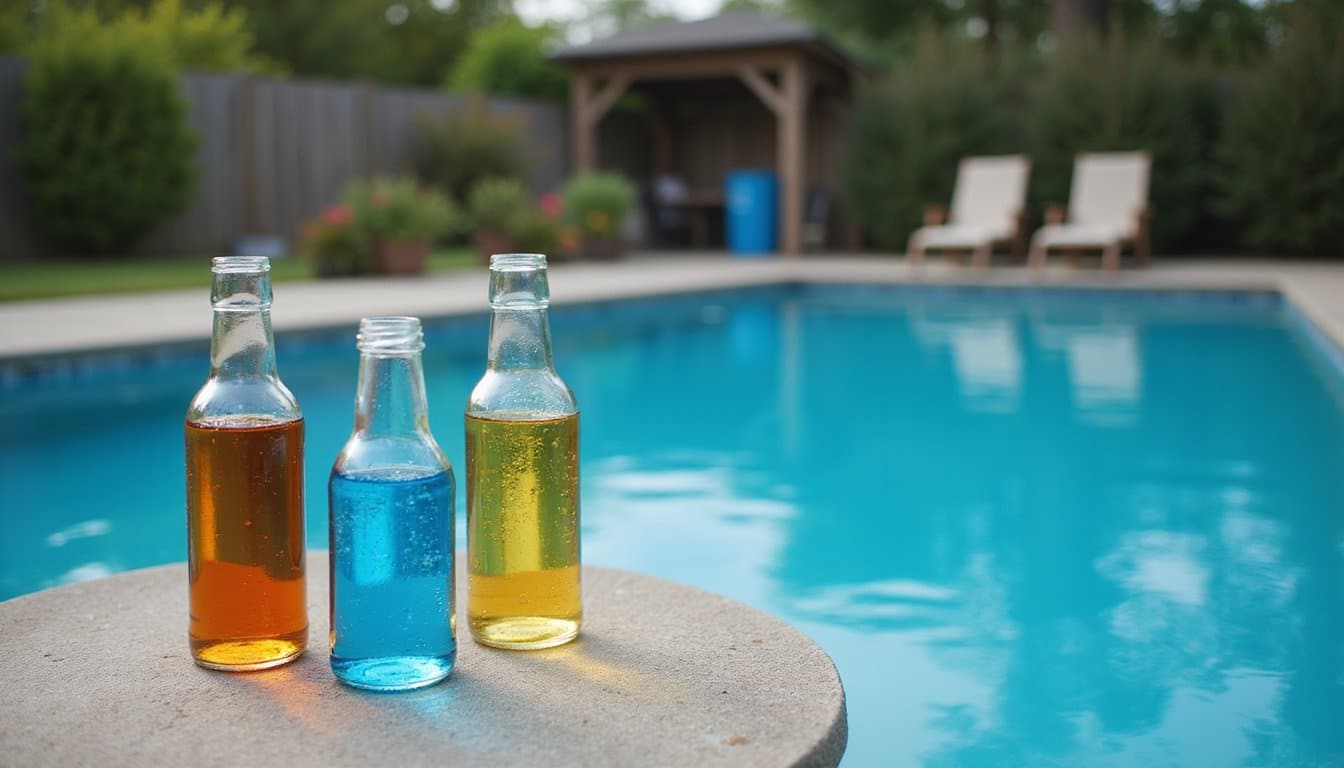
You should wait 20 minutes to 24 hours after adding chemicals to your pool before swimming, depending on the specific product and dosage. Clarifiers and algaecides typically need just 20, 30 minutes, while routine chlorine requires 30 minutes to 4 hours. Shock treatments demand the longest wait, 8 to 24 hours, since chlorine levels spike above 10 ppm. Always retest your water to confirm safe levels before entry, and understanding each chemical’s unique wait time will help you stay protected.
How Long to Wait to Swim After Adding Pool Chemicals?
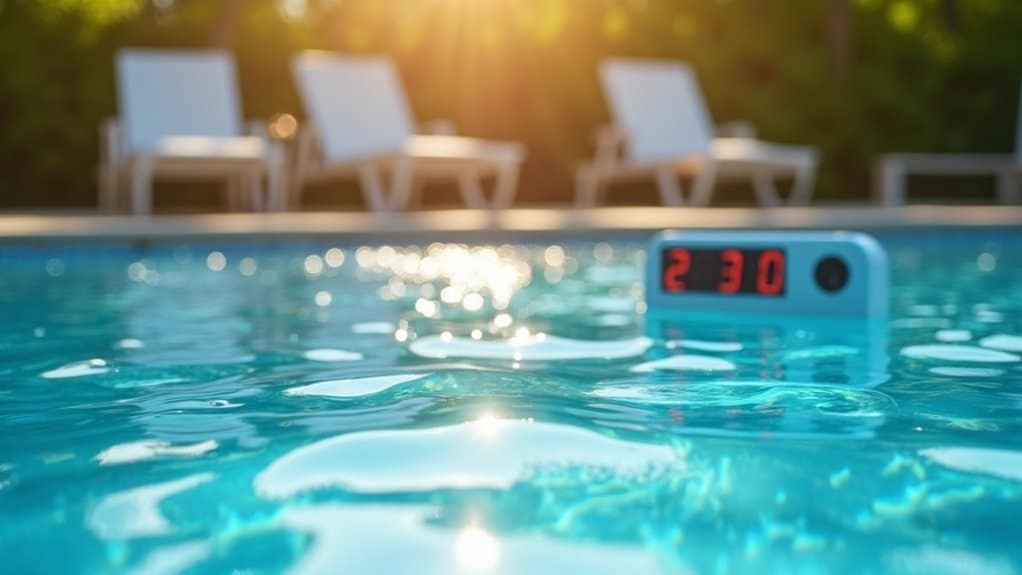
After you’ve added chemicals to your pool, the wait time before swimming depends on the specific chemical, its concentration, and how effectively your circulation system disperses it throughout the water. Pool chemical safety requires you to test levels before entering, regardless of elapsed time.
For routine chlorine pool sanitizer levels, you’ll typically wait 30 minutes to 4 hours until concentrations reach the 1, 3 ppm safe range. Shock treatments demand 8, 24 hours since chlorine spikes to 10 ppm or higher. Muriatic acid requires 30, 60 minutes with your pump running. Calcium hardness increasers need several hours or overnight for full dispersion. Flocculant is unique in that you should not swim at all until it has finished working and been completely vacuumed out of the pool.
Always retest your safe swimming water chemistry, confirming chlorine, pH, and alkalinity, before anyone enters the pool. Swimming in water where chemicals haven’t fully dispersed can cause skin and eye irritation from exposure to concentrated pockets of treatment products. When using algaecides to prevent and treat algae growth, wait 15 to 30 minutes after application before swimming, though you should always check the manufacturer’s instructions for the specific product you’re using.
Pool Chemicals That Only Need 20, 30 Minutes
Not every pool chemical demands a lengthy waiting period before you can safely return to the water. Quick-dissolving balance chemicals like pH adjusters and alkalinity increasers typically require only 20, 30 minutes of active pump circulation to disperse evenly and reach safe, testable concentrations. Most clarifiers and standard-dose algaecides follow a similar timeline, though you should always confirm with a test kit that chlorine reads 1, 3 ppm and pH falls between 7.2 and 7.6 before swimming.
Quick-Dissolving Balance Chemicals
Certain pool chemicals dissolve so rapidly that they require only 20, 30 minutes of circulation before you can safely re-enter the water. Quick-dissolve pool chemicals, including specific pH adjusters, chlorinated isocyanurates, and enzyme-based products, exhibit low acute toxicity profiles, which supports this shorter swimming pool chemical waiting time. You should always verify product-specific label directions before entry.
These fast-acting formulations work efficiently when your pump distributes them evenly throughout the water. After adding any pH adjuster, confirm your ph level 7.2 to 7.8 swimming safety range using a reliable test kit. Don’t skip this step, localized chemical concentrations can still irritate skin and eyes if circulation hasn’t fully dispersed the product. Always add chemicals to pool water, never the reverse, and use designated tools for each product. These fast-acting formulations work efficiently when your pump distributes them evenly throughout the water, which is especially important when learning how to do pool chemicals for the first time to ensure balanced and safe treatment. After adding any pH adjuster, confirm your pH level is within the 7.2 to 7.8 swimming safety range using a reliable test kit. Don’t skip this step, localized chemical concentrations can still irritate skin and eyes if circulation hasn’t fully dispersed the product. Always add chemicals to pool water, never the reverse, and use designated tools for each product.
Clarifiers And Algaecide Waits
Clarifiers and standard algaecides fall into the same rapid-dispersal category as quick-dissolve balance chemicals, requiring only 20, 30 minutes of active circulation before you can safely re-enter the pool. Non-metallic algaecides disperse faster than metallic formulations, but both need a full pool chemical circulation period to eliminate concentrated pockets.
Before swimming, verify these four conditions:
- Clarifiers and algaecides have circulated for at least 20 minutes with the pump running.
- Free chlorine reads under 3 ppm.
- pH remains between 7.2 and 7.8.
- No visible foaming exists on the water’s surface.
Always check the manufacturer’s label for product-specific timing. If you’ve added clarifiers, expect reduced visibility until filtration clears the water, typically within 12 hours. Test water balance post-wait to confirm safe swimming conditions.
How Long to Wait After Adding Chlorine
How quickly can you safely return to your pool after adding chlorine? When you’ve added liquid chlorine sodium hypochlorite, you should wait 4, 6 hours before swimming. During this period, run your pump continuously to complete at least one full pool filtration circulation cycle, ensuring even chemical distribution.
Before entering the water, test your free chlorine residual levels to confirm they’ve stabilized between 1, 3 ppm. You’ll also want to verify pH remains within 7.2, 7.8. Chlorine tablets and granules typically require 2, 4 hours, depending on dissolution rates.
Don’t skip water testing, elevated chlorine concentrations cause skin and eye irritation. Always consult manufacturer’s instructions for your specific product, as stabilized and unstabilized formulations disperse at different rates. Testing remains your most reliable safety confirmation.
Why Chlorine Shock Needs the Longest Wait
While routine chlorine additions require a few hours of patience, shock treatments demand considerably more time, and the reason comes down to concentration. Calcium hypochlorite pool shock pushes free chlorine to 10+ ppm, far exceeding the safe chlorine level swimming pool guidelines of 1, 4 ppm. Your pool shock treatment timing depends on these critical factors:
- Dosage volume: Higher shock doses per gallon extend dissipation beyond 24 hours.
- Water condition: Algae blooms require superchlorination, demanding 24, 48 hours before reentry.
- Circulation duration: You’ll need continuous pump operation for 12+ hours post-shock.
- Dissipation verification: Retest free chlorine and pH before swimming, never estimate.
Premature entry risks skin irritation, eye discomfort, and respiratory exposure from concentrated chlorine vapor.
Wait Times for Muriatic Acid and Calcium Hardness
Because muriatic acid and calcium hardness increaser behave differently in pool water, they demand distinct wait times before you can swim safely. Muriatic acid creates concentrated hotspots that can burn skin, so you should wait 30 minutes to one hour with your pump running continuously. Always confirm pH reads between 7.2 and 7.8 before entering.
Calcium hardness increaser requires a longer wait, typically 2 to 4 hours or one full filtration cycle. This extended period guarantees calcium chloride disperses evenly through your plumbing and filtration system.
Testing after chemicals is essential for both products. Use a reliable test kit to verify balanced water chemistry before swimming. Additionally, wait 4 to 6 hours between adding muriatic acid and chlorine to prevent dangerous chemical reactions or toxic fumes.
What Happens If You Swim Too Soon?
If you enter the pool before chemicals have fully circulated, you’re exposing yourself to concentrated hotspots that can cause skin burns, eye irritation, and respiratory discomfort. Ignoring pool sanitizer distribution time means chemicals haven’t dispersed evenly, leaving dangerous concentration zones throughout the water.
Failing to respect pool pump circulation duration and pool chemical safety practices leads to these specific risks: Failing to respect pool pump circulation duration and pool chemical safety practices especially when overlooking factors like do pool chemicals expire leads to these specific risks:
- Chloramines accumulate rather than dissipate, reducing sanitizer effectiveness and causing throat irritation.
- Algae and bacteria survive in undertreated zones where chemicals haven’t reached adequate concentrations.
- Equipment deterioration accelerates as undissolved chemicals bypass proper circulation cycles.
- Water chemistry imbalances compound, requiring more frequent testing and costly corrective treatments.
You’ll protect both yourself and your pool’s longevity by waiting until water testing confirms safe levels.
How Pool Size and Temperature Change Wait Times
Your pool’s volume and water temperature directly affect how quickly chemicals disperse to safe, swimmable concentrations. Larger pools dilute added chemicals more slowly, which means shock treatments can take up to 24 hours to drop below 5 ppm, while smaller pools often reach the 1, 3 ppm safe range within 2, 4 hours. Warmer water between 75, 85°F accelerates chemical dissolution and circulation, cutting standard wait times roughly in half compared to cooler conditions that slow granule breakdown and increase the risk of concentrated hot spots.
Larger Pools Need Longer
A pool holding 20,000 gallons demands roughly twice the circulation time of a 10,000-gallon pool to achieve uniform chemical distribution, a straightforward ratio that many pool owners underestimate. Because chemical dosage scales with size, you’ll need proportionally more sanitizer, and trichlor chlorine tablets designed for larger volumes dissolve slower, extending wait times. Pump operation critical for big pools means running your system 8, 12 hours daily to guarantee full turnover.
You should follow these guidelines for larger pools:
- Run your pump continuously for 8, 12 hours after chemical addition before swimming.
- Use high pump speed during dosing to accelerate dispersion.
- Test chlorine levels after a full circulation cycle rather than after 20 minutes.
- Allow 24 hours post-shock before retesting and entering the water.
Warmer Water Speeds Mixing
Because warmer water accelerates chemical reactions at the molecular level, your pool’s temperature directly influences how long you’ll wait after adding chemicals. Heat increases molecular kinetic energy, driving faster chemical dilution in pool water and shortening the time sanitizers take to disperse evenly. In pools above 85°F, chlorine reacts and dissipates more rapidly, meaning your post-treatment window may shrink compared to cooler conditions.
However, this acceleration demands careful attention to pool chemical dosing procedures. Faster reactions also mean chlorine depletes quicker, so you’ll need to test levels before swimming rather than relying solely on elapsed time. Run your pump on high speed to maximize circulation, and retest pH and free chlorine within 30 minutes of treatment. Heat amplifies incompatible chemical reactions, so never combine products simultaneously.
How to Test Your Water Before Getting Back In
Before you jump back in, testing your pool water confirms that chemical levels have returned to safe swimming ranges. Use chlorine test strips pool owners trust by dipping them 12, 18 inches below the surface, holding still for 15, 20 seconds, then comparing colors against the packaging guide. For greater accuracy, digital pool water testers eliminate guesswork by interpreting chemical readings electronically.
Confirm these four parameters through consistent pool test kit monitoring:
- Free chlorine reads between 1.0, 4.0 ppm
- pH falls within the 7.4, 7.6 range
- Total alkalinity measures 80, 120 ppm
- Calcium hardness stays between 200, 400 ppm
Collect your sample elbow-deep, away from return fittings, and rinse vials with pool water before filling to the marked line for accurate reagent ratios.
Quick-Reference Pool Chemical Wait Time Chart
Once you’ve confirmed your testing method, the next step is knowing exactly how long each chemical requires before you can safely re-enter the water. Use this chart for quick reference:
- pH/alkalinity adjusters: 20, 30 minutes
- Dichlor chlorine granules: 2, 4 hours
- Liquid chlorine: 4 hours or until ≤5 ppm
- Chlorine shock: 8, 24 hours (until 1, 3 ppm)
- Algaecide (non-metallic): 15, 30 minutes
- Copper-based algaecide: 4, 6 hours
- Clarifier: 20, 30 minutes
- Flocculant: After settling and vacuuming
Maintaining proper swimming pool water sanitation requires verifying chemical levels post-treatment, not just watching the clock. Always confirm your pool pH balance safe range stays between 7.2 and 7.8 and free chlorine reads 1, 3 ppm before entering. Run your pump continuously during every waiting period. Maintaining proper swimming pool water sanitation requires verifying chemical levels post-treatment, not just watching the clock, especially when considering how to lower ph and chlorine in pool without chemicals as part of balanced water management. Always confirm your pool pH balance safe range stays between 7.2 and 7.8 and free chlorine reads 1, 3 ppm before entering. Run your pump continuously during every waiting period.
Ready to Turn Your Backyard Into Something Extraordinary?
Your dream outdoor space deserves more than a standard pool, it deserves a design built around your lifestyle and vision. At Cristallo Pools, our award-winning team specializes in custom pool construction, spa additions, complete backyard makeovers, and concierge maintenance, delivering resort-style results that go far beyond what typical pool contractors offer. Call +1 (561) 766-0353 today and let us bring your vision to life.
Frequently Asked Questions
Can You Add Multiple Pool Chemicals at the Same Time Safely?
You shouldn’t add multiple pool chemicals simultaneously because dangerous reactions can occur. Mixing chlorine with acids releases toxic chlorine gas, and combining different chlorine types creates explosive nitrogen trichloride. Instead, you’ll want to add chemicals sequentially, balance pH first, wait 30 minutes minimum, then add chlorine, and wait 4, 8 hours before introducing specialty chemicals. Always test your water between additions to guarantee safe, effective distribution and avoid hazardous interactions.
Is It Safe to Swim During Regular Daily Pool Pump Circulation?
Yes, you can safely swim during regular daily pool pump circulation, provided you haven’t recently added chemicals. Running your pump actually improves safety by distributing chemicals evenly and eliminating concentrated hotspots. Before entering, you should test your water to confirm chlorine levels remain between 1, 3 ppm and pH stays within 7.2, 7.8. If you’ve added any treatment chemicals, wait the recommended circulation period and retest before swimming.
Do Pool Covers Affect How Quickly Chemicals Disperse in the Water?
Yes, pool covers directly affect chemical dispersion. When you’re running filtration with a solid cover on, you’ll limit surface water movement, which hinders even chemical circulation throughout the pool. Covers also suppress pH changes by trapping CO2 and reduce chlorine loss by blocking UV degradation. You should remove your cover for a few hours daily to let the water “breathe” and promote balanced chemistry, ensuring chemicals distribute safely before you swim.
Should You Shower Before Swimming in a Freshly Treated Pool?
You should absolutely shower before swimming in a freshly treated pool. A one-minute rinse removes perspiration, body oils, sunscreen, and trace fecal matter that’d otherwise react with chlorine, reducing its sanitizing effectiveness. When you’re entering water where chemicals haven’t fully dispersed, you’ll want maximum chlorine available to kill bacteria, not wasted on contaminants you’ve introduced. Pre-swim showers also lower your risk of skin irritation, swimmer’s ear, and respiratory issues from chloramine byproducts.
Can Pets Swim in the Pool After Chemicals Have Been Added?
You shouldn’t let your pets swim immediately after adding chemicals to your pool. For standard chlorine or pH adjusters, wait 2, 4 hours until levels normalize. After a shock treatment, you’ll need to wait 8, 24 hours. Always test the water before allowing pets in, confirm chlorine reads 1, 3 ppm and pH falls between 7.2, 7.8. Rinse your pets with fresh water afterward to remove residual chemicals from their fur.