
You should wait 6-12 months before swimming with a new belly button piercing. During this time, your piercing forms a complete fistula that protects against waterborne bacteria and chemicals. Even chlorinated pools and oceans pose infection risks for healing piercings. Don’t swim until all signs of healing are complete: no discharge, redness, or tenderness. The following information will help you identify when your piercing is truly ready for water exposure.
The Standard Healing Timeline for Navel Piercings
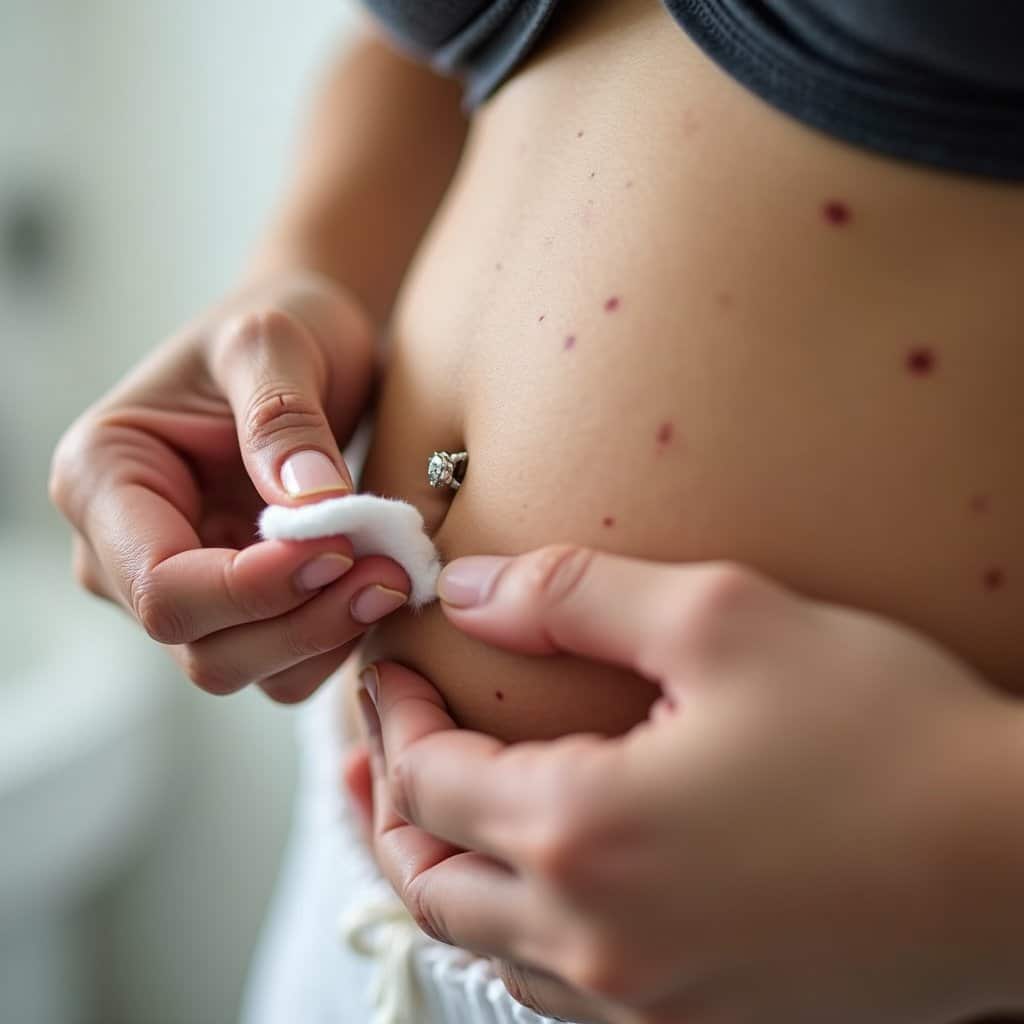
While individual healing times vary based on personal factors, navel piercings typically require 6-12 months for complete healing. During the initial 2-4 weeks, you’ll experience the primary healing stages, characterized by redness, swelling, and possible discharge. Proper piercing care during this period is essential.
Between months 1-3, visible inflammation should subside, though the fistula (piercing tunnel) remains fragile. The 3-6 month period marks significant progress, but the piercing remains vulnerable to trauma and infection.
Only at 6-12 months is healing complete, with the fistula fully formed and mature. Don’t mistake the external appearance of healing for complete recovery, internal tissues heal more slowly and require ongoing attention until the entire healing process concludes.
Why Swimming Poses Risks to Fresh Belly Button Piercings
Although swimming may seem like a harmless activity, it presents considerable risks to healing navel piercings due to multiple infection vectors. Your piercing creates an open pathway directly into your bloodstream, making infection risks markedly higher during the healing period.
Swimming exposes your healing piercing to:
- Chlorine and chemicals that irritate and dry the piercing site, disrupting the healing process
- Waterborne bacteria in pools, lakes, and oceans that can colonize the wound
- Potential physical trauma from water pressure or accidental impact
- Contamination from biofilms that form on swimming facility surfaces
These bacteria exposure hazards considerably increase your chances of developing infection, prolonging healing time, and potentially requiring medical intervention. Swimming should be avoided until your piercing has fully healed.
Different Water Types and Their Effects on Healing Piercings
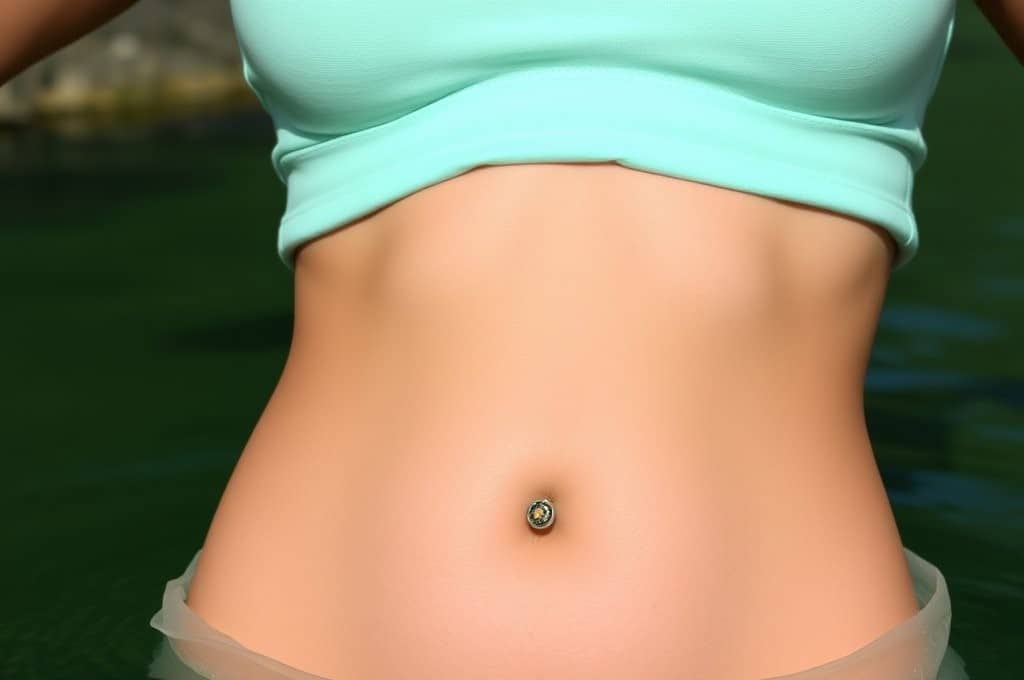
Because each aquatic environment contains unique properties and microbial profiles, different water types pose varying levels of risk to healing belly button piercings.
Ocean water contains salt that may offer some antimicrobial benefits, but also harbors specific bacteria that can cause infection in open wounds. Chlorinated pools present chemical irritants that may dry out and inflame your healing piercing, despite chlorine’s disinfectant properties. Freshwater lakes pose perhaps the highest risk, containing numerous bacteria and microorganisms without any natural disinfecting elements.
The saltwater effects on piercings can vary; while sterile saline solutions are recommended for cleaning, natural saltwater environments aren’t sterile. Bacteria exposure in any water source can trigger healing interruptions, potentially extending your recovery timeline by weeks or causing complications requiring medical intervention.
Signs Your Piercing Is Healed Enough for Swimming
Since belly button piercings require significant healing time before water exposure is safe, you’ll need to identify specific indicators that your piercing has reached adequate healing status. Medical professionals recommend monitoring these key healing indicators to determine swimming readiness:
- Complete absence of discharge; no clear, yellow, or green fluid should be present around the piercing site
- No visible redness, inflammation, or tenderness when touched
- Formation of a healed fistula (the permanent tissue tunnel) that appears pale pink or similar to your natural skin tone
- Free movement of the jewelry without pain or resistance when gently rotated
These clinical markers typically appear after 3-6 months post-procedure, though individual healing trajectories vary based on your aftercare regimen and physiological response.
Protective Measures When Swimming With a Healing Piercing
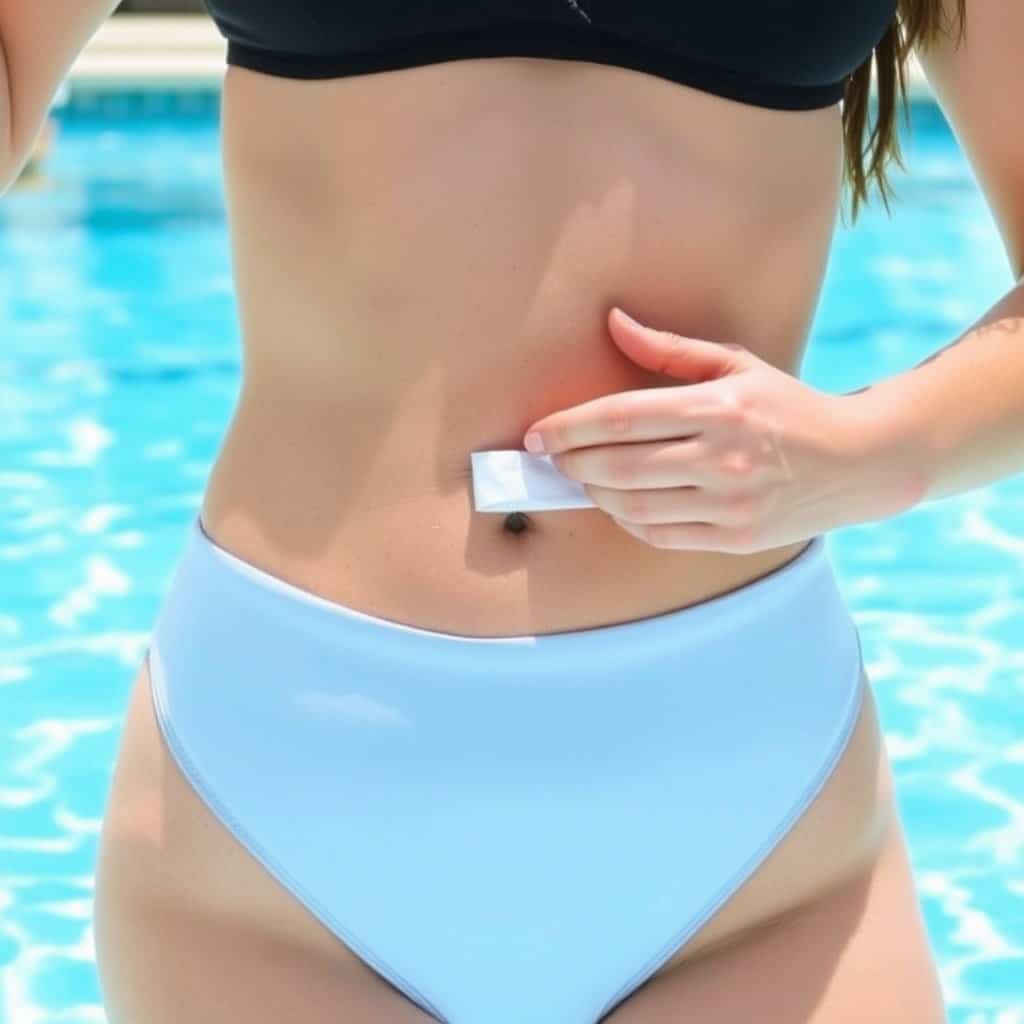
While your belly button piercing continues to heal, you’ll need to implement specific protective measures before swimming to minimize infection risks. Apply waterproof bandages or specialized piercing covers directly over the site, securing all edges to create a water-tight seal. These barriers form essential swimming precautions against potentially harmful bacteria.
For ideal infection prevention, limit water exposure to 30 minutes and immediately clean your piercing afterward using sterile saline solution. Don’t rely on chlorine as a disinfectant, it can irritate healing tissue. Consider wearing high-waisted swimwear for extra protection against friction and contamination. If you notice any redness, increased drainage, or pain post-swimming, consult your piercer or healthcare provider, as these symptoms may indicate complications requiring prompt attention.
Aftercare Tips to Speed Up the Healing Process
Beyond protective swimming measures, consistent aftercare remains the foundation for expediting your belly button piercing’s healing timeline. Clinical studies indicate that proper aftercare protocols greatly reduce healing complications and promote ideal tissue regeneration.
Implement these evidence-based healing techniques:
- Cleanse twice daily with sterile saline solution (0.9% sodium chloride) to remove debris and prevent bacterial colonization
- Avoid alcohol-based aftercare products, which can cause tissue desiccation and delayed epithelialization
- Maintain pressure-free environment by wearing loose-fitting clothing to prevent friction-induced inflammation
- Monitor for signs of infection (erythema, purulent discharge, increased pain) and seek professional evaluation if symptoms develop
Continue these interventions for the full 6-12 month healing period, even after external appearance suggests complete healing, as internal tissue regeneration requires extended time for maximum tensile strength.
Frequently Asked Questions
Can I Wear High-Waisted Swimwear With a New Belly Button Piercing?
High-waisted swimwear may be suitable with a new belly button piercing, as these styles can reduce friction against the jewelry. However, you’ll need to monitor for signs of irritation. The healing process requires keeping the area clean and dry. Swimming introduces bacteria that can cause infections, so it’s advisable to avoid submersion completely until healing is complete (typically 6-12 months). If you must swim, cover the piercing with a waterproof bandage and clean it immediately afterward.
Will Weight Gain Affect My Healing Navel Piercing?
Weight gain can impact your healing navel piercing through several mechanisms. When your body changes, the jewelry may experience increased tension and pressure, potentially irritating the wound site. Tissue expansion during weight gain alters the positioning of the piercing, disrupting the healing factors necessary for proper recovery. You’ll need to monitor your piercing carefully, keeping it clean and possibly consulting your piercer for jewelry adjustments to accommodate these physical changes and prevent migration or rejection.
Can I Get a Spray Tan With a New Belly Button Piercing?
You should avoid spray tans with a new belly button piercing. During the healing process, chemicals in tanning solutions can irritate the wound and potentially cause infection. The piercing creates an open pathway for contaminants to enter your bloodstream. If you’re determined to get a spray tan, wait at least 4-6 weeks until initial healing occurs, and cover the piercing completely with a waterproof bandage. Spray tan safety always requires protecting healing tissue from external agents.
How Do Pregnancy and Belly Button Piercings Interact?
During pregnancy, your belly button piercing may experience significant changes. As your abdomen expands, the piercing can stretch, become irritated, or even reject. If your piercing is fully healed (typically 6-12 months after getting pierced), you can use flexible jewelry like PTFE or silicone to accommodate growth. For new piercings, the healing timeline conflicts with pregnancy changes; medical professionals often recommend removing new piercings to prevent complications or addressing them post-pregnancy.
Are Certain Metals Better for Swimmers With Navel Piercings?
For swimmers with navel piercings, metal selection is essential. You’ll want to choose high-quality surgical steel or titanium options as they resist corrosion from chlorine and saltwater. These biocompatible metals minimize irritation and infection risk in aquatic environments. Titanium offers superior hypoallergenic properties for sensitive individuals, while implant grade surgical steel provides durability. Avoid nickel containing metals, gold under 14k, and silver, as these can deteriorate in water and cause complications at the piercing site.