A pool pump works by using an electric motor to power an internal impeller, which creates centrifugal force to circulate your pool’s water. The pump draws water through a strainer basket that catches debris, then pushes it through your filtration system before returning clean water to your pool via return jets. You’ll find different types available from single-speed to variable-speed models each operating between 1,100 to 3,450 RPM. Understanding your pump’s components and operation will help you maintain crystal-clear water efficiently. When selecting a pump, it’s essential to assess your pool size, the desired flow rate, and energy efficiency. Additionally, factors to consider for pool pumps include noise level, ease of maintenance, and the overall cost of operation.
Key Takeaways
- An electric motor powers an internal impeller that creates centrifugal force to move water through the pool’s circulation system.
- Water enters through the pump’s strainer basket, which catches debris before the water flows into the main pump housing.
- The impeller spins at 1,100-3,450 RPM to draw water from the pool via skimmers and force it through the filtration system.
- Clean water returns to the pool through return jets after passing through the pump and filter system.
- Pumps come in single-speed, dual-speed, or variable-speed options, with variable-speed models offering up to 80% energy savings.
The Basic Components of a Pool Pump
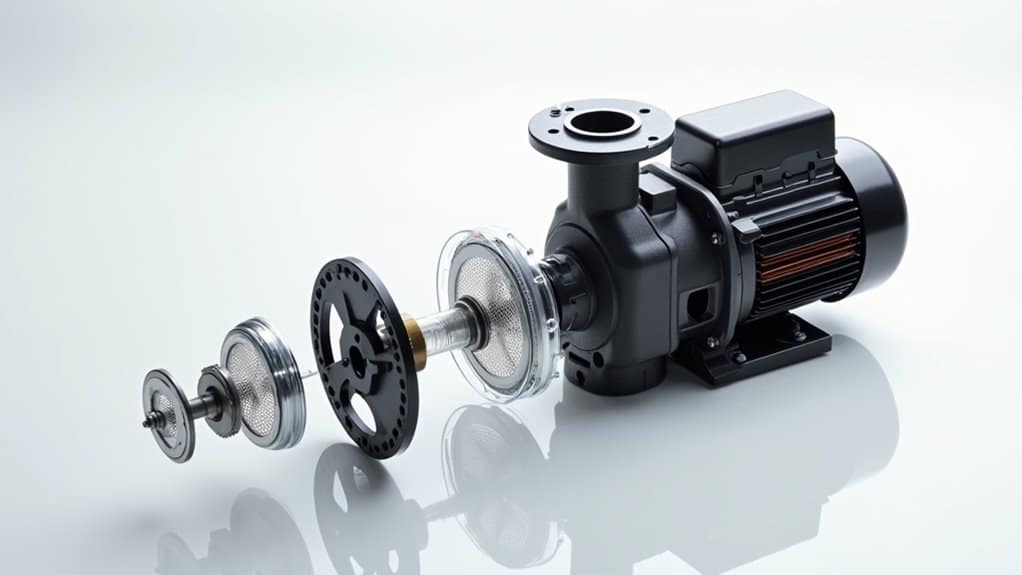
While swimming pool pumps may appear complex from the outside, they consist of several crucial components that work together as a complete system. At the heart of the pump, you’ll find an electric motor that powers an internal impeller, which creates the water movement necessary for circulation.
The pump casing houses these essential components and directs water flow through the system. Inside the casing, you’ll find the suction basket, also known as the strainer basket, which catches debris before it can enter the pump’s mechanical parts. The pump also includes intake and discharge ports, seals to prevent water leakage, and multiple gaskets that maintain proper pressure. All these components connect to your pool’s plumbing system through PVC pipes, creating a continuous flow of water through your pool’s filtration system.
Understanding the Pump’s Motor System

Since the motor serves as the primary powerhouse of your pool pump, understanding its operational system is essential for maintenance and troubleshooting. You’ll find two primary motor types in modern pool pumps: single-speed and variable-speed motors, each affecting pump performance differently.
| Motor Feature | Impact on Operation |
|---|---|
| RPM Range | 1,100 – 3,450 RPM |
| Energy Usage | 0.75 – 3.0 HP |
| Heat Output | 130°F – 180°F |
| Noise Level | 45 – 75 decibels |
Your pump’s motor converts electrical energy into mechanical energy through electromagnetic induction. When you’re selecting a motor, consider its horsepower rating, which directly influences the pump’s flow rate and pressure capabilities. Variable-speed motors offer superior energy efficiency and allow you to adjust the pump performance based on your pool’s specific needs.
The Role of the Impeller
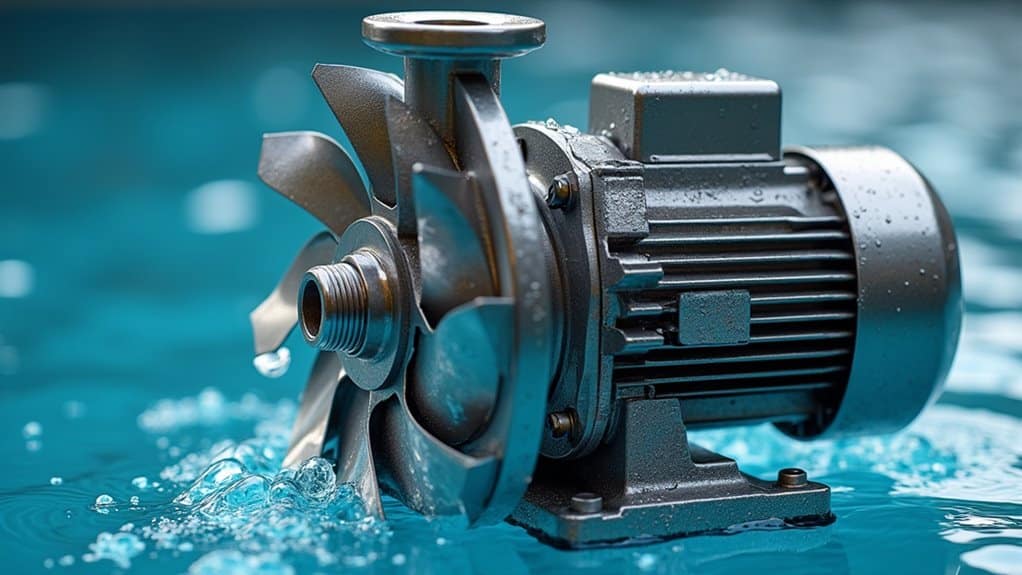
Located at the heart of your pool pump’s mechanical system, the impeller functions as a rotating component that creates the centrifugal force necessary to move water through your pool’s circulation system. The impeller design directly impacts your pump’s overall performance and efficiency.
Your pool pump’s impeller efficiency depends on four critical factors:
- The curved blade configuration that effectively channels water flow
- The clearance between the impeller and the pump housing that minimizes water recirculation
- The material quality that resists corrosion and maintains balanced rotation
- The size and number of vanes that determine water displacement capacity
When you’re maintaining your pump, you’ll want to inspect the impeller regularly for debris buildup or damage, as these issues can greatly reduce its performance and potentially damage other pump components.
Water Flow and Circulation Process
The impeller’s rotational force initiates a thorough water flow process throughout your pool’s circulation system. As the pump creates water pressure, it draws water from your pool through the skimmer and main drain. The water then passes through the pump’s strainer basket, which catches larger debris before it can enter the pump housing.
Your pump’s flow rate determines how quickly water moves through the system. Once the water passes through the pump, it’s forced into your filter system where contaminants are removed. The cleaned water then returns to your pool through the return jets, which are strategically placed to guarantee proper circulation. This continuous cycle maintains your pool’s cleanliness by pushing water through all areas, preventing stagnant zones where algae and bacteria could grow.
Types of Pool Pumps Available
Modern swimming pool owners can choose from three primary pump types: single-speed, dual-speed, and variable-speed models. You’ll find these options available for both above ground and in ground pools, with variable speed pumps being the most energy efficient choice.
- Single-speed pumps operate at one fixed speed and are commonly used with cartridge filters, though they consume the most electricity.
- Dual-speed pumps offer two operating speeds, providing better energy management for automatic cleaners and basic filtration.
- Variable speed pumps allow precise flow control and can reduce energy costs by up to 80%, making them ideal for solar pumps integration.
- Support pumps serve as supplementary units, specifically designed to power pressure-side cleaners and water features that require extra pressure.
Energy Efficiency and Performance
Since pool pumps typically consume more electricity than any other pool equipment, understanding their energy efficiency is crucial for reducing operating costs. You’ll find that modern pumps incorporate energy saving features like variable speed motors and programmable timers that can lower power consumption by up to 80%.
| Feature | Energy Impact |
|---|---|
| Variable Speed | 30-80% savings |
| Timer Control | 20-40% savings |
| Right-Sizing | 10-30% savings |
| Flow Control | 15-25% savings |
To enhance pump efficiency, you’ll want to run your pump at lower speeds for longer periods rather than at high speeds for short durations. This approach reduces resistance in the plumbing system and improves filtration. Furthermore, selecting the correct pump size for your pool’s volume guarantees peak performance without wasting energy on unnecessary power.
Common Maintenance Requirements
Regular maintenance of your pool pump guarantees peak performance and extends its operational lifespan. You’ll need to perform several critical maintenance tasks to keep your pump running efficiently:
- Conduct filter cleaning every 2-4 weeks, depending on usage and debris load, by backwashing the system and cleaning the strainer basket
- Perform seasonal checks before summer and winter, inspecting seals, O-rings, and motor bearings for wear or damage
- Monitor pump pressure readings daily unusual changes may indicate blockages or mechanical issues that require immediate attention
- Check electrical connections quarterly, ensuring they’re tight and free from corrosion, while listening for any unusual noises that might signal bearing problems
These preventive measures will help you avoid costly repairs and maintain ideal water circulation throughout your pool system.
Signs of Pump Problems
Although pool pumps are built to last, recognizing early warning signs of malfunction can prevent system failure and expensive repairs. Watch for unusual pump noises like grinding, screeching, or humming, which often indicate bearing problems or debris in the impeller. If you notice water collecting around the pump’s base, leaking seals are likely the culprit and require immediate attention.
Other warning signs include decreased water flow, inconsistent pressure readings, or the pump failing to prime. You’ll also want to monitor your pump’s performance if it’s cycling on and off frequently, running louder than usual, or displaying error codes on the control panel. Air bubbles in the return jets or a pump that’s abnormally hot to touch suggest potential suction problems that need investigation.
Proper Sizing and Selection
Selecting the right pool pump size involves three critical factors: pool volume, desired turnover rate, and plumbing specifications. You’ll need to calculate these measurements carefully to guarantee ideal pump capacity and flow rate for your specific pool setup.
To properly size your pool pump, follow these essential steps:
- Calculate your pool’s total water volume in gallons (length x width x average depth x 7.5)
- Determine your desired turnover rate (typically 8-10 hours for residential pools)
- Account for your plumbing diameter and filter specifications (1.5″ or 2″ being most common)
- Divide your pool volume by turnover hours to find required gallons per hour (GPH)
Remember that bigger isn’t always better – an oversized pump will waste energy and may damage your filtration system, while an undersized one won’t clean effectively.
Installation Best Practices
While proper sizing is essential, installing your pool pump correctly guarantees peak performance and longevity. Start by selecting a level, well-ventilated pool location for your pump that’s protected from direct weather exposure and flooding risks. You’ll need to mount the pump on a solid concrete pad to minimize vibration and secure stability.
Make sure all plumbing connections are properly aligned and sealed to prevent air leaks. Install the pump as close as possible to the pool to minimize friction loss in the piping. You’ll want to use unions on both the suction and discharge sides for easier maintenance access. Don’t forget to include proper electrical grounding and verify all wiring meets local codes. Install a check valve on the return line if the pump is located below water level.
Frequently Asked Questions
Can I Run My Pool Pump During a Thunderstorm?
You shouldn’t run your pool pump during a thunderstorm due to lightning safety concerns. Electrical equipment can attract lightning strikes, and your pump’s metal components and water connection create extra risks. As part of your storm precautions, turn off and unplug the pump when thunder begins. You’ll also want to disconnect any automatic timers. Wait at least 30 minutes after the last thunder before restarting your pump system.
How Long Can a Pool Pump Run Without Water?
You shouldn’t run your pool pump without water for more than 30 seconds, as doing so can cause severe damage. Without water circulation, the pump’s motor will overheat quickly, leading to seal failure, bearing damage, and potential motor burnout. If you’re draining your pool, always turn off the pump initially. The pump’s duration without water should be minimal to prevent costly repairs or complete replacement.
What Happens if My Pool Pump Freezes in Winter?
If your pool pump freezes in winter, you’ll face serious damage to the pump housing, impeller, and plumbing system. Frozen pipes can crack or burst, leading to expensive repairs. To prevent this during winter maintenance, you’ll need to drain all water from the pump and pipes, install freeze protection devices, or keep your pump running when temperatures drop below freezing. Don’t forget to remove drain plugs and blow out the lines with air.
Why Does My Pool Pump Make a Humming Sound but Not Work?
If your pool pump’s making a humming sound but not working, you’re likely dealing with one of several common issues. The most frequent humming sound causes include a seized motor, clogged impeller, bad capacitor, or worn bearings. As part of proper pool pump maintenance, you’ll need to check these components. Start by turning off the pump, removing debris from the basket, and inspecting the impeller. If these steps don’t help, you’ll need professional servicing.
Can Chlorine Tablets Be Placed Directly in the Pump Basket?
Don’t place chlorine tablets directly in your pump basket as this can cause serious damage to your equipment. The concentrated chemicals will corrode the pump’s internal components and potentially destroy the impeller and housing. For proper chlorine dosage, use a floating dispenser or skimmer basket instead. This practice helps maintain consistent chemical levels while protecting your pump. Regular pump maintenance is essential, and incorrect chemical placement can lead to costly repairs.