You can clean the bottom of your spa in minutes using a battery-powered spa vacuum, which completes a full pass in three to four minutes. For smaller debris spots, a dedicated turkey baster lifts dirt in seconds without draining. A standard garden hose also works as a DIY siphon, just submerge one end where sediment collects and establish suction. Each method below breaks down the exact steps to get your spa floor spotless fast.
Grab a Spa Vacuum to Clean the Bottom Fast
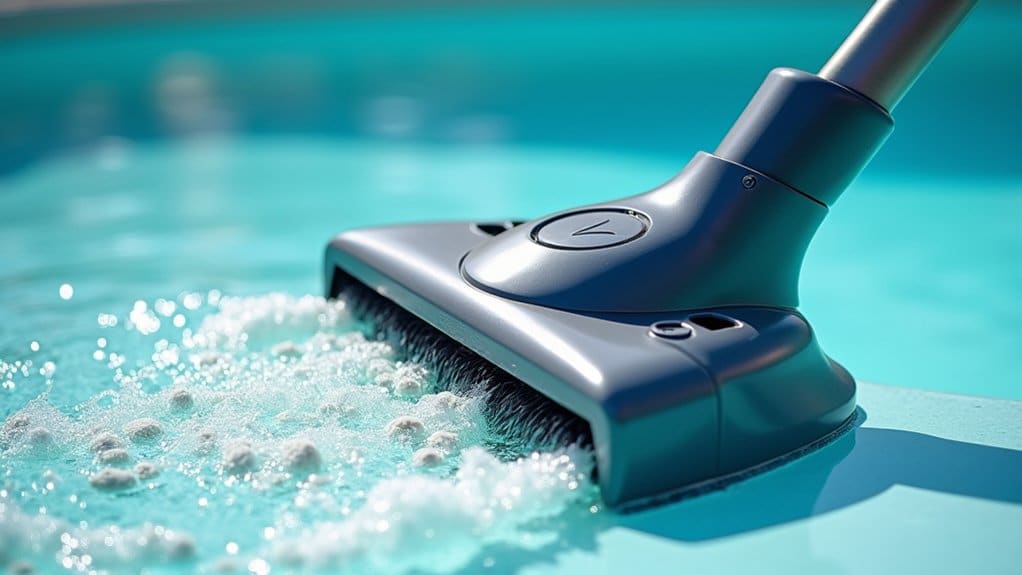
A dedicated spa vacuum is the fastest tool for clearing settled debris from your hot tub floor. Battery-powered models like the Water Tech Volt FX8 complete a full pass in just 3, 4 minutes, making them ideal for routine spa vacuum cleaning methods. Siphon-action options like the Polaris Spa Wand require no batteries or hookups, delivering quick dirt removal through gravity-fed suction. Neglecting regular vacuuming can lead to water quality issues, so staying consistent with this task is essential for a healthy spa.
If you prefer a manual spa vacuum cleaner, connect a vacuum head to your automatic cleaner hose and work the floor in steady passes. For hands-off maintenance, automatic spa vacuum systems handle recurring buildup without intervention. Choose a 75-micron filter bag to balance speed and debris capture, and you’ll keep your spa floor spotless efficiently. For larger pools, robotic cleaners with built-in filtration can catch particles as small as 2 microns, offering far greater precision than standard filter bags. A rechargeable option like the Intex PureSpa Handheld Vacuum even includes an attachment for cleaning spa jets, giving you versatility beyond just floor maintenance.
Use a Turkey Baster for Small Debris Spots
Designate this baster exclusively for spa use, never return it to your kitchen. Pair this spot-cleaning approach with a proper spa floor scrubbing technique during routine maintenance to prevent biofilm accumulation. You’ll handle minor messes in seconds without draining a single gallon.
Build a DIY Siphon to Clean Your Spa Bottom
Why invest in a specialized spa vacuum when a standard 3/4-inch garden hose can siphon debris off your spa floor without batteries, pumps, or any powered equipment? This spa bottom cleaning method requires only two hoses and a household spigot.
First, kill power to the spa. Stretch the primary hose to your discharge area and submerge the male end where sediment collects. Connect a second hose to your spigot and squirt water into the free end until continuous flow establishes. Remove the priming hose once suction holds.
Guide the submerged end across the floor for effective spa sediment removal techniques. Keep the hose underwater to prevent air breaks. This approach complements your spa filtration system performance by extracting particles that settled before reaching the filter.
Run the Jets to Loosen Stubborn Spa Bottom Grime
When you activate your spa’s jets at high speed with all valves open, the powerful water circulation dislodges stubborn grime, biofilm, and sediment trapped along the bottom surface. This agitation forces hidden debris out of crevices and into suspension, where your filtration system can capture it or you can remove it manually. As particles rise and float to the surface, skim them off promptly to prevent them from resettling on the spa floor.
Activate Jets First
Simultaneously, activated jets accelerate biofilm removal by stripping protective bacterial layers from surfaces and internal plumbing. Circulating water distributes sanitizers into hidden accumulation zones that manual scrubbing can’t reach. This pre-treatment loosens initial debris layers, optimizes cleaning solution efficacy, and prevents sediment from resettling during subsequent steps.
Dislodge Hidden Debris
Although activating the jets dislodges surface-level contaminants, stubborn grime trapped in crevices and internal plumbing requires targeted cleaning solutions to break free. Mix one part white vinegar to three parts water as your primary spa surface cleaner solutions to dissolve calcium deposits and bacterial buildup without damaging acrylic finishes.
Pour a half gallon of vinegar into the hot water and let it sit for 15, 20 minutes to loosen embedded residue. Then activate jets for an additional 15-minute cycle to flush loosened debris through the plumbing.
Apply spa brush cleaning methods using gentle circular motions along the spa floor. Use a non abrasive spa brush cleaning technique with your damp vinegar solution to scrub crevices where biofilm collects. Wipe surfaces with a soft cloth to prevent residue spots. After addressing the surfaces, don’t forget how to clean hot tub cartridge filters to ensure your water remains clear and inviting. Begin by removing the filters and rinsing them with a garden hose to eliminate loose debris. For a deeper clean, soak the filters in a specialized cleaning solution, following the manufacturer’s guidelines for best results.
Skim Floating Particles
Once the vinegar solution has broken down embedded residue and you’ve brushed the spa floor clean, the next step is skimming the floating particles that the cleaning process has released into the water. Effective spa leaf and debris skimming requires you to first run the jets briefly, which circulates loosened grime into suspension for easier removal. once you’ve cleared the surface, it’s important to consider how to clean a hot tub filter with vinegar. This natural cleaner not only tackles buildup but also helps eliminate any lingering odors. After the filter has soaked and been rinsed, reassemble it and enjoy a refreshed hot tub experience.
Use a wet/dry vacuum to extract dislodged dirt or sand from the bottom while skimming surface particles simultaneously. This dual approach streamlines your spa water clarity management and prevents settled debris from reattaching. Observe the jets during operation to monitor debris expulsion.
Ensure the pump’s off before any manual jet manipulation. Once you’ve completed skimming, balance your water chemistry to finalize the spa sanitation process and prevent future buildup on cleaned surfaces. To achieve the best results when figuring out how to clear cloudy spa water fast, consider using a clarifier, which can help bond small particles together for easier filtration.
Scrub the Spa Bottom Without Scratching the Surface
Three key factors determine whether you’ll clean your spa bottom effectively without damaging it: the brush type, the cleaning solution, and the scrubbing technique.
Cleaning your spa bottom safely comes down to three essentials: the right brush, the right cleaner, and the right technique.
Soft brush usage prevents scratches on acrylic surfaces while targeting contours and crevices. Pair it with non-abrasive cleaners like a vinegar-water mix (1:3 ratio) or dealer-recommended spa products to dissolve grime safely.
Apply these scrubbing techniques methodically:
- Spray your cleaner across the dry spa floor, letting it sit briefly to loosen oils and deposits.
- Scrub in small sections using gentle circular motions, paying close attention to floorboard areas and crevices.
- Rinse thoroughly with a hose, then use a wet/dry vac to remove residual scum before refilling.
This approach eliminates buildup without compromising your spa’s finish.
Drain and Purge Your Spa for a Deep Clean
| Step | Action |
|---|---|
| Purge lines | Circulate cleaner at 95°F+ with jets on high |
| Cut power | Turn off breaker and remove filters |
| Drain water | Attach hose to drain valve or use a sump pump |
| Remove residual water | Wet/dry vacuum the footwell and absorb remaining moisture |
This spa drain and refill cleaning method is essential to any thorough spa maintenance routine.
Wipe and Rinse Every Surface After Draining
After you’ve fully drained the spa, grab a soft damp cloth or sponge and apply a mild diluted dishwashing soap or a dedicated spa surface cleaner, like Marquis Spa Bright All-Purpose Cleaner, to wipe down the entire shell.
Follow this methodical sequence:
- Scrub the bottom and walls using gentle circular motions to lift oils, scale, and biofilm without scratching acrylic surfaces.
- Rinse all surfaces thoroughly with a garden hose, directing water into the skimmer to flush hidden residue.
- Dry the shell with a clean cloth or wet/dry vac to remove remaining water.
Before refilling, confirm your spa water testing kits and spa test strips monitoring supplies are stocked. Consistent residential hot tub maintenance practices guarantee you won’t encounter stubborn buildup between drains.
Prevent Spa Bottom Debris From Piling Up Again
Once you’ve scrubbed, rinsed, and refilled your spa, the next priority is keeping that clean bottom from collecting debris all over again. Start with consistent cover use, replace it immediately after each session to block leaves, dirt, and airborne particles. On windy days, add a temporary screen for extra protection.
Rinse your feet before entry to minimize sediment introduction, a simple step that dramatically reduces hot tub floor cleaning needs. Maintain sanitizer levels between 3, 5 ppm to prevent spa biofilm buildup removal from becoming a recurring task.
For effective spa water quality control, clean filters regularly and add scale control products if you have calcium-rich water. Invest in a spa vacuum for routine debris removal, and use a turkey baster for small particle piles between deeper cleanings.
The Backyard You’ve Always Wanted Starts Here
Your dream outdoor space deserves more than a standard pool, it deserves a design built around your lifestyle and vision. At Cristallo Pools, our award-winning team specializes in custom pool construction, spa additions, complete backyard makeovers, and concierge maintenance, delivering resort-style results that go far beyond what typical pool contractors offer. Call +1 (561) 766-0353 today and let us bring your vision to life.
Frequently Asked Questions
How Often Should Spa Water Be Completely Replaced for Hygiene?
You should completely replace your spa water every 3, 4 months under standard usage conditions. If you’re a heavy user soaking 4, 5 days weekly, you’ll need to shorten that interval. Saltwater systems can extend replacement to approximately one year. Monitor your TDS levels and water clarity regularly, don’t rely solely on schedules. You can also perform partial water changes of one-third volume every 3, 4 weeks to maintain ideal hygiene between full replacements.
What Sanitizer Level Prevents Biofilm From Forming on Spa Surfaces?
You’ll prevent biofilm from forming on spa surfaces by maintaining chlorine levels between 3 and 5 ppm or bromine levels between 4 and 6 ppm. Test your sanitizer daily, since hot water accelerates chemical degradation quickly. After each soak, apply 28 to 56 g of MPS non-chlorine shock to oxidize organics and boost sanitizer efficiency. You should also guarantee consistent circulation to eliminate dead zones where sanitizer levels drop.
Can a Wet/Dry Shop Vac Safely Clean a Filled Spa?
You shouldn’t use a standard wet/dry shop vac to clean a filled spa. You’ll risk electrical hazards since you must maintain at least 2 metres between the appliance and water sources. Accidental splashes near electrical outlets can cause short circuits or shock. Instead, you’ll get better results using a spa-specific vacuum designed for submerged cleaning. These purpose-built devices safely remove debris without introducing dangerous electrical risks into your spa’s water environment.
What Water Temperature Encourages Bacteria Growth in a Dirty Spa?
Spa water between 77°F and 113°F (25°C, 45°C) encourages rapid bacterial growth, and your spa’s typical operating range of 98.6°F, 104°F falls right in the danger zone. At 98.6°F, bacteria like Legionella and Pseudomonas can divide every 14, 30 minutes, reaching millions within hours. You won’t kill these organisms until you exceed 122°F (50°C). That’s why you must maintain sanitizer levels between 3, 5 ppm and clean your spa floor regularly.
Does Unbalanced Calcium Hardness Cause Deposits on Spa Bottoms?
Yes, unbalanced calcium hardness directly causes mineral deposits on your spa’s bottom. When levels exceed 400 ppm, excess calcium carbonate precipitates out of the water and attaches to surfaces, forming crusty scale. You’ll notice rough textures and cloudy water as scaling develops. To prevent this, you should maintain calcium hardness between 200 and 400 ppm. Test your water regularly and keep pH between 7.2 and 7.8 to minimize deposit formation.