To dispose of pool chemicals safely, you’ll need to inspect each container for damage, keep products sealed and labeled, and separate incompatible substances, chlorine away from acids and oxidizers. Don’t mix chemicals or add water during handling. Transport them upright, with liquids positioned below solids, to your local household hazardous waste facility. Follow the facility’s posted quantity limits and intake protocols exactly. Each step below breaks down the full process so you can handle disposal with confidence.
Know Why Pool Chemicals Need Special Disposal
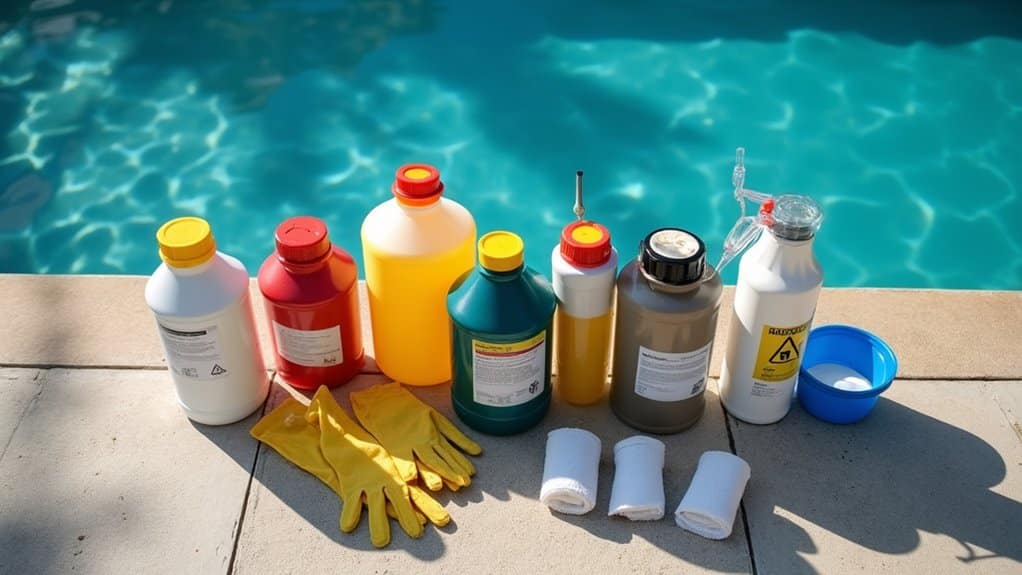
Because pool chemicals contain highly corrosive and reactive substances like sodium hypochlorite, you can’t treat them like ordinary household waste. These hazardous household chemicals react dangerously with ammonia, vinegar, and organic materials, producing toxic gases or triggering fires. Improperly stored or expired products become unstable, amplifying these risks considerably.
Environmental protection regulations exist specifically because improper disposal contaminates soil, water, and air. When pool chemicals reach landfills or wastewater systems, they harm aquatic ecosystems and degrade water quality. Chemical spill prevention requires you to maintain sealed, labeled containers in cool, dry storage areas until proper disposal occurs. Chemicals should always be stored below 95°F/35°C and under conditions specified by the manufacturer to prevent degradation before disposal. The majority of pool supply stores will also accept unwanted chemicals and properly discard them on your behalf.
You should utilize household hazardous waste programs offered by your local municipality. These programs guarantee specialized handling that safeguards your community from accidental exposure while keeping dangerous substances out of vulnerable environmental systems.
Check the Label on Every Pool Chemical First
Before disposal, verify container integrity and maintain sealed container storage before disposal to prevent leaks during transit. If chemicals show corrosion, crystallization, or discoloration, they’re compromised and demand immediate containment in secondary leak-proof vessels. Label compliance isn’t optional, it’s your legal and safety obligation.
Find a Hazardous Waste Drop-Off for Pool Chemicals
Most pool chemicals, chlorine compounds, muriatic acid, algaecides, qualify as household hazardous waste (HHW) and can’t go in curbside trash, down storm drains, or into landfills like Marana Regional Landfill, which explicitly rejects them.
You’ll need to locate municipal hazardous waste facilities that accept these materials. Tucson’s Los Reales Sustainability Campus (5300 E. Los Reales Rd.) takes pool chemicals Thursday through Saturday, 7 a.m., 2 p.m., with a 10-gallon fluid limit. Trained staff apply chemical neutralization methods and dilution disposal guidelines specific to each compound’s reactivity profile. City residents bring proof of residency; non-city residents pay $10.
For toxic chemical handling safety, keep containers sealed, labeled, and separated by chemical class during transport. Never combine chlorine products with acids, even residual mixing risks chlorine gas generation.
Separate Pool Chemicals Before You Transport Them
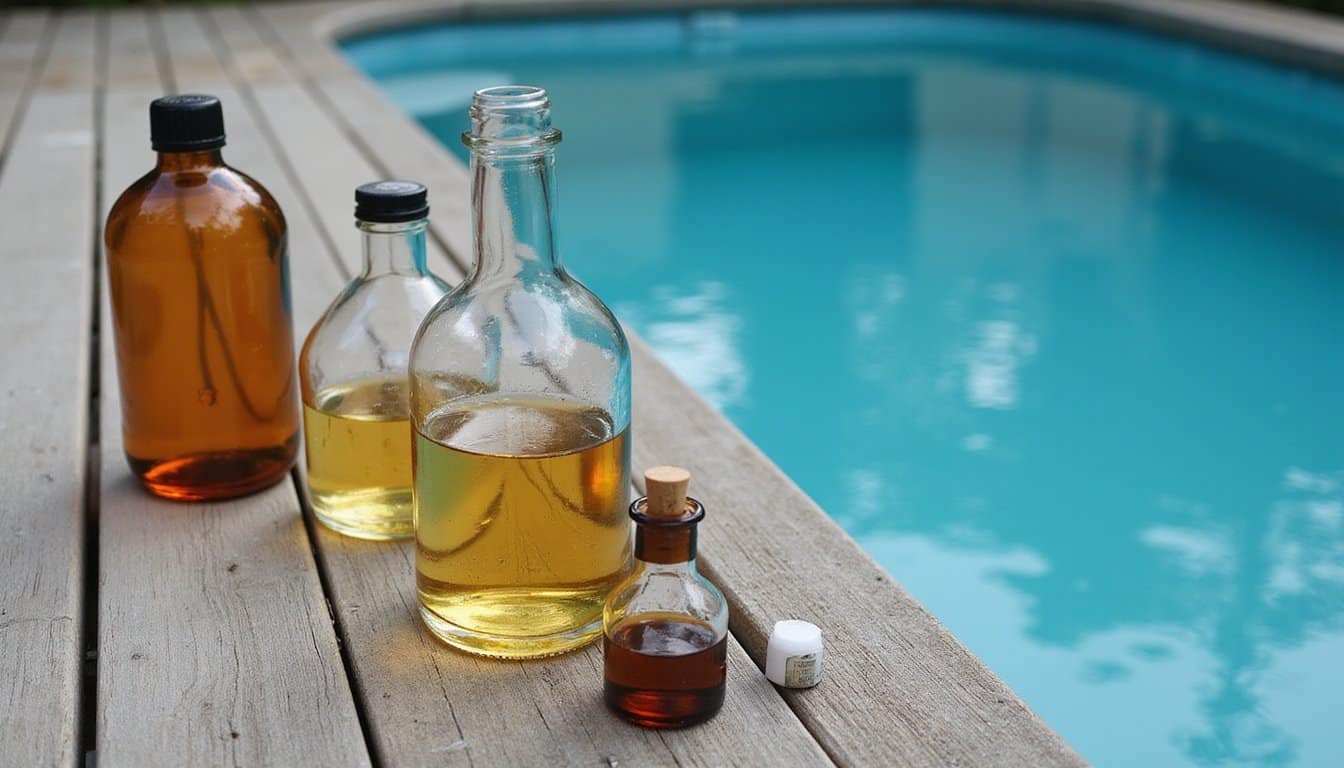
- Keep chlorine products isolated from acids, non-chlorine oxidizers, and different chlorine brands in separate bins.
- Position liquids below solids to prevent seepage onto incompatible chemicals.
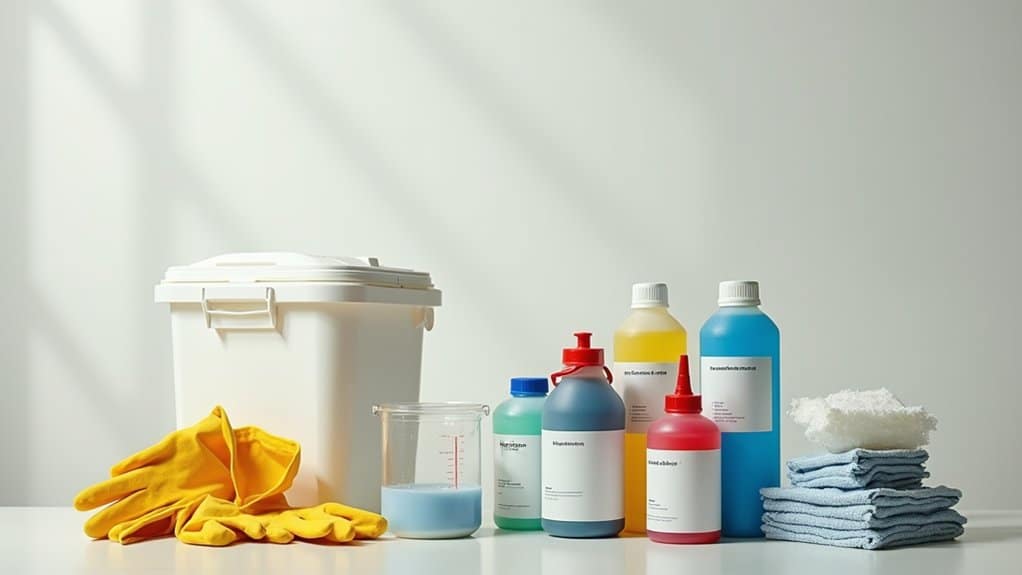
- Handle one chemical type at a time while wearing gloves and protective glasses.
- Don’t allow water contact with any container during packing.
Dispose of Pool Chemicals at Your Local Facility
Once you’ve separated your pool chemicals for transport, you’ll need to locate an authorized household hazardous waste (HHW) drop-off facility that accepts oxidizers, acids, and chlorine compounds. When you arrive, follow the facility’s intake protocols precisely, present chemicals in their original, sealed, and labeled containers, observe posted quantity limits, and never combine incompatible substances during handoff. Keeping chemicals properly separated throughout the disposal process isn’t just best practice; it’s a critical safety requirement that prevents dangerous reactions such as chlorine gas release.
Find HHW Drop-Off
Because pool chemicals qualify as household hazardous waste (HHW), you can’t place them in your regular garbage, instead, you’ll need to bring them to an authorized HHW drop-off facility for proper disposal. Approved swimming pool chemical disposal methods require you to transport materials in sealed, labeled containers of five gallons or smaller, positioned upright in a plastic-lined box.
- Hennepin County facilities accept pool maintenance chemical waste Tuesday through Saturday, 9 a.m. to 5 p.m., at Bloomington and Brooklyn Park locations.
- Ramsey County Environmental Center in Roseville handles residential pool maintenance waste handling Tuesday through Saturday during posted hours.
- Anoka County’s Centerville facility serves county residents with valid ID for environmental contamination prevention drop-offs.
- Multi-county eligibility extends acceptance to residents of Anoka, Carver, Dakota, Ramsey, Scott, and Washington counties at Hennepin facilities.
Follow Facility Guidelines
Dropping off pool chemicals at an authorized facility is only part of the process, you’ll also need to follow specific protocols that govern how those materials are received, handled, and processed. Before transporting materials, contact Local Waste Authority to confirm accepted chemical types, quantity limits, and packaging requirements.
You must follow Product Label Instructions for each product’s handling and containment specifications during transport. Review Safety Data Sheets to identify material-specific hazards, emergency procedures, and any pre-treatment steps the facility may require upon intake. Keep SDS documents accessible throughout the drop-off process.
Facility staff may enforce segregation rules to prevent incompatible chemical reactions, don’t combine containers. Observe Local Regulations governing disposal methods, container conditions, and documentation requirements. Non-compliance can result in rejected materials or legal penalties. Always verify facility-specific intake procedures ahead of your visit to guarantee a compliant, efficient drop-off.
Separate Chemicals Properly
Before you load any pool chemicals into your vehicle, you’ll need to segregate them by hazard class to prevent dangerous reactions during transport. Chemical segregation practices require you to store oxidizers like calcium hypochlorite completely separate from corrosives such as muriatic acid. Combining these creates an incompatible chemical mixing danger that can produce toxic fumes. The chlorine gas hazard risk intensifies in enclosed vehicles where ventilation is limited.
Follow these protocols to guarantee proper labeling of chemical waste and safe transport:
- Keep oxidizers away from acids and flammables in separate, sealed containers during vehicle loading.
- Maintain all chemicals in original manufacturer-labeled packaging to certify that facility personnel can identify contents accurately.
- Never stack incompatible chemical classes in the same cargo area.
- Secure containers upright to prevent leaks, spills, or cross-contamination.
Recycle or Trash Empty Pool Chemical Containers
Once you’ve used up a pool chemical, don’t assume the empty container is safe for standard recycling. Whether it held calcium hypochlorite pool shock, polyquat algaecide, or chlorine tablet disposal products, residue can trigger hazardous reactions. Wash containers thoroughly before disposal and place them in your garbage cart, never the recycling bin.
Replace cracked or deteriorating containers immediately. Don’t reuse old chemical containers for any purpose, as cross-contamination risks remain. If you’re managing safe transport of pool chemicals to a disposal site, keep original containers tightly sealed and intact.
Items labeled “Danger” or “Poison” require household hazardous waste handling. Check with your local solid waste district for specific container disposal protocols before discarding anything curbside.
Ready to Turn Your Backyard Into Something Extraordinary?
Your dream outdoor space deserves more than a standard pool, it deserves a design built around your lifestyle and vision. At Cristallo Pools, our award-winning team specializes in custom pool construction, spa additions, complete backyard makeovers, and concierge maintenance, delivering resort-style results that go far beyond what typical pool contractors offer. Call +1 (561) 766-0353 today and let us bring your vision to life.
Frequently Asked Questions
Can I Pour Small Amounts of Expired Pool Chemicals Down the Toilet?
No, you shouldn’t pour expired pool chemicals down the toilet, even in small amounts. Federal regulations classify them as household hazardous waste, prohibiting disposal through drains, toilets, or sinks. Mixing with ammonia or organic materials in your plumbing can produce deadly chlorine or phosgene gas. You’ll also risk contaminating water systems and septic tanks. Instead, take them to a designated hazardous waste facility or use your municipality’s scheduled collection program for safe disposal.
How Long Do Pool Chemicals Last Before They Need Disposal?
Your pool chemicals’ shelf lives vary considerably by type. Liquid chlorine degrades fastest, you’ll lose 50% potency within six months. Trichlor tablets last longest, retaining 98% effectiveness for up to five years when you store them sealed at 50, 70°F. Granular chlorine remains viable over five years in airtight, cool, dry conditions. pH balancers, algaecides, and clarifiers typically last three to five years. Once expired, you must dispose of them through authorized hazardous waste collection programs.
What Happens if Pool Chemicals Accidentally Spill on My Lawn?
If pool chemicals spill on your lawn, you’ll likely see grass discoloration and potential damage, especially with concentrated chlorine or acid-based products. You should immediately dilute the affected area by hosing it down with fresh water to reduce chemical concentration. Chlorine above 10 ppm can harm vegetation and disrupt beneficial soil microbes. You’ll want to direct any runoff away from storm drains and monitor the area for recovery.
Can I Donate Unused Pool Chemicals to a Neighbor or Community Pool?
You shouldn’t donate unused pool chemicals to neighbors or community pools. Donating transfers liability to the recipient, and you can’t verify the chemicals’ storage history or stability. Community pools must follow EPA-regulated protocols that prohibit accepting undocumented chemical sources. Instead, contact your local waste management facility about household hazardous waste collection events. You can also consult the manufacturer’s disposal instructions or reach out to your local hazardous materials group for approved procedures.
How Should I Store Pool Chemicals While Waiting for a Collection Event?
You should store pool chemicals in their original sealed, labeled containers in a cool, dry, well-ventilated area below 95°F. Keep acids separated from chlorine products, and separate all chlorine types from each other. Store liquids below solids to prevent reactive spills. Secure the area from children and pets using locking mechanisms. Don’t place containers near ignition sources, and keep Safety Data Sheets and PPE accessible nearby.