
To eliminate mustard algae from your pool, you’ll need a multi-step approach that goes beyond standard shocking. Start by cleaning your filter and disinfecting all pool accessories with a bleach-water solution. Balance your pH to 7.4, then brush all surfaces thoroughly to break the algae’s grip. Apply a specialized mustard algae algaecide and triple-shock your pool. The complete treatment process below covers each critical step for permanent removal.
What Is Mustard Algae and How to Identify It
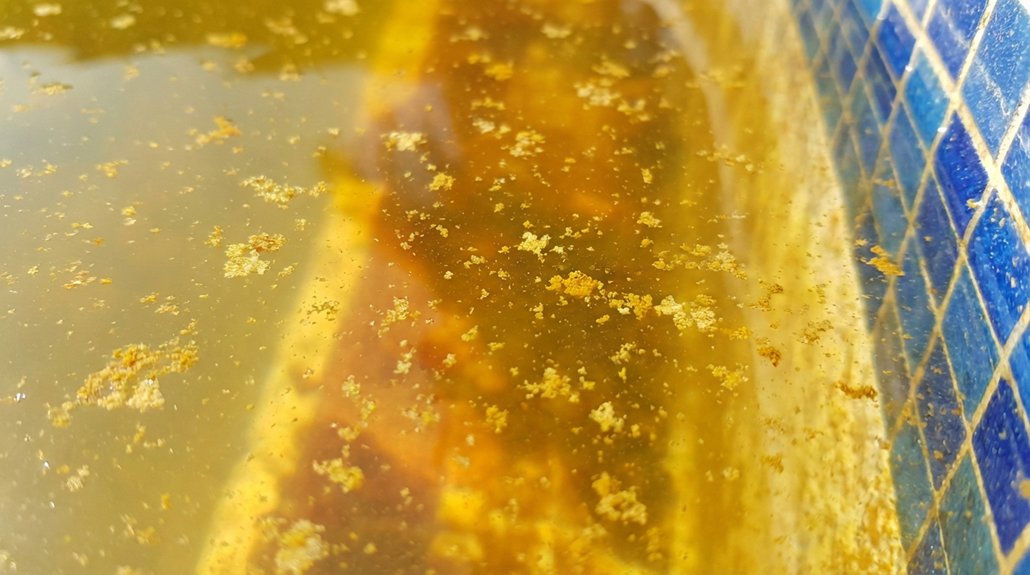
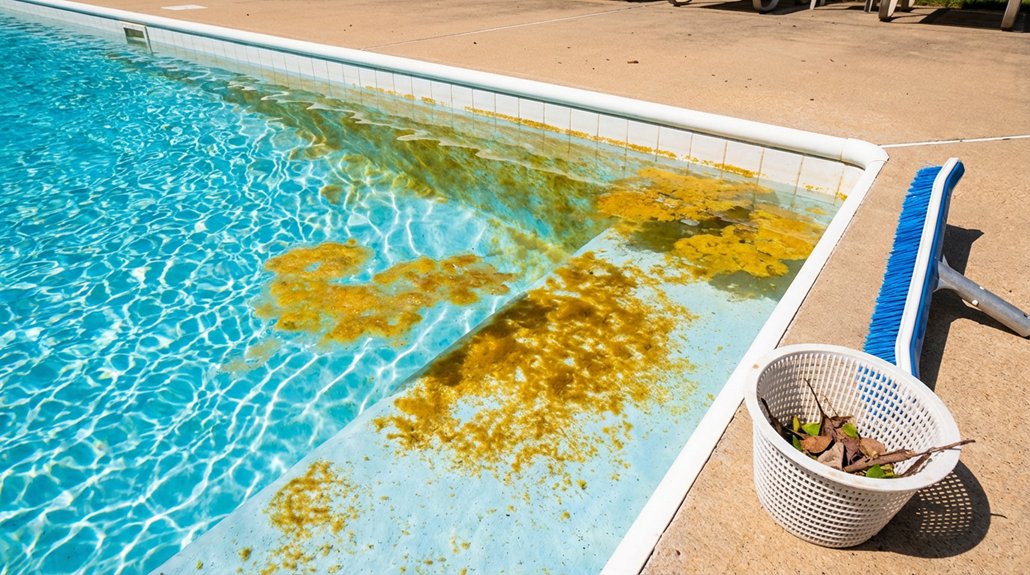
Mustard algae is a chlorine-resistant strain of green algae that lacks sufficient chlorophyll, giving it a distinctive yellow to brownish-green appearance rather than the typical green coloration. Understanding how to identify mustard algae starts with recognizing its unique mustard algae appearance, it resembles dirt, sand, or pollen clinging to pool surfaces. When assessing your pool for potential contamination, it’s crucial to look for the presence of this algae, especially in corners and shaded areas where sunlight is limited. Identifying mustard algae in pools can also involve checking for a slimy texture on surfaces, which can indicate its growth.
You’ll find it forming dusty patches or streaks on walls, floors, steps, and behind ladders. It prefers shaded areas with poor water circulation. The texture feels slimy yet brushes off easily. Here’s your identification test: scrub the suspicious spot and observe. If it returns within one to two days despite treatment, you’re dealing with mustard algae. Unlike green algae, it doesn’t cause cloudy water. Mustard algae belongs to the free-floating algae category, which means it can exist throughout the water column before settling on surfaces. Be aware that mustard algae can quickly spread to pool equipment, toys, and even swimwear that comes into contact with contaminated water. Left untreated, mustard algae can clog the filtration system and make your pool look dirty and uninviting.
Why Mustard Algae Is Harder to Kill Than Green Algae
Once you’ve confirmed mustard algae is the culprit, you’ll need to understand why it won’t respond to the same treatments that kill green algae. Mustard algae has developed significant chlorine resistance through thicker cell walls at the molecular level, allowing it to survive in sanitized water where green algae would die.
Its growth habitats also differ substantially. While green algae floats freely and thrives in sunlit areas, mustard algae contains higher beta-carotene levels, enabling photosynthesis in low-light conditions. You’ll find it clinging to shaded walls, corners, steps, and pool equipment. This stubborn algae forms slimy yellowish patches on pool surfaces that can easily be mistaken for dirt or sand. Understanding the causes of algae in pools is crucial for effective prevention and treatment. Factors such as inadequate circulation, poor water chemistry, and sunlight exposure can contribute to algae growth.
Green algae responds to superchlorination alone, but mustard requires specialized algaecides and thorough brushing. It also attaches to accessories, ladders, and toys, creating recontamination sources that standard treatments miss entirely. Because algae spores are airborne and can enter a pool through wind, rain, or contaminated equipment, mustard algae can return even after successful treatment if proper prevention measures aren’t maintained.
Essential Preparation Steps Before Treatment
Before you begin treating mustard algae, you’ll need to complete three critical preparation steps that determine whether your treatment succeeds or fails. Start by cleaning your filter system, then disinfect all pool equipment and accessories that could harbor algae spores, and finally balance your water chemistry to ideal levels. Ensure your water pH is adjusted to the ideal level of 7.4 before beginning treatment. Skipping any of these steps allows algae to reestablish itself within days of treatment. This is especially important because mustard algae is chlorine-resistant, making thorough preparation essential for effective elimination. You should also shock the pool after balancing chemicals to kill any existing algae spores before beginning your targeted mustard algae treatment.
Clean Your Filter First
Although you might be enthusiastic to start shocking your pool, cleaning your filter first is a critical step that directly impacts treatment success. Your filtration system harbors algae spores that will recontaminate the water if left untreated. Start by turning off the pump and releasing pressure through the air relief valve. Relieving this pressure prevents potential hazards and allows for smooth cartridge removal from the filter tank.
Remove your filter cartridge carefully, noting its orientation. Rinse with a garden hose at a 45-degree angle, directing water between pleats from top to bottom. For deep cleaning, soak cartridges overnight in a filter cleaner solution to break down oils and algae buildup. If your filters have visible algae coating or mineral deposits, follow the TSP soak with a muriatic acid wash using a 1:20 acid-to-water ratio until bubbling stops.
After soaking, scrub gently with a soft-bristled brush. Inspect for damage before reinstalling, and replace filters as needed since neglecting maintenance results in reduced water circulation and increased chemical consumption. Secure the clamp, restart your pump, and verify normal pressure readings before proceeding with algae treatment. Regular checks of your filtration system can help prevent costly repairs and ensure the longevity of your pool equipment. If you’re unsure about performing these tasks yourself, consider hiring professional pool maintenance services to keep everything in optimal condition.
Disinfect Pool Equipment Thoroughly
Because mustard algae spores cling to every surface they contact, you’ll need to disinfect all pool equipment before chemical treatment begins.
Start by disassembling skimmer baskets, pump baskets, and filter components. Remove your pool brush, vacuum hoses, ladders, and any floats from the pool area. Detach heaters, chlorinators, and secondary sanitation systems for individual cleaning.
Soak all removable parts in a 1:10 bleach-water solution for 24 hours. For non-removable surfaces, apply calcium hypochlorite directly and scrub thoroughly. Target yellow algae spots on ladders and hoses with algaecide applications. Calcium hypochlorite is one of the inorganic chlorine-releasing compounds that provides fast-acting and effective algaecidal properties ideal for this disinfection process. The bleach solution works by producing hypochlorous acid, which effectively inactivates and kills pathogens including the stubborn mustard algae spores.
After disinfection, rinse components with fresh water and allow complete air-drying. Inspect each piece for remaining algae stains before reassembly. Remember that algae can protect itself with a biofilm slime, making thorough inspection critical before declaring equipment clean. Reinstall equipment carefully, checking seals and O-rings, then run circulation for 4-6 hours to verify treatment efficacy.
Balance Water Chemistry
Proper water chemistry creates the foundation for effective mustard algae elimination, so you’ll need to test and adjust five critical parameters before adding any algaecide or shock treatment.
Start by measuring total alkalinity, which should fall between 80-120 ppm to buffer pH fluctuations. Once TA stabilizes, adjust pH to 7.2-7.6 for ideal chlorine effectiveness. Unbalanced pH can cause skin irritation and significantly reduce your sanitizer’s ability to kill algae.
| Parameter | Target Range |
|---|---|
| Total Alkalinity | 80-120 ppm |
| pH | 7.2-7.6 |
Wait 12 hours between adjustments to allow chemicals to integrate fully. Test calcium hardness (200-400 ppm) and cyanuric acid (30-50 ppm) next. CYA levels above 50 ppm reduce chlorine’s disinfection capability, which directly undermines your algae treatment efforts. Complete all balancing before proceeding to shock treatment.
Proper Brushing Techniques for Different Pool Surfaces
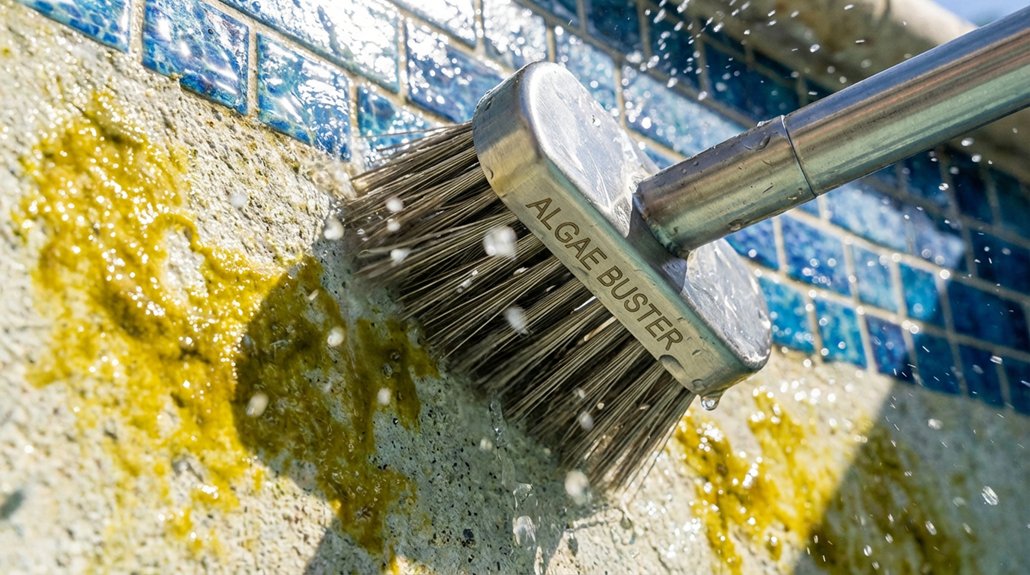
Selecting the right brush type ranks among the most critical steps in effective mustard algae removal. For vinyl and fiberglass pools, use nylon brushes to prevent surface damage while effectively dislodging algae. Concrete and gunite pools require stainless steel brushes to penetrate porous surfaces where spores hide. In addition to choosing the appropriate brush, regular maintenance and monitoring of water chemistry can significantly reduce the chances of mustard algae growth. Ignoring these factors can lead to increased risks of mustard algae exposure, which can affect not only the aesthetic quality of your pool but also the health of swimmers.
Begin brushing walls from the tile line downward, applying firm, overlapping strokes. Focus on shaded areas where mustard algae typically congregates. Move to the floor, working from the shallow end toward the main drain in the deep end.
Don’t overlook steps, ladders, and crevices, these spots harbor stubborn algae colonies. Use specialty corner brushes for hard-to-reach areas. Thorough brushing disrupts algae’s protective layer, exposing it to chlorine treatment and preventing the incomplete removal that causes recurring infestations.
Chemical Treatment Options for Mustard Algae Removal
When standard chlorine treatments fail against mustard algae’s chlorine-resistant defenses, you’ll need to escalate to specialized chemical protocols. The Yellow Out application method works by boosting chlorine effectiveness, requiring you to add 5 ounces per 10,000 gallons followed by immediate brushing and shocking. For severe infestations, the triple shock treatment process calls for applying 3 pounds of calcium hypochlorite per 10,000 gallons at night to maximize chlorine penetration without sun degradation.
Yellow Out Application Method
Before applying Yellow Out to your pool, you’ll need to verify your water chemistry meets specific parameters: pH at 7.8 or higher, chlorine levels between 2-2.5 ppm, alkalinity balanced at 80-120 ppm, and cyanuric acid maintained at 25-75 ppm.
Yellow Out functions as a chlorine accelerator rather than a traditional algaecide. Add 2 pounds per 15,000 gallons for standard mustard algae removal.
| Application Step | Action Required |
|---|---|
| Pre-treatment | Brush all affected surfaces thoroughly |
| Distribution | Spread half along perimeter, half on problem areas |
| Wait period | Pause 5 minutes before adding shock |
| Shock addition | Add 2 lbs calcium hypochlorite per 15,000 gallons |
| Circulation | Run pump 24 hours using main drain |
Triple Shock Treatment Process
Triple shock treatment ramps up chlorine levels to concentrations that overwhelm mustard algae’s natural resistance. You’ll need to apply pool shock three separate times with 12-hour intervals between each dose. Use 2 pounds of shock per 15,000 gallons of water for each application. Your target is reaching 10-12 ppm free chlorine throughout the treatment process.
Apply your first pool shock at dusk to minimize UV degradation. Run your pump continuously for the next 24-36 hours. After 12 hours, add your second shock dose. Wait another 12 hours, then apply the third and final treatment.
Brush all pool surfaces thoroughly before each chlorine application. This exposes hidden algae cells to the heightened chemical concentrations. Once you complete the final 12-hour circulation period, clean your filter to remove trapped debris.
The Triple Shock Method for Stubborn Yellow Algae
Stubborn mustard algae demands an aggressive three-stage shocking protocol that delivers chlorine at levels far exceeding standard treatment. When learning how to get rid of mustard algae, you’ll need to apply three pounds of calcium hypochlorite shock per 10,000 gallons, divided across three separate applications.
Space each dose 12 hours apart to maintain consistently heightened chlorine levels. This approach is how to kill mustard algae in pool environments where single treatments have failed.
Choose shock products with high available chlorine percentages for maximum effectiveness. Apply each treatment at dusk since UV light degrades chlorine rapidly, you’ll lose approximately 1 ppm per hour in direct sunlight. Run your pump continuously for 24 hours after each application to guarantee thorough circulation and chemical distribution throughout the water.
Post-Treatment Water Maintenance and Monitoring
Once you’ve completed the triple shock protocol, your work shifts from active algae destruction to systematic water maintenance that prevents regrowth. You’ll need to test chlorine levels daily since chlorine kill mustard algae only when concentrations remain heightened. Run your filter continuously until water clears completely, then backwash to remove dead algae debris.
| Monitoring Task | Frequency | Target Range |
|---|---|---|
| Chlorine testing | Daily | 3-5 ppm |
| pH adjustment | Daily | 7.2-7.6 |
| Phosphate testing | Post-treatment | Below 100 ppb |
Apply algaecide kill mustard algae formulations designed for chlorine-resistant strains. Test phosphate levels after treatment since dying algae release nutrients that fuel regrowth. Maintain 6-8 hours of daily filtration during summer months to guarantee consistent circulation throughout your pool.
Long-Term Prevention Strategies to Keep Mustard Algae Away
Everything you’ve done to eliminate mustard algae means nothing without a disciplined prevention system. You must test water chemistry weekly, maintaining pH between 7.4-7.6 and free chlorine at recommended levels. Keep phosphates below 100 ppb to starve potential algae growth.
Run your pump at least eight hours daily to prevent stagnant zones where mustard algae hides. Apply preventative algaecides weekly following manufacturer dosages, products like Leslie’s Algae Control target spores before they establish. Use water clarifiers to remove microscopic particles that standard filtration misses.
Clean all pool equipment with diluted bleach solutions regularly. Trim nearby vegetation to reduce organic debris entering the water. Cover your pool when not in use to limit environmental contamination. This multi-layered approach blocks mustard algae’s return permanently.
Frequently Asked Questions
Can Mustard Algae Make Swimmers Sick if They Swim Before Treatment?
Yes, swimming in a pool with mustard algae can make you sick. The algae creates breeding grounds for harmful bacteria like E. coli. You risk developing skin rashes, ear infections, and eye irritation from contact. If you accidentally swallow contaminated water, you may experience fever and diarrhea. Additionally, the slippery algae coating on surfaces increases your injury risk. You shouldn’t swim until you’ve completed full treatment.
How Long After Treatment Is It Safe to Swim Again?
After chlorine-based shock treatment, you’ll need to wait 8 to 24 hours before swimming. Your free chlorine level must drop to 5 ppm or below, ideally between 1 and 3 ppm. Run your pump for at least 8 hours to circulate chemicals properly. Always test your water with strips or a kit before re-entry. If you’ve used non-chlorine shock, you can typically swim within 15 to 30 minutes.
Will Mustard Algae Damage Pool Equipment if Left Untreated for Weeks?
Yes, mustard algae will damage your pool equipment if left untreated for weeks. The algae attaches to ladders, slides, diving boards, toys, floats, and solar covers, where spores persist indefinitely. Your filter system becomes clogged as algae accumulates, reducing circulation efficiency. Because mustard algae is chlorine-resistant, standard sanitation won’t eliminate it from contaminated surfaces. You’ll face cross-contamination risks when reusing affected equipment, making complete decontamination essential during treatment.
Can Mustard Algae Spread From One Pool to Another Through Shared Toys?
Yes, mustard algae can spread from one pool to another through shared toys. Because it’s chlorine-resistant and clings to surfaces rather than floating freely, it survives on damp floats, equipment, and accessories moved between pools. You’ll need to rinse and disinfect all shared items with chlorine-based cleaners before introducing them to your pool. Soak potentially contaminated gear during shock treatment and maintain 4 ppm free chlorine to prevent transferred spores from establishing.
Does Draining the Pool Completely Eliminate Mustard Algae Faster Than Chemical Treatment?
No, draining your pool won’t eliminate mustard algae faster than chemical treatment. Draining removes visible algae but leaves microscopic spores embedded in surfaces, walls, and equipment. You’ll still need to scrub everything and risk recontamination when refilling.
Chemical treatments like Yellow Out eliminate mustard algae within 24 hours when combined with proper chlorine levels. They target chlorine-resistant spores directly without water loss or labor-intensive mechanical removal afterward.