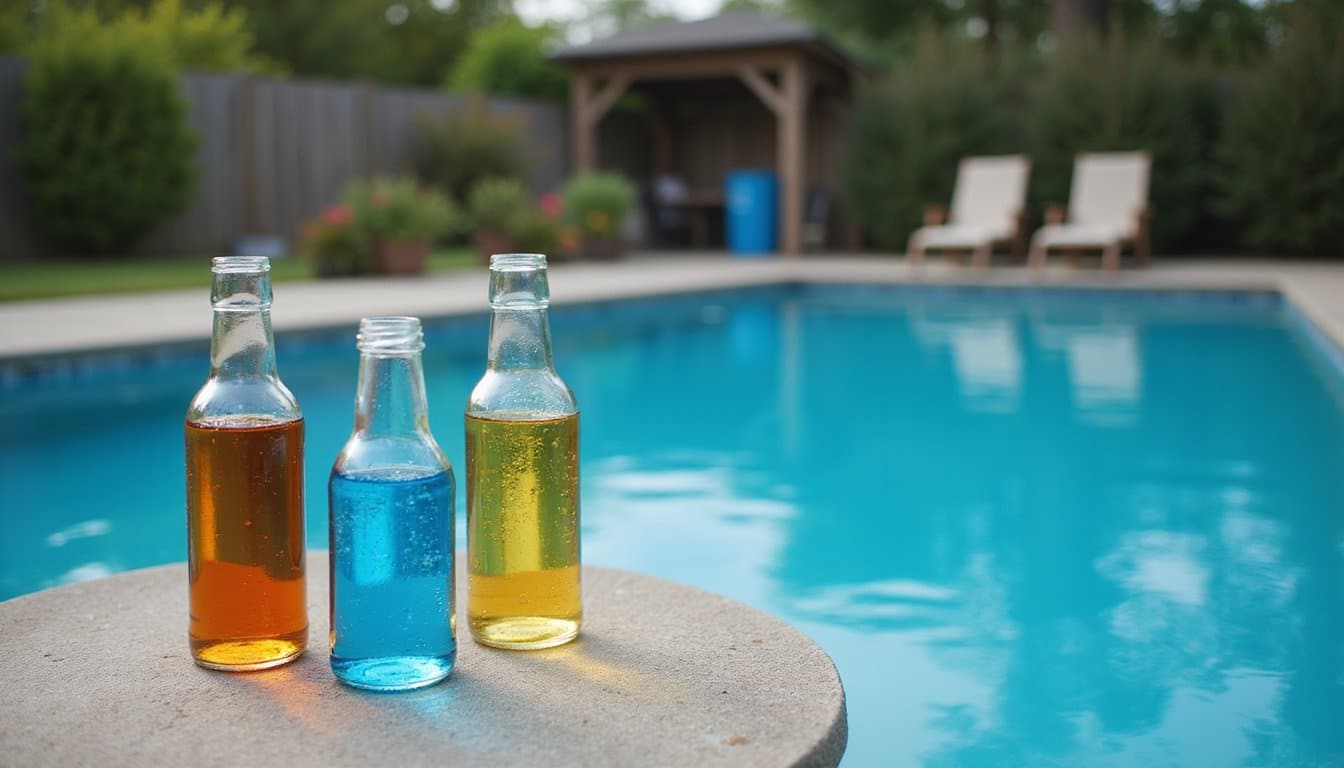
You can lower your pool’s pH naturally by adding vinegar or lemon juice (pH 2.0, 3.0) near the return jets while running your pump for even distribution. A 10, 25% partial drain and refill with fresh or distilled water will reduce pH by 0.1, 0.2 units per 10,000 gallons. You’ll also want to maintain consistent skimming, vacuuming, and filter cleaning to prevent organic debris from disrupting your water’s chemistry. Each method below breaks down the exact steps you’ll need.
Lower Pool pH Naturally With Vinegar or Lemon Juice
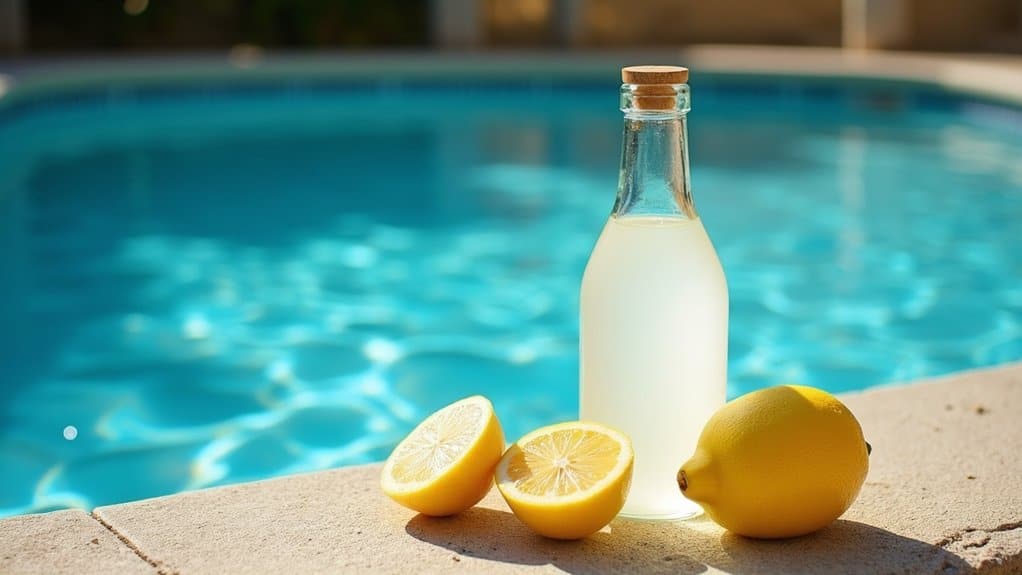
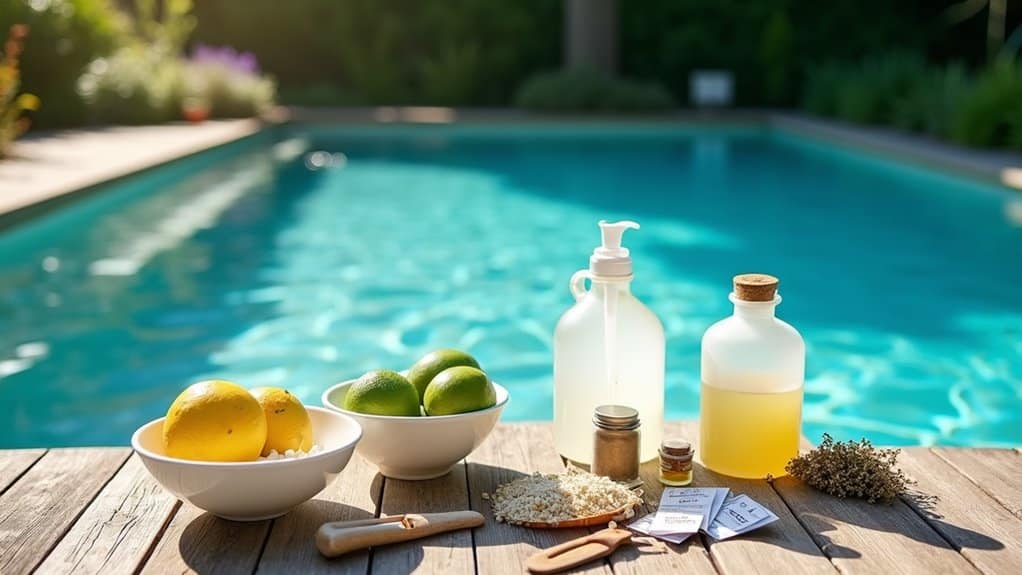
When your pool’s pH climbs above the ideal 7.2, 7.8 range, common household acids like vinegar and lemon juice offer a chemical-free alternative for bringing it back down. Both substances register a pH of 2.0, 3.0, making them effective natural ph reduction techniques for swimming pool water chemistry adjustments.
To implement these pool ph reduction methods, test your water first, then add the juice of one lemon or an equivalent vinegar measure near return jets. This guarantees pool water circulation improvement distributes the acid evenly. Run your pump continuously during dissolution, as aeration impact on pool chemistry affects results. Retest after full circulation completes. Add incrementally, pool ph balance management requires patience. Before adjusting pH, make sure to address total alkalinity first, since alkalinity acts as a buffer that stabilizes pH levels and influences how effectively your corrections hold. Since pool water quality management depends on precision, consistent retesting prevents over-correction across varying pool sizes. Keeping pH within the proper range is essential because high pH reduces chlorine effectiveness, leaving your pool vulnerable to bacteria and algae. While vinegar is a cost-effective option, keep in mind that its persistent aroma may not appeal to every pool owner.
Dilute High Pool pH With Fresh or Distilled Water
Because heightened pool pH often stems from accumulated mineral concentrations and alkalinity buildup, diluting your pool water with fresh or distilled water provides a straightforward, chemical-free correction method. You’ll achieve ideal results by combining Fresh Water Dilution with Distilled Water Use for precise pool water dilution techniques.
| Method | pH Impact per 10,000 gal | Best Application |
|---|---|---|
| Partial Drain Refill | 0.1, 0.2 unit reduction | High-alkalinity pools |
| Rainwater Addition | Gradual lowering | Supplemental dilution |
| Water evaporation and refill dilution | Variable | Routine maintenance |
Execute a 10, 25% Partial Drain Refill, then refill using fresh or distilled sources. Run your pump during addition for uniform mixing and employ AerationReductionAid by limiting fountains to prevent CO2 off-gassing. Retest pH after 15, 20 minutes of circulation to confirm you’ve reached the 7.2, 7.6 target range.
How Regular Cleaning Helps Lower Pool pH Naturally
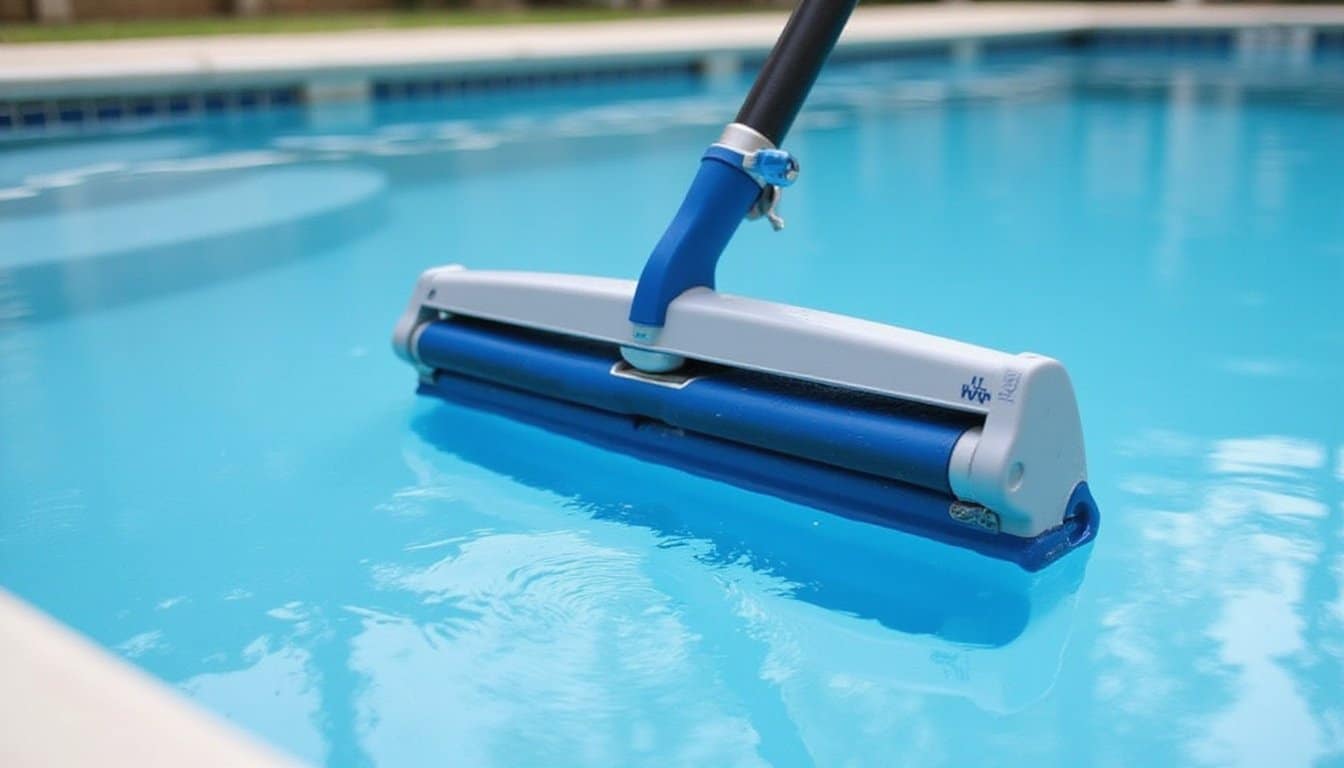
A consistent pool cleaning regimen directly targets the organic contaminants and biological growth that drive pH upward, giving you a chemical-free pathway to stabilize water chemistry within the ideal 7.2, 7.8 range.
Effective pool maintenance practices restore pool water equilibrium chemistry through these critical steps: Effective pool maintenance practices restore pool water equilibrium chemistry through these critical steps, including understanding how long after adding chemicals to pool can you swim to ensure both safety and proper chemical balance:
- Skim and vacuum regularly to remove organic debris before decomposition triggers pH shifts, complementing filtration system optimization efforts.
- Clean filters biweekly to maintain flow rates that support the carbon dioxide aeration method for natural pH balance.
- Remove algae promptly using natural algaecides, preventing biological activity that elevates alkalinity beyond correction through dilution with fresh water alone.
- Monitor post-storm conditions since the rainwater dilution effect introduces contaminants requiring immediate removal.
Unlike carbon dioxide injection systems, consistent cleaning prevents pH problems rather than correcting them reactively.
Why Your Pool pH Keeps Rising on Its Own?
Even with a disciplined cleaning routine in place, you’ll notice your pool pH drifting upward repeatedly, and that’s not a maintenance failure but a predictable outcome of physics and chemistry working against you. Carbon dioxide offgassing drives dissolved carbon dioxide equilibrium toward the atmosphere, reducing carbonic acid and raising pH through your pool’s carbonate-buffering system. Algae-activity compounds this by consuming CO₂ directly. Sanitizer effects from liquid chlorine and salt systems introduce alkaline byproducts, while high-alkalinity factors set heightened pH ceilings. Environmental temperature influences accelerate every reaction. Even with a disciplined cleaning routine in place, you’ll notice your pool pH drifting upward repeatedly, and that’s not a maintenance failure but a predictable outcome of physics and chemistry working against you, especially when considering what chemicals are needed to close an inground pool as part of overall water balance strategy. Carbon dioxide offgassing drives dissolved carbon dioxide equilibrium toward the atmosphere, reducing carbonic acid and raising pH through your pool’s carbonate-buffering system. Algae activity compounds this by consuming CO₂ directly. Sanitizer effects from liquid chlorine and salt systems introduce alkaline byproducts, while high-alkalinity factors set heightened pH ceilings. Environmental temperature influences accelerate every reaction.
| pH Driver | Mechanism |
|---|---|
| CO₂ Off-Gassing | Henry’s Law pushes dissolved CO₂ into air |
| Algae Growth | Depletes carbonic acid, spiking pH above 8.2 |
| Chlorine Byproducts | Sodium hydroxide elevates pH persistently |
| Warm Temperatures | Concentrates minerals through evaporation |
When to Let Pool pH Drop Without Any Intervention
Though your instinct may be to reach for muriatic acid the moment pH climbs above 7.4, certain conditions actually favor a hands-off approach, letting natural chemistry do the correcting. Understanding the alkalinity and pH relationship helps you recognize when dissolved carbon dioxide equilibrium will self-correct minor elevations through pool filtration and circulation balance.
Monitor these scenarios before intervening with total alkalinity adjustment strategies:
- pH reads between 7.6, 7.8 and trends downward after overnight aeration sessions lasting 4, 6 hours.
- Recent rainwater addition below 5% pool volume introduces slight acidity, supporting natural decline.
- Low-mineral water replacement creates conditions for gradual pool water stabilization methods.
- Weekly testing confirms steady drift toward 7.2, 7.8 during stable weather.
These sustainable pool maintenance strategies and pool chemistry troubleshooting techniques prevent unnecessary chemical interventions. Maintaining pool water chemical balance is essential for maximizing the effectiveness of these strategies. Regular testing and adjustment of pH and chlorine levels can help ensure a clean and safe swimming environment. This proactive approach not only enhances enjoyment but also extends the lifespan of pool equipment.
Ready to Turn Your Backyard Into Something Extraordinary?
Your dream outdoor space deserves more than a standard pool, it deserves a design built around your lifestyle and vision. At Cristallo Pools, our award-winning team specializes in custom pool construction, spa additions, complete backyard makeovers, and concierge maintenance, delivering resort-style results that go far beyond what typical pool contractors offer. Call +1 (561) 766-0353 today and let us bring your vision to life.
Frequently Asked Questions
Can Pool Heating Naturally Help Lower High pH Levels Over Time?
No, heating your pool won’t lower high pH levels, it actually raises them. When you heat your water, you accelerate CO2 loss through aeration and evaporation, which drives pH upward. Warmer temperatures also concentrate dissolved minerals and alkalinity as water evaporates, further elevating pH. You’ll need more frequent acid-based adjustments to counteract these effects. Instead, focus on dilution with lower-alkalinity fresh water and maintain alkalinity between 80, 120 ppm for stable pH control.
How Does Aeration Affect Pool pH Balance and Carbon Dioxide Levels?
Aeration drives dissolved carbon dioxide out of your pool water through surface turbulence from fountains, jets, and waterfalls. As CO₂ escapes, carbonic acid decreases, shifting the carbonate equilibrium and raising your pH, not lowering it. You’ll notice faster pH rises with higher alkalinity, warmer temperatures, and increased surface agitation. To counteract this, you should direct return jets downward, reduce water features, and maintain lower carbonate alkalinity to minimize CO₂ off-gassing.
Does Heavy Rainfall Effectively Lower Swimming Pool pH Levels Naturally?
Yes, heavy rainfall effectively lowers your pool’s pH naturally. Rainwater typically measures between 5.0 and 5.6 pH, acting as a mild acid when it enters your pool. You’ll notice it dilutes alkalinity by 5, 10 ppm daily during prolonged storms, shifting water chemistry toward acidity. You should test pH immediately after rain and run filtration for 8, 12 hours to stabilize conditions. Monitor chlorine levels simultaneously, since rain dilutes sanitizer concentration alongside pH.
What Is the Ideal Filtration Turnover Rate for Stabilizing Pool pH?
You should aim for a complete water turnover every 6 to 8 hours, cycling your pool’s entire volume through the filtration system 3 to 4 times daily. To calculate your required flow rate, divide your pool’s total gallons by the desired turnover hours, then divide by 60 to determine your minimum GPM. This consistent circulation guarantees pH-adjusting treatments disperse uniformly, preventing localized chemical imbalances that destabilize your pool’s pH levels.
How Long Does Natural pH Drift Take to Noticeably Reduce Levels?
Natural pH drift typically takes days to weeks before you’ll notice a measurable reduction. You should test your water twice weekly during swim season to track gradual changes. As minerals accumulate and CO2 off-gasses through normal circulation, you’ll observe slow downward movement in pH readings. You can accelerate this timeline by combining partial water replacement, consistent filtration turnover, and aeration adjustments, monitoring results after each 24-hour circulation cycle to confirm noticeable progress.