
To use chemical monitors in your swimming pool, start by selecting a monitoring system that matches your needs from basic DIY test kits to advanced automated controllers. Install the sensors on your pool’s return line after the filter, ensuring proper calibration before use. You’ll need to track essential parameters like pH (7.2-7.8), chlorine (1-3 ppm), and alkalinity (80-120 ppm). Regular maintenance and sensor cleaning will maximize accuracy. Understanding the full capabilities of your monitoring system will transform your pool maintenance routine. Consider integrating automated pool chemical management systems to streamline your maintenance tasks further. These systems automatically adjust chemical levels based on real-time readings, allowing for consistent water quality with minimal manual intervention.
Understanding Different Types of Pool Monitoring Systems
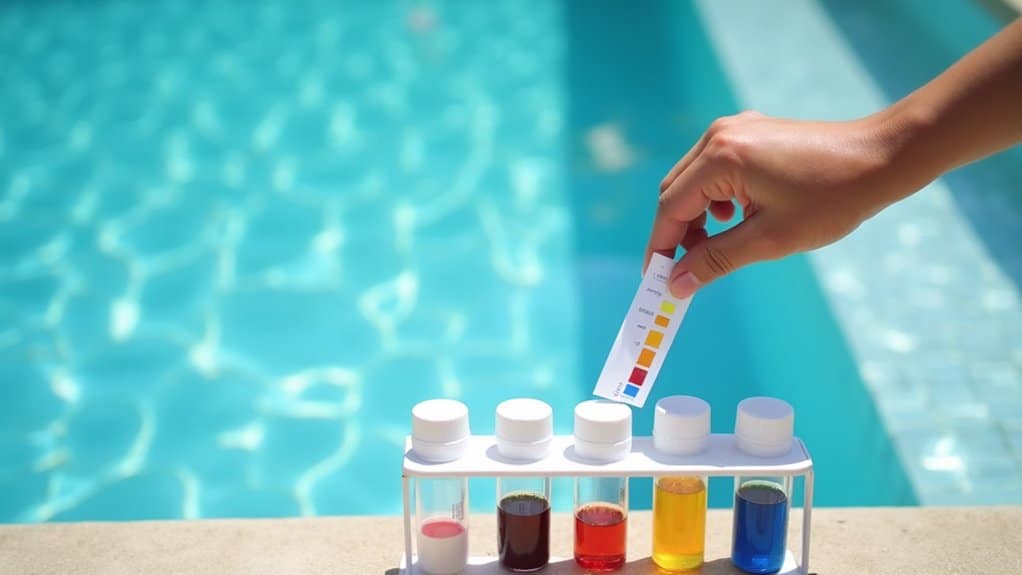
When choosing a pool monitoring system, you’ll find five distinct categories ranging from sophisticated industrial solutions to basic DIY test kits. Industrial automated systems offer advanced monitoring techniques through sensor-controller combinations, while smart wireless systems provide real-time data through mobile apps for chemical balance optimization. These advanced systems use pH and ORP sensors to continuously monitor water quality.
Handheld wireless devices eliminate the need for reagents, offering quick results through portable testing units. For budget-conscious pool owners, DIY electronic meters present a middle-ground solution, providing digital readings for basic parameters like pH and chlorine. The most basic option, DIY test kits, uses colorimetric methods and test strips for manual testing.
Each system has specific applications: industrial for commercial pools, smart wireless for data-driven maintenance, handheld for residential convenience, and DIY options for basic monitoring needs.
Essential Chemical Parameters to Monitor
Regular monitoring of five essential chemical parameters guarantees a safe and balanced swimming pool environment. You’ll need to maintain pH balance between 7.2-7.8 to confirm sanitizer effectiveness and swimmer comfort. Keep chlorine levels at 1-3 ppm for proper disinfection, while using alkalinity control (80-120 ppm) to prevent pH fluctuations. Monitor calcium hardness at 200-400 ppm to protect your pool’s surfaces and equipment from scaling or corrosion. For outdoor pools, you’ll want to track cyanuric acid levels at 30-50 ppm to stabilize chlorine against UV degradation. Test pH and chlorine weekly, with more frequent checks during heavy use periods. Digital testing equipment provides quick and accurate readings for reliable monitoring. Measure alkalinity and calcium hardness every 1-2 weeks, and cyanuric acid bi-weekly, adjusting chemicals incrementally to maintain ideal ranges. Using salt chlorine generators can help maintain more consistent chlorine levels while providing gentler water for swimmers. Liquid test kits offer more accurate results compared to basic testing strips for comprehensive water analysis.
Selecting the Right Chemical Monitor for Your Pool

Five key factors should guide your selection of a chemical monitor for your pool: compatibility, monitoring frequency, sensor capabilities, connectivity features, and user experience.
First, verify monitor compatibility with your pool type. If you have a saltwater pool, choose devices like the iopool or WaterGuru Sense S2. For continuous monitoring, select the Crystal Smart Water Monitor or pHin. Consider sensor capabilities based on your specific needs the Solaxx SafeDip offers thorough testing of multiple parameters, while others focus on essential measurements like pH and sanitizer levels. These devices help maintain real-time monitoring to ensure optimal water conditions throughout the swimming season. Additionally, digital calculators for pool maintenance make it easier to balance chemicals by providing tailored recommendations based on your pool’s water parameters, simplifying and speeding up the process.
Your user preferences should dictate connectivity requirements. If you prefer smartphone integration, the Ondillo Ico or iopool provide real-time updates and dosage recommendations. For simpler operation, the Solaxx SafeDip’s LCD display offers straightforward readings without requiring app connectivity. Regular monitoring through these devices helps extend equipment lifespan by preventing harmful chemical imbalances.
Proper Installation of Pool Monitoring Equipment
Successful installation of pool monitoring equipment demands careful attention to both placement and preparation. When following installation tips, you’ll need to drill precise holes, install tube fittings with proper gaskets, and route tubing without kinks. Select a mounting location on the return line after the filter for accurate readings. The Jandy Aqualink RS integrates seamlessly with chemical monitoring controls for comprehensive pool maintenance. A waterproof project box is essential to protect sensitive monitoring components from moisture damage.
For ideal equipment selection and setup, follow these critical steps:
- Test water chemistry before installation to establish baseline levels
- Calibrate probes using reference solutions to guarantee measurement accuracy
- Configure alert systems and connectivity options for remote monitoring
Mount your monitor in an accessible spot away from direct sunlight and standing water. Use manufacturer-approved tubing materials and secure all connections with compression nuts. Don’t forget to perform leak tests at normal operating pressure before finalizing the installation.
Setting Up Automated Chemical Controllers
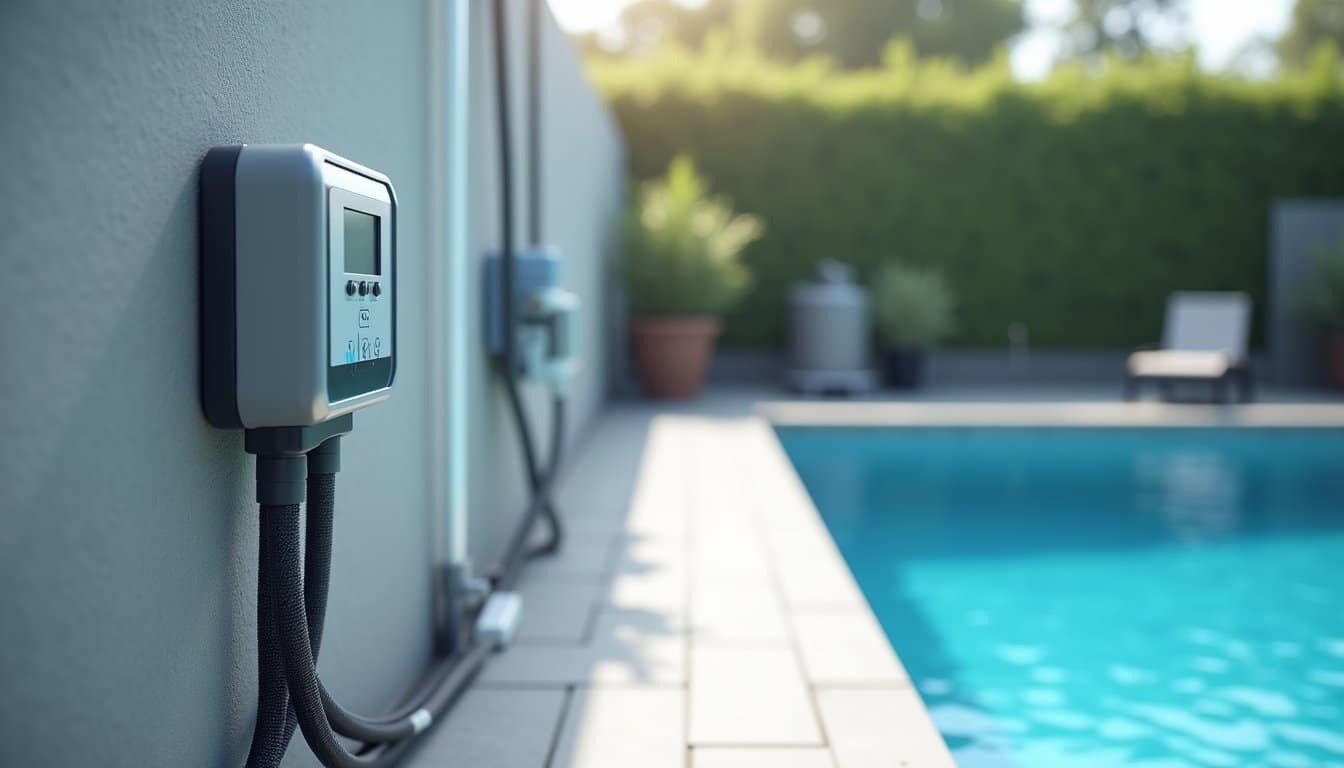
Building upon proper equipment installation, the setup of automated chemical controllers requires methodical configuration to maintain ideal pool chemistry. Begin by testing and balancing your pool’s pH, alkalinity, and calcium hardness levels manually before initiating automated setup procedures. You’ll need to configure feed times and alarm thresholds while ensuring sensors are properly positioned 6-12 inches below the water surface. A complete control system will require professional expertise to ensure proper integration with your pool’s existing equipment.
Next, adjust your chemical dosing parameters by setting appropriate scale factors for free chlorine and ORP measurements. Fine-tune your controller’s proportional factors and pulse width settings to match your pool’s volume and feeder capacity. Don’t forget to establish deadband thresholds for pH control and configure prime feed times during peak usage periods. Finally, sync your controller with other pool systems and enable remote monitoring capabilities for thorough chemical management.
Maintaining and Calibrating Pool Sensors
To maximize your pool sensors’ service life, you’ll need to maintain a strict schedule of cleaning and calibration based on manufacturer guidelines and usage patterns. Calibrate pH probes when readings appear inaccurate using fresh buffer solutions. You should gently clean probe surfaces with approved solutions whenever readings drift beyond 0.5 pH units or 1 ppm chlorine, taking care not to damage sensitive electrodes during the maintenance process. Electrochemical sensors are critical components that require special attention during maintenance. The automated monitoring provided by systems like Resilience D Plus eliminates manual testing and ensures consistent water quality. Regular calibration checks using proper standards and avoiding over-calibration will guarantee your chemical monitoring system continues to provide accurate, reliable readings throughout the swimming season.
Probe Cleaning Best Practices
Three essential cleaning methods form the foundation of proper chemical monitor maintenance in swimming pools. Start with mechanical scrubbing using a soft brush and dish detergent, followed by acidic soaking for mineral deposits, and finish with targeted calcium removal through post-soak brushing. Regular maintenance helps prevent inaccurate readings from contaminated probes. Advanced controllers like the Prominent DCM5 can measure both free and total chlorine levels. Maintaining optimal sensor performance requires routine calibration checks according to manufacturer guidelines.
For effective probe maintenance, follow these critical cleaning techniques:
- Use toothpaste with a soft brush specifically on white sensor rings
- Avoid abrasive materials that can damage probe surfaces
- Allow a one-hour reacclimation period after cleaning
After cleaning, you’ll need to thoroughly rinse with fresh water and properly reinstall probes without over-tightening. Don’t forget to store probe tips in non-corrosive solutions between cleanings to prevent membrane damage. For pools with high bather loads, you’ll need to increase your cleaning frequency to maintain accurate readings.
Calibration Frequency Guidelines
Regular calibration serves as the cornerstone of accurate chemical monitoring in swimming pools. You’ll need to adjust your sensor calibration frequency based on usage patterns and environmental conditions. Calibrate before first use, monthly during peak seasons, and after exposure to extreme conditions. Utilizing high-quality pH sensors ensures reliable measurement data between calibrations.
| Condition | Required Action | Calibration Timing |
|---|---|---|
| Initial Setup | Baseline Calibration | Before First Use |
| Peak Season | Regular Checks | Monthly |
| Heavy Usage | Performance Verification | After Each Event |
| Temperature Shifts | Sensitivity Adjustment | >10°C Change |
| Reading Inconsistency | Full Recalibration | Immediate |
Monitor your sensors for signs of wear, drift, or contamination. When readings deviate from manual test results, perform immediate calibration. Always use manufacturer-certified solutions and document each calibration to maintain compliance and guarantee peak performance of your chemical monitoring system.
Extending Sensor Service Life
Since proper maintenance directly impacts sensor longevity, implementing an extensive care routine will maximize your chemical monitors’ service life. To achieve ideal sensor longevity techniques, you’ll need to combine regular cleaning with protective measures against environmental stressors.
Key protective measures to extend service life include:
- Rinse sensors with fresh water after each use and employ soft-bristled brushes for stubborn residue removal
- Store sensors in climate-controlled environments using manufacturer-recommended storage solutions
- Shield devices from UV exposure and maintain stable water circulation around sensor zones
Don’t forget to inspect for mineral buildup and wear regularly. You’ll also want to integrate your sensors with automated monitoring systems to track performance trends and predict maintenance needs before failures occur. Replace worn components promptly to prevent degradation of measurement accuracy.
Troubleshooting Common Monitor Issues
Chemical monitors provide critical data about your pool’s water chemistry, but they can occasionally malfunction or display inaccurate readings. When troubleshooting your monitor, first verify that pH and chlorine levels match manual test results. If readings diverge greatly, you’ll need to recalibrate your sensors.
| Issue | Likely Cause | Solution |
|---|---|---|
| Erratic pH Readings | High TDS Levels | Drain 10-20% and recalibrate |
| False Chlorine Data | Excessive Chloramines | Shock pool and retest |
| Slow Response Time | Mineral Buildup | Clean sensors with mild acid |
| No Display | Power/Connection Issues | Check wiring and batteries |
Check your monitor’s alkalinity measurements against test strips weekly. If you’re experiencing consistent discrepancies, inspect the filtration system, as poor filtration can affect sensor accuracy. For persistent issues, consider professional sensor calibration or replacement.
Interpreting Monitor Data and Making Adjustments
Properly interpreting monitor data requires understanding five critical chemical parameters: pH, ORP, alkalinity, cyanuric acid, and TDS levels. Your data interpretation should focus on identifying values outside ideal ranges and implementing immediate adjustments when needed.
Successful pool maintenance hinges on monitoring five key chemical parameters and swiftly addressing any imbalances to maintain optimal water quality.
For effective adjustment techniques, follow these critical steps:
- Monitor pH levels daily, maintaining 7.4-7.6 by adding soda ash for low readings or muriatic acid for high readings
- Check ORP values to verify they’re above 600 mV, adjusting chlorine levels accordingly
- Test alkalinity weekly, using baking soda to raise levels or muriatic acid to lower them
When TDS readings exceed 2,500 ppm in freshwater pools or 6,500 ppm in saltwater pools, you’ll need to partially drain and replenish. Remember to increase testing frequency during periods of heavy use or extreme weather conditions.
Cost-Benefit Analysis of Pool Monitoring Systems
Understanding the financial implications of pool monitoring systems helps you make informed investment decisions for your facility. While upfront costs can range from hundreds to thousands of dollars depending on system complexity, you’ll need to conduct a thorough cost analysis to evaluate long-term benefits.
Your savings projection should consider multiple factors: chemical usage reduction of up to 50%, lower energy bills through optimized equipment runtime, and fewer professional maintenance visits. You’ll typically see ROI within 3-5 years through accumulated savings. Smart monitors also extend equipment lifespan and prevent costly repairs by detecting imbalances early. Additional benefits include potential insurance discounts and increased property value. When calculating total value, factor in environmental benefits like reduced chemical runoff and improved safety compliance, which can protect you from costly regulatory issues.
Advanced Features and Smart Technology Integration
Modern pool monitoring systems integrate sophisticated technology that transforms basic chemical testing into an all-encompassing smart management solution. Through smart home integration, you’ll control your pool’s chemistry using voice commands via Alexa, Google Assistant, or Siri, while receiving real-time updates on your smartphone.
Smart pool monitoring revolutionizes maintenance by putting complete chemical control and real-time data at your fingertips through home automation.
For ideal pool management, focus on these key technological capabilities:
- Wi-Fi-enabled sensors that provide 1,000+ weekly measurements of pH, ORP, and temperature
- Algorithm-driven dosing systems that automatically adjust chemical levels based on real-time data
- Predictive maintenance features that alert you to potential equipment issues before they become problems
Your monitor’s data analysis tools will track historical trends, enabling you to optimize chemical usage and anticipate maintenance needs. You’ll receive instant notifications when parameters exceed safe thresholds, ensuring consistent water quality year-round.
Frequently Asked Questions
Can I Install Chemical Monitors in Saltwater Pools?
Yes, you can install chemical monitors in saltwater pools. Most modern monitors offer specific saltwater compatibility, including systems like EcO Start SALT and iCare. For installation tips, make certain you position sensors properly either submersed in the water or installed in return pipes. You’ll want to follow the manufacturer’s saltwater-specific setup guides and use the included mounting hardware. Many systems offer app-guided configuration to help you optimize placement and calibration.
How Do Chemical Monitors Perform During Heavy Rain or Storms?
During heavy rain or storms, your chemical monitor’s performance may be affected in several ways. You’ll notice storm impact on sensor readings due to water dilution and debris interference. Rain effects can temporarily skew measurements of pH and chlorine levels as the pool’s chemistry changes. To maintain accuracy, you’ll need to clean sensors after storms, verify readings manually, and possibly recalibrate your device. Most quality monitors will alert you when levels need adjustment.
Do Chemical Monitors Affect Pool Heating Systems?
Yes, chemical monitors greatly impact your pool’s heating efficiency by maintaining ideal chemical balance. They’ll protect your heating system from corrosive damage and scale buildup that could reduce heat transfer. You’ll benefit from automated sensors that prevent chemical overdosing, which can damage heating components. The monitors also help maintain stable water chemistry through temperature fluctuations, ensuring your heater operates at peak efficiency while extending its lifespan.
What Happens to Monitor Readings When Pool Parties Increase Bather Load?
When pool parties increase bather load, you’ll notice significant changes in your monitor readings. Your chlorine levels will drop as swimmers introduce more contaminants, requiring about 4g of chlorine per person-hour. You’ll see ORP values decrease while the chemical balance shifts. Your pH readings will likely fall below ideal range, and the system will alert you when sanitizer levels can’t keep up with increased demand.
Can Chemical Monitors Detect Algae Growth Before It Becomes Visible?
While chemical monitors can’t directly detect algae, they’ll alert you to conditions that enable algae growth before it’s visible. You’ll receive early warnings when free chlorine drops below 1 ppm, pH becomes unbalanced, or CYA levels fall too low. By monitoring these parameters, you can implement early intervention strategies before algae takes hold. Watch for automated alerts from systems like WaterGuru SENSE to maintain ideal chemical levels and prevent algae blooms.