


To seamlessly integrate a spa into your custom pool, you’ll want to focus on harmonious design elements and structural integrity. Consider geometric or freeform layouts that create visual continuity through submerged walls or infinity edges. Guarantee proper foundation support with reinforced concrete and expert-placed rebar for long-term stability. Select complementary materials like natural stone or glass tiles for elegant shifts. Your perfect integrated spa design balances aesthetic appeal with engineering excellence discover how to bring your vision to life.
Design Options: Choosing the Perfect Spa Integration Style
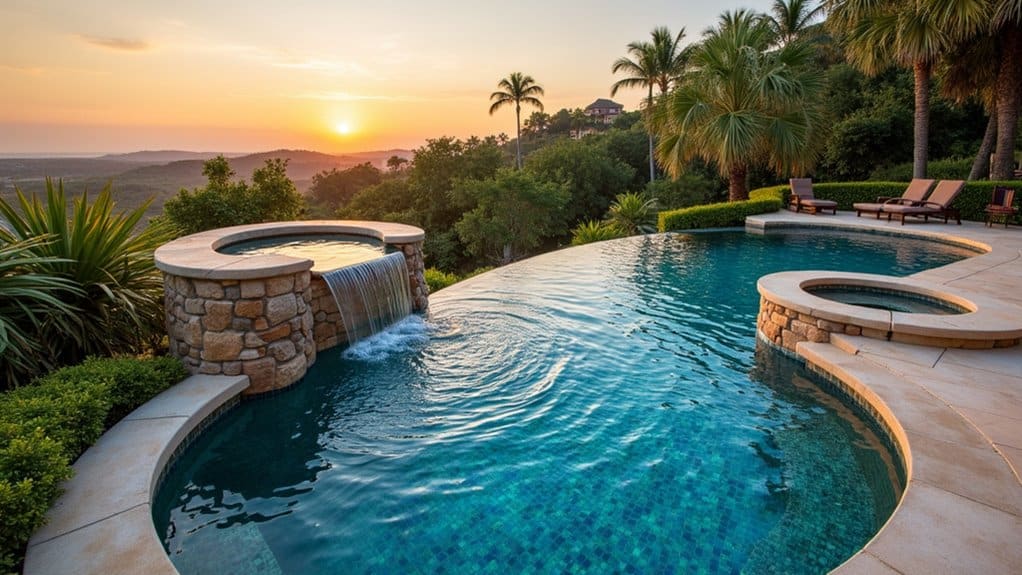
Anyone planning to integrate a spa into their backyard pool faces an exciting array of design possibilities that can transform an ordinary swimming area into a luxurious retreat. You’ll uncover designs ranging from modern geometric layouts with angular edges to freeform, organic shapes that mirror natural water features. Incorporating mood lighting, water jets, and integrated seating can enhance your experience, creating a space for relaxation and wellness. Exploring elegant backyard spa designs helps you blend aesthetics with functionality, turning your spa into an inviting focal point. With thoughtful planning, your backyard can become a tranquil oasis that reflects your personal style. As you explore different themes and styles, consider adding fire features or natural landscaping to elevate your space. Browsing luxurious pool design inspirations can spark ideas for seamlessly integrating your spa into the overall aesthetic. The goal is a cohesive environment where relaxation and elegance come together. Incorporate natural elements like stone and wood to enrich your spa’s ambiance. Explore luxury pool design inspirations that match your vision to create a seamless flow between your pool and spa. With thoughtful material and feature choices, your outdoor space can become a true personal sanctuary.
Consider a submerged spa wall design that delivers hydrotherapy benefits while maintaining visual continuity, or opt for an edge-integrated spa that creates a stunning infinity effect. For energy efficient heating, you might choose corner positioning with separate temperature zones, allowing you to heat only the spa area. Resort-inspired elements like cascading waterfalls and swim-up access points can augment your experience, while eco-friendly options incorporating biological filtration and rainwater systems offer sustainable alternatives. Whether you prefer sleek contemporary lines or naturalistic curves, today’s integrated spa designs prioritize both form and function. Natural stone and glass tiles can create an elegant transition between your pool and spa, enhancing the overall aesthetic appeal of your outdoor oasis. The addition of cool travertine around the spa area provides both safety and comfort for barefoot guests. A popular configuration features the spa at one end of the pool, making it easy to supervise children while relaxing.
Structural Planning for Long-Term Stability
You’ll need to carefully analyze your property’s soil composition and load-bearing capacity before proceeding with any spa integration, as proper foundation distribution is critical for preventing future structural issues. To guarantee lasting stability, your spa’s shell must incorporate reinforced steel construction, particularly in areas where water pressure exerts the most force against the walls. Your contractor should perform extensive soil assessments to identify potential settling issues, drainage patterns, and load-bearing limitations that could affect your spa’s structural integrity over time. Working with qualified pool builders ensures expert guidance on structural requirements and best practices for integration. The installation must include a perfectly level pad when integrating above-ground spas to ensure proper weight distribution and prevent stress on the shell. The complete project typically requires a 3-6 month timeline from initial planning through final completion.
Foundation Load Distribution Requirements
Three critical factors determine the success of integrating a spa into your backyard pool: proper foundation design, load distribution, and structural stability.
You’ll need to account for both static and dynamic loads, as your spa system will likely exceed 20,000 pounds when filled with water and occupants. A six-inch thick concrete foundation is required for optimal support. Start with a concrete density requirements assessment to guarantee your foundation can handle the weight. Installing a level surface is essential to prevent water from sloshing and causing structural stress. A minimum compressive strength of 2,500 PSI is essential, along with proper reinforcement using steel rebar or weld wire mesh.
Before construction, conduct a soil load capacity analysis to verify ground stability. Your concrete slab should be 100mm thick for smaller spas or 150mm for swim spas, with a flatness tolerance of ±½-inch. Consider installing a sump pump system if placing the spa in an inground pit to prevent water accumulation. Don’t overlook the importance of proper drainage – incorporate a gravel or pea stone base to prevent moisture-related deterioration.
Shell Reinforcement Key Points
A well-engineered shell reinforcement strategy forms the backbone of any integrated spa-pool system. You’ll need to verify proper reinforcement quality oversight throughout the construction process, with particular attention to concrete consolidation processes that prevent voids and shadows. Double mat rebar is essential when building in expansive soil areas. Structural engineers must design and specify the rebar placement for optimal integrity. A thorough site verification by engineers ensures the reinforcement plan matches actual conditions.
| Critical Element | Specification | Purpose |
|---|---|---|
| Rebar Size | No.4-6 (13M-19M) | Load Support |
| Bar Spacing | 8-12 inches | Void Prevention |
| Cover Depth | 1.5+ inches | Corrosion Protection |
Your shell’s structural integrity depends on precise rebar placement and proper bonding techniques. You’ll want to maintain electrical continuity through grounding while verifying non-contact lap splices for amplified durability. Keep in mind that your reinforcement must extend fully to the shell boundaries, with steel positioned to resist hydrostatic pressure effectively. Consider upgrading to corrosion-resistant materials in high-moisture zones where your spa interfaces with the main pool.
Soil Assessment Before Construction
Before undertaking any integrated spa-pool construction, thorough soil assessment proves critical for ensuring long-term structural stability. You’ll need to implement multi-phase testing procedures, starting with bore hole analysis at multiple depths to evaluate both active and inactive soil zones.
Professional soil sampling recommendations suggest conducting at least two bore tests to identify variations in clay, sand, and silt content across your property. Loamy soil mixtures provide the most stable foundation for pool-spa installations. Don’t assume adjacent lots share similar compositions, even neighboring sites can differ considerably. You’ll want to pay particular attention to fill soil detection and structural weakness mapping, as these factors directly impact your spa-pool foundation requirements. This is especially important since imported fill issues are more prevalent in new builds and subdivisions. Failure to properly assess soil conditions can lead to serious pool construction failures down the line.
If you’re dealing with complex site conditions like steep slopes or mixed soil types, it is crucial to engage a geotechnical engineer who can prescribe appropriate stabilization methods and drainage solutions.
Creating Visual Harmony Through Materials and Finishes
When integrating a spa into your backyard pool, thoughtful selection of materials and finishes creates essential visual harmony between these two water features. You’ll need to coordinate surface materials, establish a cohesive color palette, and carefully blend textures to achieve a seamless transition between pool and spa areas. By extending consistent materials from your pool into the spa space while incorporating natural elements like stone and plants, you’ll create an organic flow that unifies your entire aquatic environment.
Note: Based on your input showing a detailed structure of material considerations and integration methods, this paragraph serves as an introduction to the more detailed points you’ve outlined about material consistency, finish matching, texture coordination, waterproof finish selection, and seamless landscape integration. The paragraph deliberately takes a high-level view to set up the detailed discussion that would follow about specific materials, finishes, and integration techniques.
Surface Material Selection Tips
Selecting the right surface materials for an integrated spa and pool design requires careful consideration of both aesthetics and functionality. When evaluating material suitability factors, you’ll want to assess durability, maintenance requirements, and visual cohesion with your outdoor environment.
- Quartz surfaces offer excellent longevity and chemical resistance while maintaining consistent coloring across your pool and spa areas
- Glass bead finishes provide superior stain resistance and non-slip properties, making them ideal for wet zones
- Pebble finishes create natural harmony with surrounding terrain while offering extended durability at a moderate cost-benefit ratio
Consider how each material’s characteristics align with your specific needs. You’ll find that premium materials like quartz and glass beads often justify their higher upfront costs through reduced maintenance and extended lifespans, making them smart long-term investments for your integrated pool and spa design.
Color Palette Planning Guide
Color harmony serves as the cornerstone of a successful pool and spa integration, where thoughtfully chosen palettes create seamless shifts between aquatic spaces. By incorporating soothing color combinations and strategic lighting integration, you’ll establish a cohesive design that flows naturally between elements.
| Zone Type | Recommended Colors | Material Suggestions | Lighting Tips | Design Impact |
|---|---|---|---|---|
| Pool Area | Muted blues, grays | Textured stone tiles | Underwater LEDs | Tranquil depth |
| Spa Space | Deep navies, beige | Natural marble | Soft spotlights | Luxurious calm |
| Passage | Analogous greens | Limestone pavers | Path lighting | Fluid movement |
| Accent Walls | Rich earth tones | Textured surfaces | Wall washing | Visual anchor |
| Decor Elements | Metallic touches | Mixed materials | Accent lights | Dynamic interest |
Select your palette thoughtfully, using neutrals for 60-80% of surfaces while incorporating calming blues and nature-inspired elements for a sophisticated aquatic retreat.
Texture Blending Best Practices
Masterful texture blending serves as the foundation for integrating your spa and pool space, where thoughtfully selected materials create a harmonious shift between aquatic elements. When implementing texture variation techniques, you’ll want to coordinate surface alterations while maintaining visual interest through strategic material layering approaches.
- Deploy locally sourced stone and wood elements to establish natural cohesion between your spa and pool, incorporating complementary textures that mirror the surrounding environment
- Utilize a mix of smooth tiles and textured stone to create intentional contrast while maintaining overall unity through consistent material themes
- Integrate water features and fire elements with compatible materials, guaranteeing their textures complement rather than compete with your pool and spa surfaces
Remember to maintain proportional texture contrast and select construction materials that guarantee long-term durability while preserving your designed aesthetic through weathering and regular use.
Smart Technology and Water Management Systems
Modern pool and spa integration reaches new heights with sophisticated smart technology and automated water management systems. You’ll benefit from sensor-driven monitoring that continuously analyzes water chemistry, temperature, and cleanliness while implementing preventative maintenance protocols through AI-powered systems.
Control your integrated pool and spa environment through user-friendly apps that connect to your smart home ecosystem. Voice commands via Alexa or Google Home let you adjust jets, temperature, and lighting hands-free. The system’s automated scheduling optimizes energy consumption by adapting filtration cycles to your usage patterns and weather conditions.
Medical-grade sensors and precision dosing systems maintain perfect water balance automatically, while IoT-enabled robotic cleaners handle debris removal efficiently. These smart features amplify your experience and also reduce operating costs through intelligent energy management and chemical optimization.
Enhancing Comfort With Strategic Features
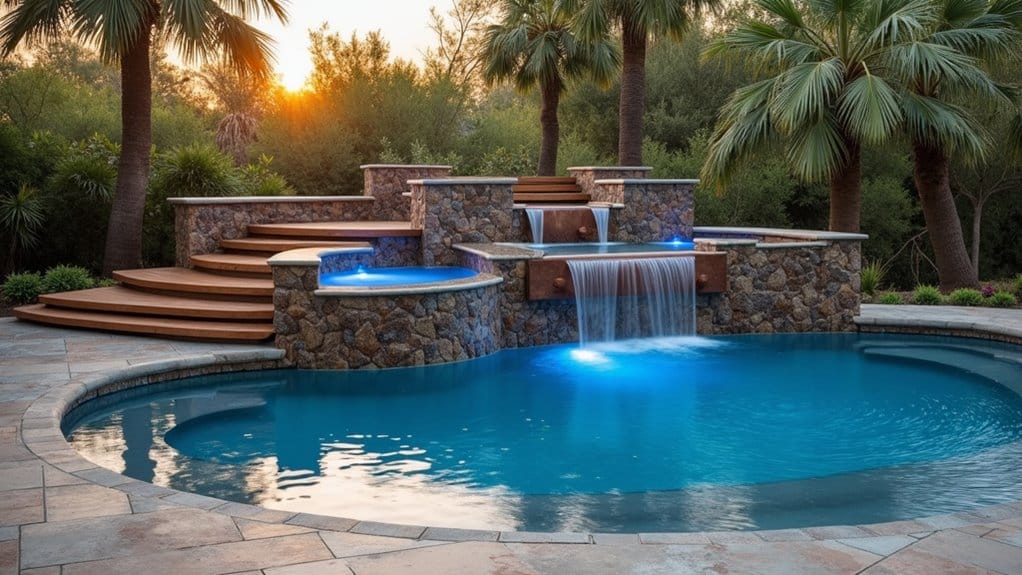
Beyond smart technology, thoughtful design elements transform your pool and spa integration into a sanctuary of comfort and relaxation. Create multi-functional seating options with ergonomic designs that accommodate both intimate conversations and larger gatherings. Incorporate customized lighting designs that increase visibility while setting the perfect ambiance for evening soaks.
Your comfort-focused integration should include:
- Weather-resistant furniture with plush seating arrangements, complemented by built-in heated seats
- Strategic placement of infrared heaters and fire features for year-round enjoyment
- Acoustic landscaping with water features and dense foliage to create a private, serene environment
Maximize your spa’s therapeutic potential by incorporating adjustable jet systems and varied soaking depths. Consider installing climate-controlled elements and insulated shelters to maintain ideal temperatures regardless of weather conditions, ensuring your outdoor retreat remains inviting throughout all seasons. Add soft lighting and gentle water features to create a calm atmosphere. Look into backyard spa retreat ideas that use natural landscaping to make the space feel even more inviting. With a few thoughtful touches, you can turn your backyard into a relaxing place to unwind.
Optimal Placement for Maximum Enjoyment and Safety
Strategic placement of your spa integration demands careful consideration of both practical requirements and lifestyle preferences. Your natural terrain offers inherent opportunities to utilize slopes for multi-level designs and mature trees for natural shade while avoiding areas prone to leaf accumulation. Consider structural demands carefully, ensuring proper foundation support through concrete pads for above-ground installations or precise excavation for in-ground options.
Visual integration plays a vital role through matched finishes and shared water features, while safety-conscious traffic flow requires clear pathways between wet and dry zones. For year-round utility, position your spa with strategic shading and convenient house access, incorporating protection from seasonal extremes. Remember to verify local building codes and maintain clear access routes for maintenance and emergency situations.
Frequently Asked Questions
How Long Does It Take to Heat a Spa to Optimal Temperature?
You’ll need 4-6 hours to heat your spa to the appropriate temperature of 100-104°F, though this varies based on your heater’s power and ambient conditions. Guarantee proper water circulation and persistent temperature monitoring throughout the heating process. With a standard 5kW heater, you’ll achieve a 3-6°F increase per hour. For quicker results, use an insulated cover and maintain efficient filtration. Cold weather will extend heating time considerably.
Can Pool Chemicals Be Used in the Connected Spa System?
While some pool chemicals can work in connected spa systems, you’ll need to exercise caution due to chemical compatibility concerns. Don’t use pool chlorine tablets, as they’re too concentrated for spa volumes. You’ll want to maintain separate chemical treatments despite water circulation integration. Stick to NSF/ANSI 50-certified products specifically formulated for spas, and always adjust dosages according to your spa’s smaller volume. Professional guidance is recommended for ideal chemical management.
What Is the Average Monthly Energy Cost for Maintaining a Spa?
You’ll typically spend between $20-50 per month on energy costs to maintain your spa, though this varies markedly based on seasonal energy usage patterns. During colder months, you’ll see higher costs as your heater works harder to maintain temperature. By investing in energy efficient heating systems and quality insulation, you can reduce these expenses. Local utility rates and climate conditions will finally determine your specific monthly energy expenditure.
How Often Should Spa Filters and Jets Be Professionally Cleaned?
You’ll want to schedule professional spa filter maintenance every 1-3 weeks if you’re experiencing heavy usage, though monthly service is sufficient for typical residential spas. For proper spa jets cleaning, you should engage professional services quarterly to guarantee thorough descaling and debris removal. Don’t skip these essential services, your filter’s efficiency and jets’ performance depend on it. Between professional cleanings, you’ll need to perform weekly rinses and monthly chemical treatments yourself.
Are There Weight Limits for Raised Spas Built Above Ground?
You’ll need to adhere to strict structural integrity requirements for above-ground spas, which typically support 300-400 pounds per person. Load bearing design considerations must account for both water weight and maximum occupancy. You’ll want your structure engineered to withstand 1.5 times the rated capacity for safety compliance. For permanent installations, it is crucial to have a licensed contractor verify that your foundation and support system meet local building codes.