
Yes, mustard algae is dangerous because it creates an ideal environment for harmful bacteria like E. coli to thrive. If you swim in contaminated water, you’re risking skin rashes, eye irritation, and gastrointestinal illness from accidental ingestion. This chlorine-resistant organism requires aggressive treatment, triple-shocking, thorough brushing, and equipment sanitization, to eliminate completely. You’ll need to maintain proper water chemistry and consistent cleaning routines to prevent regrowth and keep your pool safe.
What Is Mustard Algae and How to Identify It

Mustard algae is a chlorine-resistant form of green algae that’s also called yellow algae. It contains compounds that defend against sanitizer oxidation and lacks sufficient chlorophyll, giving it a distinctive yellowish-green to brown hue. You’ll often find it resembling dirt, sand, or pollen on your pool surfaces. In addition to its persistent nature, mustard algae can thrive in poorly maintained pools where insufficient sanitation and circulation occur. Understanding the causes of algae in pools is crucial for effective prevention and treatment, as factors such as nutrient buildup and inadequate filtration can contribute to its growth.
When determining is mustard algae dangerous for your pool, you’ll first need to identify it. Look for powdery, mustard-colored patches in shaded areas, corners, steps, and behind equipment. The texture feels more like dirt or sand than slimy green algae. It brushes away easily but returns quickly, dispersing into a cloud before resettling. This persistence in shaded spots after brushing confirms you’re dealing with mustard algae rather than debris. Be aware that mustard algae can quickly spread to pool equipment, toys, and swimwear, making early identification essential. Unlike green algae, mustard algae is more resistant to chlorine and common pool chemicals, requiring specialized treatment methods for effective removal. As a type of free-floating algae, mustard algae clings loosely to pool walls and can be found throughout the water column.
Why Mustard Algae Thrives in Swimming Pools
Understanding what mustard algae looks like helps you spot it early, but knowing why it thrives in your pool lets you stop it before it starts. Mustard algae exploits specific weaknesses in your pool’s defenses, creating pool algae health risks that compromise water sanitation and public health. By keeping your pool clean and well-balanced, you can significantly reduce the likelihood of this stubborn organism taking hold. Identifying mustard algae in pools early on allows for immediate intervention, ensuring that your water remains safe and enjoyable for swimmers.
Three primary conditions enable mustard algae establishment:
- Inadequate chlorine levels: Mustard algae’s chlorine-resistant nature means standard sanitization won’t eliminate it, raising algae safety concerns.
- Poor water circulation: Stagnant areas allow spores to colonize undisturbed, eventually creating slippery algae pool surfaces.
- Inconsistent maintenance: Infrequent brushing and debris accumulation provide nutrients for rapid growth.
Warm temperatures and unbalanced pH accelerate proliferation. When filtration runs fewer than 12 hours daily, pool safety deteriorates as algae establishes footholds on walls and floors. Unlike other pool contaminants, mustard algae uses photosynthesis to generate its own energy, making it remarkably self-sufficient once established. While mustard algae is typically found in warmer climates, it can develop in any pool or spa regardless of geographic location.
Health Risks Associated With Mustard Algae Overgrowth
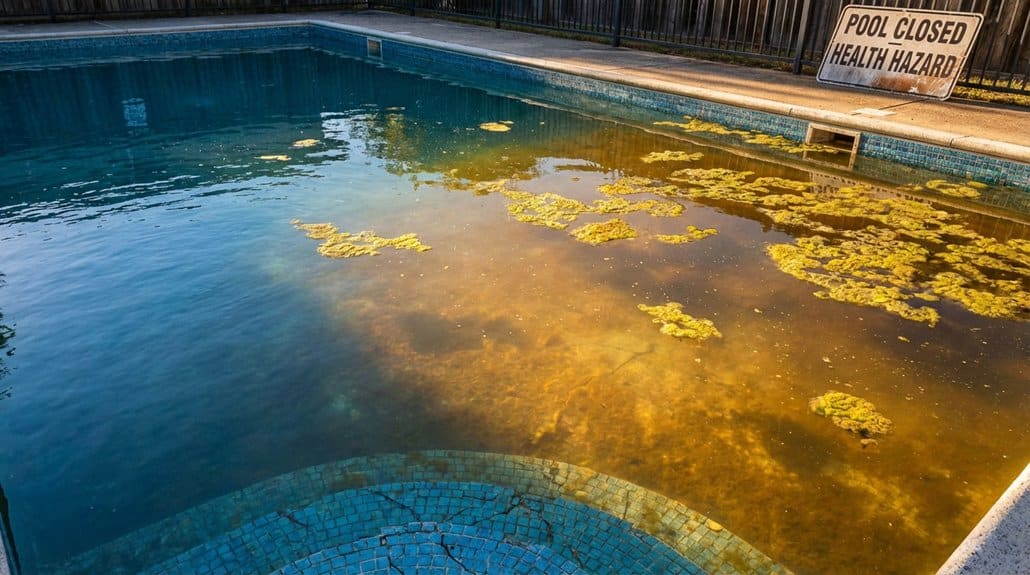
When mustard algae takes hold in your pool, it creates conditions that attract harmful bacteria like E. coli, which thrive in the degraded water quality. You’ll notice the water becoming cloudy and unsanitary, compromising the effectiveness of your filtration system and chemical treatments. Direct contact with contaminated water can cause skin rashes and eye irritation, making it essential to address algae overgrowth before anyone swims. Accidental ingestion of contaminated pool water can lead to fever or diarrhea, posing additional health concerns for swimmers. This chlorine-resistant form of algae can spread quickly if left untreated, making prompt identification and treatment crucial for maintaining a safe swimming environment. While the algae itself is not harmful to humans, the secondary effects it creates in your pool water demand immediate attention.
Bacterial Growth Attraction
Why does mustard algae pose risks beyond its visible presence? This chlorine-resistant organism creates an environment where harmful bacteria thrive. Bacterial spores develop rapidly within algae blooms, and E. coli levels can reach unsafe concentrations. You’re exposing yourself to pathogens that cause skin infections, eye irritations, and respiratory issues. Mustard algae can also clog pool filters and pipes, reducing equipment efficiency and further compromising water quality. Swimming in contaminated water can lead to ear infections and stomach problems from ingesting algae-harboring pathogens.
Here’s how preventing mustard algae protects your health:
- Maintaining chlorine levels between 1-3 ppm inhibits bacterial proliferation
- Following pool sanitation standards eliminates organic matter that feeds bacterial growth
- Implementing recurring pool algae prevention through regular brushing stops bacterial harboring before it starts
Bacterial spores prevention requires consistent action. Poor circulation and imbalanced chemistry allow pathogens to accumulate in algae-infested areas. Your commitment to proper sanitation directly reduces these dangerous conditions.
Water Quality Degradation
Beyond bacterial contamination, mustard algae triggers a cascade of water quality problems that compound health risks. As algae colonies multiply, they consume dissolved oxygen and block sunlight penetration, creating conditions where water clarity drops considerably. You’ll notice your pool appearing murky or greenish, signaling deteriorating swimming pool hygiene.
The degradation extends to your filtration system. Algae spores lodge in sand, cartridge, or DE filters, reducing circulation effectiveness and rendering filters useless over time. This perpetuates a destructive cycle where poor filtration accelerates algae proliferation. The algae particularly thrive in dead spots in circulation where water movement is minimal, allowing colonies to establish and spread more rapidly.
Mustard algae’s chlorine-resistant defense compounds create additional complications. Standard sanitizers prove ineffective, straining your treatment resources and increasing chemical demands. For effective algae prevention pool maintenance, you must address filtration integrity alongside chemical treatment to break the degradation cycle.
Skin and Eye Irritation
Although mustard algae itself isn’t toxic to humans, direct contact with contaminated water frequently triggers uncomfortable skin and eye reactions. You’ll notice symptoms ranging from mild redness to persistent rashes, particularly in areas where swimwear traps water against your skin.
Common irritation symptoms include:
- Skin reactions, Redness, itchiness, and rashes appearing within minutes to 24 hours after exposure, often concentrated around the groin, waistband, and chest areas
- Eye irritation, Swelling and discomfort from direct contact, requiring 15 minutes of tap water irrigation for relief
- Secondary infections, Bacteria entering through broken skin, causing pus, increased warmth, and potential fever
For treatment, wash affected areas with soap and apply 1% hydrocortisone lotion twice daily. When swimming costume fabric presses against skin, it can rub irritants deeper into the tissue, intensifying reactions in pressure contact areas. The presence of mustard algae also reduces the effectiveness of pool disinfectants, allowing harmful bacteria and viruses to thrive and further increase infection risks. If symptoms progress to fever, diarrhea, or other serious symptoms, ingestion of contaminated water may have occurred and requires immediate medical attention. Prioritizing algae spores prevention through consistent sanitation eliminates these risks entirely.
Bacterial Contamination Linked to Algae Growth
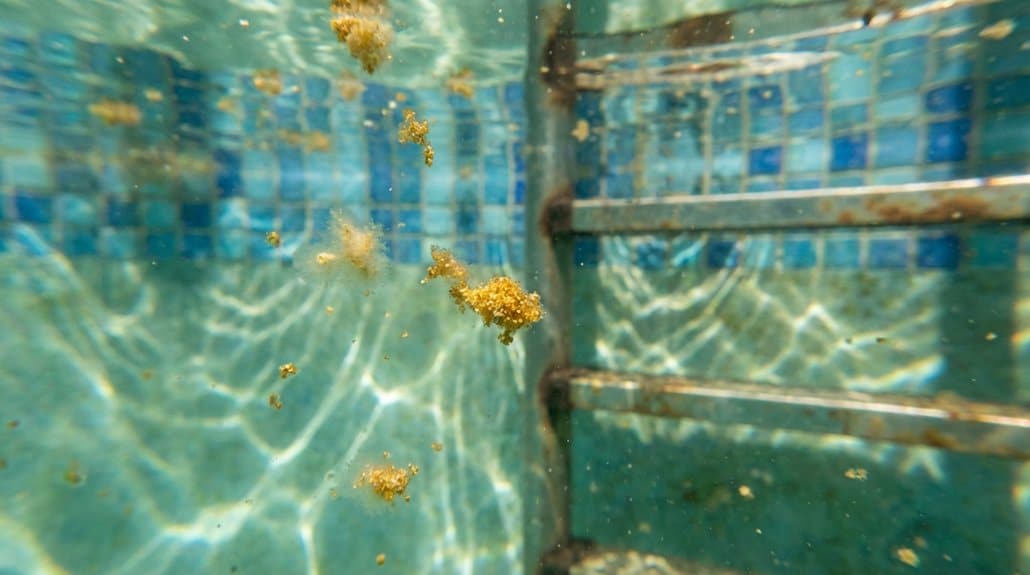
When mustard algae takes hold in your pool, it creates more than just an unsightly yellow-green film, it establishes an environment where dangerous bacteria can thrive. Algae provides shelter and nutrients for harmful microorganisms like E. coli, Pseudomonas, and Legionella, which cause recreational water illnesses (RWIs) ranging from gastrointestinal infections to swimmer’s ear and respiratory problems. Addressing mustard algae promptly is essential to ensure a safe swimming environment. Many pool owners often seek effective strategies on how to eliminate pool mustard algae, as it not only affects water clarity but also poses health risks for swimmers.
These bacteria colonize rapidly in warm, algae-contaminated water where chlorine effectiveness diminishes. Studies show 58% of public pool filters contain E. coli, demonstrating how quickly bacterial populations establish themselves alongside algae growth. Exposure to this contaminated water can cause skin rashes, ear infections, and gastrointestinal problems that may lead to serious health consequences.
You’ll need to address both threats simultaneously. Super-chlorination at 10-20 ppm kills algae and bacteria together, while running your filter continuously for 24-48 hours removes dead organic material that would otherwise feed bacterial regrowth.
Symptoms of Exposure to Contaminated Pool Water
Swimming in a pool contaminated with mustard algae exposes you to bacteria-laden water that can trigger distinct symptoms depending on how you encounter it.
Mustard algae contamination turns your pool into a breeding ground for harmful bacteria that affect your body in multiple ways.
Ingestion symptoms appear when you accidentally swallow contaminated water. You’ll likely experience fever, diarrhea, and infection-related discomfort from bacteria like E. coli that thrive alongside algae overgrowth.
Skin contact reactions develop after direct exposure to affected water. Watch for these warning signs:
- Skin rashes from prolonged contact with yellow mustard algae
- Irritation from cloudy, bacteria-rich water
- Potential infections where bacteria penetrate compromised skin
Eye irritation commonly occurs in swimmers who don’t wear goggles in contaminated pools.
If you experience persistent symptoms after swimming in an algae-affected pool, seek medical attention promptly. Early intervention prevents complications from bacterial exposure.
Mustard Algae vs. Cyanobacteria: Key Differences
While mustard algae and cyanobacteria both appear in poorly maintained pools, they’re fundamentally different organisms requiring distinct treatment approaches.
Mustard algae are true eukaryotic organisms classified as Xanthophytes, featuring organized chloroplasts and two flagella for mobility. They contain chlorophyll A and C, producing their characteristic yellow hue. You’ll typically find them starting at wall bases in shaded areas, clinging to equipment and fabrics.
Cyanobacteria, historically called blue-green algae, are actually bacteria lacking membrane-bounded nuclei. They contain chlorophyll A and phycocyanin, appearing dark green to black on pool surfaces. Their thick gelatinous cell walls provide greater oxidation resistance than mustard algae.
Both organisms indicate sanitation failures, but cyanobacteria’s ability to form dormant akinetes makes them particularly persistent. You’ll need targeted treatment strategies based on which organism you’re combating.
Safe Swimming Practices When Algae Is Present
Understanding the biological differences between mustard algae and cyanobacteria helps you identify threats, but knowing when it’s safe to enter the water matters more for your immediate health.
Before swimming in any pool showing signs of algae, verify these three conditions:
- Chlorine levels remain between 1.0-3.0 ppm and hold steady, indicating active sanitation
- The pool bottom stays completely visible from all angles, ensuring proper supervision
- pH balance measures 7.4-7.6 to confirm water chemistry supports effective disinfection
If you must enter water with suspected algae contamination, keep your head above water at all times. This prevents pathogen entry through your ears, nose, and eyes. Limit your swim duration and shower immediately afterward. However, complete avoidance remains your safest option until treatment restores proper water quality.
Effective Prevention Strategies for Pool Owners
You can prevent mustard algae by focusing on three critical maintenance practices. First, maintain proper water chemistry by testing weekly and keeping pH at 7.4-7.6, alkalinity at 80-120 ppm, and phosphates below 100 ppb. Second, clean all pool equipment regularly with a diluted bleach solution, and third, brush and vacuum thoroughly each week to eliminate spores before they establish.
Maintain Proper Water Chemistry
How effectively your pool resists mustard algae depends largely on maintaining precise water chemistry. When your levels drift outside ideal ranges, chlorine loses its sanitizing power, creating conditions where algae thrive.
You’ll need to monitor these critical parameters consistently:
- pH levels (7.4-7.8): Balanced pH ensures your shock treatments work at maximum effectiveness against algae.
- Alkalinity (80-120 ppm): Stable alkalinity prevents pH fluctuations that compromise chlorine’s algae-fighting strength.
- Cyanuric acid (25-75 ppm): This stabilizer protects chlorine from UV degradation, extending its effectiveness over time.
Test your water regularly using test strips, liquid kits, or professional pool store analysis. Don’t apply chemical treatments until you’ve verified all parameters are balanced. Retest within 24-48 hours after treatment to confirm successful elimination.
Clean Pool Equipment Regularly
Beyond balanced water chemistry, your pool’s mechanical systems play a direct role in preventing mustard algae. Run your filtration system 8-12 hours daily during warmer months to maintain circulation and avert stagnant conditions where algae thrive. Clean or backwash your filter according to manufacturer instructions, especially after treating algae outbreaks, dirty filters recirculate spores and impede water flow.
Clear skimmer and pump baskets daily to guarantee proper water movement and even chemical distribution. Inspect pumps regularly and address malfunctions promptly, as faulty equipment creates stagnant zones prone to algae development. Use skimmers to remove leaves, bugs, and debris before they decompose and contribute to algae-friendly conditions.
After any algae treatment, thoroughly clean all equipment to eradicate lingering spores and preclude recontamination of your sanitized pool water.
Brush and Vacuum Thoroughly
Effective mustard algae prevention starts with selecting the right brush for your pool’s surface type. Use wire-bristled brushes for plaster, gunite, or concrete surfaces. Choose softer nylon brushes for vinyl-lined, pebble, or quartz pools to prevent damage.
Thorough brushing destroys algae’s defenses and loosens spores hiding in nooks and crannies. This mechanical action pushes algae into the water, enhancing chemical treatment effectiveness.
Follow these essential maintenance steps:
- Scrub walls, floors, and all surfaces weekly, paying special attention to corners where spores accumulate.
- Vacuum dead algae debris with your filter’s multiport valve set to “waste” mode.
- Backwash sand or DE filters regularly; clean cartridge filters thoroughly.
Consistent brushing and vacuuming routines prevent future outbreaks more effectively than reactive treatment alone.
Step-by-Step Guide to Removing Mustard Algae
When mustard algae takes hold in your pool, a systematic removal approach guarantees you’ll eliminate both visible growth and hidden spores that cause reinfection.
Start by sanitizing all bathing suits with color-safe bleach and wiping pool accessories with chlorine-based cleaner. Next, consolidate maintenance equipment, hoses, brushes, and suction cleaners, in the shallow end for simultaneous disinfection.
Sanitize everything that touches your pool water, from swimsuits to skimmers, before tackling the algae itself.
Brush all surfaces aggressively with an algae brush to loosen spores, then vacuum on the waste setting to prevent filter contamination. Triple-shock your pool at dusk using three pounds of calcium hypochlorite per 10,000 gallons, achieving 10 ppm free chlorine.
Run your pump continuously for 24 hours. Brush daily post-treatment, apply mustard algaecide per label directions, and backwash your filter thoroughly. Test water chemistry to confirm successful elimination before resuming normal pool use.
Maintaining Proper Water Chemistry to Prevent Regrowth
After removing mustard algae from your pool, you’ll need to maintain precise water chemistry to guarantee its return. Start by testing and adjusting your pH to 7.8 or higher and keeping total alkalinity between 80-120 ppm, as these balanced conditions create an environment where algae struggles to survive. Before applying any shock treatment, you should always balance these levels first to ascertain maximum sanitizer effectiveness against lingering algae spores.
Optimal Ph and Alkalinity
Maintaining ideal pH and alkalinity levels creates an inhospitable environment where mustard algae can’t survive or regrow. You’ll want to keep your pH between 7.4 and 7.6 specifically for mustard algae prevention, while maintaining alkalinity at 80-120 ppm for optimal sanitizer performance.
Follow these essential guidelines for balanced water chemistry:
- Test your water at least twice weekly, increasing frequency during warm weather conditions.
- Keep pH within the 7.4-7.6 range to maximize chlorine shock effectiveness against algae.
- Maintain alkalinity between 80-120 ppm to stabilize pH and support consistent sanitizer function.
When your chemistry parameters fall outside these ranges, chlorine loses its effectiveness, and algae gains a foothold. You should always test before and after making adjustments to guarantee accuracy and prevent regrowth conditions.
Pre-Shock Water Balancing
Balanced pH and alkalinity set the foundation, but pre-shock water balancing requires attention to additional parameters that directly impact treatment success.
Before shocking, test your free chlorine levels and confirm they’re at least 3 ppm. If levels have dropped below this threshold, you’ll need immediate treatment. Check your filter pressure and backwash if it reads 10 PSI above normal, clean filters guarantee proper chemical distribution throughout the pool.
Verify calcium hardness falls within the appropriate range for your pool type: 175-225 ppm for vinyl pools or 200-275 ppm for concrete and plaster surfaces. Pre-dissolve your shock treatment in a bucket of water before adding it to the pool. Always add chemicals to water, never the reverse. Run your pump for 6-8 hours post-shock to ascertain complete circulation. Regular testing of your water chemistry is crucial to maintain optimal conditions and should be integrated into your routine. If you find balancing chemicals to be challenging or time-consuming, consider hiring professional pool maintenance services to handle it for you.
Frequently Asked Questions
Can Mustard Algae Spread From Swimsuits to Other Pools?
Yes, mustard algae can spread from swimsuits to other pools. When you swim in an infected pool, algae spores attach to your swimsuit fabric and remain viable even after drying. You’ll then transfer these spores to any pool you enter afterward. To prevent this transmission, you should machine wash your swimsuits with bleach after swimming in affected water. This kills clinging spores and protects other pools from contamination.
Is It Safe for Pets to Drink Pool Water With Mustard Algae?
You shouldn’t let your pets drink pool water containing mustard algae. While the algae itself isn’t highly toxic, it can harbor harmful bacteria like E. coli that pose infection risks. Additionally, the chemicals used to treat mustard algae, particularly copper-based algaecides and chlorine shock treatments, are dangerous for animals. Provide fresh water in clean containers instead, and keep pets away from your pool until chemical levels return to safe ranges.
How Long Does Mustard Algae Take to Return After Treatment?
Mustard algae can return within hours if you don’t fully eliminate it. Standard chlorine treatments often fail because this algae resists typical sanitizers. You’ll see it resettle on surfaces within 24-48 hours if you haven’t cleaned all pool accessories, replaced contaminated filter media, or run your filtration system continuously for 24-72 hours post-treatment. To prevent quick recurrence, you should repeat shock treatments every 48 hours until it’s completely gone.
Can Mustard Algae Grow in Saltwater Pools?
Yes, mustard algae can grow in your saltwater pool. It’s resistant to chlorine regardless of how you generate it, so salt chlorination doesn’t provide extra protection. Your pool becomes vulnerable when total dissolved solids reach up to 4500 ppm, cyanuric acid levels climb too high, or phosphates exceed 200 ppb. You’ll prevent growth by maintaining balanced chemistry, running filtration 12-24 hours daily, and applying weekly preventative algicide.
Should I Replace Pool Toys Exposed to Mustard Algae or Just Clean Them?
You can clean most pool toys rather than replace them. Spray or soak hard plastic and vinyl items with a multipurpose cleaner like Clorox to kill embedded spores. However, you should discard deteriorated items like half-popped inflatables, worn pool noodles, or anything with significant material degradation, these can’t be adequately sanitized. If you’ve experienced repeated algae outbreaks, replacing inexpensive toys is often more practical than time-intensive decontamination.