




Swimming is highly effective for weight loss, burning 500-700 calories per hour while building lean muscle throughout your body. The water’s resistance provides a full-body workout that continues burning calories even after you’ve left the pool. You’ll experience less joint stress than with running or high-impact exercises, making swimming sustainable for long-term fitness. Plus, its stress-reducing properties help combat emotional eating. Uncover how specific techniques and workout plans can enhance your results.
The Science Behind Swimming and Weight Loss

While many exercises can help with weight loss, swimming stands out as particularly effective due to its unique combination of cardiovascular and resistance training. When you immerse yourself in water, you engage multiple muscle groups simultaneously, burning significant calories while elevating your heart rate.
The buoyancy benefits of swimming allow for longer workout durations with reduced joint stress, making it ideal for consistent training. Water resistance provides 12-14 times more resistance than air, forcing your body to work harder with every movement. This increased effort translates to greater caloric expenditure; you can burn 500-700 calories per hour during moderate swimming.
Your body also continues burning calories after swimming through excess post-exercise oxygen consumption (EPOC), further contributing to weight loss when combined with proper nutrition.
Calories Burned: Swimming vs. Other Exercises
Swimming burns 500-700 calories per hour at moderate intensity, compared to running (600-800) and cycling (400-600), making it an efficient choice for weight loss. You’ll optimize caloric expenditure by increasing your stroke intensity, incorporating intervals, or extending your swimming duration. As a full-body workout, swimming engages more muscle groups simultaneously than many land-based exercises, resulting in a higher total energy expenditure during and after your session.
Comparing Caloric Expenditure Rates
Four key factors determine how swimming compares to other exercises regarding caloric burn: intensity, technique, body composition, and duration. Your swimming techniques greatly impact caloric expenditure, with butterfly stroke burning substantially more calories than breaststroke.
| Activity | Calories/30 min (155 lb person) | Efficiency Rating |
|---|---|---|
| Butterfly | 450 | High |
| Freestyle | 300 | Medium-High |
| Backstroke | 250 | Medium |
| Breaststroke | 200 | Medium-Low |
When compared to land exercises, swimming offers comparable caloric burns to jogging (300 calories/30 min) but less than high-intensity interval training (500 calories/30 min). However, you’ll experience less joint stress while swimming, allowing for longer workouts. Heavier individuals burn more calories in water due to increased resistance, making swimming particularly effective for overweight beginners starting their fitness path.
Intensity Determines Burn
The intensity of your swimming workout directly dictates your caloric expenditure, making it the primary variable in weight loss results. Research shows that varying intensity levels can notably impact how many calories you burn during each session. To enhance your swimming’s weight loss potential, consider these evidence-based approaches:
- High-intensity intervals burn 550-800 calories hourly versus 400-500 calories during moderate swimming
- Extended swimming duration at moderate intensity (45+ minutes) activates fat-burning metabolic pathways
- Stroke selection matters, butterfly burns 800+ calories hourly while breaststroke averages 600
- Heart rate zones between 70-85% of maximum optimize caloric expenditure while remaining sustainable
These variables allow you to customize your swimming routine to achieve specific weight management goals without overtaxing your joints.
Full-Body Workout Advantage
Unlike most cardio activities that primarily target lower-body muscles, swimming engages approximately 85% of your muscle groups simultaneously, resulting in considerably higher caloric expenditure compared to land-based exercises. This full body engagement means you’re working your arms, core, back, and legs in a single workout, rather than isolating muscle groups as with weight training.
Research indicates that swimming’s resistance; about 12-14 times greater than air, intensifies muscle activation across multiple planes of movement. You’ll benefit from muscle toning throughout your entire body while burning between 400-700 calories per hour depending on stroke and intensity. The water’s buoyancy also enables longer workout durations without joint strain, allowing for extended calorie-burning sessions that wouldn’t be sustainable with high-impact exercises like running.
Optimal Swimming Techniques for Maximum Fat Burning
Effective swimming techniques dramatically enhance calorie burn and weight loss potential when executed properly. The freestyle technique offers superior calorie expenditure due to its continuous nature and full-body engagement. Meanwhile, breaststroke benefits include joint-friendly resistance and excellent muscle toning, particularly in the chest and thighs.
For maximum fat burning, incorporate these evidence-based techniques:
- Interval training – Alternate between 30 seconds of high-intensity swimming and 60 seconds of moderate pace
- Distance progression – Gradually increase your swimming distance by 10% weekly
- Stroke variation – Rotate between different strokes during your session to engage diverse muscle groups
- Resistance tools – Utilize pull buoys, kickboards, and hand paddles to intensify your workout and elevate caloric burn
Creating an Effective Swimming Workout Plan
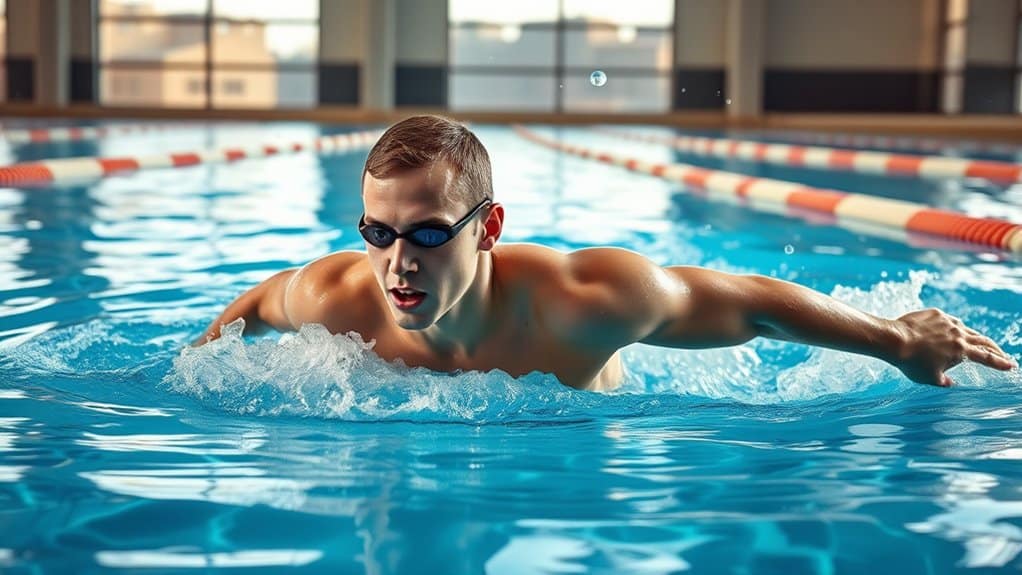
An effective swimming workout plan incorporates interval training to optimize calorie burn and enhance your metabolism. You’ll alternate between high-intensity swimming sprints and recovery periods, which research shows burns more fat than steady-state swimming alone. Organizing your swims into a weekly schedule template guarantees proper progression and recovery, typically including 3-4 swim sessions with varying intensity levels and adequate rest days.
Interval Training Basics
When designing your swimming workout plan, interval training serves as the cornerstone for maximizing caloric burn and improving cardiovascular fitness. This evidence-based approach alternates high-intensity swimming with brief recovery periods, stimulating metabolic adaptations that continue burning calories hours after your workout ends.
To implement effective interval training:
- Start with work-to-rest ratios – Begin with 1:2 (30 seconds intense swimming, 60 seconds recovery) and progress to 2:1 as your fitness improves
- Vary swimming techniques – Alternate between freestyle, backstroke, and butterfly to engage different muscle groups
- Use timed intervals – Set specific work periods (20-60 seconds) rather than distances for better intensity control
- Progressive overload – Increase intensity or decrease rest periods by 10% weekly to prevent adaptation plateaus
Monitor heart rate recovery between intervals to gauge improvement in cardiovascular efficiency.
Weekly Schedule Template
Structuring your weekly swimming routine requires strategic planning to optimize weight loss while allowing adequate recovery. Aim to swim 3-4 times per week, spacing workouts to prevent overtraining and muscle fatigue.
For beginners, start with:
- Monday: 20-minute endurance swim
- Wednesday: Interval training (10 × 50m with 30s rest)
- Friday: Technique practice and light cardio (30 minutes)
Intermediate swimmers should add a fourth session and increase duration:
- Monday: 30-minute endurance swim
- Tuesday: Interval training (15 × 50m with 20s rest)
- Thursday: Technique drills (40 minutes)
- Saturday: Long, steady swim (45 minutes)
Set weekly goals that progressively increase distance or intensity by 10% to challenge your body while minimizing injury risk.
How Swimming Builds Metabolism-Boosting Muscle
Resistance plays an essential role in how swimming transforms your muscle composition and metabolic rate. Unlike land exercises, water provides continuous resistance in all directions, creating an ideal environment for muscle growth and metabolism improvement.
Water’s omnidirectional resistance creates a perfect training environment for metabolic transformation and muscle development.
Here’s how swimming builds metabolism-boosting muscle:
- Full-body engagement – Swimming activates multiple muscle groups simultaneously, increasing caloric expenditure during and after workouts
- Lean muscle development – The resistance of water builds dense, elongated muscles that burn more calories at rest
- Increased mitochondrial density – Regular swimming stimulates mitochondria production, enhancing your cells’ energy-burning capacity
- Hormonal optimization – Swimming triggers release of growth hormone and testosterone that support muscle development and fat metabolism
Why Swimming Reduces Stress and Emotional Eating
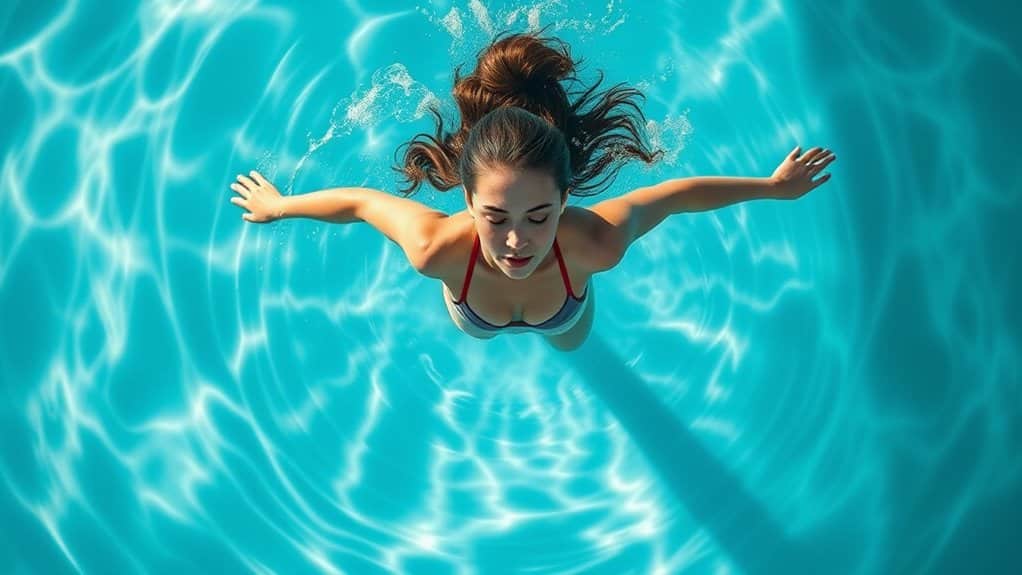
Swimming offers psychological benefits that extend beyond muscle development and metabolism improvement. When you immerse yourself in water, your brain releases endorphins and reduces cortisol levels, creating a natural stress reduction effect that can decrease emotional eating triggers.
Research shows that aquatic exercise provides unique sensory input; the feeling of weightlessness and rhythmic movement that promotes emotional regulation better than many land-based activities. This meditative quality helps disrupt the stress-hunger cycle that often leads to consuming excess calories.
You’ll find that regular swimming sessions create a structured outlet for managing daily tensions, potentially eliminating food as your primary coping mechanism. The combination of gentle resistance, controlled breathing, and immersion creates a therapeutic environment that addresses the psychological aspects of weight management often overlooked in traditional exercise programs.
Combining Swimming With Nutrition for Best Results
While regular swimming workouts create an excellent foundation for weight loss, they must be paired with proper nutrition to improve your results. Combining your aquatic exercise with strategic eating habits optimizes fat loss while supporting muscle recovery and energy levels.
- Plan protein-rich meals within 30-45 minutes after swimming to repair muscle tissue and promote satiety throughout the day.
- Adjust carbohydrate intake based on workout intensity, moderate carbs before morning swims provide energy without excess calories.
- Practice nutrition timing by consuming lighter meals 2-3 hours before swimming to prevent cramping while ensuring adequate fuel.
- Create a weekly meal planning calendar that aligns with your swimming schedule, emphasizing whole foods and appropriate portion sizes when appetite increases from aquatic exercise.
Your nutrition strategy is just as significant as your swimming regimen for sustainable weight management.
Success Stories: Real Weight Loss Through Swimming
Across fitness communities worldwide, numerous individuals have transformed their bodies and lives through consistent swimming routines. Take Sarah, who shed 45 pounds over eight months by swimming four times weekly while improving her technique from basic freestyle to incorporating butterfly and breaststroke intervals.
These inspiring anecdotes often share common elements: gradual progression, commitment to form, and patience during plateau phases. Mark’s personal transformation included losing 60 pounds through a combination of morning swims and mindful eating, starting with just 15 minutes in the pool and eventually completing mile-long sessions.
You’ll notice most success stories emphasize swimming’s joint-friendly nature, allowing consistent exercise despite previous injuries that had prevented weight loss through high-impact activities like running or HIIT workouts.
Overcoming Common Swimming Barriers for Weight Loss
Despite the inspiring success stories we’ve shared, many people face significant obstacles when considering swimming as their weight loss method. Overcoming these barriers is essential to experience swimming’s full weight loss benefits.
- Pool access challenges – Locate community centers or YMCA facilities that offer affordable memberships or drop-in options when expensive gym memberships aren’t feasible.
- Overcoming anxiety – Begin with private lessons or less-crowded session times if you’re self-conscious about your swimming abilities or body image.
- Addressing time constraints – Implement high-intensity interval training (HIIT) in the pool to enhance calorie burn when you’re short on time.
- Technical limitations – Consider working with a coach for 1-2 sessions to improve your stroke efficiency, which directly impacts calorie expenditure and reduces injury risk.
Frequently Asked Questions
Can Swimming Help With Spot Reduction of Belly Fat?
Swimming can’t specifically target belly fat through spot reduction. Despite claims, research consistently shows that spot reduction isn’t physiologically possible. Your body loses fat uniformly during exercise, not just from areas you’re working. While swimming is excellent for comprehensive weight loss, you can’t selectively reduce belly fat through swimming or specific belly exercises. Instead, focus on combining regular swimming with a balanced diet for total body fat reduction, which will eventually reduce belly fat too.
Is Swimming Safe for Weight Loss During Pregnancy?
Swimming is generally considered a safe and beneficial exercise during pregnancy. You’ll find it provides excellent cardiovascular benefits while reducing joint stress due to water’s buoyancy. The pregnancy safety profile of swimming is high as it minimizes fall risks and overheating concerns. However, always consult your healthcare provider before starting any exercise regimen while pregnant. Swimming benefits include improved mood, better sleep quality, and maintained fitness without putting excessive strain on your changing body.
How Does Chlorine Exposure Affect Weight Loss Progress?
Chlorine exposure itself doesn’t directly impact your weight loss progress. However, if you develop chlorine sensitivity, resulting skin irritation may disrupt your swimming routine. You’ll notice redness, itching, or rashes that might reduce workout frequency or duration. Consider wearing a swim cap, applying barrier cream, and showering immediately after swimming to minimize irritation. For severe sensitivity, investigate salt water or mineral pools as alternatives to maintain your exercise consistency.
Can I Lose Weight Through Swimming if I Can’t Swim Well?
Yes, you can lose weight through swimming even as a beginner. Focus on simple swimming techniques like water walking, kickboard exercises, or basic freestyle. These beginner-friendly activities still raise your heart rate and burn calories. You don’t need perfect form to benefit, even treading water burns approximately 200-400 calories per hour. Start with shorter sessions (15-20 minutes) and gradually increase as your confidence and endurance improve. Consistency matters more than skill level for weight loss results.
At What Temperature Should Pools Be Kept for Optimal Weight Loss?
Water temperatures between 78-84°F (25.5-29°C) offer the best balance for weight loss swimming. You’ll burn more calories in cooler pools (78-80°F) because your body works harder to maintain core temperature. However, if you’re uncomfortable, you won’t swim as long or intensely. For sustainable weight loss, choose a temperature that lets you exercise longer without discomfort. Many fitness pools are kept around 82°F, providing a good compromise between calorie burn and comfort.