


Your pool’s long-term value depends on several key factors: installation type, maintenance costs, and regional market dynamics. You’ll invest $20,000-$120,000 upfront, plus $30-$195 in monthly operating expenses. While pools typically return 7-8% on property value, premium increases can reach 20% in hot markets like Fort Myers. Material choices and regional factors substantially impact costs of concrete pools last 50 years but need resurfacing, while fiberglass offers 20+ years of lower maintenance. Understanding these elements helps amplify your investment’s potential.
Initial Installation Expenses by Pool Type
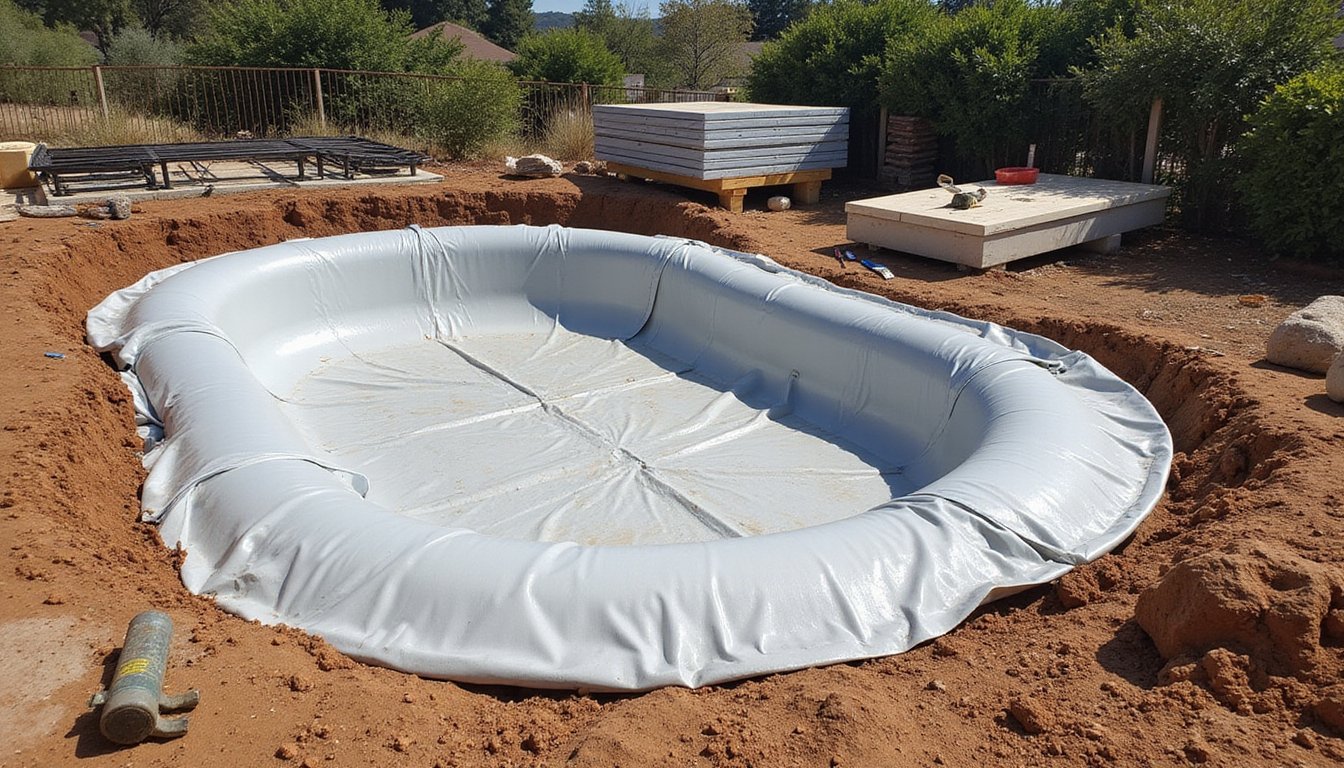
When planning a pool installation, understanding the initial cost breakdown across different pool types helps you make an informed investment decision. The market offers three primary options: vinyl liners starting at $20,000, fiberglass shells ranging from $20,000 to $85,000, and concrete/gunite pools commanding $35,000 to $120,000.
Your location drastically impacts costs, with urban labor costs driving prices higher in metropolitan areas. California installations typically range from $75,000 to $150,000, while Texas projects average $30,000 to $75,000. Complex excavation impacts can further increase your investment, particularly in areas with challenging terrain or access issues. A decking installation will add between $3,000 to $20,000 to your project depending on material choice. A key advantage of fiberglass pools is their quick installation time compared to other options. Consider that while vinyl offers the lowest upfront cost, it needs replacement every decade. Fiberglass provides a middle-ground solution lasting 25 years, while concrete pools can serve generations with proper maintenance. Most homeowners should budget for monthly maintenance costs between $80 and $150 to keep their pools in optimal condition.
Monthly and Annual Maintenance Requirements
Beyond the initial investment, a pool’s true cost emerges through its ongoing maintenance requirements. You’ll need to manage both monthly and annual upkeep tasks to safeguard your investment. Monthly checks include water chemistry balancing, filter media evaluation, and structural inspections of tiles, grout, and liners. These routine tasks typically range from $30-$95 per month, depending on your pool type and service provider. A thorough water chemistry test should check pH, alkalinity, chlorine levels, and calcium hardness to maintain optimal conditions. Regular weekly skimming of the pool surface helps prevent debris buildup and reduces strain on the filtration system. Proper maintenance includes brushing pool walls to prevent algae growth and ensure cleanliness.
Annual maintenance focuses on pump efficiency analysis, extensive filter cleaning or replacement, and safety inspections of critical components. For saltwater pools, you’ll need additional cell maintenance. Equipment longevity depends on regular O-ring lubrication, motor seal checks, and proper pressure management. Your maintenance schedule must balance water chemistry within specific ranges: pH (7.4-7.8) and chlorine (2-4 ppm) to prevent costly damage and assure safe swimming conditions.
Material Durability and Replacement Schedules
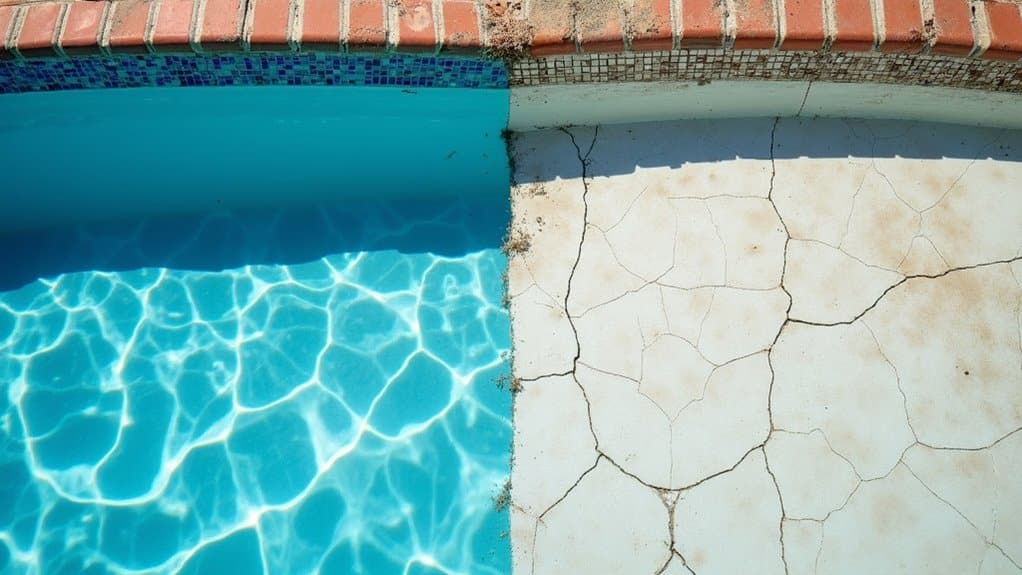
Different pool materials stack up markedly in their durability and long-term value proposition. Tile-lined pools offer indefinite lifespans but come with premium material resurfacing costs, while fiberglass pools deliver 20+ years of service without liner replacements. You’ll find concrete pools lasting up to 50 years, though they need resurfacing every 10-20 years. Sharp objects can damage and compromise vinyl pool liners, leading to unplanned replacement expenses. Pebble Tec finishes provide the most durable concrete pool surface available, lasting over two decades with proper care.
For budget-conscious homeowners, vinyl liner pools present lower upfront costs but require $8,000-$10,000 liner replacements every 7-10 years. Plaster-finished pools, while initially affordable, need frequent resurfacing due to their 5-10 year lifespan. Proper maintenance, including regular cleaning and balanced pH levels, can help extend the life of plaster surfaces. When considering material aesthetics and appeal, tile offers the most customization potential, followed by concrete. Fiberglass, though limited in design options, provides excellent durability with minimal maintenance, making it an attractive long-term investment.
Hidden Costs and Utility Considerations
The true cost of pool ownership extends far beyond material selection and installation expenses. When planning your investment, you’ll need to account for hidden utility costs and ongoing operational expenses that substantially impact your budget over time.
Key considerations that affect long-term expenses include:
- Monthly electricity consumption for pump operation, ranging from $30-$100
- Equipment lifespan factors, including filter replacements and automatic cleaner maintenance
- Cost of pool chemicals, averaging $20-$100 monthly for proper water treatment
- Unexpected repairs due to soil conditions or structural stress
You’ll also face regulatory compliance costs, including permits, inspections, and potential safety upgrades. Safety fencing requirements add approximately $1,100 to your initial investment to meet municipal regulations. Excavation complications can add $3,000-$20,000 to your initial budget, while utility line rerouting might be necessary during installation. Vinyl liner replacement typically becomes necessary every 5-10 years, adding to your maintenance expenses. Concrete resurfacing will be required every 10-15 years to maintain pool integrity. Consider these hidden costs when evaluating your pool’s long-term financial impact.
Property Value Impact and Return on Investment
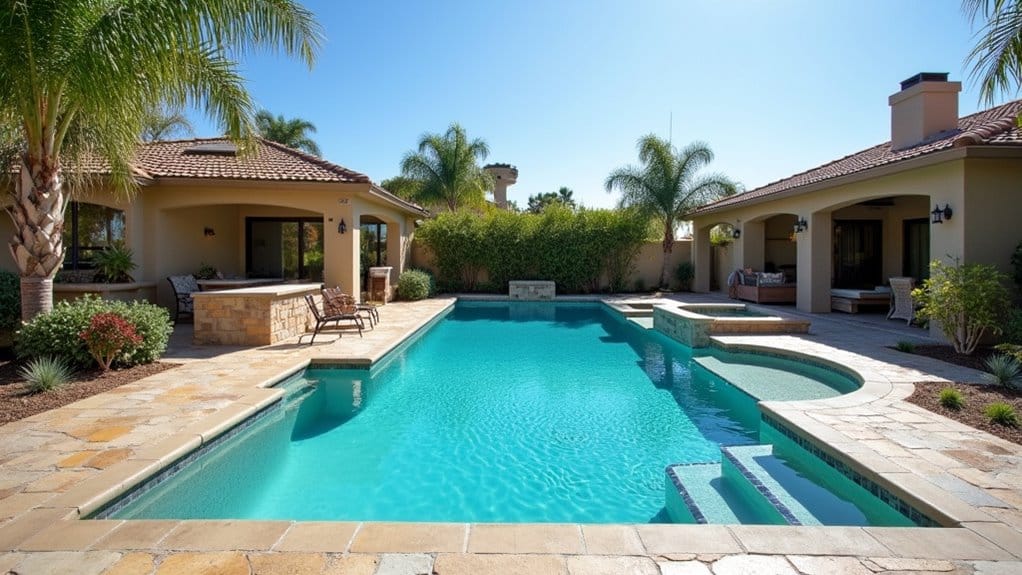
The impact of a pool on your property’s value varies considerably by region, with premium increases ranging from 11.5% in Pittsburgh to over 20% in Fort Myers, reflecting climate-driven market dynamics. You’ll find the highest returns on investment in areas with extended warm seasons, where pools are considered standard amenities and can elevate property values by an average of 16.3% nationally. Your choice of pool style directly affects potential returns, with in-ground pools consistently outperforming above-ground options due to their durability and aesthetic integration with the property. Single-family homes see a particularly strong benefit, with pools adding lasting value to these properties compared to apartments. Before the pandemic, homeowners saw the pool premium decline to 6% from around 10%, but the market has since rebounded significantly. The most dramatic surge occurred during the pandemic when homes with pools commanded a 61% premium over non-pool properties, though this figure has since moderated.
Market Value By Region
Regional pool values demonstrate striking market variations across the United States, with premiums ranging from a remarkable $95,393 in Los Angeles to potential decreases of $15,000 in Boston. Resale trends reveal that warm-climate markets consistently deliver higher returns, while neighborhood comparisons highlight significant differences even within regions.
Key market patterns show:
- Fort Myers leads nationwide with a 20.4% premium and $539k median listing price
- Tampa and Fort Lauderdale properties gain $30-36k with pools present in 29-45% of sales
- Phoenix shows varied impact: minimal in affordable areas, substantial in luxury communities
- Pittsburgh surprises with an 11.5% pool premium despite seasonal limitations
Post-COVID market shifts have amplified these regional differences, with pool premiums averaging 8% higher nationally than non-pool properties.
ROI Factors Over Time
Swimming pool investments reveal complex ROI dynamics that vary dramatically based on market conditions, installation choices, and geographical factors. You’ll find ROI ranges from 5% to 56%, with typical returns hovering around 7-8%. Resale market dynamics show stronger performance in warm-climate regions where seasonal usage patterns support year-round enjoyment.
| Time Period | ROI Impact | Key Drivers |
|---|---|---|
| 2020-2022 | +68% Cost | Supply Chain |
| 2021 Peak | +8% Premium | COVID Demand |
| 2022-2023 | Stabilizing | Rate Changes |
| Long Term | 7-8% Avg | Climate/Region |
Your pool’s value retention depends heavily on maintenance, with annual costs ranging $1,500-$3,000. Modern features like energy-efficient pumps and saltwater systems can amplify long-term returns, while outdated equipment may diminish your investment’s worth.
Pool Style Price Impact
Building on ROI considerations, your pool’s style and design meaningfully shape its impact on property value. In-ground pools typically recoup 56% of installation costs, with concrete options offering superior customization potential for resale. Your choice between saltwater and traditional systems affects both maintenance costs and buyer appeal.
Key value-driving elements include:
- Integration with adjacent landscape features like outdoor kitchens and shaded patios
- Modern child safety upgrades, including automated equipment and proper fencing
- Material selection matching regional preferences and climate demands
- Aesthetic alignment with home architecture and yard proportions
Remember that regional factors heavily influence returns Sun Belt properties see higher premiums than cold-climate locations. Well-maintained pools with complementary outdoor living spaces consistently command better valuations, especially in luxury markets where they’re considered essential amenities.
Regional Factors and Local Regulations
Your pool’s true cost varies considerably by location, with labor rates ranging from $25-75 per hour in different regions and permit costs spanning $200-1,000+ based on local regulations. You’ll need to factor in climate-specific maintenance expenses, as northern locations require winterization while southern pools face higher chemical costs due to year-round use and intense sun exposure. Building codes and fencing requirements also impact your initial investment, with states like California demanding 5-foot barriers and specific safety features that can add $2,000-5,000 to your project costs.
Geographic Labor Rate Variations
While pool labor rates fluctuate substantially across the United States, clear regional patterns emerge that affect your total ownership costs. Understanding these variations helps you anticipate expenses and plan for employee retention strategies amid ongoing labor shortage impacts.
Your location markedly influences labor costs, with notable regional distinctions:
- Urban markets like Los Angeles and San Francisco command rates up to 40% higher than rural areas, reflecting increased living costs
- Southeast regions offer competitive rates, with Florida averaging $17/hour, 8.29% below national figures
- Northeast contractors charge premium rates, particularly near major cities like NYC
- Western states show extreme variation, with California’s strict regulations driving higher labor costs
These geographic differences directly impact your pool’s long-term value, making location awareness imperative for budget planning and maintenance scheduling.
Permit Costs By Area
Pool permit costs vary dramatically across jurisdictions, reflecting complex regional factors and local regulatory frameworks. You’ll find tiered pricing systems where cities like LA County charge based on risk levels – from $274 for residential pools to over $1,000 for high-risk commercial installations. Municipal approval processes differ noticeably, with some areas requiring extensive documentation and HOA clearances.
Your location’s zoning restrictions directly impact permit expenses through varied calculation methods. Riverside uses value-based permits starting at $654.50, while La Habra implements flat rates ranging from $224 to $623. You’ll need to account for supplementary charges like Strong Motion fees, CBSC surcharges, and plan check costs. Commercial pools typically face stricter requirements and greater fees than residential installations, reflecting heightened safety and regulatory oversight.
Climate Impact On Maintenance
Climate variations dramatically influence maintenance costs, with hot regions facing chemical expenses up to 150% higher than cooler areas. You’ll need to factor in both chemical storage safety and wildlife contamination prevention when calculating your long-term expenses. Environmental conditions directly impact your pool’s operational costs and maintenance frequency.
- Hot, humid climates require 65% more chemicals due to accelerated algae growth and increased swimmer usage
- Coastal areas face higher equipment deterioration rates from salt exposure and storm-related debris
- Dry regions need 2-3x more water refills, demanding frequent chemical rebalancing
- Temperature fluctuations in moderate climates strain heating systems, potentially doubling energy costs
Your location’s specific challenges will determine your maintenance strategy and budget allocation. Consider investing in protective measures like covers and upgraded filtration systems to offset climate-related expenses.
Frequently Asked Questions
How Does Extreme Weather Affect Different Pool Materials Over Time?
Your pool’s weathering resistance varies markedly by material choice. Fiberglass offers superior durability, flexing with ground movement and resisting UV damage with minimal maintenance requirements. You’ll find concrete pools crack in extreme heat and need frequent resurfacing, while vinyl liners deteriorate quickly in harsh conditions. If you’re in an area with severe weather, you’ll want to avoid vinyl and consider fiberglass for its long-term resilience and lower upkeep needs.
Can Existing Pools Be Converted to Different Materials or Designs?
Yes, you can convert your pool to different materials and designs. Common conversions include vinyl-to-gunite ($50,000-$65,000) or vinyl-to-fiberglass ($50,000-$70,000). You’ll find extensive pool resurfacing options and customizable pool shapes when switching to gunite, which offers the most design flexibility. While conversions aren’t cheap, they’re worthwhile if you’re seeking durability, gunite pools last decades compared to vinyl’s 5-9 year lifespan before requiring replacement.
What Insurance Requirements Change When Installing a Backyard Pool?
You’ll need to considerably adjust your insurance when adding a pool. Most insurers require increasing your liability coverage from $100,000 to at least $500,000, and they’ll conduct property value assessments to update your policy. You’ll also need to install safety features like a 4-foot fence with a locking gate. Consider adding an umbrella policy for extra protection, typically $1M+ coverage, which costs $200-300 annually.
How Do Pool Covers Impact Long-Term Maintenance and Energy Costs?
Energy efficient pool covers can dramatically reduce your long-term costs through multiple channels. You’ll save 50-70% on heating expenses and cut water evaporation by up to 95%. Your chemical costs will drop 35-60% since chlorine lasts considerably longer in covered pools. You’ll also spend less time on maintenance, as covers prevent debris accumulation and reduce strain on filtration systems. The initial investment typically pays for itself through these ongoing savings.
What Financing Options Are Typically Available for Pool Installation Projects?
You’ll find several loan programs customized for pool installation, each with distinct financing terms. Home equity loans and HELOCs let you borrow against your property’s value, offering lower rates and longer repayment periods. If you don’t have sufficient equity, personal loans provide quick, unsecured funding with shorter terms. Many pool dealers also partner with specialized lenders, giving you access to industry-specific financing that doesn’t require home equity.