Low stabilizer in your pool means your cyanuric acid (CYA) levels have fallen below the 30 ppm minimum needed to shield chlorine from UV rays. Without this protection, you’ll lose up to 90% of your chlorine within just two hours of sunlight exposure. Common causes include using unstabilized chlorine products, heavy rainfall, frequent backwashing, and large water top-offs. Understanding the right CYA range for your pool type helps you restore balance quickly.
What Is Pool Stabilizer and Why Does Chlorine Need It?
Pool stabilizer, also known as cyanuric acid (CYA), serves one critical function: it protects your chlorine from the sun’s UV rays. Without this protective compound, chlorine breakdown UV exposure causes you to lose up to 90% of your sanitizer within just two hours. Pool stabilizer, chemically known as cyanuric acid (CYA), performs one essential role: shielding chlorine from rapid degradation caused by ultraviolet radiation. Without this protective compound, UV exposure can destroy up to 90% of your available sanitizer within just two hours; this is why many pool owners ask is clorox pool stabilizer cyanuric acid, since most commercial stabilizer products, regardless of brand, are fundamentally CYA designed to preserve free chlorine and extend its disinfecting lifespan.
CYA works by bonding loosely to hypochlorous acid, creating a shield that minimizes UV degradation while still allowing chlorine to sanitize effectively. You’ll find it in stabilized chlorine products like tabs and slow-dissolution formulas. When stabilizer levels aren’t maintained, algae infestations can quickly take over your pool as free chlorine drops too low to prevent growth. Unlike chlorine, cyanuric acid is bio-accumulative and does not evaporate from your pool water, meaning it only builds up over time without water replacement. This ability to hold a sustained residual is what makes chlorine uniquely effective compared to alternative disinfection systems.
To track stabilizer depletion metrics, test your levels weekly. The ideal range sits between 30-50 ppm, where chlorine maintains its residual hold against photolysis. When levels drop below 20 ppm, you’re essentially operating an unprotected pool, forcing frequent shocking and wasting chemicals on rapidly dissipating sanitizer.
Why Low Stabilizer Makes Your Chlorine Vanish
When stabilizer levels drop too low, UV rays destroy your chlorine at an alarming rate, approximately 90% vanishes within just a few hours of direct sunlight exposure. Without cyanuric acid’s protective shield, uv exposure chlorine degradation occurs so quickly that half your sanitizer disappears within 17 to 30 minutes under direct sunlight.
This rapid chlorine loss creates a frustrating cycle. You’ll add chlorine, watch levels plummet, then add more, wasting money and time while your pool remains vulnerable. Algae can establish itself because chlorine depletes before eliminating contaminants, leading to cloudy water despite regular shock treatments.
You’ll notice telltale signs: chlorine readings drop dramatically after dosing, your pool smells strongly of chlorine yet tests show inadequate levels, and water quality deteriorates during sunny periods. These symptoms intensify after heavy rain or backwashing.
Five Common Causes of Low Pool Stabilizer
Understanding why your chlorine disappears so quickly points directly to the root problem: insufficient cyanuric acid in your water. Several factors drive this deficiency.
Unstabilized Chlorine Use
Liquid chlorine, sodium hypochlorite, and calcium hypochlorite add zero CYA. Exclusive reliance on these products depletes existing stabilizer without replenishment.
Water Dilution Effect CYA
Heavy rain, frequent backwashing, and partial drains reduce CYA concentration proportionally. Each water replacement event lowers your stabilizer levels.
Sun-Depleted Chlorine Demand
Intense UV exposure destroys unprotected chlorine rapidly, creating indirect CYA stress through constant chemical demand.
Bacterial Consumption
When free chlorine drops to zero, bacteria consume stabilizer molecules directly, accelerating depletion.
Fresh Water Additions
New fills, refills, and large top-offs introduce CYA-free water, immediately diluting your existing stabilizer concentration. New fills, partial refills, and significant top-offs introduce water with zero cyanuric acid, instantly diluting your existing stabilizer concentration and reducing chlorine’s UV protection. This is why understanding what is spa stabilizer becomes important, as it refers to cyanuric acid added specifically to maintain adequate sanitizer shielding and restore balanced water chemistry after dilution events.
The Right Stabilizer Range for Your Pool Type
Different pool types require distinct cyanuric acid targets to maintain effective chlorine protection.
For residential outdoor pools, you’ll want to maintain 30-50 ppm to shield chlorine from UV degradation. Outdoor pool stabilizer needs are higher because sunlight can destroy 90% of unprotected chlorine within two hours. Keep levels above 20 ppm minimum to prevent rapid sanitizer loss.
When comparing indoor vs outdoor pools, indoor environments typically require lower or zero CYA since UV exposure is minimal. Commercial and public pools follow stricter CDC guidelines, capping stabilizer at 15 ppm maximum for public health protection.
Saltwater pools should target 20-50 ppm to prevent overworking your chlorine generator. Since cyanuric acid accumulates and doesn’t evaporate, test regularly and drain one-third of your water volume if levels exceed 70 ppm.
How to Raise Low Stabilizer Levels Safely

Raising your pool’s stabilizer level requires accurate dosage calculations based on your specific water volume. When pool stabilizer low readings appear, use this formula: 13 ounces of cyanuric acid raises CYA by 10 ppm in 10,000 gallons. For a 20,000-gallon pool needing a 30 ppm increase, you’d need approximately 78 ounces (4.9 pounds).
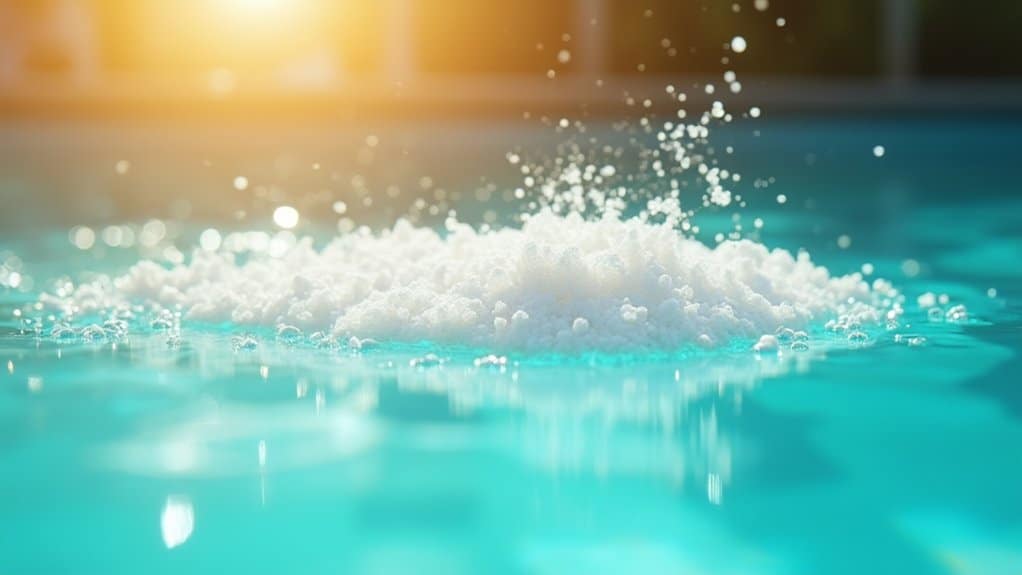
Granular stabilizer offers the most budget-friendly option, though it dissolves slowly over 24 to 48 hours. Place it in a clean sock inside your skimmer basket or hang it near a return jet, never add it directly to pool water, as this causes settling and potential floor staining.
Keep your pump running during dissolution for proper distribution. Retest after 48 to 72 hours, and add smaller doses if levels remain insufficient.
How Long Until Stabilizer Starts Working?
After adding stabilizer to your pool, you’ll need to wait 24-48 hours before it fully integrates into your water and begins protecting chlorine from UV breakdown. Granular cyanuric acid dissolves slowly, so pre-dissolving it in warm water before application speeds up the activation process considerably. Liquid stabilizer products activate faster, but you should still run your pump continuously and wait 48-72 hours before testing to get an accurate CYA reading.
Granular CYA Dissolving Time
When you add granular cyanuric acid to your pool, don’t expect immediate results, this chemical dissolves far more slowly than chlorine or pH adjusters. The dissolution timeline typically spans 24-48 hours under ideal conditions, even with continuous circulation running.
Water temperature greatly affects how quickly CYA becomes available in your pool. Warmer water (80°F+) accelerates dissolution, while cold water extends the process considerably. If you’re adding stabilizer during winter months, expect longer wait times before testing.
For faster results, pre-dissolve granules in a bucket of hot water (120-140°F), stirring vigorously for 10-15 minutes. Let the mixture sit for 30-60 minutes before slowly pouring it around your pool’s perimeter during active circulation. Always wait at least 48 hours after addition before testing stabilizer levels.
Liquid Stabilizer Activation Speed
Unlike granular cyanuric acid that takes 24-48 hours to dissolve, liquid stabilizer begins protecting your chlorine immediately upon addition. The activation mechanism works instantly because the fast-dissolving cyanuric acid formula integrates rapidly with your pool water.
Several circulation time factors determine how quickly the stabilizer disperses throughout your pool:
- Strong pump flow distributes most product within 10 minutes
- Adding slowly over the deep end return jet optimizes coverage
- Multiple return jets accelerate even distribution
- Wait 1 hour before testing for accurate CYA readings
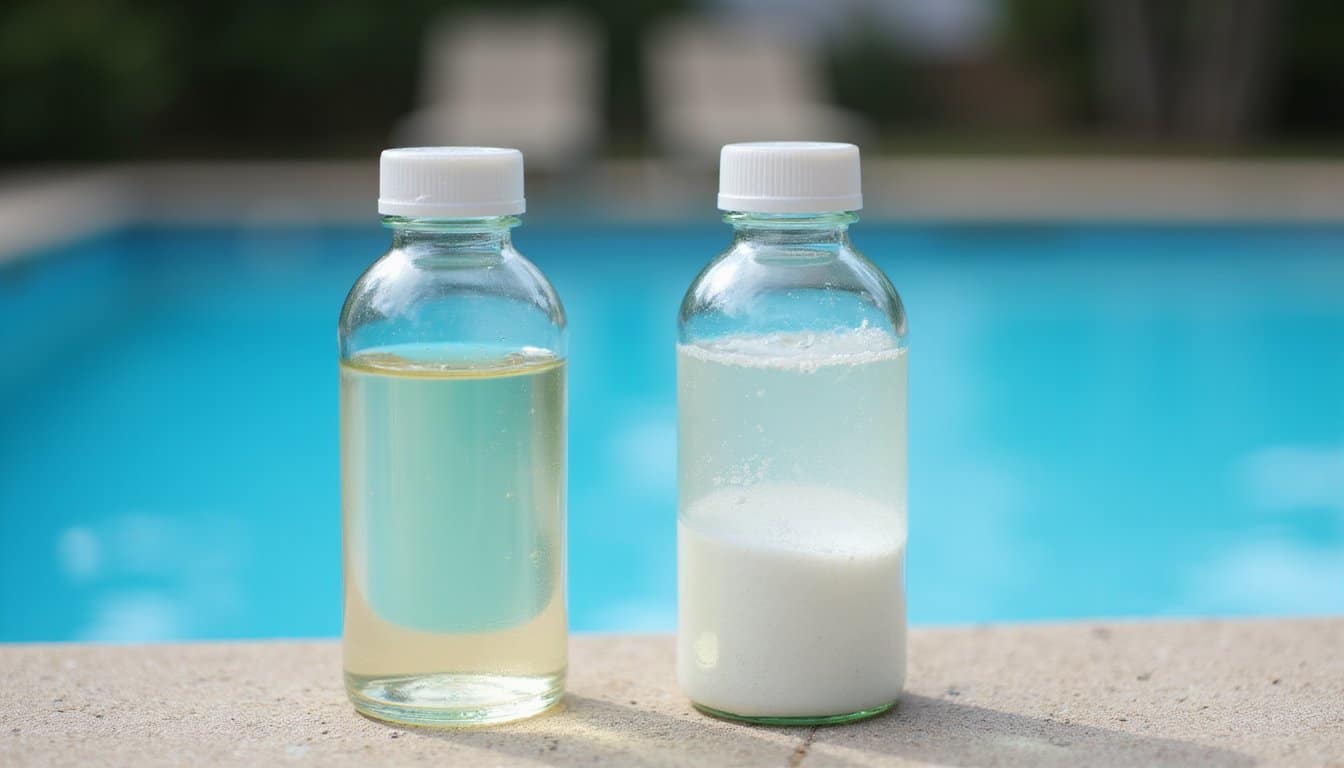
Before adding, shake the bottle upside down thoroughly. A thick, sticky layer settles naturally over time, and proper mixing guarantees you’re applying the full concentration. You’ll notice an opaque, paint-like consistency when it’s ready for use.
Can You Swim While Stabilizer Dissolves?
While the stabilizer dissolves in your pool over several days, swimming remains technically possible but carries some practical considerations. During stabilizer dissolution, undissolved granules may settle on your pool floor, potentially damaging vinyl liners if swimmers disturb them. You’ll also encounter higher localized concentrations of cyanuric acid near addition points, which can cause skin and eye irritation.
For ideal swimming safety, wait until granules fully dissolve before entering the water. Keep your pump running continuously to distribute the stabilizer evenly throughout the pool. If you’ve added stabilizer through the skimmer method, avoid swimming near return jets where concentrations remain heightened.
After stabilizer dissolves completely, you’ll need to shock your pool. This requires waiting 24 hours before swimming due to increased chlorine levels. After the stabilizer has fully dissolved and circulated, the next step is to shock the pool to reestablish proper free chlorine levels, keeping swimmers out for at least 24 hours due to elevated sanitizer concentrations. When determining do i add stabilizer or chlorine first for pool, it’s generally best to allow the stabilizer to disperse before shocking, ensuring the added chlorine is protected from rapid UV degradation and remains effective.
Monthly Testing Prevents Stabilizer Surprises
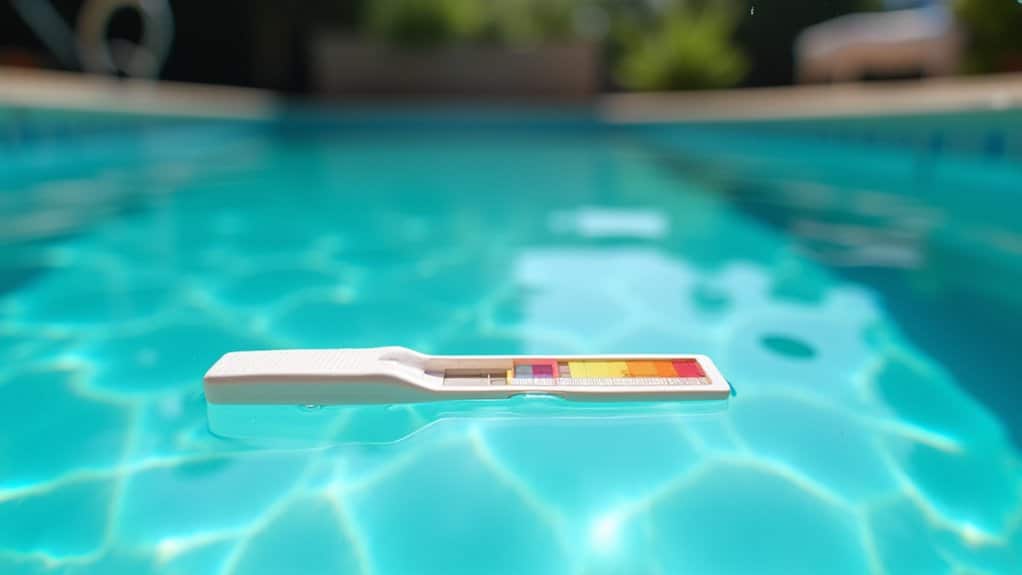
Testing your cyanuric acid levels monthly with affordable test strips helps you catch imbalances before they drain your wallet through wasted chlorine. You’ll spot gradual CYA accumulation or unexpected drops from dilution long before algae blooms or cloudy water signal a problem. Setting a consistent schedule for these checks keeps your stabilizer within the ideal 30-50 ppm range year-round.
Test Strips Save Money
Most pool owners underestimate how quickly low stabilizer levels can drain their chemical budget through wasted chlorine. Test strips offer cost-effective maintenance by catching CYA deficiencies before they trigger expensive chlorine loss cycles. You’ll spend less on strips than liquid reagent kits while getting reliable results for monthly trend tracking.
Consider the financial advantages:
- Eliminates pool store trips and their associated testing fees
- Prevents algae treatments that cost far more than preventive testing
- Reduces chlorine waste by identifying stabilizer problems early
- Lasts longer than liquid kits, lowering per-test costs
The convenience-accuracy tradeoff works in your favor for routine monitoring. Quick dip-and-read functionality tests CYA alongside chlorine and pH in seconds. App integration stores your results and recommends precise stabilizer adjustments, preventing costly chemical imbalances throughout the season.
Catch Accumulation Early
Affordable test strips solve immediate detection needs, but their real value emerges through consistent monthly scheduling. By establishing a monthly CYA testing frequency, you’ll identify declining stabilizer levels before they compromise your chlorine’s effectiveness. This early detection low stabilizer approach prevents the frustrating cycle of constant rechlorination and wasted chemicals.
Heavy rain, backwashing, and water replacement dilute cyanuric acid without warning. Monthly checks catch these drops before UV rays destroy your unprotected chlorine within hours. You’ll maintain the ideal 30-50 ppm range consistently rather than reacting to algae outbreaks or cloudy water.
Test at the same time each month, avoiding samples right after chemical additions. After storms or significant water replacement, retest immediately. This proactive schedule eliminates surprises and keeps your sanitizer working all season efficiently.
Schedule Regular CYA Checks
Regular CYA checks form the backbone of effective stabilizer management, and you’ll want to test at least once monthly for outdoor pools. Establishing a consistent pool water testing schedule prevents cumulative buildup from stabilized chlorine products while catching drops before chlorine loss becomes problematic.
Your stabilizer monitoring strategy should include:
- Weekly testing for high-usage pools or sunny climates where UV exposure accelerates chlorine degradation
- Recording each result to track trends and detect gradual changes
- Testing alongside pH and alkalinity for exhaustive water balance assessment
- Using reliable CYA test kits designed for accurate measurement
Maintain detailed logs of your findings. These records enable early intervention, whether you’re adding stabilizer granules to correct low levels or planning partial drains to reduce excessive CYA concentrations.
Frequently Asked Questions
Does Pool Stabilizer Expire or Lose Effectiveness When Stored for Long Periods?
Pool stabilizer (cyanuric acid) doesn’t expire or lose potency when you store it properly. You can keep it indefinitely in a cool, dry location between 50-85°F using airtight containers. Unlike liquid chlorine, it won’t degrade over time. However, moisture exposure causes clumping, which makes dissolution difficult but doesn’t affect chemical effectiveness. You should discard the stabilizer only if it’s contaminated with other chemicals, shows unusual colors or odors, or has severe water damage.
Can High Stabilizer Levels Be Lowered Without Draining Pool Water?
Yes, you can lower high stabilizer levels without fully draining your pool. Use aluminum sulfate (alum) as a flocculant, add 8.33 pounds per 10,000 gallons when your pH is between 5.8-8.0 and the water temperature reaches at least 70°F. You’ll need to vacuum the resulting sludge to waste. Alternatively, try a CYA Removal Kit™, which works without draining. However, most professionals still recommend partial dilution as the most reliable method.
Will Adding Stabilizer Affect My Pool’s pH or Alkalinity Levels?
Adding stabilizer (cyanuric acid) won’t substantially affect your pool’s pH levels. CYA has minimal direct impact on pH compared to other pool chemicals. However, it does contribute slightly to your total alkalinity reading. You’ll want to test your water after adding stabilizer and make any necessary adjustments. Maintain your pH between 7.2-7.8 and total alkalinity at 80-120 ppm through standard balancing protocols independent of your CYA additions.
Is Cyanuric Acid Safe for Pets That Drink Pool Water Occasionally?
Yes, cyanuric acid is generally safe for pets that occasionally drink pool water. A few sips from a properly maintained pool won’t cause serious harm, as the diluted chemical concentration poses minimal risk. However, you should watch for vomiting, diarrhea, or lethargy if your pet consumes large amounts. Keep stabilizer levels within recommended ranges (30, 50 mg/L), always supervise pool time, and provide fresh drinking water to discourage pool water consumption.
Do Indoor Pools Need Stabilizer if They Have No Sunlight Exposure?
No, your indoor pool doesn’t need a stabilizer if it has no sunlight exposure. Cyanuric acid’s sole purpose is protecting chlorine from UV degradation, without direct sunlight, this protection becomes unnecessary. You’ll maintain effective chlorine levels without stabilizer intervention, avoiding the accumulation issues outdoor pools face. Regulatory guidelines explicitly restrict stabilizer use to outdoor applications. Simply maintain your free chlorine between 2.0, 10.0 ppm, and you’ll achieve consistent sanitization without CYA.