Muriatic acid is a diluted form of hydrochloric acid (typically 10-35% HCl) that you’ll use to lower your pool’s pH and total alkalinity when levels climb too high. It’s more aggressive than dry acid, so you’ll need chemical splash goggles, acid-resistant gloves, and proper ventilation before handling it. You should always dilute it 10:1 with water and never exceed half a gallon per application. Below, you’ll find exact dosing calculations and step-by-step application methods.
What Is Muriatic Acid and Why Do Pool Owners Use It?
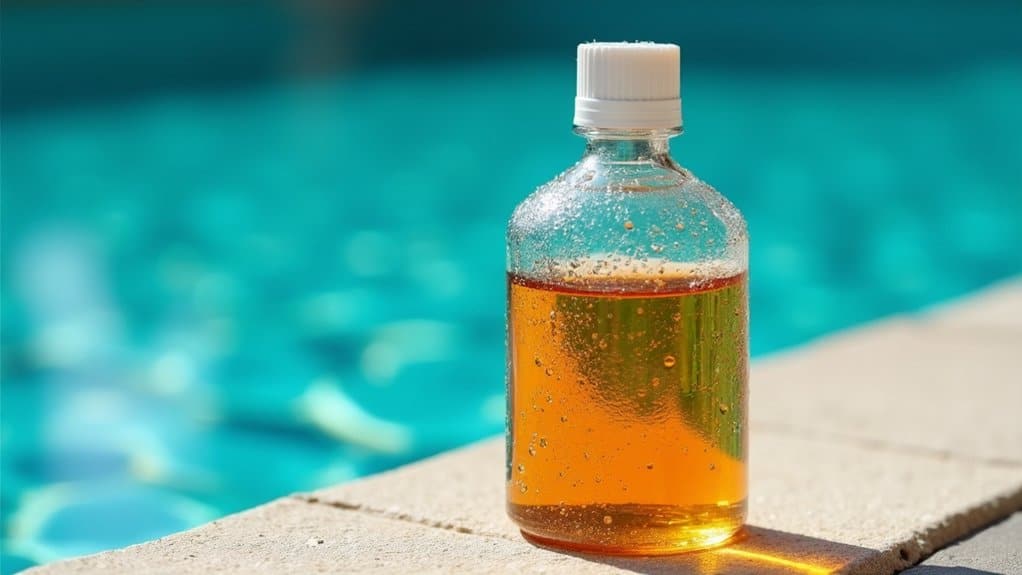
Muriatic acid is a diluted form of hydrochloric acid (HCl), a strong inorganic compound that dissociates completely when it contacts water. Commercial pool muriatic acid typically contains 20-35% HCl, though hardware store versions offer 10-12% concentrations. You’ll recognize it by its clear to slightly yellow appearance and sharp, pungent odor. Pool owners primarily use muriatic acid to adjust pH levels and neutralize alkaline water in their pools. The acid is also valuable for cleaning and descaling pool surfaces, tiles, and filtration equipment. Because this substance is highly corrosive and toxic, pool owners must follow strict safety protocols including wearing chemical-resistant gloves and goggles when handling it.
Muriatic Acid vs. Dry Acid: Which Works Better?
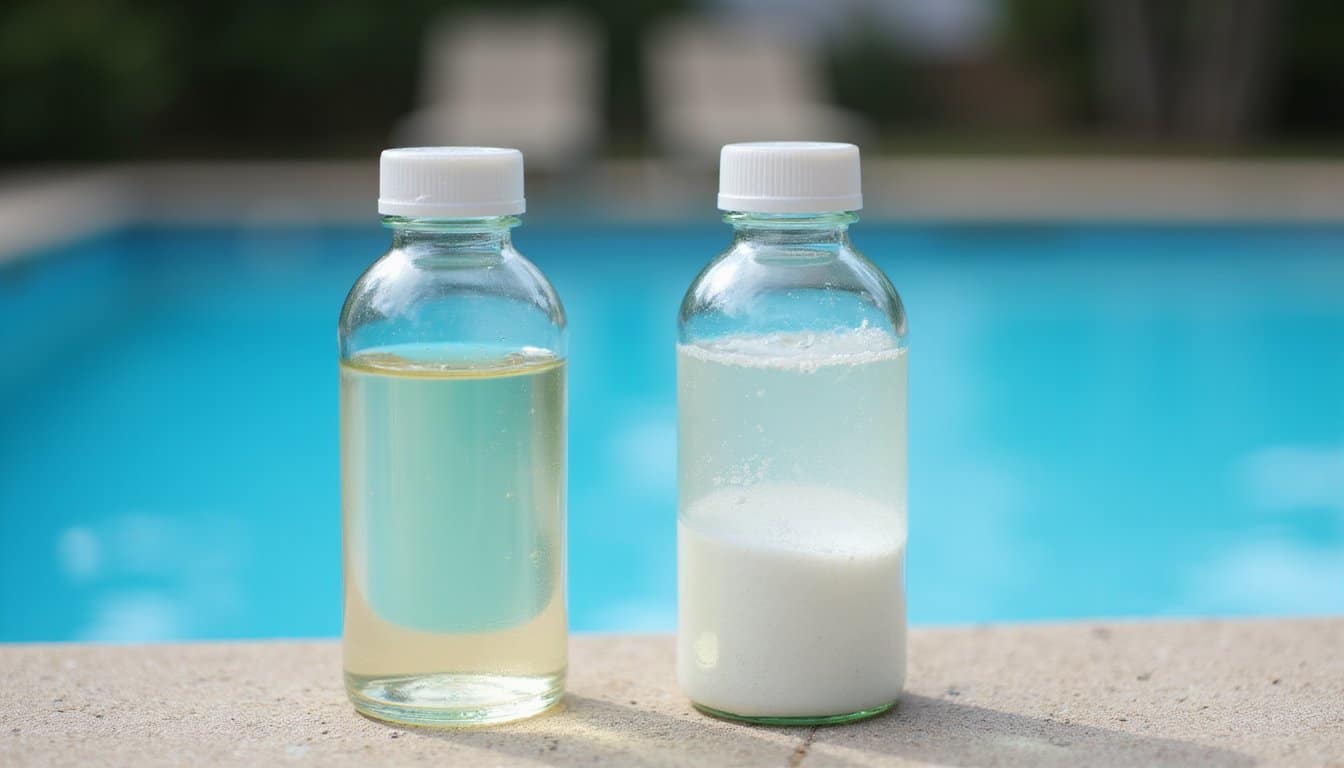
When choosing between muriatic acid and dry acid (sodium bisulfate) for pool chemistry adjustments, you’ll need to weigh potency, safety, and practical application requirements. Muriatic acid delivers rapid pH reduction and aggressively lowers total alkalinity, making it ideal for significant corrections. However, it releases harmful fumes and requires protective gear, proper ventilation, and chemical-resistant storage containers.
Dry acid offers a safer alternative with its granular form that won’t burn dry skin or produce fumes. It provides more gradual pH reduction, reducing the risk of overcorrection. Because dry acid typically doesn’t drop localized pH below 5.5, it preserves total alkalinity better than muriatic acid.
Consider dry acid for routine adjustments and muriatic acid for substantial corrections requiring aggressive chemical action.
When Your Pool Actually Needs Muriatic Acid
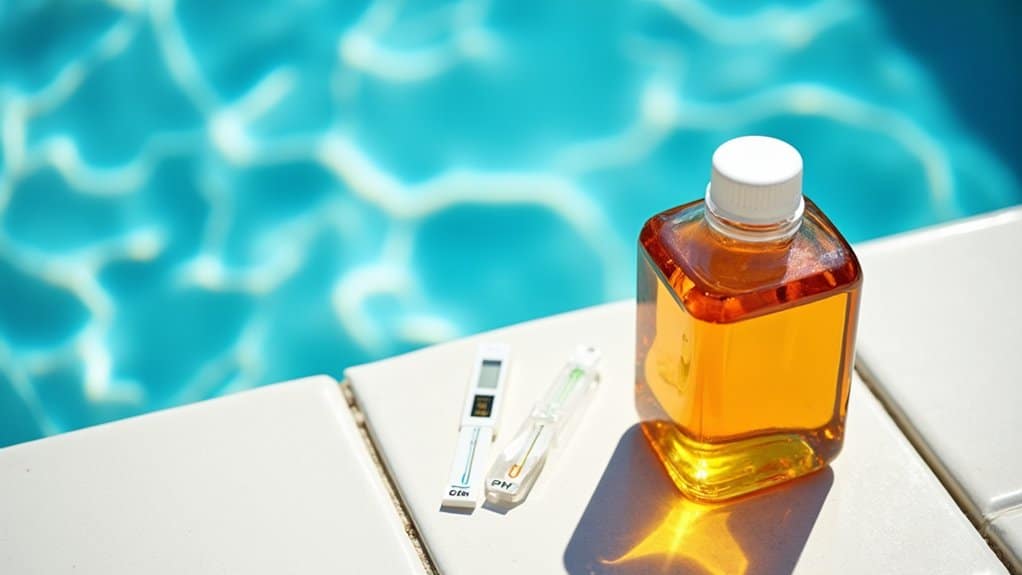
Timing determines whether muriatic acid serves as a solution or creates additional problems for your pool chemistry. Understanding pool water chemistry basics helps you identify when intervention becomes necessary.
You’ll need this alkalinity adjustment chemical when pH exceeds 7.6 or total alkalinity rises above 120 ppm. It’s also essential as a calcium scale prevention acid when hard water threatens equipment.
| Condition | Indicator | Action Required |
|---|---|---|
| High pH | Above 7.6 | Add acid to lower |
| High Alkalinity | Above 120 ppm | Gradual acid treatment |
| Salt Cell Use | Rising pH trend | Bi-weekly adjustment |
For safe pool acid usage context, test water before adding chemicals. Proper pool chemical balancing requires accurate measurements, not guesswork.
How Much Muriatic Acid Does Your Pool Need?
How precisely you calculate muriatic acid dosage determines whether you’ll achieve balanced water or create a new chemistry problem requiring correction. Pool volume determination serves as your foundation, measure length, width, and average depth, then multiply by 7.5 for gallons.
When using pool cleaner acid, follow these critical guidelines:
- Add 10-12 fluid ounces per 10,000 gallons to lower pH from 7.8 to 7.4
- Use 20 ounces per 10,000 gallons to reduce alkalinity by 10 ppm
- Never exceed ½ gallon per single application
- Dilute acid 10:1 (water-to-acid) before adding
- Retest after 1-5 hours before making adjustments
Proper dosing supports pool equipment corrosion prevention, pool surface protection, and water clarity control chemistry. Always start conservatively, you can add more, but you can’t remove excess acid.
Safety Gear You Need Before Handling Muriatic Acid
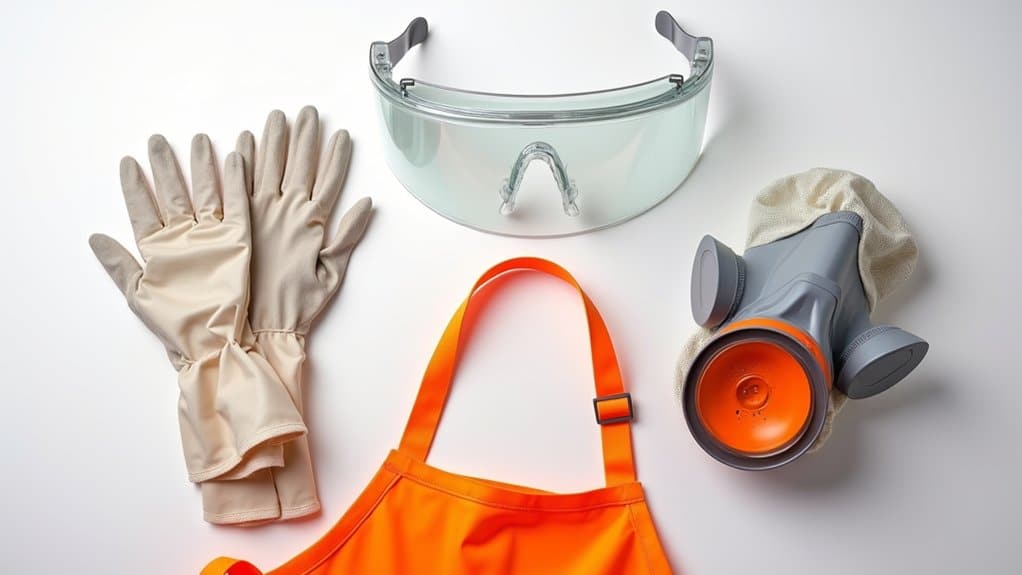
Proper protective equipment stands between you and serious chemical burns when handling muriatic acid.
Eye protection requires chemical splash goggles rated for acids that seal tightly against your face. Add a face shield when working with stronger concentrations.
Hand protection demands acid-resistant gloves made from rubber or neoprene. These must cover your hands completely and should be replaced immediately if damaged.
Body protection includes long-sleeved shirts, pants, a chemical-resistant apron, and rubber boots. You’ll want every inch of skin covered during handling.
Respiratory protection prevents inhalation of corrosive fumes. Use a respirator and work only in well-ventilated areas.
Additional gear includes keeping a hose nearby for immediate rinsing, baking soda to neutralize spills, and acid-resistant plastic containers for safe transport and storage.
How to Add Muriatic Acid to Your Pool Safely
Before you pour muriatic acid into your pool, you’ll need accurate water chemistry readings to determine exactly how much acid the job requires. Test your pH and alkalinity levels first, targeting a pH range of 7.2-7.8. Know your pool volume in gallons for precise dosing calculations.
For safe muriatic acid application in pools, follow these steps:
- Fill an acid-resistant bucket with 4-5 gallons of water before adding pool acid
- Slowly pour muriatic acid into water using a 10:1 dilution ratio, never reverse this
- Turn on your pump to guarantee full circulation before adding the mixture
- Walk the perimeter and pour into the deep end while the system runs
- Wait 30 minutes before reentering after muriatic acid pool treatment
Retest levels after 1-2 hours of circulation to confirm proper adjustment.
How Muriatic Acid Balances pH and Alkalinity
Understanding the chemistry behind muriatic acid‘s action helps you make informed decisions when adjusting your pool water. What is muriatic acid? It’s a diluted form of hydrochloric acid that releases hydrogen ions when added to water. These ions react with hydroxide ions, effectively lowering pH levels.
What does muriatic acid do for your pool’s chemistry? When you add muriatic acid in pool water, it targets both pH and total alkalinity simultaneously. High alkalinity above 120 ppm causes persistent pH elevation, cloudiness, and reduced chlorine efficiency.
What is muriatic acid used for specifically? You’ll use it to bring pH back into the 7.2-7.8 range while reducing excessive alkalinity. This dual action protects equipment, prevents scaling, and optimizes sanitizer performance.
Frequently Asked Questions
Can Muriatic Acid Damage My Pool Liner or Surface Over Time?
Yes, muriatic acid can damage your pool liner or surface over time if you don’t use it properly. Direct contact with concentrated acid causes vinyl liner fading, wrinkling, and deterioration. It’ll also eat away at plaster and corrode tiles with frequent overuse. You should always dilute acid at a 1:10 ratio with water, pour it in the deep end away from walls, and run your circulation pump to prevent localized damage.
How Long Should Swimmers Wait After Adding Muriatic Acid to the Pool?
You should wait at least 30 minutes to 1 hour after adding muriatic acid before swimming. Run your pump continuously during this time to guarantee proper dilution and distribution. If you’ve added a larger dose or your pool has poor circulation, extend the wait to a full hour. Always test your pH levels before entering, they should read between 7.2 and 7.8 to confirm it’s safe.
Does Muriatic Acid Expire or Lose Effectiveness During Storage?
Yes, muriatic acid does lose effectiveness over time. Once you’ve opened a container, you’ll maintain usability for 6 months to 1 year with proper storage. Unopened containers last approximately 5 years under ideal conditions. To preserve potency, you should store it below 95°F in a cool, dark, well-ventilated area with tightly sealed caps. Air exposure, moisture, and temperature fluctuations accelerate degradation, so always test older solutions before heavy-duty applications.
Can I Use Muriatic Acid to Clean My Pool Filter Cartridges?
Yes, you can use muriatic acid to clean your pool filter cartridges. It’s effective at breaking down calcium deposits and mineral buildup from filter pleats. Dilute 20% muriatic acid 1:1 with water, always adding acid to water, never the reverse. Soak the cartridge in an acid-resistant plastic container, then flush thoroughly with clean water. Wear protective gear including gloves, goggles, and a respirator, and work in a well-ventilated area.
What Neutralizes Muriatic Acid if Accidentally Spilled on Pool Deck?
If you accidentally spill muriatic acid on your pool deck, neutralize it immediately with soda ash (sodium carbonate) or baking soda. Sprinkle the neutralizing agent directly onto the spill until the fizzing stops, indicating the acid has been neutralized. You’ll want to wear protective gear during cleanup and rinse the area thoroughly with water afterward. Acting quickly prevents surface damage and protects surrounding landscaping from acid exposure.