
Mustard algae in pool is a chlorine-resistant strain of green algae that appears as yellowish-brown deposits on your pool’s walls, floors, and shaded areas. You’ll recognize it by its gritty texture and dusty appearance that brushes off easily but returns within days. Unlike green algae, it lacks sufficient chlorophyll, giving it that distinctive yellow to brownish color. Understanding where it hides and how it differs from other algae types will help you eliminate it effectively.
What Is Mustard Algae?
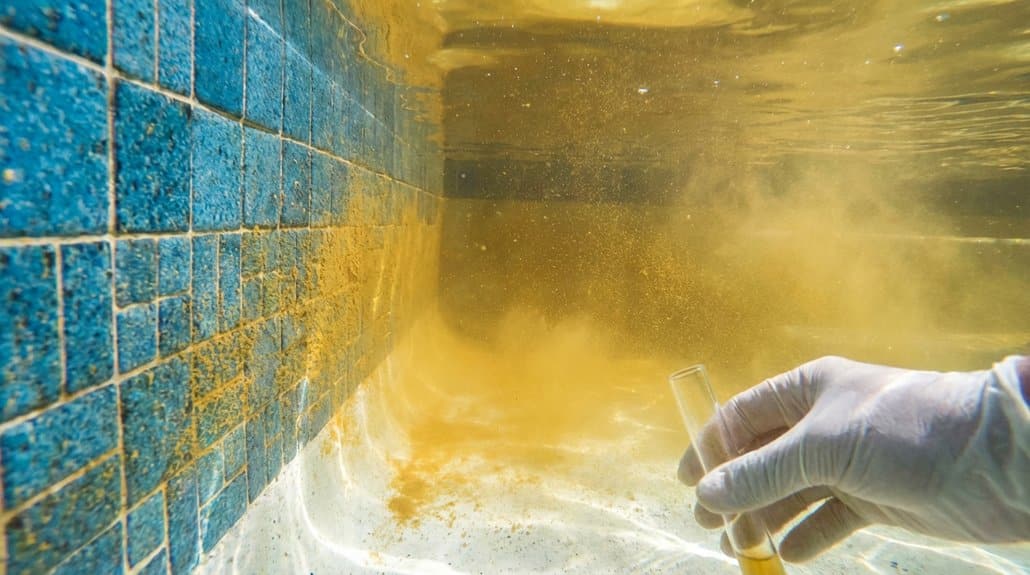
Mustard algae is a chlorine-resistant strain of green algae that lacks sufficient chlorophyll, giving it a distinctive yellow to brownish appearance rather than the typical green color. You’ll often find this yellow algae forming dusty deposits on pool walls, steps, and shaded areas where circulation runs low.
Unlike standard algae varieties, chlorine-resistant algae like mustard algae contains protective compounds that defend against sanitizer oxidation. This means your regular chlorine levels won’t eliminate it effectively. The algae brushes off surfaces easily but returns quickly, creating ongoing maintenance challenges. Left untreated, mustard algae can damage pool filtration systems and significantly increase your maintenance costs over time. Effective treatment typically requires copper-based algaecides along with multiple applications to fully eliminate the problem.
You should know that mustard algae spreads beyond your pool water to equipment, toys, and accessories. It also harbors bacteria, making proper identification and treatment essential for maintaining sanitary swimming conditions. Contaminated swimsuits and pool equipment can reintroduce the algae even after treatment, so cleaning all accessories thoroughly is critical to preventing reinfestation.
How to Identify Mustard Algae in Your Pool
Mustard algae displays a distinctive yellowish-green to brown hue with a slimy texture that clings to surfaces rather than floating freely in your water. You’ll typically find it concentrated in shaded, low-circulation areas like pool walls, steps, behind ladders, and near light fixtures. Pools located near open spaces, forests, or swampy areas face higher contamination risks due to increased exposure to organic debris and wildlife.
Recognizing these color and location patterns helps you distinguish mustard algae from ordinary dirt, pollen, or sand that it closely resembles. Because mustard algae is chlorine resistant, it can persist even when your pool maintains normal sanitizer levels. Regular water testing helps detect imbalances in sanitizer levels, pH, and alkalinity that may indicate algae presence before it becomes visibly established.
Color and Texture Clues
When you’re trying to identify mustard algae in your pool, color serves as your primary diagnostic indicator. Yellow pool algae typically presents as yellowish-brown deposits ranging from pale yellow-green to deeper brown tones. If you’re wondering what does yellow algae look like in a pool, look for dusty patches that mimic sand, pollen, or dirt accumulation on walls, steps, and shaded areas.
Texture provides critical differentiation from other algae types. Yellow algae in pool environments feels gritty rather than slimy, a key distinction from green algae’s slippery film. When you brush affected areas, the algae disperses into a cloudy suspension but resettles within hours.
This persistent clinging behavior, combined with its chlorine resistance, confirms mustard algae presence and distinguishes it from ordinary debris requiring standard cleaning protocols. Be aware that mustard algae can also attach to pool equipment, toys, and bathing suits, which allows it to spread quickly throughout your pool area if not addressed promptly. Like all algae types, mustard algae thrives in warm, sunlit conditions, making shaded inspection areas particularly important during your regular pool maintenance checks. Implementing regular pool maintenance services can help mitigate the risk of mustard algae proliferation. These services often include thorough cleaning and chemical balancing, which are essential in preventing algae buildup.
Location Patterns Matter
Location reveals mustard algae’s presence more reliably than color alone. You’ll notice this contaminant’s shady areas preference immediately, it forms primarily on pool walls receiving limited sunlight rather than sun-exposed floors. Check corners, behind ladders, and along the shaded side of your pool first.
Wall and floor attachment distinguishes mustard algae from floating debris. It clings stubbornly to vertical and horizontal surfaces, resettling quickly after you brush it away. This persistence often leads to misidentification as dirt or sand. Its distinctive appearance resembles sand at the bottom of the pool, making visual identification challenging for many pool owners.
Examine your poor circulation zones carefully. Mustard algae thrives where water flow remains weak or stagnant. Areas near steps, behind equipment, and in corners with inadequate circulation create ideal conditions. You’ll also find it hiding on ladders, light fixtures, and inside skimmer crevices where movement is minimal.
Appearance and Color Characteristics of Mustard Algae

Mustard algae displays a distinctive yellowish-green to brown coloring that sets it apart from the bright green appearance of common pool algae. You’ll notice it has a sand-like visual texture that makes it easy to confuse with pollen, dirt, or debris that’s blown into your pool. Look for these deposits primarily in shady areas of your pool where sunlight doesn’t reach, including behind ladders, along steps, and in corners where water circulation is limited.
Unlike other algae types, mustard algae is chlorine-resistant and can survive normal sanitizer levels that would typically kill common green algae. It contains protective compounds that act as a defense mechanism against sanitizers, creating a large chlorine demand when present in your pool. This stubborn algae thrives in warm, stagnant water with inadequate chlorine levels, making poorly maintained pools especially vulnerable to infestation.
Yellowish-Green to Brown Coloring
How can you tell if that yellowish residue in your pool is actually mustard algae? Start by examining the color closely. Mustard algae in pool environments displays a distinct yellowish-green to brown coloring that sets it apart from other contaminants. Additionally, mustard algae tends to cling to pool surfaces, including walls and steps, making it challenging to remove without proper treatment. Understanding the causes of algae in pools is essential for preventing future outbreaks, as factors like poor circulation, inadequate sanitization, and high organic matter can contribute to its growth.
When identifying what does mustard algae look like, you’ll notice dusty yellow or mustard-colored patches clinging to surfaces. The coloring ranges from pale yellow-green to deeper brown hues, often resembling sand or pollen at first glance.
Yellow algae pool deposits typically appear in shaded areas where chlorine effectiveness diminishes. You’ll find these brownish-yellow formations on walls, behind ladders, and along steps. Unlike floating debris, this algae adheres stubbornly to surfaces and returns quickly after brushing, a key identifier that confirms you’re dealing with mustard algae rather than ordinary dirt.
Sand-Like Visual Texture
When you spot what appears to be sand scattered across your pool’s floor or clinging to shaded walls, you’re likely looking at mustard algae‘s signature texture. This brown algae in pool environments mimics granular sand particles so convincingly that many pool owners dismiss it as debris blown in by wind.
Unlike actual sand, mustard algae clings stubbornly to surfaces in low-circulation zones. When you brush these deposits, they disperse into a muddy cloud rather than sinking cleanly to the bottom. This brown pool algae resettles within hours, reappearing in the same shaded spots behind ladders and along steps. The surface of mustard algae has a dry, powdery texture that further contributes to its sand-like appearance.
You can distinguish mustard algae from sand through a simple test: brush the deposit and observe. Sand stays displaced, while mustard algae returns, requiring targeted chemical treatment for elimination.
Shady Area Deposits
Because mustard algae thrives away from direct sunlight, you’ll find its telltale yellowish-green to brown deposits concentrated in your pool’s shadiest zones. This pool algae specifically targets low-light areas where your filtration system has minimal circulation impact.
Look for shaded area deposits in these common locations:
- Behind ladders and along pool steps where shadows persist
- Along walls and floors beneath overhanging structures
- In corners and crevices that receive limited direct light
These yellowish deposits cling stubbornly to surfaces, creating conditions similar to wetland environments. The algae’s defensive compounds allow it to survive highly chlorinated water, which explains why standard treatment often fails. You’ll notice the powdery residue brushes away easily but returns within days. Proper identification of these shaded growth patterns is essential before implementing targeted treatment protocols.
Texture and Feel of Mustard Algae
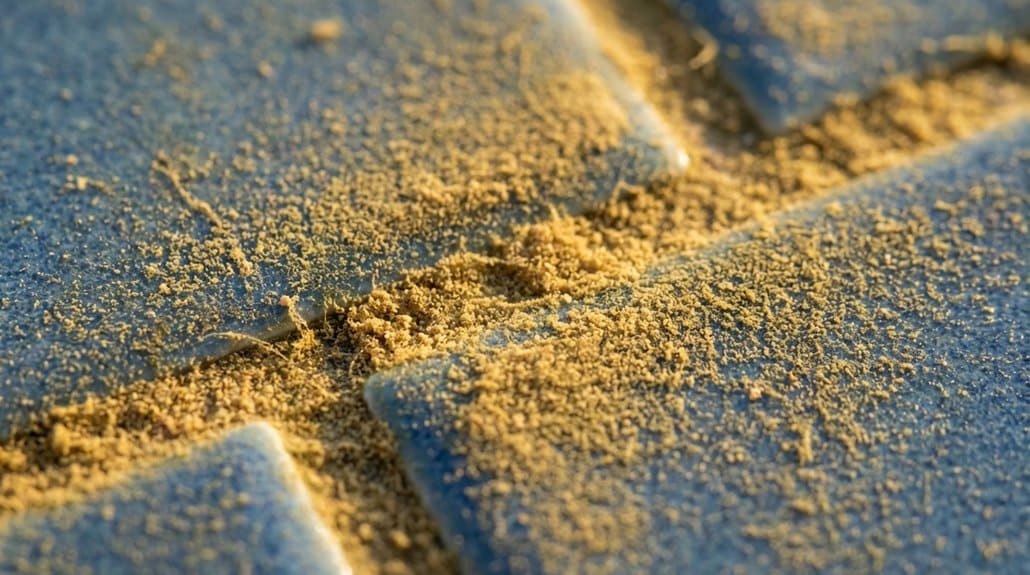
Most pool owners first notice mustard algae’s unusual texture when they touch it, it feels grainy and sandy rather than slimy like green algae. When you spot yellow spots in pool walls or floors, run your fingers across the deposit. You’ll feel a gritty, dust-like consistency that distinguishes it from other contaminants.
This brown algae looks like sand because of its fine, powdery composition. The microscopic structures form webbed, mat-like formations that create a textured surface you can physically feel. When algae on bottom of pool appears, brushing causes it to disperse into clouds rather than dissolve. These particles resettle quickly, often within hours.
The clingy biofilm protection means the algae adheres firmly to surfaces despite its loose appearance. Because mustard algae can survive outside swimming pools, it may also attach to pool toys, floaties, and bathing suits that enter the water. This characteristic makes mustard algae difficult to remove once established, requiring persistent treatment efforts.
Common Locations Where Mustard Algae Grows
Knowing how mustard algae feels helps you identify it, but understanding where it grows allows you to target treatment effectively. Yellow algae on pool walls thrives in specific conditions that standard chlorination can’t reach. You’ll find this persistent algae congregating in shaded pool areas where UV radiation and chlorine penetration are limited.
Common growth locations include:
- Behind ladders, handrails, and equipment that create shadow zones on pool surfaces
- Wall corners and step areas with minimal water circulation
- Floor sections in deeper zones where sunlight doesn’t penetrate effectively
Mustard algae also colonizes pool accessories, toys, and even swimsuits, which explains why infestations reappear after treatment. You’ll need to inspect and sanitize all equipment that contacts pool water to prevent recontamination during your eradication efforts.
Types and Variants of Pool Algae Compared to Mustard Algae
Several distinct algae types can infest your pool, but each exhibits unique characteristics that demand specific treatment approaches.
Green pool algae spreads rapidly, replicating every 3-6 hours and coating surfaces in slimy film. Standard superchlorination eliminates it effectively. Black algae proves most destructive, forming protective layers with root-like structures that penetrate concrete and require aggressive steel brushing with spot chlorination.
Green algae doubles every few hours, act fast with superchlorination before it takes over your pool.
Mustard algae differs markedly from these algae types. It grows slower due to chlorophyll deficiency, creating its signature yellow-brown appearance. Unlike free-floating green varieties, mustard algae clings loosely to walls and brushes off easily but returns quickly. It resists standard chlorine levels more than green algae yet lacks black algae’s invasive root system.
Pink slime isn’t true pool algae, it’s bacterial growth requiring different treatment protocols than mustard algae.
Frequently Asked Questions
Can Mustard Algae Spread From One Pool to Another Through Swimsuits?
Yes, mustard algae can spread from one pool to another through your swimsuit. This chlorine-resistant algae clings to fabric fibers and survives transport between pools. You’ll unknowingly carry it on bathing suits, towels, and pool toys if you don’t clean them properly. To prevent cross-contamination, you should soak your swimwear and gear in a water-algaecide solution after each use and wash everything thoroughly before entering a different pool.
Is Mustard Algae Harmful to Swimmers or Pets?
Mustard algae isn’t directly toxic to you or your pets, but it signals poor water sanitation that can harbor harmful bacteria. Swimming in contaminated water increases your risk of skin irritation, eye infections, and gastrointestinal issues. Pets drinking algae-affected water may experience similar digestive problems. You shouldn’t swim until you’ve completed proper treatment and restored balanced water chemistry. Always test your water weekly to maintain safe swimming conditions.
How Long Does It Take for Mustard Algae to Grow Back?
Mustard algae can grow back within 24 to 48 hours if you don’t maintain continuous water circulation and proper chlorine levels. Its chlorine resistance allows it to survive standard treatment and reappear quickly in stagnant, shaded areas. You’ll see regrowth faster if you skip thorough brushing, leave filters uncleaned, or stop running your pump overnight. To prevent recurrence, you should run your pump 24 hours daily during treatment and shock repeatedly.
Can Mustard Algae Survive Outside the Pool During Winter Months?
Yes, mustard algae can survive outside your pool during winter months. Its chlorine-resistant structure allows it to remain dormant on pool equipment, toys, bathing suits, and vacuum heads stored in sheds or outdoors. When spring arrives, these contaminated items reintroduce spores into your pool. You’ll prevent re-infestation by soaking all equipment in algaecide solution before winter storage and maintaining proper sanitizer levels year-round.
Does Mustard Algae Affect Pool Water Chemistry or Ph Levels?
Yes, mustard algae directly affects your pool’s water chemistry. As it grows, it consumes chlorine rapidly, depleting your sanitizer levels and reducing effectiveness. The algae also produces organic waste that increases chlorine demand while potentially lowering pH over time. You’ll notice your water becomes cloudy and filtration efficiency drops. To combat this, you’ll need to maintain free chlorine at 4 ppm and balance pH between 7.4-7.6 before treatment.