Keep your natural pool pristine without harsh chemicals by embracing nature’s own cleaning crew. You’ll want to cultivate beneficial bacteria, position aquatic plants strategically for filtration, and deploy eco-friendly robotic cleaners to handle daily debris. Combine these with targeted biofilm management, optimized water flow systems, and seasonal maintenance rhythms. Natural algae prevention methods round out your chemical-free toolkit. Discover how these seven sustainable approaches work together to create your perfect swimming sanctuary.
Beneficial Bacteria: Your Pool’s Natural Cleaning Crew
Nature’s microscopic janitors, beneficial bacteria form the backbone of natural pool maintenance. These tiny workhorses break down organic waste like sweat, body fluids, and microscopic debris through their specialized enzyme production. They’re particularly effective at converting oils and fats into harmless byproducts while absorbing excess nutrients that could otherwise fuel algae growth. These organisms work alongside water bugs and tadpoles to maintain optimal water conditions. Like the dedicated biofilter systems, these bacteria help purify pool water naturally. Additionally, many pool owners are exploring alternative sanitization methods, weighing the pros and cons of ozone vs chlorine pool sanitizers. While chlorine is a traditional choice for its effectiveness, ozone offers a chemical-free solution that can further enhance the role of beneficial bacteria by reducing the need for harsh chemicals.
Your pool’s microbial diversity creates a robust cleaning system that’s both efficient and environmentally sound. As these beneficial bacteria colonize your pool’s filtration zones, they establish intricate relationships with plants and other microorganisms, contributing to overall ecosystem balance. They’ll work tirelessly at ideal temperatures between 22-25°C, maintaining water clarity and chemistry without harsh chemicals. While the process requires patience to establish, the long-term benefits of this self-sustaining ecosystem far outweigh the initial wait. By supporting these natural processes, you’re choosing a sustainable approach that mimics nature’s own purification methods.
Strategic Plant Placement for Enhanced Filtration
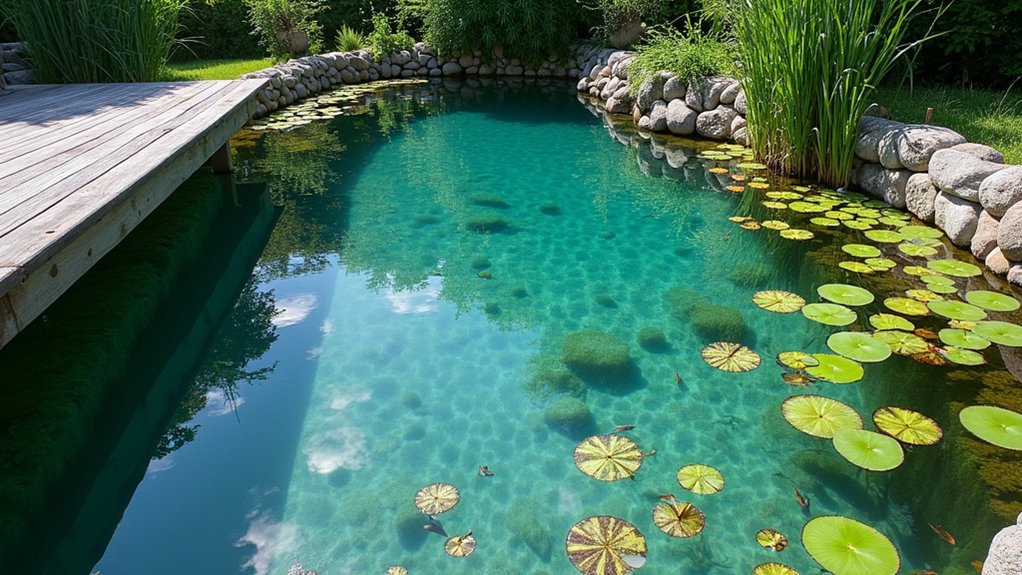
While traditional pools rely heavily on chemicals, strategic plant placement transforms your natural pool into a living filtration system. You’ll want to surround your swim zone on three sides with a regeneration area that’s equal in size, creating an efficient ecosystem for water purification. The aquatic native species work best since they’re already adapted to your local climate and water conditions.
Position deep-rooted plants like cattails and iris in 5-8 inch deep gravel beds, focusing on higher density placement near water entry points. This plant diversity maximizes nutrient absorption and starves algae of their food source. The water remains crystal clear and soft when properly maintained through this natural filtration process. Your regeneration zone should feature a mix of hardy species that can handle submersion while actively filtering nitrogen and phosphorus from the water. The inclusion of sweet flag plants offers natural insect control while contributing to the pool’s filtration capabilities.
Remember to maintain consistent gravel depth throughout and install submerged barriers to keep your filtration medium separate from the swimming area.
Automated Robotic Cleaners and Skimming Systems
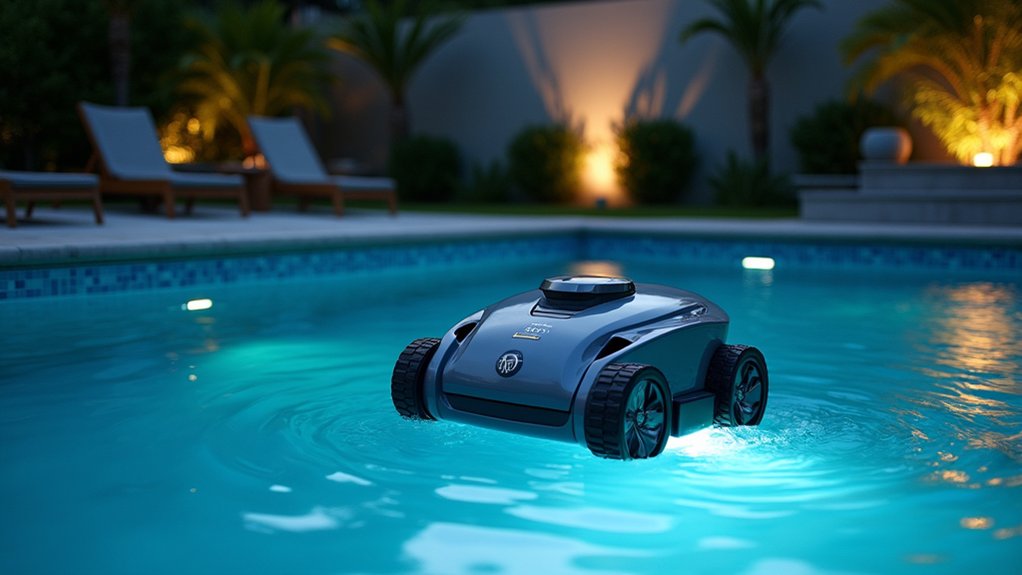
You’ll find that automated robotic cleaners offer an eco-conscious approach to daily debris collection, removing up to 90% of organic matter while using considerably less energy than traditional methods. Your pool’s natural ecosystem benefits from programmable cleaning cycles that maintain consistent water quality without relying heavily on chemicals. Advanced navigation systems provide systematic coverage patterns to ensure no areas are missed during cleaning sessions. Modern cleaners like the Beatbot AquaSense 2 ensure maximum efficiency and water clarity with minimal environmental impact. By setting ideal cleaning schedules during off-peak energy hours, you’re not only maximizing the efficiency of your robotic cleaner but also supporting a more sustainable pool maintenance routine. The integration of a separate filtration system helps further enhance water clarity while reducing the need for chemical treatments.
Daily Debris Collection Methods
Because maintaining pristine pool water relies heavily on effective debris management, implementing a combination of automated and manual collection methods can greatly reduce your reliance on chemical treatments. You’ll find that robotic cleaners with smart navigation efficiently target various debris types while conserving energy, and their enzyme-based clarifiers naturally break down organic matter. Using a pool rake first helps remove major debris before deploying automated systems, ensuring more effective operation. These efficient robotic systems utilize washable filter media that can be reused for years, significantly reducing waste from disposable materials.
To maximize your daily collection frequency, start with manual netting for larger items, then let your automated system handle smaller particles through its reusable filters. You can enhance this process by incorporating gravity-fed filtration and air lift pumps, which work seamlessly with your pool’s regeneration zones. Remember to regularly clean your filter media to prevent biofilm buildup and maintain peak water flow through your pool’s natural ecosystem.
Programming Optimal Cleaning Cycles
Since natural pool ecosystems thrive on consistent maintenance rhythms, programming your automated cleaning cycles demands a strategic approach that aligns with your pool’s biological patterns. You’ll want to leverage your cleaner’s smart scheduling features to complement your pool’s natural filtration cycles. The triple-active brush system ensures thorough cleaning of surfaces while respecting the pool’s biological balance. The internet-enabled monitoring provides real-time oversight of your cleaning routines. Modern solutions like Extrabat Piscine help optimize maintenance scheduling through centralized management.
Set your cleaning algorithms to run during off-peak swimming hours, allowing uninterrupted coverage of your pool’s unique layout. Through cycle customization, you can adjust filtration modes based on seasonal changes and debris loads. Program shorter, frequent cycles during heavy use periods, and schedule intensive cleaning sessions before dawn when your pool’s ecosystem is most receptive to maintenance. By integrating your automated cleaner with existing biofiltration systems, you’ll maintain ideal water clarity while supporting your pool’s natural purification processes.
Biofilm Management Through Targeted Vacuuming
When managing your natural pool’s biofilm, you’ll need to coordinate your vacuuming schedule with the natural growth cycles, focusing on high-accumulation zones while preserving beneficial microbial communities in regeneration areas. You can optimize your cleaning strategy by targeting debris-prone areas after storms and during peak summer months, using gentle vacuum techniques that won’t disrupt the pool’s ecological balance. Your equipment selection should include tools specifically designed for natural pools, such as adjustable-pressure vacuum heads that protect plant zones while effectively removing excess biofilm buildup. The biofilm’s Extracellular Polymeric Substance provides structural protection for the microbial communities, so careful vacuuming helps maintain this beneficial matrix while removing only excess accumulation. Regular maintenance through specialized pool robots ensures thorough cleaning while respecting the wooden construction of the pool basin.
Vacuum Timing and Zones
Natural pool maintenance requires a thoughtful approach to vacuuming that protects beneficial biofilm while maintaining water clarity. Your vacuum techniques directly impact water quality and the delicate ecosystem that makes natural pools work. By understanding when and where to vacuum, you’ll preserve the biological filtration that keeps your pool clean naturally.
- Focus vacuuming on swimming zones while being gentle around planted areas to protect essential biofilm development
- Adjust your cleaning schedule seasonally increase frequency during fall leaf drop and after storms, reduce in winter
- Use skimmers for surface debris instead of vacuuming when possible to minimize disruption to beneficial bacteria
- Target areas with poor circulation more frequently, but maintain gentle suction to avoid disturbing the biological filter system
Remember that a natural pool is a living ecosystem your maintenance approach should work with nature, not against it.
Managing Biofilm Growth Patterns
Balanced biofilm growth plays an essential role in your pool’s natural ecosystem, working alongside targeted vacuuming to maintain ideal water quality. When managed properly, beneficial biofilm communities compete with algae for nutrients, creating a self-regulating system that naturally maintains clear water.
You’ll find biofilm thriving in regeneration zones and on submerged surfaces, where it forms protective microbial communities. These beneficial organisms help filter contaminants while maintaining nutrient balance. The key is supporting helpful bacteria through proper water circulation and strategic planting zones that complement their function.
Watch for signs of excessive biofilm development, which can indicate nutrient imbalances. By maintaining stable water flow and monitoring phosphate levels, you’re supporting the beneficial biofilm competition that keeps your natural pool’s ecosystem healthy and balanced.
Equipment Selection for Success
Selecting the right equipment for your natural pool’s biofilm management creates the foundation for a thriving aquatic ecosystem. Your core arsenal should include a vacuum hose and telescopic pole, working together to maintain pristine water quality without harsh chemicals. When choosing your equipment, focus on sustainable materials and energy-efficient designs that support your pool’s natural balance.
Essential considerations for eco-conscious pool maintenance:
- Opt for recyclable or biodegradable brush materials that won’t introduce microplastics into your water system
- Choose manual cleaning tools over electric alternatives when possible to reduce energy consumption
- Select adjustable equipment that serves multiple purposes to minimize resource waste
- Invest in durable, long-lasting materials that won’t need frequent replacement
Remember to regularly clean and maintain your equipment using natural methods to extend its lifespan and effectiveness.
Natural Water Flow Optimization Techniques
While conventional pools rely heavily on mechanical systems, optimizing water flow through natural methods can dramatically reduce energy consumption and chemical dependency. You’ll want to focus on creating balanced water circulation between your swimming and regeneration zones, maintaining a 50/50 split for ideal filtration efficiency.
Install strategically placed 360-degree rotating jets and return flows to create gentle circular patterns that distribute water evenly throughout your pool. You can enhance this natural movement by incorporating water features like cascades or fountains. During off-peak hours, run variable speed pumps at lower settings to maintain consistent flow while minimizing energy use.
Don’t forget to implement rainwater harvesting systems and efficient pool covers to conserve water. These elements work together to create a self-sustaining ecosystem that requires minimal intervention.
Seasonal Maintenance Rhythms for Crystal Clear Water
Maintaining crystal clear water in a natural pool requires adapting maintenance routines to nature’s seasonal rhythms. By aligning seasonal strategies with natural cycles, you’ll achieve peak water quality while preserving the pool’s ecosystem. Consider these essential maintenance tips that work in harmony with each season’s unique characteristics:
- Winter demands reduced circulation and careful debris management to prevent system strain during dormant months
- Spring calls for thorough revitalization through deep cleaning and restoration of biological filtration systems
- Summer requires consistent monitoring of water clarity and strategic plant management for natural shade
- Fall focuses on preparing regeneration zones and implementing protective measures against leaf accumulation
These chemical-free approaches support your pool’s natural purification processes while maintaining pristine water quality throughout the year’s changing conditions. By incorporating non-chemical cleaning methods for pools, you can reduce your environmental footprint and promote healthier swimming experiences. These methods not only minimize the risk of chemical exposure but also enhance the overall efficiency of your pool’s ecosystem.
Eco-Friendly Algae Prevention Methods
Natural algae prevention doesn’t require harsh chemicals to be effective. You can maintain crystal-clear pool water by embracing eco-friendly options that work with nature rather than against it. Start by introducing beneficial aquatic plants like water lilies, which compete with algae for nutrients while adding beauty to your pool ecosystem.
Harness the bacteria benefits of barley straw, which naturally releases compounds that inhibit algae growth. Combine this with regular brushing and vacuuming to physically remove unwanted growth. You’ll also want to optimize water circulation and use pool covers to limit sunlight exposure. Consider installing a saltwater system for natural chlorine generation, and maintain proper pH levels using simple baking soda. These sustainable methods create a balanced aquatic environment that naturally resists algae formation.
Frequently Asked Questions
How Long Does It Take for Beneficial Bacteria to Establish Fully?
You’ll need to allow 3-6 months for complete bacterial growth and ecosystem stability in your system. The process begins within the first few weeks as heterotrophic bacteria colonize, followed by nitrifying bacteria establishing over several months. You’ll see the best results by maintaining consistent water flow and temperature while adding bacterial supplements during the first season. Your patience during this period guarantees a robust, self-sustaining biological filtration system.
Can Natural Pools Handle Heavy Rainfall Without Chemical Intervention?
Yes, you’ll find that well-designed natural pools can effectively handle heavy rainfall without chemicals, thanks to their built-in rainfall resilience. Your pool’s biological filtration system, combined with proper structural features like deep zones and overflow channels, maintains ecosystem stability during rain events. You can rely on the pool’s natural processes, including beneficial bacteria and aquatic plants, to manage water quality. Just confirm you’ve implemented proper drainage and maintenance protocols.
What Temperature Ranges Are Optimal for Natural Pool Ecosystem Balance?
You’ll find ideal ecosystem stability in natural pools between 26-28°C (78-82°F), where temperature effects support both swimming comfort and biological balance. While your pool can handle fluctuations from 19-25°C seasonally, maintaining consistent temps helps aquatic plants thrive and regulates beneficial microorganism activity. You can work with nature by allowing gentle variations while ensuring your pool’s core ecosystem remains balanced through plant-based filtration and natural shade management.
How Do Natural Pools Perform in Extremely Hot or Cold Climates?
You’ll need specific climate adaptation strategies for your natural pool in extreme temperatures. In hot climates, focus on expanding wetland areas and adding shade features to prevent overheating above 26°C. For cold regions, you’ll want robust insulation and possibly heat pumps to maintain microbial activity above 10°C. Your seasonal maintenance should include adjusting water flow, monitoring temperatures, and diversifying plant selections to match your climate’s unique challenges.
What Is the Typical Lifespan of Aquatic Plants in Filtration Zones?
You’ll find that aquatic plant varieties in filtration zones have diverse lifespans depending on their type. Annual species complete their cycle within one season, while perennials can thrive for multiple years with proper care. Your submerged plants in deeper zones typically live longer than emergent species. To maximize their effectiveness, you’ll need consistent filtration zone maintenance, including seasonal trimming and debris removal. Most aquatic plants will flourish for 3-5 years when properly maintained.