You can maintain a pristine pool without harsh chemicals by leveraging natural chemistry principles and biological filtration. Start by establishing proper pH levels between 8.3-8.5 and installing a zeolite filter system to remove contaminants. Implement mineral-based treatments using copper and silver ions, while incorporating natural cleaners like baking soda and borax. Combine these methods with daily maintenance and UV technology. The all-encompassing approach to chemical-free pool care reveals multiple layers of optimization.
Understanding Natural Pool Chemistry Basics
While traditional pools rely heavily on chlorine for sanitization, natural pools operate under fundamentally different chemical principles that require careful attention to water balance. You’ll need to maintain higher pH levels between 8.3-8.5, compared to chlorinated pools’ 7.2-7.6 range, to optimize nutrient absorption by plants in your natural system. Automated controllers can help maintain consistent levels without constant manual adjustments. Regular testing helps identify potential problems before they become severe issues.
Proper water temperature management affects the pool’s chemical equilibrium, requiring consistent monitoring as conditions change. Your pool’s total alkalinity acts as a buffer, protecting pH stability even as factors like rainfall and heavy use impact the water chemistry. Keeping a printed guide nearby ensures you never forget the correct chemical ranges during maintenance. Without chlorine, you must focus intensively on phosphorus control to prevent algae growth while ensuring calcium hardness stays between 175-300 ppm to protect surfaces and equipment. Understanding these core chemical relationships helps you maintain crystal clear water naturally.
Setting Up a Biological Filtration System
To establish an effective biological filtration system, you’ll need to integrate several key components that work together as a natural purification ecosystem. The system configuration requires careful planning of regeneration zones where aquatic plants and beneficial bacteria work symbiotically to clean your pool water. A properly designed zeolite filter system can effectively remove ammonia and other harmful compounds from the water. The resulting swimming experience provides crystal-clear water without the harsh effects of chemical treatments. The natural system also attracts various forms of beneficial wildlife that contribute to the pool’s ecosystem.
- Install a sturdy pump system that circulates water through your regeneration zone, ensuring consistent flow through gravel and sand media where beneficial bacteria colonize
- Create dedicated planting zones with proper depth gradients, selecting native aquatic plants like reeds, water lilies, and cattails that thrive in your climate
- Position skimmers strategically to remove surface debris before it sinks, and implement proper liner installation to prevent water loss and maintain separation between your swimming and filtration areas
Remember to monitor pH and nutrient levels regularly as your system matures.
Essential Natural Cleaning Solutions and Methods
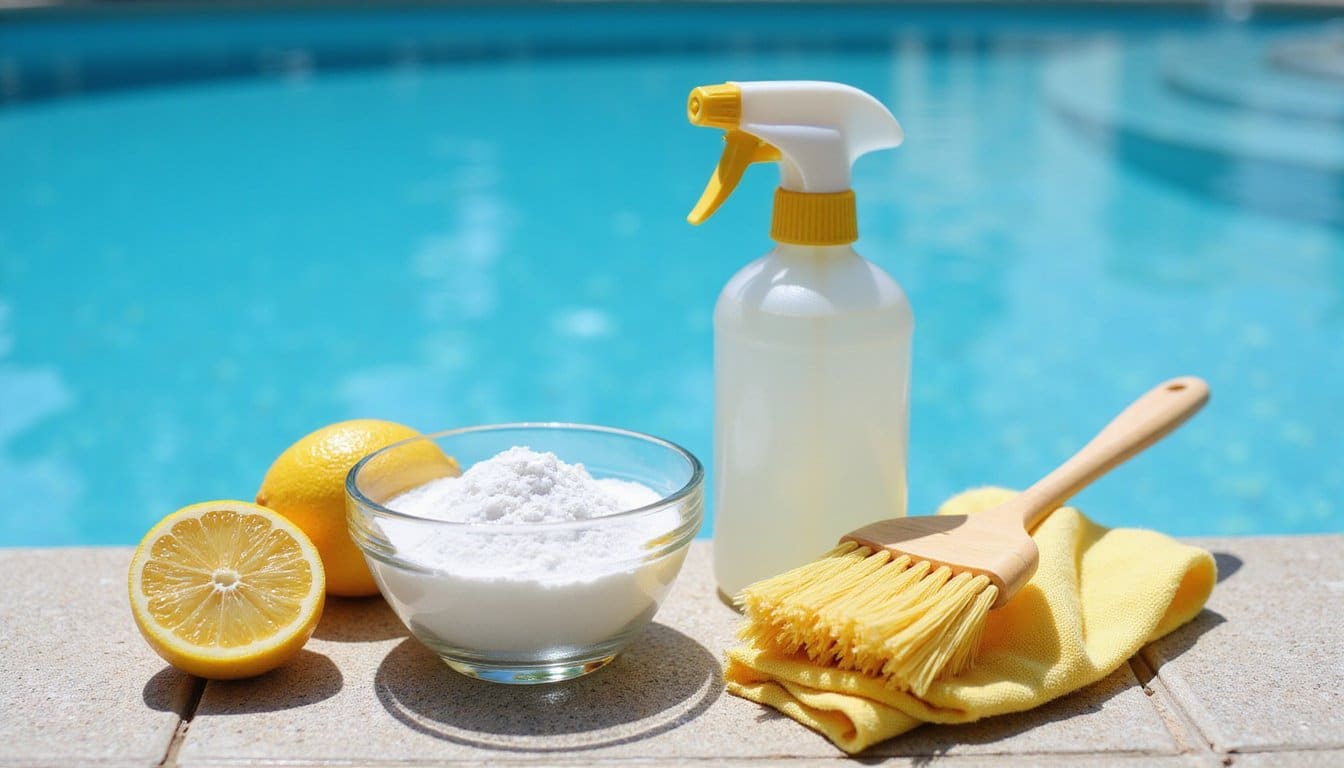
Natural cleaning solutions provide a sustainable alternative to harsh pool chemicals while maintaining water quality and surface cleanliness. Baking soda applications serve multiple functions: creating a non-abrasive cleaning paste for surfaces, increasing water alkalinity (1.5 pounds per 10,000 gallons raises alkalinity by 10 ppm), and preventing mineral buildup on pool surfaces. Adding borax can help raise pH levels, requiring half cup per 10,000 gallons of pool water. A well-designed water circulation system helps prevent contamination naturally without chemical intervention. Using mineral ions from copper and silver provides additional natural sanitizing power while reducing the need for traditional chemicals.
You’ll achieve ideal results by combining vinegar and lemon juice with baking soda. These acidic solutions effectively break down hard water stains and mineral deposits while neutralizing alkaline residues. For boosted cleaning power, apply baking soda initially, followed by vinegar or lemon juice to create a natural fizzing action that lifts stubborn grime. Supplement these methods with daily manual cleaning practices, including skimming and brushing, to minimize chemical dependence and maintain crystal-clear water.
Mineral-Based Water Treatment Strategies
Mineral-based water treatment systems harness the power of naturally occurring elements like magnesium, potassium, and sodium chloride to transform your pool’s sanitization approach. These systems employ mineral water interactions and oxidation reduction reactions to naturally purify your pool while decreasing chlorine dependency by up to 75%. The specialized systems produce 40% fewer chloramines than traditional chlorine pools, ensuring a more pleasant swimming experience without harsh chemical odors. These solutions often require in-skimmer dispensers for optimal mineral distribution. Most mineral systems still need occasional shocking to address algae buildup and contaminants.
- Install an ionization system that releases silver and copper ions, creating a powerful antimicrobial barrier against harmful organisms
- Integrate limestone components to stabilize pH levels while zinc provides additional sanitization through oxidation processes
- Monitor mineral levels regularly to maintain ideal water chemistry and confirm proper mineral-to-water ratios
You’ll benefit from clearer water, reduced eye irritation, and a more eco-friendly pool environment. While the initial setup requires professional installation, you’ll see long-term savings through decreased chemical usage and maintenance costs.
Smart Maintenance Tips for Chemical-Free Pools
While maintaining a chemical-free pool requires diligence, implementing smart maintenance strategies can effectively keep your water pristine without harsh sanitizers. Focus on pool construction techniques that optimize natural flow patterns, ensuring proper circulation to prevent stagnant areas where algae thrive. You’ll need to establish a systematic cleaning routine that includes daily skimming, regular brushing, and thorough vacuuming. Daily skimming takes just minutes but significantly reduces debris accumulation over time.
Install physical barriers like covers and screens to minimize debris entry, and utilize technology such as UV systems and robotic cleaners for automated maintenance. Natural flow optimization through well-maintained pumps and filters is indispensable for sustained water clarity. Using photocatalytic nanotechnology like FN NANO AQUA can provide effective cleaning and antimicrobial effects while remaining eco-friendly. Consider installing an ozone generator to naturally sanitize your pool water while reducing the need for chemicals. You can improve your pool’s natural chemistry by using simple solutions like baking soda for alkalinity adjustment and vinegar for spot treatments, while monitoring water parameters regularly to prevent imbalances.
Frequently Asked Questions
How Does Weather Affect the Effectiveness of Natural Pool Cleaning Methods?
Weather substantially impacts your natural pool cleaning methods through varying seasonal changes and precipitation patterns. You’ll find that heavy rainfall dilutes your natural sanitizers and throws off chemical equilibrium, while intense sunlight degrades organic cleaning agents quicker. High humidity accelerates unwanted biological growth, requiring you to adjust your maintenance frequency. Frigid weather slows these reactions but demands different protective measures. Wind introduces more debris, affecting your pool’s natural balance.
Can Natural Cleaning Methods Be Used Effectively in Indoor Pools?
Yes, you can effectively use natural cleaning methods in indoor pools, but you’ll need to maintain a multi-barrier approach. UV systems and ozone generators bolster your water filtration efficiency while reducing chloramine buildup. However, due to increased bacterial growth concerns in enclosed spaces, you can’t completely eliminate chemical sanitizers. You’ll still need to maintain low-level chlorine or bromine for residual protection, though you can reduce usage by up to 50%.
Are Natural Pools Safe for People With Specific Skin Conditions?
If you have skin sensitivity concerns, natural pools can offer significant advantages, but you’ll need to exercise caution. While you’ll avoid chemical irritants found in conventional pools, you must guarantee proper maintenance and filtration to prevent bacterial growth. You’ll benefit from chemical-free maintenance advantages, but should still monitor your skin’s response carefully. Consider consulting your dermatologist initially, as individual reactions vary based on specific conditions and severity.
What’s the Maximum Pool Size Suitable for Chemical-Free Maintenance Systems?
You’ll find that chemical-free systems can effectively maintain pools up to 600,000 gallons for commercial applications, while residential solutions typically max out at 40,000-50,000 gallons. Your pool size limitations depend heavily on your filtration system requirements and chosen sanitization method. For pools exceeding 100,000 gallons, you’ll need specialized commercial-grade equipment or multiple systems working together. Consider your pool’s specific usage patterns and environmental factors when selecting an appropriate system.
How Do Natural Pools Handle Heavy Usage During Pool Parties?
You’ll need to increase frequent water circulation through your pool’s regeneration zone during parties to maintain water quality. Implement periodic manual cleaning before and after events, including surface skimming and debris removal. Consider adding temporary biofilters or aerators to handle the increased organic load. You should also monitor water clarity closely and may need to reduce bather loads if the system shows signs of stress.