



A better pool and spa starts with integrated smart systems working together, not standalone upgrades. You’ll pair variable-speed pumps that slash energy use by up to 80%, saltwater chlorinators that stabilize pH and cut chemical costs, and AI-driven safety sensors that detect distress in real time. Smart control panels tie these subsystems into one mobile dashboard, giving you precise command over heating, filtration, and lighting from anywhere. Each design choice below breaks down the specs, savings, and ROI timelines.
What Makes a Smart Pool Different?
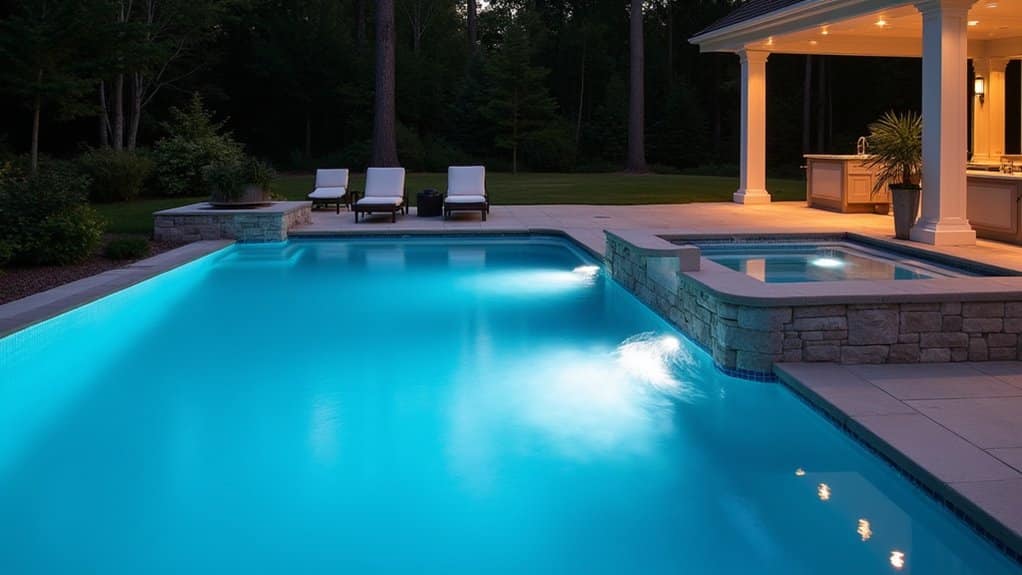
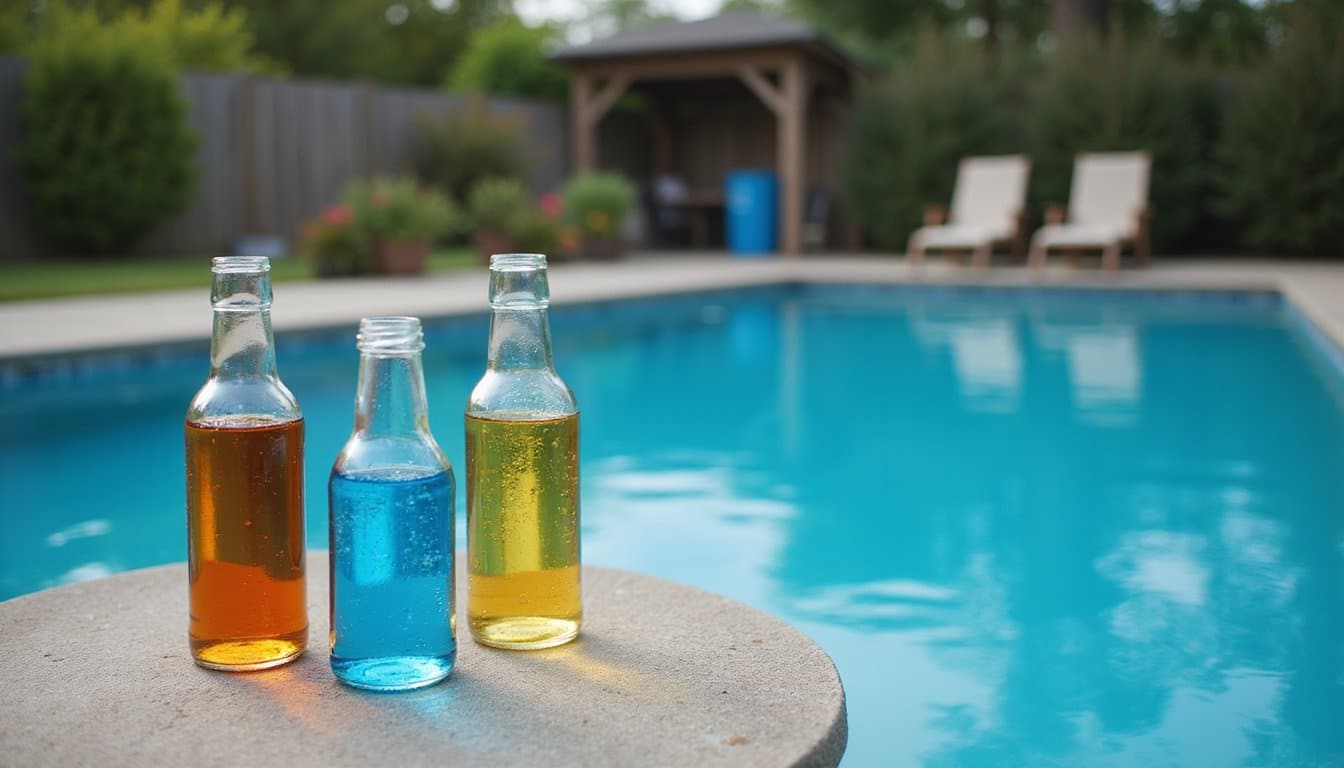
Through smart water quality management, you’ll monitor pH, chlorine concentration, and temperature via mobile dashboards. Remote automation capabilities let you adjust heating, lighting, and cleaning cycles from your smartphone, regardless of location. Pool water quality management sensors trigger autonomous chemical dosing when parameters drift outside target ranges. Combined with energy efficient enhancements like variable-speed pumps and solar-powered heaters, your system reduces electricity consumption by up to 70 percent while delivering consistently superior water clarity and sanitation performance. Additionally, UV and ozone systems offer chemical-free alternatives to traditional chlorine sanitization, neutralizing harmful pathogens while further enhancing water clarity and swimmer safety. For hands-free convenience, voice control integration with smart home assistants like Alexa and Google Home allows you to manage pool functions using simple spoken commands. Beyond efficiency, customizable LED lighting allows you to set colors and patterns that enhance ambiance while illuminating pool edges, steps, and surrounding areas for added safety.
Smart Pool Pumps That Cut Energy Bills by 85
Because variable-speed pool pumps adjust motor output to match real-time circulation demands, they’ve become the single most impactful upgrade for slashing residential pool energy costs. Energy savings stats confirm up to 80% consumption reduction over single-speed models, with the U.S. Department of Energy documenting up to 50% cost savings. ENERGY STAR certification requires 30, 72% greater efficiency than standard pumps, qualifying you for rebates up to $500.
The operational advantages extend beyond your utility bill. You’ll experience quieter performance, reduced hydraulic stress, and a 2.5x coefficient of performance increase at ideal low-speed operation. Peak demand reduction averages 273 watts during critical grid periods. Right-sizing your pump to 7.8 hours daily runtime, including 2.3 hours at high speed, maximizes filtration without wasting electricity.
Smart Pool Heating for Year-Round Swimming
Cutting your pump’s electricity draw by 80% solves only half the energy equation, pool heating typically accounts for 50, 70% of total operational costs, making your heating system the next high-impact target for efficiency gains. Selecting energy efficient pool equipment means matching heater type to your climate and usage pattern.
Pool heating drives 50, 70% of operational costs, choosing the right heater for your climate is the biggest efficiency win left.
- Gas pool heaters deliver up to 400,000 BTUs for rapid heating, ideal for intermittent weekend use in cold climates with low NOx compliance.
- Electric heat pumps transfer ambient air heat using titanium exchangers, cutting operating costs versus gas but requiring 12, 48 hours for initial heating.
- Solar pool heaters raise temperatures 6, 10°F with zero fuel costs and 15+ year panel longevity.
- Hybrid pool heaters combine 93% gas thermal efficiency with heat pump operation for variable-climate coverage.
- Hybrids optimize seasonal shifts, balancing rapid heating speed against long-term efficiency.
Saltwater Systems for Smarter Pool Chlorination
You’ll achieve superior pool water chemistry balancing since SWCGs produce consistent sanitizer output, reducing pH fluctuations. Any reputable swimming pool service company confirms that integrating SWCGs with pool automation control systems enables real-time chlorine monitoring via smart sensors. The result: silkier water that’s gentler on skin, eyes, and swimwear, while cutting annual chemical costs by hundreds. When paired with professional pool chemical treatment service oversight, you’ll extend equipment lifespan and maintain cleaner water year-round.
Smart Pool Sensors That Prevent Costly Damage
- Water quality sensors automate chemical dosing using AI-driven trend analysis
- Temperature sensors integrate with Alexa and Google Assistant for remote adjustments
- Flow rate sensors run continuous diagnostics to flag circulation inefficiencies
- Leak detection sensors cost $200, $500 and reduce utility expenses
- Alert and automation features deliver real-time notifications and enable predictive maintenance scheduling
Smart Pool Safety Features That Prevent Accidents
While smart sensors excel at detecting equipment malfunctions and chemical imbalances, they don’t address the most critical pool risk, drowning, which remains a leading cause of unintentional death for children ages 1, 4. AI-based drowning detection systems analyze underwater movement patterns, body positioning, and submersion duration, reducing false alarms through machine learning. Automated monitoring cameras use computer vision and OpenPose technology to flag abnormal swimmer behavior, triggering tiered alerts. Sensor-based detection technologies employ wearable accelerometers, ultrasonic sensors, and sonar to differentiate humans from objects and monitor physiological signals. Pool alarms and barriers effectiveness increases substantially with four-sided isolation fencing, self-latching gates, and layered protection models. Integrated IoT safety networks connect these systems, enabling real-time alerts, predictive danger analysis, and autonomous response, combining human vigilance with machine precision for all-encompassing accident prevention.
Smart Pool Control Panels That Tie It All Together
You can manage every pump, heater, light, and cleaning system from a single control panel that functions as your pool’s central brain, processing real-time sensor data to adjust settings automatically. These smart panels cut pump energy consumption by up to 70% through optimized scheduling and reduce overall energy bills by 30, 50% with intelligent load management. They also integrate seamlessly with platforms like Alexa, Google Home, and Apple HomeKit, enabling voice commands, automated scenes, and usage-pattern adaptation that unify your pool and spa into your broader smart home ecosystem.
Centralized Equipment Management
The smart pool control panel functions as the centralized brain of your entire pool and spa system, coordinating pumps, heaters, lighting, sanitizers, and cleaning equipment through a single integrated hub. With centralized pool control, you’ll eliminate manual intervention as sensors feed real-time data on water quality, temperature, and levels directly to the processor. This integrated pool automation approach enables connected pool systems to self-adjust through actuator-driven responses. Adding a spa to an existing pool enhances the overall experience by providing a dedicated space for relaxation and rejuvenation. This transformation not only increases the aesthetic appeal of your outdoor area but also boosts the property’s value. By integrating the spa with your smart pool control panel, you can seamlessly manage both features, ensuring optimal performance and enjoyment.
Smart pool technology delivers measurable pool equipment management advantages:
- 24/7 sensor monitoring tracks pH, chlorine concentration, and water temperature continuously
- Automated actuators adjust chemical dosing and filtration cycles based on processed data
- Real-time notifications alert you to deviations requiring attention
- Predictive maintenance detection identifies filter degradation and sanitizer depletion early
- Independent set-points maintain separate pool and spa temperature configurations simultaneously
Automated Energy Savings
Beyond coordinating equipment and monitoring water chemistry, your smart control panel‘s most impactful function lies in cutting energy costs, often by 40, 80%, through automated optimization of pumps, heaters, lighting, and evaporation controls. Your variable-speed pump alone delivers $600, $1,200 in annual savings by running at low RPMs during filtration and ramping up only when demand requires it.
Intelligent heating control systems leverage weather data and usage schedules to eliminate wasteful cycles, while inverter heat pumps achieve COP ratings up to 13. Automated lighting switches LEDs off at predefined times, trimming consumption further. Evaporation management through automated covers prevents energy losses exceeding 200,000 kWh annually. Real-time monitoring ties these subsystems together, tracking consumption metrics and adjusting filtration cycles, heating output, and equipment schedules based on occupancy and environmental conditions.
Smart Home Integration
Every component in a modern pool and spa system, pumps, heaters, sanitizers, lighting, and cleaning equipment, converges through a single smart control panel that functions as the centralized command hub for your entire aquatic environment.
During pool equipment installation, WiFi-enabled panels integrate directly into existing infrastructure, enabling pool automation without complete system overhauls. You’ll access real-time smart pool monitoring through dedicated smartphone applications that track pH, chlorine concentration, and temperature continuously.
- Remote pool control lets you adjust heating, filtration, and lighting from any location via mobile app
- Voice-enabled pool management through Alexa, Google Home, and Apple HomeKit provides hands-free operation
- Custom scenes activate multiple functions simultaneously with a single command
- Automated alerts notify you of chemical imbalances or equipment malfunctions instantly
- Weather integration dynamically adjusts operational schedules based on local forecasts
Smart Pool Costs and When You’ll Break Even
When you’re evaluating smart pool technology, you’ll need to account for an initial investment of $5,000 to $15,000 for automation systems on top of base installation costs ranging from $44,499 to $87,349 for a standard inground pool. Variable-speed pumps alone can cut electricity consumption by up to 70 percent compared to single-speed models, establishing a measurable energy savings timeline that typically offsets their premium within 2 to 3 operating seasons. Breaking down ROI by component, pumps, automated chemical monitors, smart controllers, and sanitization upgrades, lets you pinpoint exactly where each dollar recovers its cost against your ongoing utility, chemical, and maintenance expenses.
Initial Investment Breakdown
Although a base smart pool starts at $42,500, covering auto-fill, waterline tile, concrete deck, mini-pebble finish, and startup chemicals, the total investment climbs substantially once you factor in technology add-ons and regional pricing variables.
- Smart pool controls and automation: $2,000, $4,000, reducing long-term pool equipment repair costs through precision monitoring
- Variable-speed pumps and efficient systems: $5,000, $15,000, minimizing future pool pump repair service frequency
- LED lighting packages: $1,500, $3,000 for energy-efficient illumination
- Pool filtration systems: Cartridge filter maintenance and sand filter cleaning service costs vary by type, impacting ongoing budgets
- Fencing and code compliance: $4,000, $10,000, required in many jurisdictions
You’re looking at $55,000, $75,000 total before site prep, excavation, patios, or electrical infrastructure.
Energy Savings Timeline
That upfront $55,000, $75,000 investment starts paying you back the moment a variable-speed pump replaces a traditional single-speed unit. You’ll cut energy consumption by 50% to 80%, dropping annual electricity costs from $450, $500 down considerably. Intelliflo pumps deliver verified average savings of 52%, running 7.8 hours daily versus 5.7 hours on single-speed models while consuming far less power.
Your pool circulation system maintenance costs decrease as variable-speed pumps reduce mechanical stress. Structured pool maintenance plans and weekly pool service contracts optimize pool sanitation management, extending equipment life. A qualified pool care service provider guarantees your system maintains 1, 3 ppm chlorine levels and 7.2, 7.8 pH balance efficiently. Net monetized benefits reach $398.8 million annually at 3% discount rates industry-wide, with payback periods falling below the 11.1-year average equipment lifetime.
ROI By Component
Breaking your smart pool investment into individual components reveals exactly where each dollar goes, and how quickly it returns. Smart controls and digital pool monitoring systems command $5,000, $15,000 upfront but slash monthly operating costs through variable-speed pump optimization, reducing electricity from $150, $300 to $60, $100 monthly. Pool system diagnostics built into automation platforms detect issues early, minimizing unexpected pool heater repair service calls and extending equipment lifespan.
- Variable-speed pumps: Save $90, $200/month versus single-speed units, achieving payback within 18, 36 months
- Automatic covers: $12,000, $22,000 investment reduces heating and chemical loss by up to 70%
- LED lighting: $1,000, $3,000 with 80% energy reduction over incandescent
- Heating systems: $4,000, $7,000, reducing pool filter replacement frequency through lower chemical demand
- Smart automation package: $5,000, $15,000 delivering 10-year savings exceeding initial cost
The Backyard You’ve Always Wanted Starts Here
Your dream outdoor space deserves more than a standard pool, it deserves a design built around your lifestyle and vision. At Cristallo Pools, our award-winning team specializes in custom pool construction, spa additions, complete backyard makeovers, and concierge maintenance, delivering resort-style results that go far beyond what typical pool contractors offer. Call +1 (561) 766-0353 today and let us bring your vision to life.
Frequently Asked Questions
How Often Should Smart Pool Filters Be Cleaned or Replaced?
You should clean cartridge filters every 1, 3 months or when pressure rises 8, 10 PSI above your clean baseline, replacing them every 2, 5 years. Backwash sand filters every 1, 2 weeks, with full sand replacement every 5, 7 years. For DE filters, backwash and recharge with DE powder every 1, 3 months. You’ll want to increase cleaning frequency during heavy use, storms, or algae blooms to maintain ideal filtration performance.
What pH Range Keeps Smart Pool Equipment Functioning Properly?
You’ll want to maintain your smart pool equipment within a pH range of 7.2, 7.6 for ideal functionality. Below 7.2, acidic water corrodes pumps, heaters, and plumbing components. Above 7.8, scale deposits accumulate on sensors and automated controllers, reducing accuracy. You should target 7.4, 7.6 as your operational baseline, buffer total alkalinity between 80, 120 ppm, and use LSI calculations factoring alkalinity, calcium hardness, and temperature to determine your system’s precise pH setpoint.
Can Smart Pool Systems Work With Existing Older Pool Plumbing?
Yes, you can integrate smart pool systems with existing older plumbing, but you’ll face limitations. Older pumps and heaters typically support only on/off relay control without variable-speed or temperature adjustments. You’ll need to photograph service labels, verify model numbers, and contact the automation manufacturer to confirm compatibility levels. Equipment exceeding 10 years often requires replacement. Consider vendor-agnostic controllers like The Attendant, which work across brands, or add smart relays for scalable integration.
How Do Spa Hydrotherapy Jets Integrate With Smart Pool Automation?
Spa hydrotherapy jets integrate with smart automation through variable pressure control systems that let you adjust intensity from gentle bubbles to powerful therapeutic streams via digital interfaces. You’ll program personalized jet configurations targeting specific muscle groups, neck, shoulders, lower back, and store settings per user. Smartphone apps connect via Bluetooth, enabling remote adjustment of jet intensity and targeted therapy zones. Multi-directional 18-jet precision systems coordinate with automated controllers for layered therapeutic delivery.
What Internet Connection Speed Do Smart Pool Systems Require?
You don’t need high-speed internet for smart pool systems like IntelliCenter or iAqualink. They prioritize low latency over bandwidth, requiring response times of 100 milliseconds or lower for reliable connectivity. If your response time exceeds 200 milliseconds, you’ll need to relocate your antenna or add a Wi-Fi extender. Standard home Wi-Fi networks with DHCP-enabled configurations work effectively, since these systems depend on consistent signal strength rather than raw speed.