Protect your family with 2025’s essential pool safety measures by implementing smart barrier systems with automated closure mechanisms and remote monitoring. You’ll need proper emergency response equipment, including rescue poles and AED devices, within 50 feet of your pool. Maintain strict chemical safety protocols, utilize AI-powered supervision technology, and guarantee children complete professional swimming lessons. Your thorough pool safety strategy should extend beyond these fundamental requirements to enhance protection.
Key Takeaways
- Install smart barrier systems with automated gates, motion sensors, and smartphone monitoring to prevent unauthorized pool access.
- Keep rescue equipment readily accessible, including telescopic poles, life rings, and first aid kits within 50 feet of the pool.
- Enroll children in professional swimming lessons between ages 1-4 to develop essential water skills and confidence.
- Use AI-powered cameras and wearable devices to monitor swimmers and detect potential drowning incidents in real-time.
- Establish and practice family emergency response plans, ensuring everyone knows rescue procedures and emergency contact information.
Smart Pool Barrier Systems and Gates
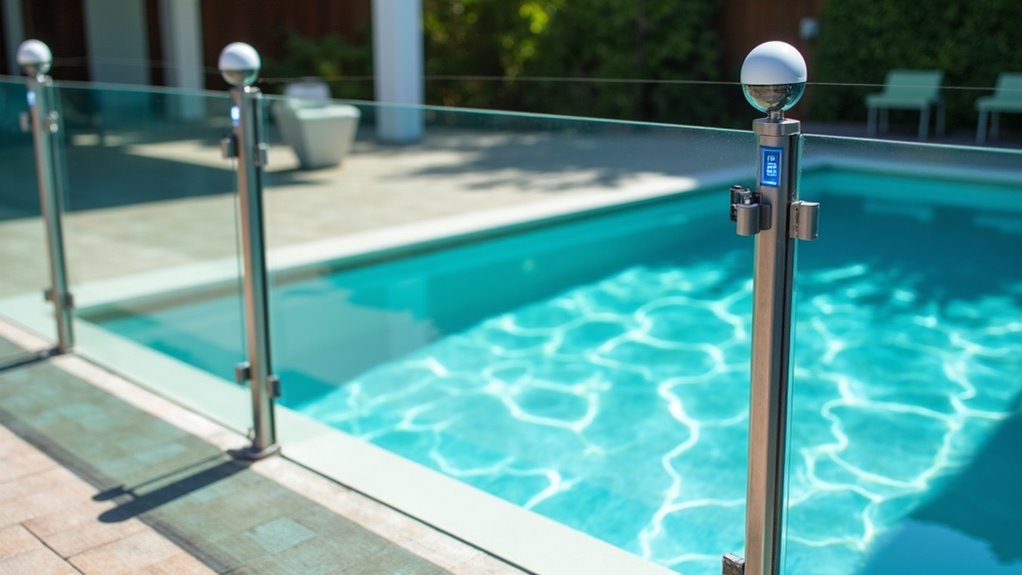
While pool ownership brings enjoyment, properly installed barrier systems and gates serve as your initial line of defense against accidental drownings. Today’s smart technology has revolutionized pool barriers, offering features like automated closure mechanisms, tamper alerts, and remote monitoring through your smartphone.
Your barrier system must comply with current safety regulations, maintaining a minimum height of 4 feet with no gaps exceeding 4 inches between vertical slats. Install self-closing, self-latching gates that open outward from the pool area. You’ll need to position the latch release at least 54 inches above ground level to prevent young children from reaching it.
Consider integrating motion sensors and pool-activity cameras into your barrier system for improved security. These smart features can instantly alert you when someone enters the pool area.
Emergency Response Plans and Equipment
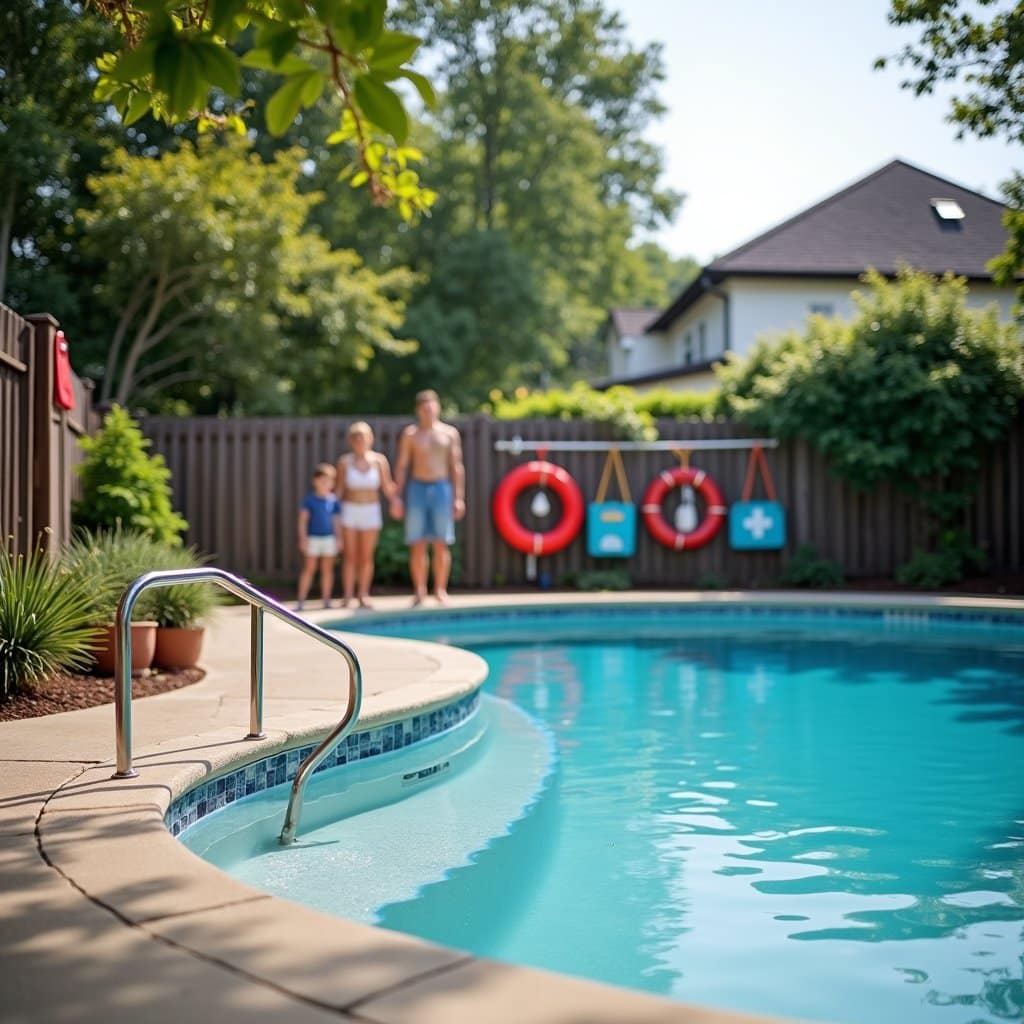
Although sturdy barriers provide essential protection, every pool area must have readily accessible emergency response equipment and a well-documented rescue plan. You’ll need to conduct regular emergency drills and verify all family members know exactly what to do during a water emergency. Beyond barriers, keep rescue gear ready, practice emergency drills, teach kids water safety, and set clear rules to help in making pools secure for children.
| Equipment | Location | Maintenance |
|---|---|---|
| Life Ring | Pool Deck West | Monthly Inspection |
| Rescue Pole | Pool Deck East | Quarterly Check |
| Initial Aid Kit | Equipment Room | Bimonthly Restock |
| Emergency Phone | Near Pool Entry | Weekly Testing |
| AED Device | Main Pool Area | Annual Certification |
Store your response equipment in clearly marked, easily accessible locations that aren’t blocked by furniture or equipment. You’ll want to post emergency numbers, CPR instructions, and evacuation routes in visible areas. Remember to update your emergency contact list quarterly and replace any expired safety equipment immediately.
Updated Pool Chemical Safety Guidelines

Because pool chemicals can pose serious health and safety risks, proper handling and storage procedures must be strictly followed. You’ll need to maintain a dedicated chemical storage area that’s cool, dry, well-ventilated, and locked away from children. Never mix different chemicals together, and always introduce chemicals to water, not water to chemicals.
Conduct regular pool testing to maintain proper chemical balance. You should check chlorine and pH levels at least twice weekly during peak swimming season. Keep detailed records of all chemical contributions and test results. Store your testing equipment in a clean, dry location separate from chemicals. If you’re unsure about chemical handling, consult your local pool professional or health department for guidance. Always wear appropriate protective equipment, including goggles and chemical-resistant gloves, when handling pool chemicals.
Modern Supervision Techniques and Technology
Safe chemical management represents just one aspect of pool safety; modern technology now offers enhanced ways to monitor swimmers and prevent accidents. You’ll find creative tools that provide improved supervision capabilities while meeting current safety regulations.
| Technology | Safety Benefits |
|---|---|
| AI Cameras | Detects drowning movements in real-time |
| Digital Alarms | Alerts when pool gate opens |
| Wearable Devices | Tracks swimmer location and essential signs |
| Remote Monitoring | Enables smartphone pool surveillance |
| Smart Fencing | Reports perimeter breaches instantly |
When implementing these technologies, you’ll need to maintain multiple layers of protection. Don’t rely solely on digital systems, they are meant to complement, not replace, in-person supervision. Verify your remote monitoring setup includes backup power sources and test all digital alarms weekly according to manufacturer specifications. Regular system maintenance remains critical for peak performance.
Child Swimming Lessons and Water Skills
Since drowning remains a leading cause of death among children, enrolling kids in professional swimming lessons can reduce their risk by up to 88%. You’ll want to start lessons early, ideally between periods 1-4, when children are most receptive to developing essential water confidence and basic swimming techniques.
Ensure your child’s instructor is certified and follows a structured curriculum that includes crucial skills like floating, treading water, and proper breathing methods. Don’t rely solely on flotation devices as they can create a false sense of security. Instead, focus on teaching your children to swim independently.
Monitor your child’s progress through defined skill levels, from basic water safety to advanced swimming techniques. Regular practice sessions between formal lessons will reinforce these life-saving abilities and help maintain their confidence in the water.
Pool Maintenance for Safety Compliance
While proper swimming skills are vital, maintaining your pool’s safety compliance requires strict adherence to local regulations and industry standards. You’ll need to establish a regular maintenance schedule and conduct thorough pool inspections to guarantee all safety features remain functional.
- Check your pool’s barrier system weekly, including gates, latches, and fencing, to verify they meet height requirements and are in proper working condition
- Test water chemistry daily during peak season and maintain proper sanitizer levels to prevent waterborne illnesses and guarantee the best visibility for swimmers
- Inspect safety equipment monthly, including drain covers, emergency shut-off switches, and rescue devices, replacing any worn or damaged components immediately
Follow your local health department’s guidelines and document all maintenance activities to demonstrate compliance during official inspections. Don’t skip scheduled maintenance, as it’s essential for preventing accidents and maintaining a safe swimming environment.
Weather Safety Protocols and Precautions
Weather conditions play a significant role in pool safety and require specific protocols beyond standard maintenance procedures. You’ll need to implement strict lightning protocols, which include evacuating swimmers at the initial sign of an approaching storm and maintaining a 30-minute waiting period after the last thunder.
During storm preparation, you must secure all loose pool equipment, including chairs, umbrellas, and toys that could become projectiles in high winds. It’s crucial to monitor local weather alerts and install a weather radio near your pool area. You should also have an emergency shutdown procedure for your pool’s electrical systems.
Don’t allow swimming during heavy rain, as reduced visibility compromises your ability to monitor swimmers effectively. Keep your pool’s water chemistry balanced, as heavy rainfall can dilute chemical levels and create unsafe swimming conditions.
Safe Pool Accessories and Equipment
To maintain a safe swimming environment, you’ll need several essential pieces of safety equipment that meet current regulations and industry standards. Floating pool alarms and safety pool covers serve as your primary defense against unauthorized access and potential accidents.
Pool safety starts with proper equipment certified alarms and covers are your first line of defense against accidents.
- Install ASTM-certified safety pool covers that can support at least 485 pounds per square foot, featuring automatic locking mechanisms and water drainage systems to prevent dangerous pooling
- Choose electronic floating pool alarms with motion sensors that detect water displacement and emit 85-decibel alerts when triggered by unexpected entry
- Keep rescue equipment readily accessible, including a telescopic pole with body hook, USCG-approved life rings, and a fully-stocked initial aid station within 50 feet of the pool area
Always check your equipment’s certification dates and replace any items showing signs of wear or damage.
Frequently Asked Questions
How Long Should Children Wait After Eating Before Swimming?
While the old rule of waiting an hour after eating is outdated, you’ll want to take into account food digestion when planning swim time. For swimming safety, wait 15-30 minutes after a light meal and 30-45 minutes after a heavy meal. You don’t need to worry about getting cramps from swimming with a full stomach; that’s a myth. However, you’ll feel more comfortable swimming when you’ve given your body time to begin digestion.
What Is the Ideal Water Temperature for Recreational Swimming?
For recreational swimming, you’ll want to maintain water temperature between 78°F and 82°F (25.5°C to 27.7°C). This range provides ideal comfort while preventing hypothermia or overheating. If you’re swimming with young children or elderly individuals, keep the temperature closer to 82°F, as they’re more sensitive to cold. Don’t let the water exceed 84°F, as warmer temperatures can lead to fatigue and potential safety risks. Always monitor the temperature using a reliable pool thermometer.
Can Pool Lights Attract Unwanted Wildlife to the Pool Area?
Yes, your pool lighting can contribute to wildlife attraction, particularly insects and the animals that feed on them. You’ll find that bright underwater and perimeter lights often draw moths, mosquitoes, and other flying insects, which may subsequently attract bats, frogs, and small reptiles. To minimize unwanted wildlife, consider using yellow “bug light” bulbs, installing timers to limit lighting duration, and maintaining proper chemical balance in your pool water.
How Often Should Pool Safety Rules Be Reviewed With Visiting Guests?
You should review pool guest regulations every time visitors arrive at your pool, regardless of their swimming experience or previous visits. Don’t skip safety reminders, even with frequent guests, as people often forget rules over time. Make it a consistent practice to walk through essential protocols, including emergency procedures, designated swimming areas, and depth markers. It’s best to conduct this brief overview before anyone enters the water to guarantee compliance and safety.
What Swimming Activities Are Safe During Pregnancy?
During pregnancy, you’ll find water aerobics and prenatal swimming to be excellent low-impact exercises. Always consult your healthcare provider before starting any aquatic activities. Keep your water temperature between 83-86°F to prevent overheating. You should avoid diving, jumping, or any activities with fall risks. Stick to gentle strokes like breaststroke or freestyle, and don’t overexert yourself. Stop immediately if you experience dizziness, contractions, or discomfort while swimming.