Pool stabilizer, or cyanuric acid, is a chemical compound that bonds with free chlorine to shield it from ultraviolet degradation. You’ll want to maintain levels between 30-60 ppm for ideal protection without compromising sanitizing power. When concentrations climb too high, chlorine’s effectiveness decreases substantially, leading to poor water quality and algae growth. Since cyanuric acid doesn’t evaporate or break down naturally, understanding proper testing and adjustment methods becomes essential for maintaining balanced water chemistry. Pool stabilizer, or cyanuric acid, bonds with free chlorine to protect it from ultraviolet degradation, with an optimal operating range of 30, 60 ppm to balance UV protection and sanitizing efficiency. When levels rise excessively, chlorine activity drops, contributing to poor water clarity and algae growth, while insufficient levels prompt many owners to ask low stabilizer in pool what to add, since the correct adjustment typically involves carefully dosing additional cyanuric acid. Because CYA does not evaporate or naturally degrade, consistent testing and precise corrections are essential to maintain stable, effective water chemistry.
What Is Pool Stabilizer and How Does It Work?
Cyanuric acid (CYA) functions as a chlorine stabilizer by forming a weak, reversible bond with free chlorine molecules in your pool water. This bond shields chlorine from ultraviolet radiation, dramatically reducing photolysis rates. Understanding the stabilizer definition pool owners rely on helps you maintain proper water chemistry.
Pool stabilizer cyanuric acid provides essential UV protection chlorine needs to remain effective. Without this chlorine stabilizer, sunlight degrades free chlorine within hours, leaving your water vulnerable to bacterial contamination and algae growth. Cyanuric acid essentially acts as a sunscreen for your chlorine, protecting it from the sun’s damaging rays. In non-stabilized pools, sunlight can wipe out 75-90% of chlorine in just two hours, demonstrating why stabilizer protection is critical.
The mechanism operates through controlled release: as free chlorine depletes during sanitization, CYA gradually releases bound chlorine back into active form. This buffering action extends chlorine’s lifespan, reduces chemical consumption, and maintains consistent germicidal efficacy throughout daylight hours. For optimal protection, pool owners should maintain Free Chlorine between 1-4 ppm and keep their stabilizer at 30-50 ppm.
Why Unstabilized Chlorine Burns Off in Sunlight
While CYA provides this protective shield, understanding what happens to unprotected chlorine reveals why stabilization matters so much. UV radiation triggers sun degradation chlorine by breaking apart hypochlorite ions at the molecular level. The resulting chlorine gas escapes into the atmosphere, eliminating your sanitizer residual longevity entirely.
Without stabilized chlorine, you’ll lose approximately one-third of your free chlorine every hour during peak sunlight. On bright days, unstabilized pools can experience up to 90% chlorine depletion within two hours. This rapid breakdown destroys free chlorine retention and creates dangerous sanitization gaps.
Heat compounds this problem considerably. Temperatures exceeding 28°C accelerate chlorine loss while simultaneously promoting bacterial growth that consumes remaining sanitizer faster. You’re fighting a losing battle without proper CYA protection.
The Right Cyanuric Acid Levels for Your Pool Type
Your pool type determines the ideal cyanuric acid range you should maintain. Standard residential pools function optimally at 30-50 ppm, while saltwater pools necessitate slightly higher levels of 50-80 ppm to protect chlorine generated by the salt cell. Keeping CYA within these ranges prevents chlorine lock and facilitates your sanitizer’s effective performance against bacteria and algae.
Standard Pool Recommendations
Maintaining the correct cyanuric acid level depends on your pool type, surface material, and whether it’s exposed to sunlight.
For residential pools, you should target a CYA range of 30-50 ppm. This pool stabilizer concentration protects chlorine from UV degradation while maintaining effective sanitization. If levels exceed 50 ppm, increase free chlorine to 7.5% of your cyanuric acid reading.
Commercial pools require stricter standards, the CDC MAHC recommends 15 ppm or less. Higher concentrations slow chlorine’s disinfection rate, increasing recreational water illness risks.
Vinyl liner, plaster, and fiberglass pools share similar parameters: minimum 30 ppm, ideal 40-50 ppm, maximum 60 ppm. Maintain free chlorine between 4-8 ppm for proper chlorine stabilization at these levels.
Indoor pools don’t require stabilizer since UV exposure isn’t a factor. Test weekly when using dichlor or trichlor products.
Saltwater Pool Requirements
Saltwater pools require higher cyanuric acid levels than traditional chlorinated pools because their generators produce chlorine continuously at lower concentrations. You’ll need to sustain CYA between 60-80 ppm, some manufacturers like Hayward and Pentair specifically recommend this range for ideal chlorine loss prevention.
Understanding pool stabilizer chemistry helps explain why salt water pool stabilizer needs differ. Without trichlor additions providing built-in stabilization, your generated chlorine faces direct UV exposure. Higher CYA levels compensate by forming protective bonds with free chlorine molecules.
You must also maintain proper free chlorine ratios. Keep your sanitizer at minimum 5% of your CYA level, if you’re running 80 ppm CYA, maintain at least 4 ppm free chlorine. This balance guarantees effective sanitization while preventing rapid degradation from sunlight exposure.
Avoiding Excessive Levels
While stabilizer protects chlorine from UV degradation, excessive CYA levels create a counterproductive effect that undermines your pool’s sanitation capacity. When concentrations exceed 150 mg/L, you’re approaching the American maximum standard, and levels beyond 200 mg/L trigger chlorine lock, severely reducing free chlorine’s disinfection ability.
The CYA accumulation issue stems from stabilizer’s bio-accumulative nature, it doesn’t evaporate or break down naturally. High concentrations slow chlorine’s oxidation rate, increasing CT values required to neutralize pathogens. The CDC limits CYA to just 15 ppm for public pools following fecal incidents, reflecting stabilizer safety considerations during contamination events.
Your bather load impact correlates with heightened CYA, as temperature and organic compounds often rise together. Sunlight protection plateaus between 30, 70 ppm, making the ideal CYA range approximate to 30, 50 ppm for perfect balance.
How to Add and Test Pool Stabilizer
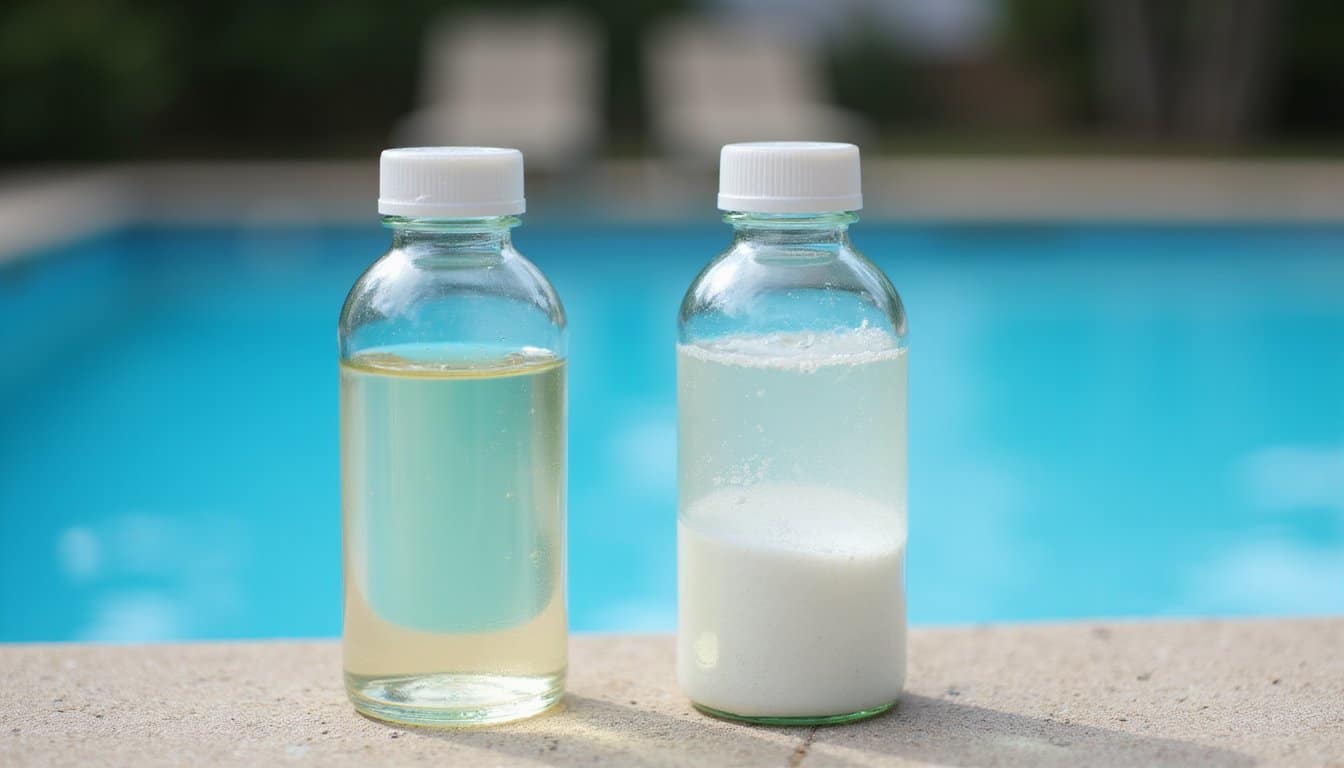
Before adding stabilizer to your pool, you’ll need to accurately measure your current cyanuric acid levels using test strips, liquid reagent kits, or turbidity-based testing methods. For test strips, submerge for 30 seconds, wait one minute, then compare colors to the chart. Turbidity tests require adding reagent drops until a black dot disappears when viewed from above.
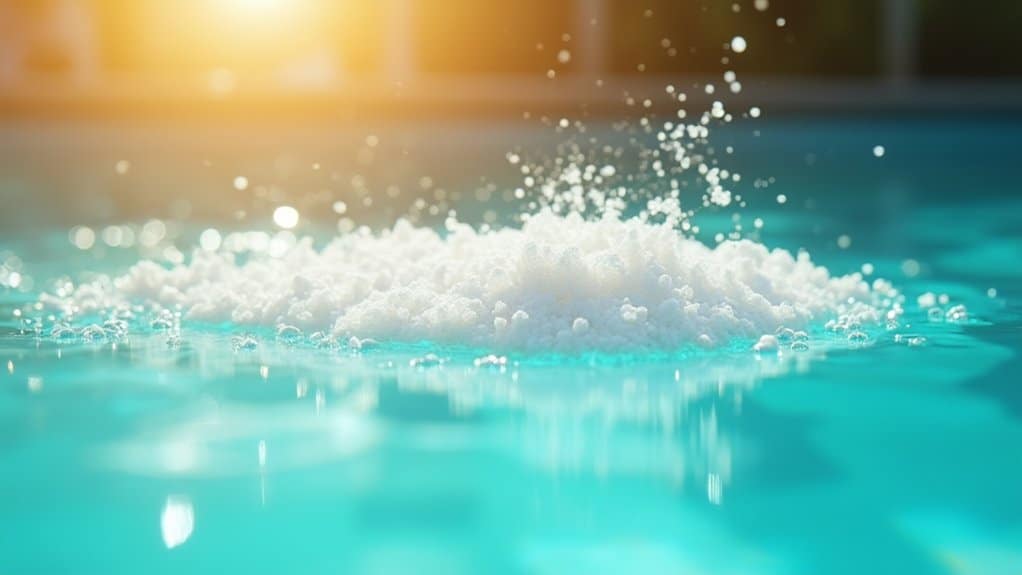
Once you’ve determined your pool stabilizer dosage, dissolve the measured cyanuric acid in a bucket of warm water while wearing protective gear. Pour the solution into your skimmer with the pump running, or distribute it evenly across the surface. Run circulation continuously for 24 hours and avoid backwashing for 3-4 weeks. Retest after full circulation using your test kit to confirm levels reach the 30-50 ppm target range.
Warning Signs of Too Much Cyanuric Acid
High cyanuric acid levels can creep up on pool owners, often revealing themselves through subtle but persistent water quality issues before triggering more obvious problems. You’ll notice your pool water balance becomes increasingly difficult to maintain, with pH and alkalinity resisting standard adjustments.
The most telling indicator involves compromised sanitizer effectiveness. When CYA exceeds 70 ppm, your free chlorine becomes fundamentally “locked,” unable to neutralize bacteria and pathogens efficiently. You’re adding chlorine, but it’s not performing.
Watch for recurring algae and contamination problems despite consistent cyanuric acid application and shock treatments. Persistent cloudiness that won’t clear, swimmer complaints of eye and skin irritation, and chemical corrections requiring excessive product all signal accumulation issues. These symptoms indicate your stabilizer has crossed from protective to problematic, demanding immediate attention.
How to Lower Pool Stabilizer When Levels Climb Too High
When your pool’s cyanuric acid levels exceed the ideal 30-60 ppm range, you’ll need to take corrective action to restore chlorine effectiveness. The most straightforward approach involves partial draining, removing one foot of water at a time and replacing it with fresh supply to dilute the stabilizer concentration. For a more advanced chemical method, you can use aluminum sulfate (melamine coagulation) to bind and precipitate CYA from the water, though this technique requires precise pH control and is best left to professionals.
Dilution Through Partial Draining
Because cyanuric acid doesn’t break down or evaporate from pool water, dilution through partial draining remains the only guaranteed method for reducing heightened CYA levels. This approach works by removing water containing dissolved pool stabilizer and replacing it with fresh water.
To execute this process effectively, follow these steps:
- Test your current CYA concentration using a cyanuric acid-specific test strip, dipping for 30 seconds and waiting one minute for accurate results.
- Calculate the percentage of water requiring removal using a dilution formula or pool calculator, typically 25, 50% depending on your target reduction.
- Drain the calculated portion, refill with fresh water, and rebalance all pool chemicals.
Results appear within hours of completion. Multiple cycles may be necessary if levels remain above the ideal 30, 50 ppm range.
Melamine Coagulation Removal Method
While partial draining offers a straightforward solution for reducing cyanuric acid, it’s not always practical, especially for pools with severe CYA buildup or water conservation concerns.
The melamine coagulation removal method provides an alternative approach. You’ll first add a reducing agent to neutralize chlorine, preventing green water discoloration. Next, introduce a melamine source, which reacts with cyanuric acid to form insoluble melamine cyanurate precipitate.
To accelerate particle settlement, add a flocculating agent such as polyaluminum chloride or polyimino polymer. This coagulation sedimentation filtration process clumps fine solids for easier removal.
Once precipitate settles, vacuum to waste or employ your filtration system. Monitor filter performance closely, precipitate volumes can be substantial. Empty filters frequently to maintain function. After complete removal, re-chlorinate your pool to restore proper sanitizer levels.
Frequently Asked Questions
Does Pool Stabilizer Expire or Lose Effectiveness When Stored for Long Periods?
Pool stabilizer doesn’t expire and maintains its potency indefinitely when you store it properly. You’ll want to keep it in a tightly sealed container in a cool, dry location between 50-70°F. If moisture gets in, you’ll notice clumping or hardening, which makes handling messier but doesn’t drastically diminish effectiveness. Unlike liquid chlorine or granular chlorine that degrades within 12-24 months, cyanuric acid remains chemically stable for well over five years.
Can I Use Pool Stabilizer in Hot Tubs and Spas?
You can use pool stabilizer in hot tubs and spas, but you’ll need to exercise caution with dosing. Maintain cyanuric acid levels between 30-50 ppm, the smaller water volume means concentrations build up quickly. Avoid chlorine tablets containing stabilizer, as they’ll cause rapid accumulation. Test regularly using CYA-specific strips, and if levels exceed the recommended range, you’ll need to partially drain and refill since no chemical reduces cyanuric acid directly.
Does Rain or Heavy Pool Usage Affect Cyanuric Acid Levels?
Rain directly dilutes your cyanuric acid levels since rainwater contains none of the stabilizer. Heavy rainfall can drastically reduce concentrations, so you’ll want to test after storms and replenish if levels drop below the ideal 30-50 ppm range. Heavy pool usage, however, doesn’t consume cyanuric acid, it remains stable regardless of bather load. Usage increases organic contaminants that stress chlorine, but your stabilizer levels stay unaffected. Test both scenarios to maintain proper balance.
Is Cyanuric Acid Safe for Swimmers With Sensitive Skin or Allergies?
Cyanuric acid is generally safe for sensitive swimmers when you maintain proper levels between 30-50 ppm. However, concentrations above 50 ppm increase irritation risks, causing dry, itchy skin and red eyes in susceptible individuals. If you’re allergy-prone, you’ll want to monitor levels closely, excessive CYA combined with chloramines can trigger respiratory issues and skin allergies. You should also guarantee swimmers aren’t present when adding stabilizer directly to the pool.
Will Pool Stabilizer Affect My Pool’s pH or Alkalinity Readings?
Pool stabilizer won’t markedly alter your pH levels, but it does affect your total alkalinity readings. When you test total alkalinity, you’re measuring both carbonate and cyanurate alkalinity combined. To get accurate carbonate alkalinity, the value that actually protects your plaster, you’ll need to subtract your cyanuric acid concentration multiplied by a pH-dependent correction factor. This calculation becomes increasingly crucial as stabilizer accumulates in your water.