
Transform your pool area with strategic rock landscaping that combines beauty and function. Start by integrating multi-tiered waterfalls using river rocks and boulders to create soothing soundscapes while improving circulation. Add slip-resistant flagstone pathways with proper drainage to verify safety and elegance. Ultimately, incorporate built-in stone seating areas with dramatic lighting to showcase textures and create intimate gathering spaces. These foundational elements set the stage for your ideal backyard refuge.
Creating a Natural Oasis With Rock Gardens and Water Features
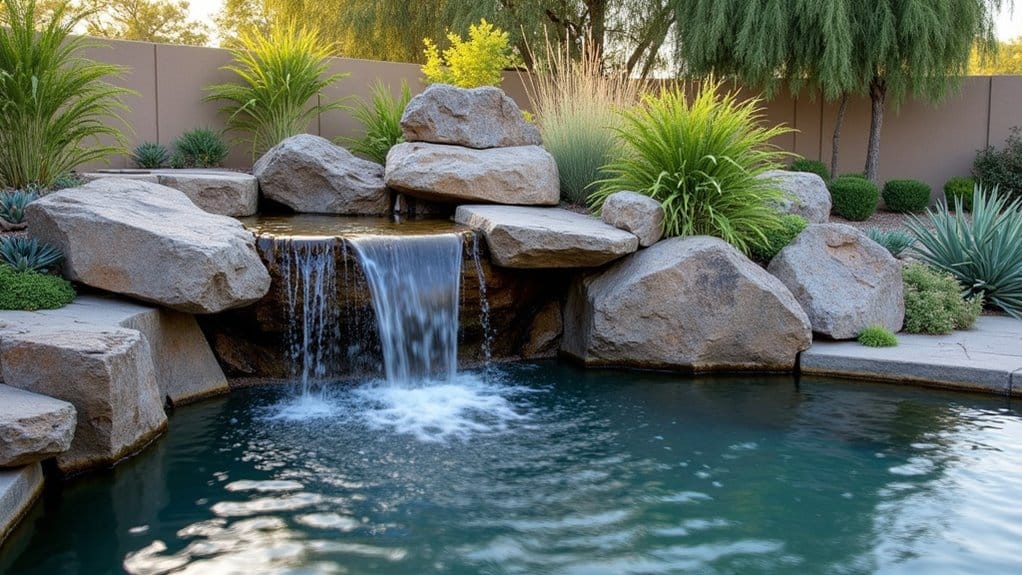
When designing a poolside natural haven, thoughtfully integrating rock gardens and water features transforms an ordinary backyard pool into an immersive scenic retreat. Multi-level rock arrangements create visual depth while providing integrated seating options and accessory placement opportunities. You’ll amplify aesthetic appeal by carefully sizing and positioning boulders to maintain balanced focal points. Evening ambiance reaches new heights with dramatic nighttime illumination that showcases cascading water and stone textures. Installing built-in benches among the rock formations offers comfortable resting spots for guests.
Incorporate both natural and artificial rocks to conceal utilities like lighting and speakers while preserving an authentic environment. Multi-tiered waterfalls using river rocks and boulders deliver soothing soundscapes and improve water circulation. The addition of slip-resistant flagstone offers a safe and elegant pathway around water features. You can bolster the natural aesthetic by pairing water features with stone edging and drought-resistant plants. This combination creates a cohesive design that mimics nature’s own water features while ensuring practical functionality through improved drainage and circulation.
Smart Stone Selection for Safety and Style Around Your Pool
The thoughtful selection of poolside stones anchors both the safety and aesthetic appeal of your backyard haven. When choosing materials, prioritize textured surfaces like split face or flamed finishes that deliver superior slip resistance while maintaining visual sophistication. Professional installers should handle the placement to ensure optimal safety and functionality.
Consider heat absorption characteristics carefully; light-colored travertine and limestone remain cool underfoot, making them ideal for sun-exposed pool decks. Natural stone colors provide endless design possibilities to complement your home’s exterior palette. Mediterranean designs often feature earthy limestone that beautifully harmonizes with garden elements and water features. For maximum durability and minimal maintenance requirements, opt for granite with a flamed finish or high-quality porcelain coping, both offering excellent chemical and weather resistance.
Your stone layout matters too. Large-format pavers with minimal grout lines reduce trip hazards, while bullnose or drop-face edging profiles boost safety and drainage. Whether you’re aiming for a contemporary look with regular cuts or a naturalistic feel with irregular flagstone, ensure your selection aligns with both functional demands and design goals.
Sustainable Pool Borders That Stand the Test of Time
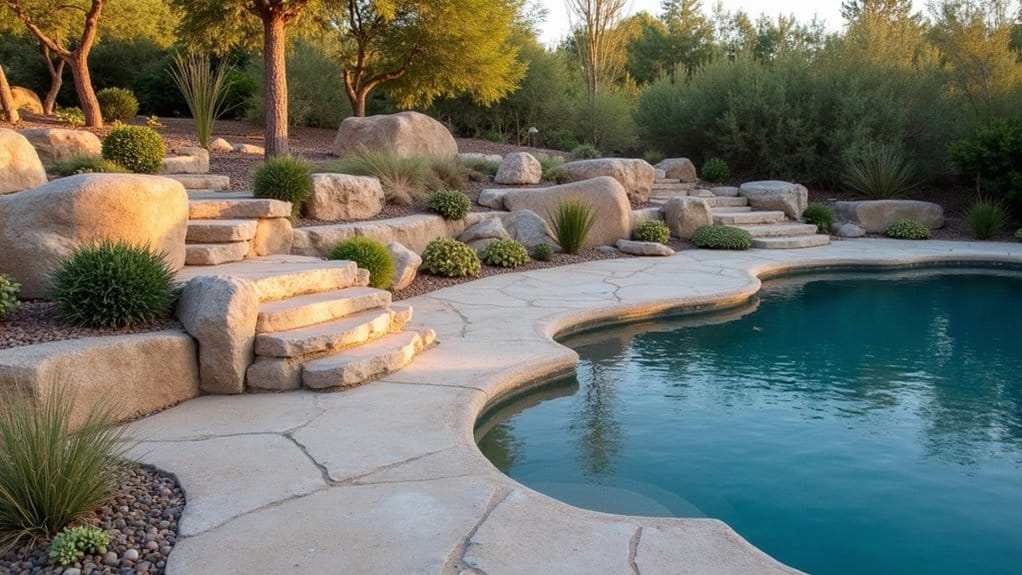
Creating sustainable pool borders demands a strategic blend of eco-conscious materials and intelligent design principles. Your choice of durable paving materials and low-maintenance plant selections will determine the long-term success of your pool landscaping investment. Native flagstone pathways, as seen in Oklahoma installations, provide lasting durability while complementing natural surroundings.
Smart pool design starts with sustainable materials and mindful plant choices that guarantee lasting beauty and minimal upkeep.
String lighting solutions along the border pathways enhance safety while creating an inviting nighttime ambiance.
Consider these essential elements for lasting pool borders:
- Install recycled composite decking or porcelain pavers for chemical-resistant, splinter-free surfaces that maintain their appearance despite weather exposure
- Integrate native shrubs and ornamental grasses that require minimal water and care while supporting local ecosystems
- Implement permeable paving systems and strategic drainage solutions to manage water runoff and protect your pool’s structural integrity
A well-designed drip irrigation system helps maintain consistent moisture levels for your poolside plants while conserving water resources.
Frequently Asked Questions
How Much Does Professional Rock Landscaping Typically Cost per Square Foot?
You’ll typically spend between $6 to $15 per square foot for professional rock scenery, including both labor and materials. Average rock scenery labor costs range from $40 to $100 per hour, while typical rock scenery material expenses vary by stone type. You’ll pay less for pea gravel ($6-10/sq ft) and more for decorative river rocks ($12-20/sq ft). Supplementary costs may include site preparation, landscape fabric, and delivery fees.
Can Existing Pool Landscaping Be Converted to Rock Features Without Damaging Infrastructure?
Yes, you can safely convert your pool landscaping to rock features when following proper protocols. Start by mapping existing infrastructure and utilities before any digging. Consider retaining wall construction techniques that work around pool plumbing and employ hand placement methods for rocks. When selecting plants for rock gardens, choose species with shallow root systems. You’ll need to maintain adequate drainage and guarantee rocks don’t compromise pool structure or mechanical systems.
What Tools Are Needed for DIY Rock Garden Installation Around Pools?
You’ll need several essential hand tools required for proper rock garden installation. Start with site preparation tools: a shovel, rake, and wheelbarrow for ground clearing and material transport. Include edging tools like a utility knife, hammer, and measuring tape for precise borders. Don’t forget proper ground preparation equipment: a tamper, landscape fabric, and pins. Ultimately, make certain you have safety gear, including gloves, protective eyewear, and a dust mask.
How Often Should Pool Rocks Be Cleaned or Replaced?
You’ll need to clean your pool rocks every 1-3 months as part of a regular maintenance schedule, with more frequent cleaning in high-debris areas. Guarantee proper rock selection from the start, choose non-porous materials that resist algae growth. Replace rocks when you notice cracking, persistent staining, or structural instability. Weekly debris removal and visual inspections should complement your cleaning routine. Ensure immediate cleaning after storms or heavy pool use.
Will Chlorinated Pool Water Damage or Discolor Certain Types of Rocks?
Yes, chlorinated pool water will damage and discolor certain rocks, particularly those with porous chemical compositions like sandstone and limestone. You’ll notice fading, staining, and surface erosion over time. To minimize damage, consider your rock placement positioning carefully, keep softer stones farther from splash zones and guarantee proper sealing. You’ll want to maintain balanced pool chemistry (pH 7.2-7.8) and regularly inspect rocks for signs of deterioration. Choose dense, non-reactive stones when possible.