
Transform your compact backyard into a sophisticated haven by choosing space-optimized pool designs like L-shaped configurations or plunge pools under 150 square feet. You’ll amplify functionality with efficient equipment solutions, including wall-mounted heaters and variable-speed pumps. Consider low-maintenance fiberglass options that install in just three days, or customize concrete pools with features like tanning ledges. Smart planning and strategic placement guarantee your small-space pool delivers both style and sustainability. Our exhaustive guide covers every detail you’ll need for your dream installation.
Maximizing Limited Space Through Strategic Pool Design
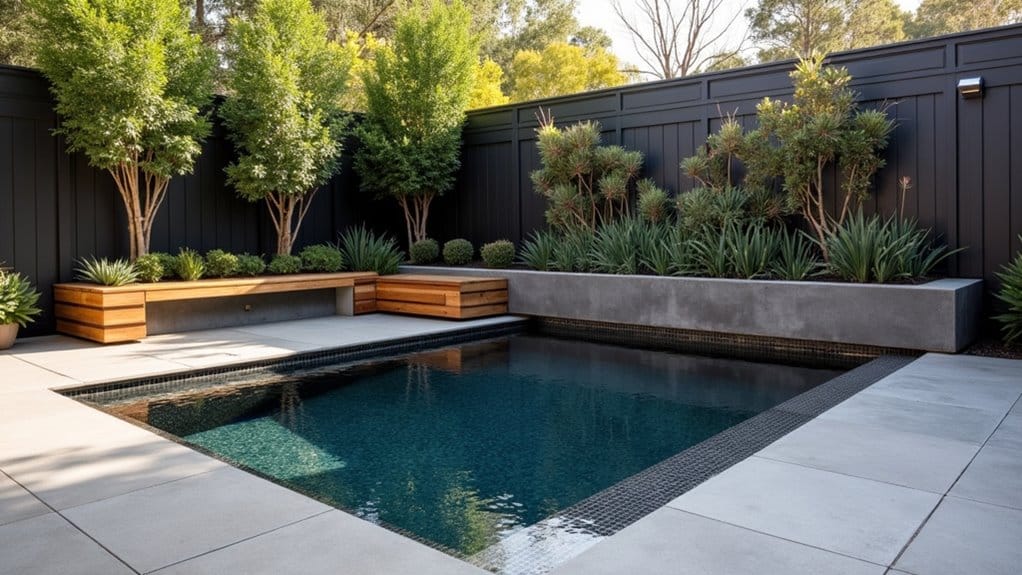
When working with a small backyard, strategic pool design becomes essential for optimizing every square foot while maintaining functionality. You’ll find that rectangular and L-shaped configurations offer ideal yard integration strategies, particularly when aligning with existing structures and property boundaries. For maximum efficiency, consider compact hybrid designs like cocktail pools that merge social areas with swim zones in spaces as small as 12×24 feet. Proper planning should allocate 15 square feet per swimmer to ensure comfortable use of the space.
Incorporate low profile landscaping treatments through built-in structural benches and zero-edge installations to minimize the overall footprint while creating visual continuity. You’ll optimize your available space by selecting pre-engineered fiberglass shells, like the 150-square-foot kidney design, which requires less excavation. Adding elegant touches like Valders limestone coping can elevate the overall aesthetic while maintaining a natural look. For enhanced spatial perception, implement infinity edges and monochromatic color schemes that blend seamlessly with your surroundings. Adding smartphone-controlled LED lighting can transform your compact pool space into a customizable nighttime retreat.
Essential Pre-Installation Planning Tips
Before breaking ground on your small backyard pool, thorough pre-installation planning proves essential for project success and environmental stewardship. Start with exhaustive utility documentation procedures by contacting 811 for public line markings and mapping private infrastructure like irrigation systems. Your strategic site evaluation should assess overhead wires, soil composition, and proximity to existing structures. If you belong to a homeowners association, verify their requirements for daily site cleanup during construction. Properties near lakes or oceans must maintain a 100-foot distance for safety and stability. Expect the planning phase to require 2 to 4 weeks as you finalize crucial design decisions.
Don’t skip critical permitting steps, secure necessary approvals while verifying local setback requirements and health department regulations. You’ll need detailed site plans showing pool dimensions and drainage solutions, particularly for properties with slopes or retaining walls. Consider long-term sustainability by selecting energy-efficient equipment and planning maintenance access routes. Factor in costs for potential utility rerouting and mandatory inspections, while prioritizing contractors who demonstrate proven experience with small-space installations.
Choosing the Right Pool Type for Your Yard
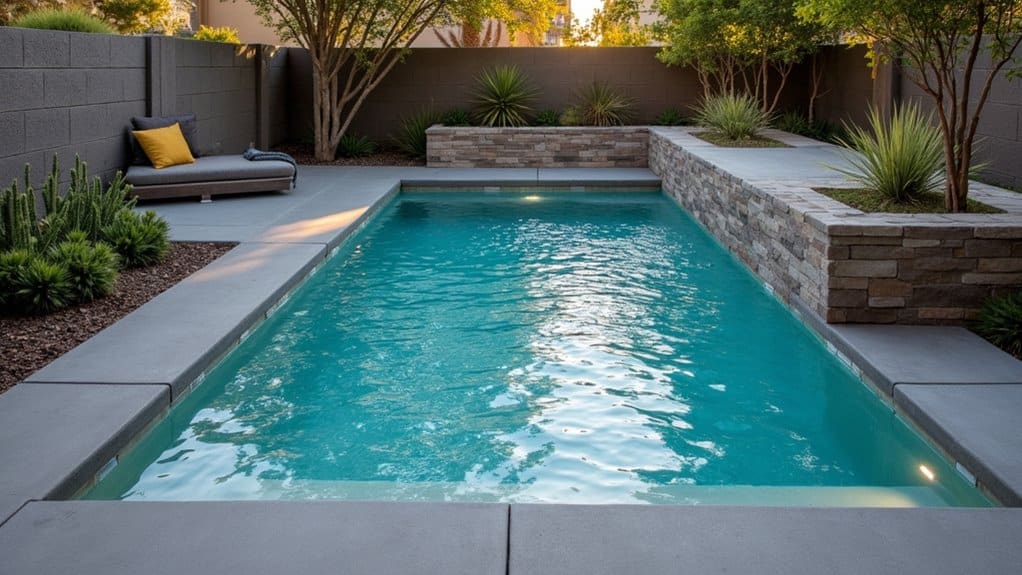
When selecting a pool for your compact yard, you’ll need to weigh the benefits of fiberglass’s low maintenance and durability against vinyl’s flexible design options and lower upfront costs. Concrete pools offer unlimited customization potential but require significant installation space and ongoing maintenance commitments, making them better suited for yards with adequate access and established landscaping. Above-ground options provide easy installation without requiring excavation, though they may impact property aesthetics. Your available space will conclusive guide your shape selection, with lap pools maximizing linear yards, plunge pools working well in square footprints, and freeform designs offering efficient use of irregular spaces while incorporating features like built-in seating. A minimum of seven feet of decking should be planned around the pool perimeter to accommodate lounge chairs and essential poolside furniture. Swim spas are an excellent solution for narrow spaces, with width-spanning steps creating both functionality and visual appeal.
Fiberglass Vs Vinyl Options
As homeowners evaluate their backyard pool options, the choice between fiberglass and vinyl pools represents a pivotal decision that impacts long-term costs, maintenance requirements, and installation timelines.
While vinyl pools offer greater flexibility in pool aesthetic considerations with customizable shapes and sizes, fiberglass pools deliver superior environmental impact factors through reduced chemical usage and energy consumption. With predesigned molds, fiberglass pool designs are more limited but include popular features like tanning ledges and built-in seating. You’ll find that fiberglass installations complete in just three days, compared to vinyl’s lengthy 2-5 week timeline. Though vinyl pools cost less initially, you’ll need to factor in liner replacements every 5-9 years at $10,000+ each time. The non-porous surface of fiberglass makes it easier to maintain crystal-clear water quality year-round. Fiberglass pools’ gelcoat surface resists algae growth, minimizing maintenance needs and chemical treatments. When considering lifetime value, fiberglass pools’ durability, energy efficiency, and lower operational costs often outweigh their higher upfront investment. Many homeowners appreciate that fiberglass pools come with lifetime structural warranties, providing long-term peace of mind for their investment.
Concrete Design Considerations
Concrete pools deliver unmatched design flexibility and structural integrity for small backyard installations. You’ll benefit from customizable features like tanning ledges, built-in benches, and hydrotherapy seats that optimize your pool’s functionality. The material quality of concrete allows for both smooth and textured surfaces, with non-slip additives enhancing safety in high-traffic areas. Select light-colored finishes to minimize heat absorption and keep deck surfaces comfortable for barefoot walking. A thoughtful placement should consider the sun’s daily path to achieve optimal exposure and comfort. Most homeowners choose concrete pools for specific uses that align with their lifestyle and family needs.
Professional construction methods guarantee proper drainage through strategically sloped decks and integrated channel systems. You can incorporate swim jets for exercise while maintaining a compact footprint. When planning your concrete pool, consider durability factors like high-strength mixtures and proper reinforcement techniques for weather resistance. Focus on harmonizing the design with your home’s architecture while maximizing available space through smart placement of features like steps and seating areas.
Space-Saving Pool Shapes
The ideal pool shape for your backyard hinges on optimizing both functionality and spatial efficiency. When selecting a design that offers seamless integration with your outdoor space, consider shapes that complement your yard’s natural contours while delivering customized aesthetics.
- Rectangular and lap pools provide timeless appeal for exercise-focused designs, utilizing slim profiles that preserve valuable yard space
- L-shaped configurations maximize corner placements while creating distinct zones for different activities
- Kidney and freeform shapes blend organically with landscaping, optimizing swimming area relative to perimeter
- Plunge pools and compact squares deliver spa-like functionality in footprints under 150 square feet
These space-conscious designs guarantee you’ll get maximum enjoyment from minimal square footage while maintaining harmony with your property’s architectural elements and environmental features.
Space-Saving Equipment Solutions
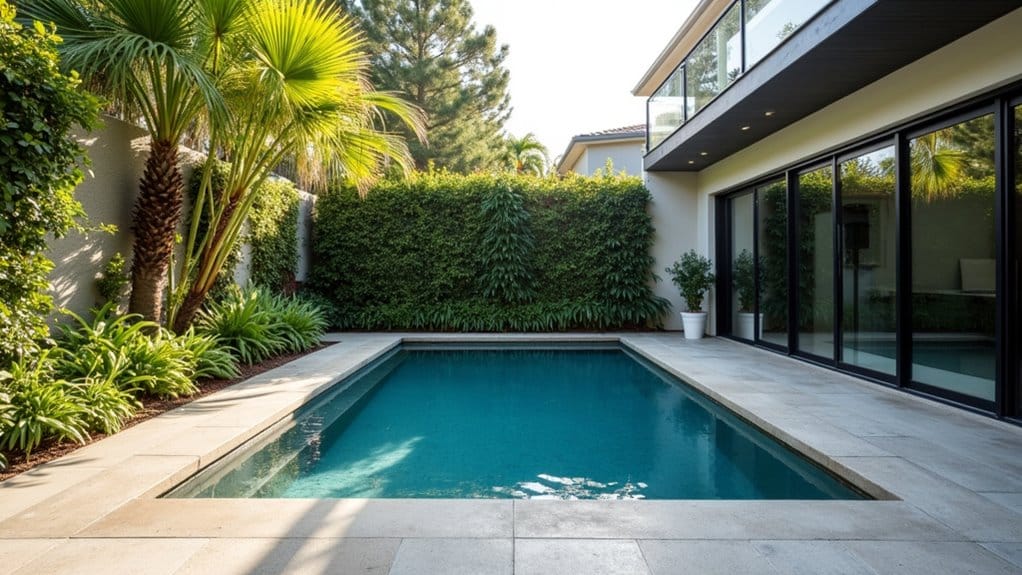
When planning a small backyard pool, prudent equipment choices can ideal your available space while preserving optimal functionality. You’ll find significant space savings through discreet equipment integration, starting with variable-speed pumps like the IntelliFlo3® that offer powerful performance in compact designs.
Consider wall-mounted heaters and automated control systems that diminish your equipment’s footprint. Cartridge filters provide efficient filtration while requiring less space than traditional systems, and you’ll maximize compact storage solutions with telescopic cleaning tools and inflatable accessories. Smart automation through centralized control systems lets you manage all pool functions remotely, eliminating the need for multiple control panels. For enhanced efficiency, integrate ENERGY STAR®-certified equipment and hybrid solar systems that’ll reduce both your spatial and environmental impact while maintaining perfect pool performance.
Building Code Requirements and Safety Measures
Before installing your small backyard pool, you’ll need to obtain proper building permits and guarantee compliance with local regulations, especially for pools deeper than 24 inches. You must surround your pool with a 4-foot-high barrier that features self-closing, self-latching gates and meets specific gap requirements to prevent unauthorized access. Your pool’s location needs to maintain minimum setbacks of 3 feet from property lines and slopes, while your filtration system must incorporate approved sand or cartridge filters with appropriate sewer connections for backwash discharge.
Local Codes and Permits
Installing a small backyard pool requires strict adherence to local building codes and safety regulations that protect both property owners and the public. Before starting your municipal approval process, you’ll need to understand the precise requirements for your property’s permit application procedures.
Your project must comply with these essential code requirements:
- Maintain a 5-foot minimum clearance from property lines and a 3-foot buffer for pool equipment
- Install safety barriers meeting the 5-foot height requirement with self-closing gates and 4-inch maximum gaps
- Secure proper clearance for utility easements, particularly regarding underground infrastructure and overhead electrical lines
- Implement dual safety features from approved options, including alarms, covers, or mesh fencing
You’ll need stamped engineering plans and energy compliance documentation to complete your permit application, ensuring your installation meets all local standards.
Pool Safety Barrier Standards
The cornerstone of pool safety lies in implementing sturdy barrier systems that meet stringent building code requirements. Your perimeter configuration options must include fencing that’s at least 48 inches high with no gaps exceeding 4 inches, while maintaining ground clearance of 4 inches or less. For bolstered protection, integrate multi-layered safety systems combining physical barriers with technological solutions.
You’ll need self-closing, self-latching gates positioned at least 54 inches high, plus EPA-compliant door alarms measuring 85dB or higher. Consider ASTM-certified safety pool covers as supplemental protection, guaranteeing they’re professionally installed without buckling or gaps. When selecting barrier materials, opt for smooth surfaces that discourage climbing, and verify that mesh barriers maintain gaps of 1 inch or less. Remember, regular inspections assure continued compliance with local safety codes.
Smart Design Features for Small Pool Areas
When designing a small pool area, smart spatial optimization becomes the cornerstone of creating a luxurious yet efficient aquatic retreat. Multi-functional designs and water feature hybrids let you improve every square foot while maintaining sophisticated aesthetics.
Transform your compact space with these original solutions:
- Integrate raised spas with spillover effects and tanning ledges to create vertical interest without expanding the footprint
- Combine freeform shapes with built-in seating to optimize swimming area while accommodating social zones
- Install deck jets and laminar flows for ambient sound and movement without demanding excessive space
- Utilize modern minimalist designs with monochromatic palettes to heighten the perception of openness
These space-conscious features deliver resort-style amenities while respecting environmental constraints and maintaining functionality in limited areas. You’ll achieve both luxury and efficiency through thoughtful integration of these elements.
Efficient Construction Methods and Timeline
Successful backyard pool construction hinges on three critical elements: strategic planning, precise execution, and efficient timeline management. For small backyard pools, you’ll find fiberglass and vinyl options typically complete in 6-8 weeks, while concrete installations may extend longer due to necessary curing periods.
To optimize your project timeline management, start with early permit applications and maintain consistent contractor communication strategies throughout the process. You’ll save valuable time by selecting pre-engineered shells and modular components that streamline installation. Consider weather patterns when scheduling critical phases like excavation and curing, and guarantee materials are ordered well in advance. By implementing phased scheduling, you can overlap compatible tasks such as plumbing and electrical work, eventually reducing your total construction timeline while maintaining quality standards.
Cost-Effective Material Options
Selecting cost-effective materials for your small backyard pool doesn’t mean compromising on quality or aesthetics. With thoughtful planning, you can choose durable exterior finishes that blend functionality with budget-friendly aesthetics.
Smart pool design balances beauty and budget, proving affordable materials can create stunning backyard retreats without sacrificing quality.
- Opt for faux stone panels combined with timber surrounds to create an upscale look while maintaining cost efficiency and providing built-in seating options
- Consider fiberglass shells or vinyl liners, which offer lower long-term maintenance costs and better heat retention than traditional concrete
- Implement gravel bases with paver stone decking for superior drainage and slip resistance, reducing both installation and upkeep expenses
- Install eco-conscious water features like solar-powered bubblers or DIY spout fountains using recycled materials and closed-loop circulation systems
These material choices deliver durability and style while keeping your project within budget and environmentally responsible.
Maintenance Accessibility in Compact Spaces
Strategic placement of your pool equipment within arm’s reach reduces maintenance time while maximizing your compact outdoor space. You’ll want to incorporate dedicated service corridors around the pool’s perimeter, ensuring easy access for robotic cleaners and routine maintenance tasks without disrupting the comprehensive design aesthetic. Installing raised equipment platforms and convenient access points near filtration systems allows you to perform quick inspections and adjustments while maintaining the pool’s streamlined appearance.
Strategic Equipment Placement
Proper equipment placement in small backyard pools demands careful consideration of both space optimization and maintenance accessibility. Your equipment elevation choices impact both functionality and serviceability, while a service-friendly layout guarantees efficient maintenance for years to come.
- Position pumps and heaters within 5 meters of your pool, using vertical stacking when possible to maximize limited space while maintaining 3-foot clearance for servicing
- Group related components together in designated zones, with central valve access points for streamlined operation and troubleshooting
- Install equipment at ground level or slightly raised for inground pools, incorporating slip-resistant surfaces and clear labeling
- Utilize compact, energy-efficient systems with reduced electrical requirements, ensuring proper ventilation and protection from water exposure while maintaining easy access for maintenance
Streamlined Cleaning Access Points
While designing a small backyard pool, efficient maintenance access points can make the difference between simple upkeep and frustrating service challenges. You’ll want to incorporate deck plates near critical junctions and position equipment at elevated heights to guarantee secure equipment access while minimizing visual clutter.
Consider installing built-in bench systems with removable tops that double as access covers, and establish dedicated service corridors with weed barriers to protect your plumbing infrastructure. Position quick-clean skimmer designs strategically, and cluster your components compactly to reduce travel distances between maintenance points. By integrating multi-return configurations with adjustable eyeballs, you’ll optimize circulation while maintaining easy access for cleaning. Remember to include non-slip surfaces around these access points and confirm they comply with your local zoning setback requirements.
Space-Saving Service Corridors
Creating efficient service corridors in compact pool spaces demands a sophisticated approach to spatial organization and multi-functional design. You’ll need to establish clear zoning for service routes while maximizing every square meter of available space. Strategic placement of service access pathways guarantees maintenance crews can efficiently reach equipment without disrupting recreational areas.
- Integrate 3D-planned maintenance corridors with a minimum width of 0.75m, incorporating LED pathway lighting for nighttime servicing
- Install raised deck structures that double as equipment access points while providing attractive seating areas
- Implement sloped drainage channels along perimeter paths to prevent water accumulation in service areas
- Utilize vertical storage solutions within fence-line walls to house maintenance supplies without compromising corridor width
Professional Installation Best Practices
Professional pool installation in compact spaces demands thorough attention to detail and a systematic approach from the start. You’ll need to work closely with experienced contractors who understand how to optimize limited areas while integrating utilities and implementing on-site storage solutions effectively.
Begin with a thorough site assessment to verify property dimensions and identify ideal placement that complies with local zoning requirements. Your contractor should create a personalized layout that accounts for mandatory safety features, including self-closing gates and proper fencing, without compromising the design aesthetic. During construction, contractors will manage sequential phases precisely, from structured excavation to equipment placement.
Choose materials wisely fiberglass pools offer quicker installation times than vinyl alternatives, potentially reducing disruption in your compact space. Ensure all safety monitoring systems and non-slip surfaces are properly integrated.
Frequently Asked Questions
Can Pool Heating Systems Affect Surrounding Landscaping and Garden Areas?
Yes, your pool heating system can substantially impact nearby gardens. Water temperature regulation equipment, especially heat pumps, affects soil moisture levels in surrounding areas through heat discharge and airflow patterns. You’ll need to carefully plan plant placement, avoiding deep-rooted species near equipment and maintaining proper drainage. Be strategic with windbreaks and landscaping to protect both your heating system’s efficiency and your garden’s health while ensuring adequate maintenance access.
How Does Winter Weather Impact Different Types of Small Pool Installations?
You’ll find that winter weather greatly impacts different pool types through frozen pipes and water freezing effects. Concrete pools face structural cracking from freeze-thaw cycles, while vinyl liners are prone to tears in extreme cold. Fiberglass shells show better resilience but require careful plumbing winterization. Tile pools experience the most visible damage as frozen water can pop tiles off surfaces. Proper winterization and drainage are essential for protecting your investment regardless of material choice.
What Lighting Options Work Best for Nighttime Safety in Compact Pools?
For ideal nighttime safety in compact pools, you’ll want to combine underwater pool lighting with strategic perimeter illumination. Install energy-efficient LED lighting fixtures every 8 feet along pool walls, positioned 9-12″ below the waterline to prevent glare. You can improve visibility by adding solar-powered path lights around the pool’s edge. Consider RGBW color-mixing systems that provide both safety illumination and ambient lighting while consuming 80% less power than traditional options.
Are There Special Insurance Considerations for Small Backyard Pool Installations?
You’ll need to update your homeowner policy immediately when installing any pool, regardless of size. Start by increasing your pool liability coverage from standard limits to at least $500,000, and consider adding an umbrella policy for extra protection. Don’t forget to document all safety features like fencing and locking mechanisms, as they’re required for coverage. Contact your insurer early in the planning process to guarantee you meet all their specific requirements.
How Do Salt Water Systems Compare to Chlorine for Small Pools?
While salt water systems require higher upfront costs, they’re often more efficient for small pools due to minimized chemical impact and maintenance requirements. You’ll benefit from gentler water that’s easier on skin, eyes, and swimwear. However, you’ll need to monitor the salt generator and manage pH levels professionally. Consider that saltwater can be corrosive to fixtures and equipment, making material selection essential. Annual operating costs typically run lower than traditional chlorine systems.